

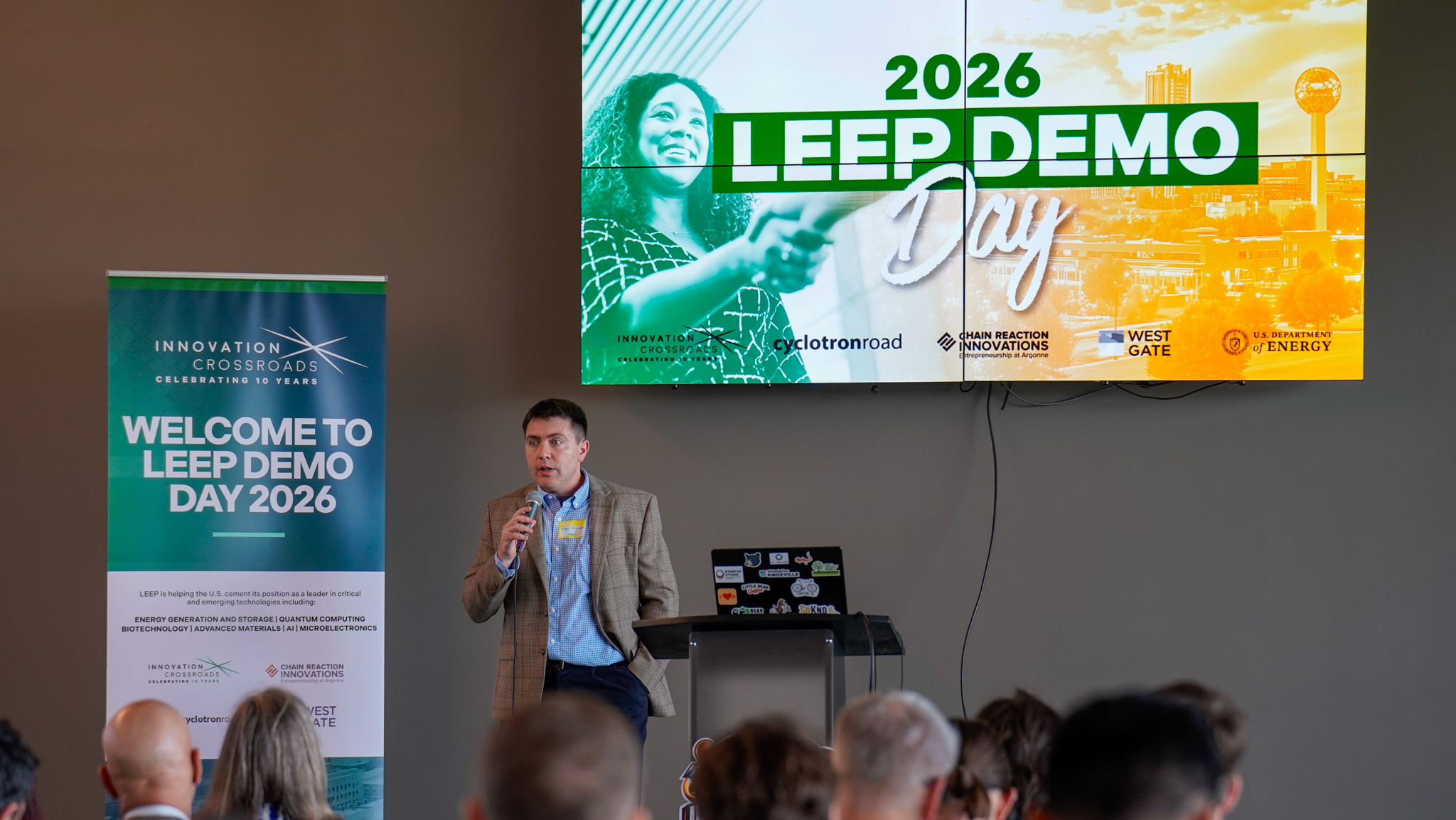
DOE’s LEEP Demo Day comes to Knoxville: 23 founders, $6B in alumni funding, and growth announced
The graduation brings LEEP's total to 239 founders since the program launched roughly a decade ago. Those alumni have collectively raised more than $6 billion and created about 4,000 jobs.
After two years of navigating the national labs, undergoing intense entrepreneurial programming, and building a functional business from the ground up, 23 founders are stepping out of the fellowship and back into the proverbial “real world” to make economic impact across the United States.

In 2024, these 23 innovators entered the Department of Energy (DOE) Lab Embedded Entrepreneurship Program (LEEP) with an idea. Today, they are all graduating from the program with a fully formed company.
The fellows are joining the ranks of the alumni who walked before them. Since its inception about a decade ago, LEEP has supported 239 founders and subsequently about 4,000 jobs. Additionally, to date, alumni founders of LEEP have collectively raised more than $6 billion in follow-on funding.
“About half of startups fail within the first five years, but our LEEP startups crush those statistics, with a 92% success rate,” said Anthony Pugliese, the Director of the Office of Technology Commercialization (OTC) and the Chief Commercialization Officer of the DOE.
Changes coming to LEEP
At the 2026 LEEP Demo Day on Wednesday, Pugliese announced that LEEP would be repositioned under the OTC, something that he is very excited and passionate about growing.
“Soon, we hope to be announcing some new locations for new LEEP nodes,” he shared. “And on top of that, we will be changing the application process to lower the barrier for more innovation-based companies to come be a part of the fellowship.”
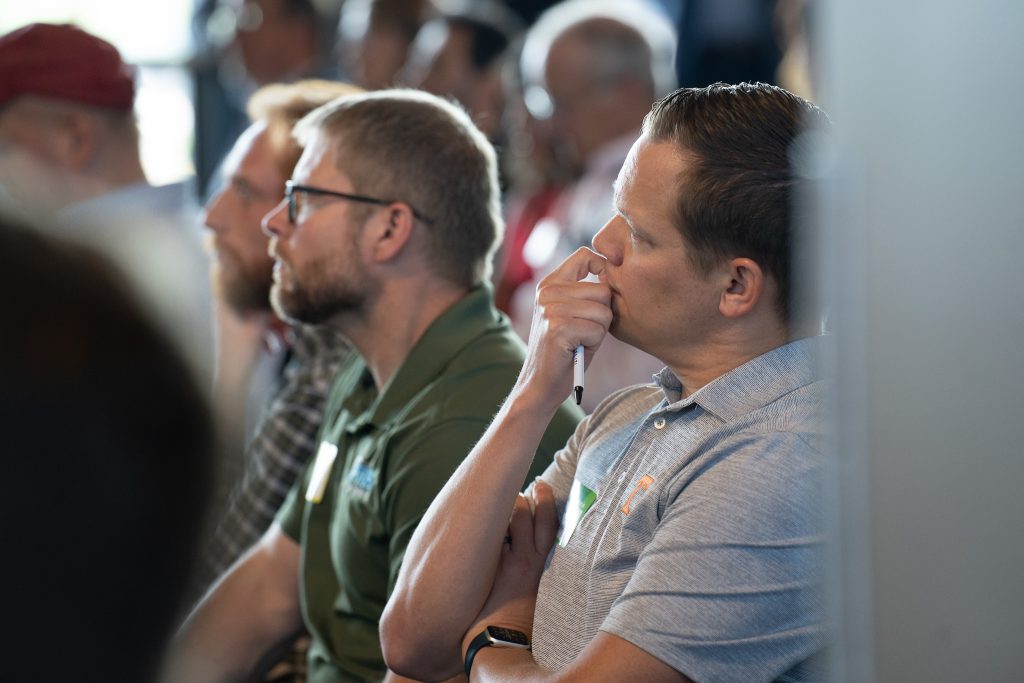
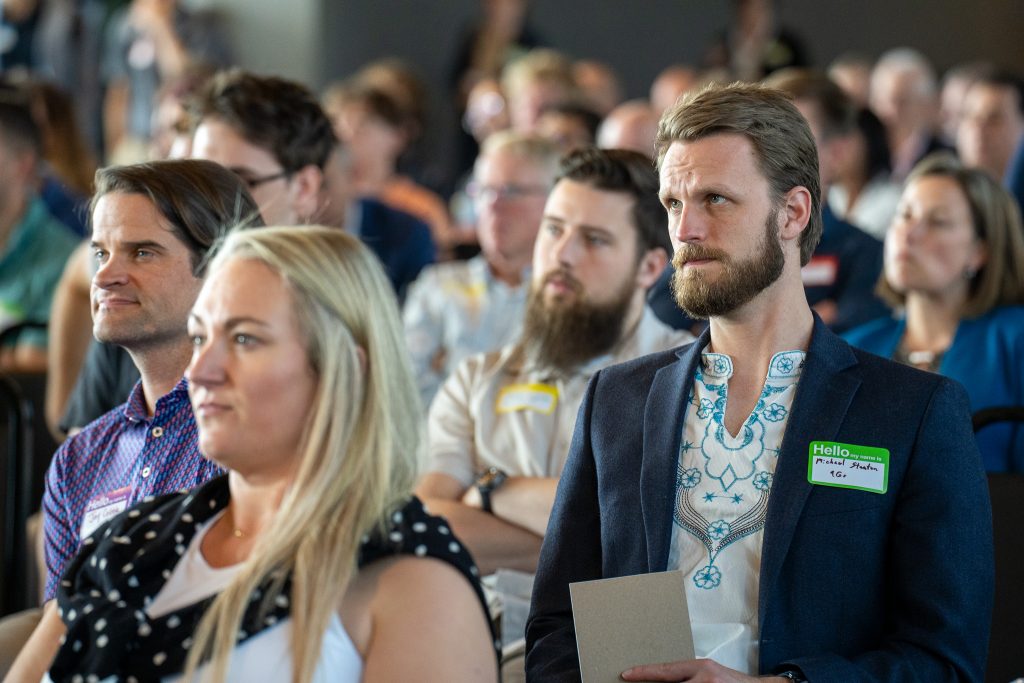
One of the changes to do so was decreasing the application from close to 100 pages, down to just 15. That change catalyzed an eruption of cheers throughout the crowd at the LEEP Demo Day.
Graduating the 2024 fellows
LEEP is a two-year program offered at Oak Ridge National Laboratory (Innovation Crossroads), Argonne National Laboratory (Chain Reactions Innovations), Berkeley National Laboratory (Cyclotron Road), and the National Laboratory of the Rockies (West Gate).
For the first year, the annual Demo Day was hosted in Knoxville in conjunction with a first-time community celebration called Innovation Night at the Park. Almost 350 people were in attendance, both to observe the LEEP Demo Day, with 23 fellows, and also watch 17 founders from Tennessee pitch to Market Square Ventures (MSV) for a chance to receive a $100,000 investment.
Representing the 2024 cohort from Innovation Crossroads: Katy Bradford, Jordan Cannon, Vinit Chaudhary, Brian Iezzi, Kevin Roccapriore, and Tim Vosburgh.
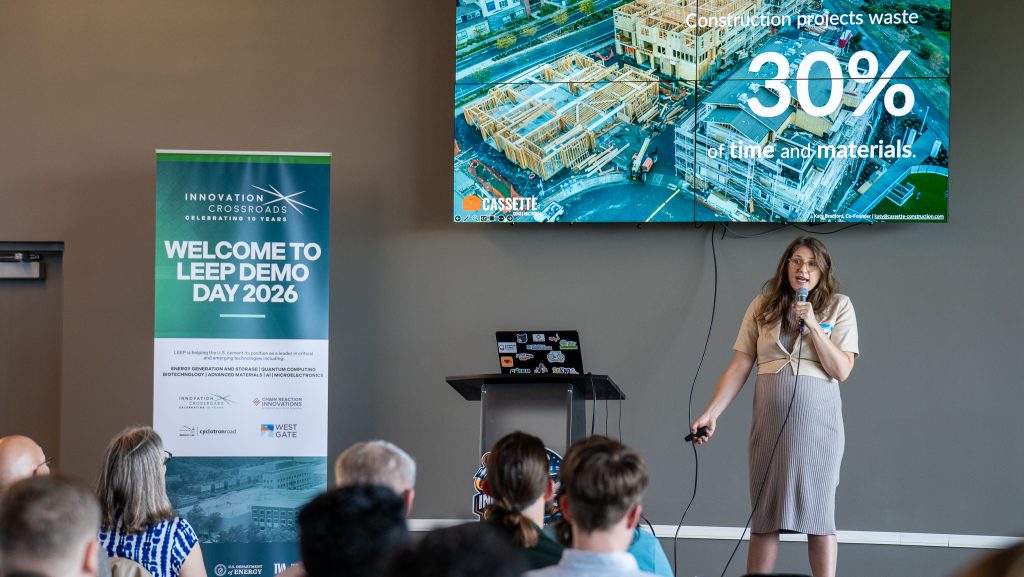
Bradford shared about her company, Cassette Construction, which she said is helping make construction faster, cheaper, and more energy efficient. She said the construction industry wastes about 30% of time and materials. Cassette is developing modular walls to help speed up that process and reduce the amount of material. Read more about Cassette Construction.
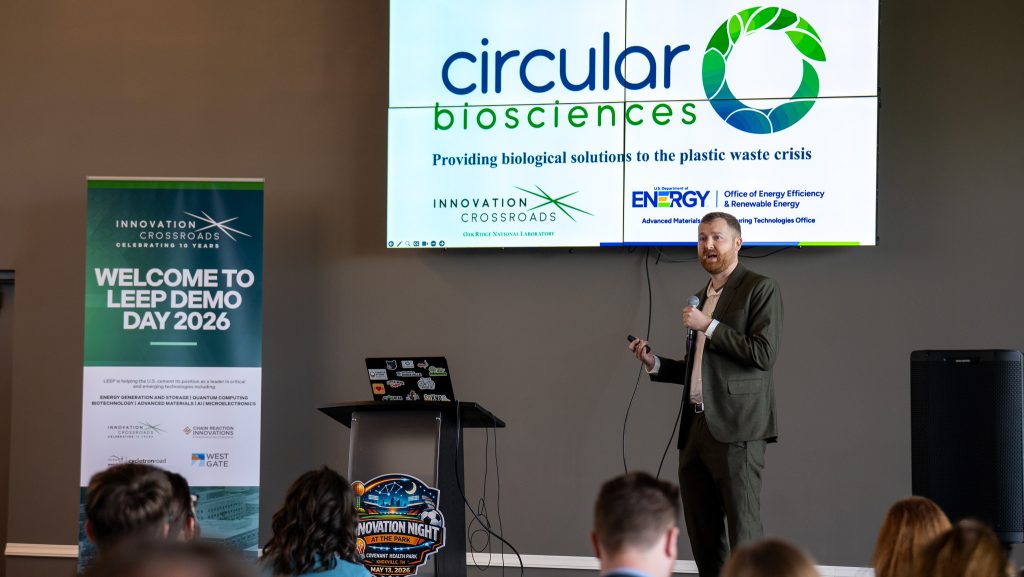
Cannon is the founder of a company called Circular Biosciences, and as the name suggests, his innovation fits into the lifecycle of bioplastics. He targets something called “Poly-L-lactic acid (PLLA),” which is currently the most abundant and widely used bioplastic. His technology, developed at the University of Tennessee and ORNL, can depolymerize PLLA at ambient temperatures under mild reaction conditions, making it useful to help clean up the environment. Read more about Circular Biosciences.
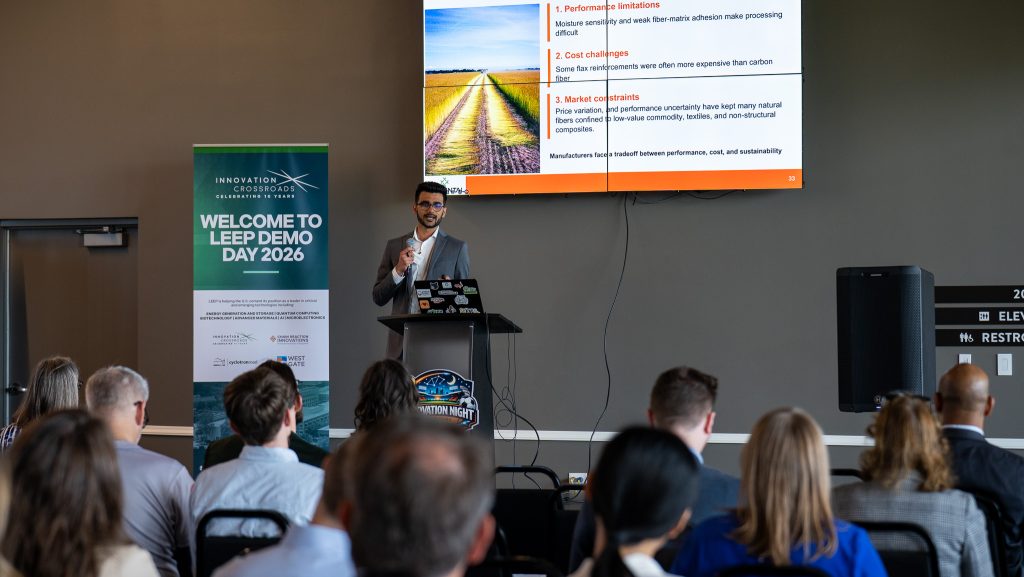
Chaudhary started Innovation Crossroads with the company name “Aligned Composites Technology,” and is leaving with the name “Elemental Composites.” He said that through the course of the program, the market fit for his fiber-reinforced polymer composites (FRPs) became increasingly clear. He found a sweet spot within the mobility sector and with sporting goods. Read more about Elemental Composites.
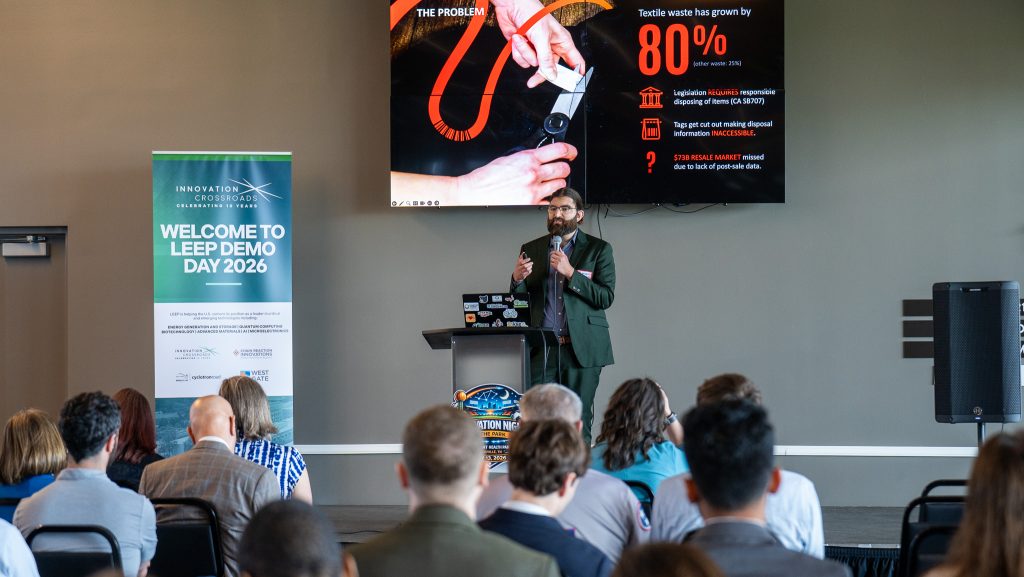
Iezzi shared about his company, Fibarcode. He has been building “the thread that is read,” which is a scannable fiber that gives clothing recyclers information to preserve and reuse articles. His technology directly promotes circular economy initiatives. Read more about Fibarcode.
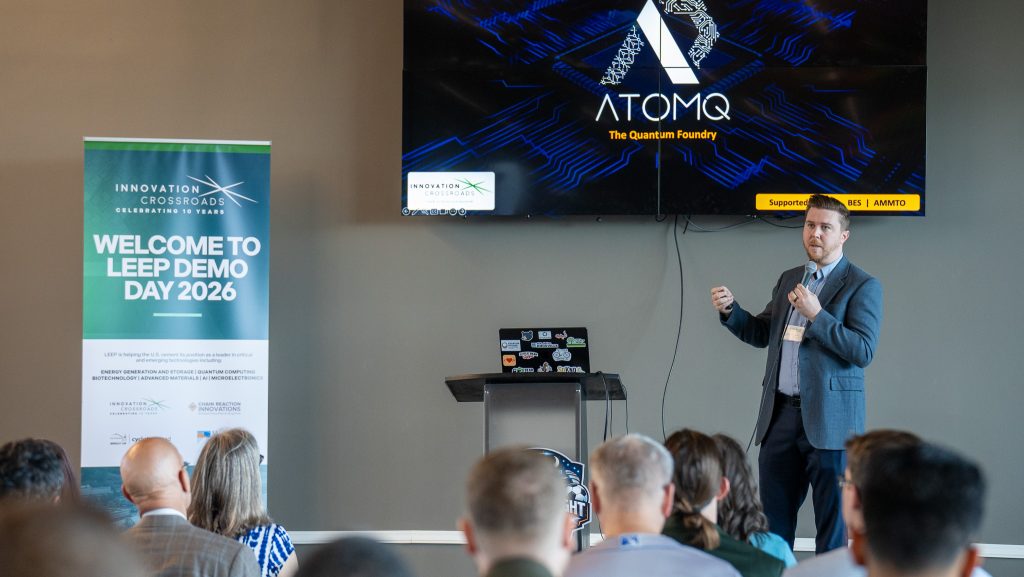
Roccapriore enticed attendees with a run-through of his innovations with AtomQ. He co-developed a method using electron microscopy that could move atoms in a controlled, non-destructive manner within a material. By manipulating atoms within a material, his technology could enable the creation of more reliable and scalable qubits, pushing the field closer to realizing the full promise of quantum computing. Read more about AtomQ.
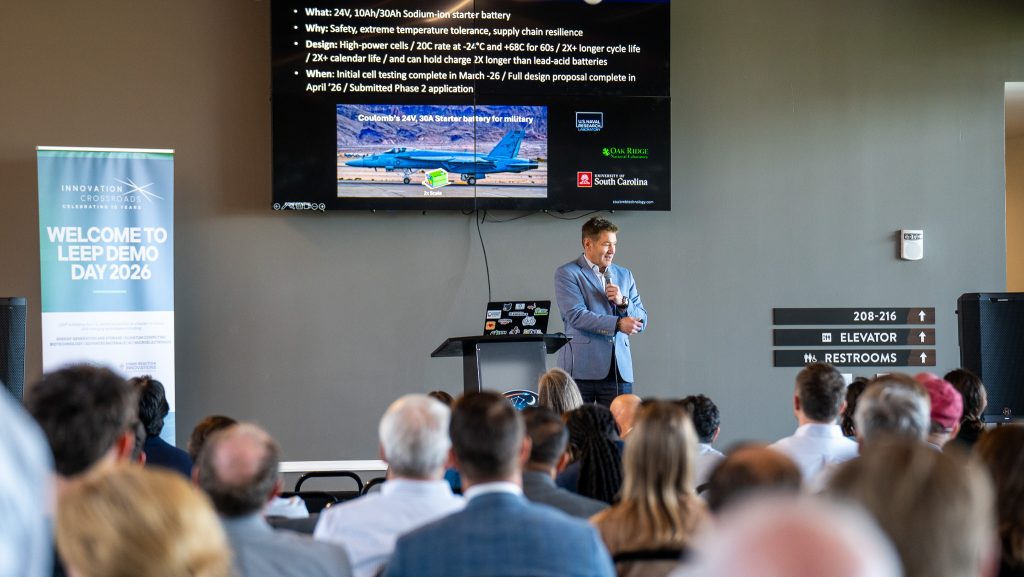
And Vosburgh, the founder of Coulomb Technology, and a recent PYA Ballard Innovation Award finalist, shared about his sodium-ion, zinc, and manganese dioxide batteries as an alternative to traditional lithium-ion batteries. Read more about Coulomb Technology.
The day-long event concluded with a community outing to the One Knox soccer match, with a night-long theme of innovation. Throughout the game, innovators from the LEEP nodes were able to represent their businesses at booths on the concourse.
Read more from the Innovation Night at the Park Investor Pitch.
Like what you've read?
Forward to a friend!