

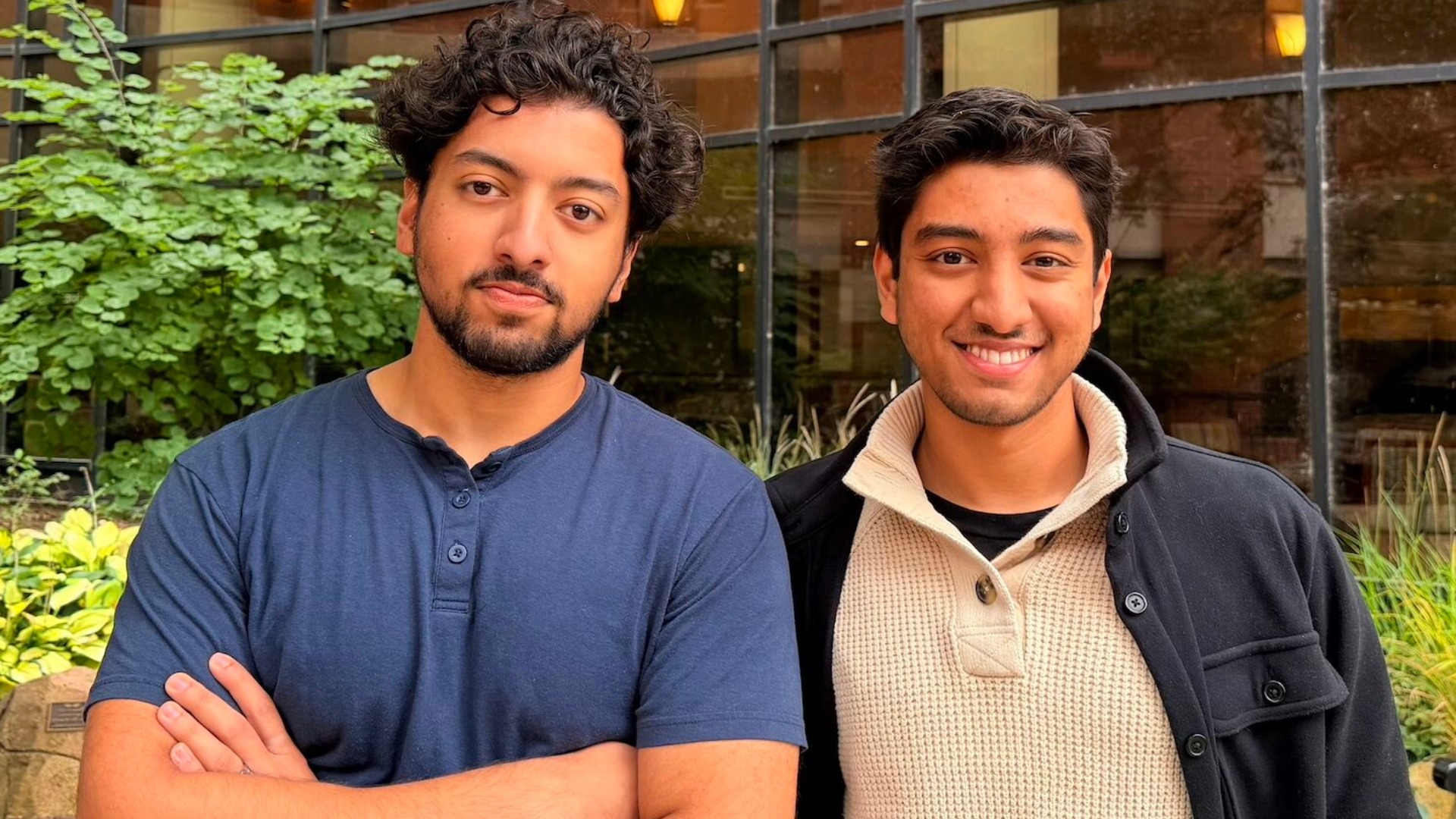
Scaylor founders are scaling a data unification platform, and you can watch them build 24/7
Using a 24/7 Twitch stream, the founders of Scaylor are showing everything it really takes to build a data unification startup from the ground up.
Streaming is big time. YouTubers stream their morning routines, video gamers stream their campaigns, and some influencers just chat away – answering questions from fans and viewers. It’s a huge industry.
A pair of brothers, Shazor and Shaheer Khan, the founders of Scaylor, are using streaming differently. They are turning on Twitch to give people an inside look at what it takes to build a high-growth startup. And their transparency throughout the process has encouraged other entrepreneurs in Chattanooga to follow suit.
You may be wondering…. How is that possible? What about client data? Trade secrets? Proprietary code?
Rest assured, the streaming isn’t up close and personal. Viewers cannot depict dashboards, but rather they take a bird’s-eye view of the creative, early-stage startup process at the Brickyard in Chattanooga.
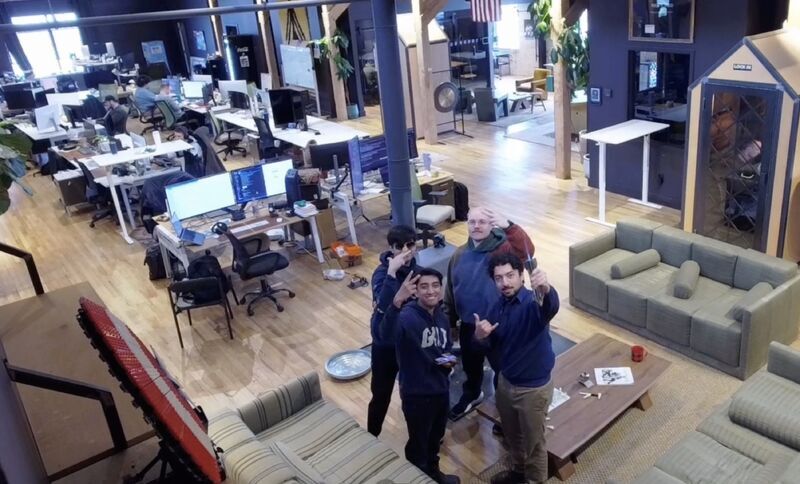
Shazor laughed, recalling how it started.
“The camera used to be on my laptop, and it used to be my brother’s and my face. But people would jokingly do annoying things behind the camera, while we would be streaming. It was a learning lesson,” he laughed. “The bird’s eye is less distracting for everyone.”
Today, you can watch Shazor and Shaheer building their startup, Scaylor, alongside other members of the Brickyard in Chattanooga.
Scaylor is unifying data into one platform
In the age of data glorification and data-driven decision-making, the Khan brothers see a shortfall for middle-market corporations. These companies collect a bunch of data, but it’s all pouring into different platforms, generating separate reports, and requiring several departments to gain simple insights.
“You’re looking through four to six different software systems and data sets to put reports together. And in our experience, we’re hearing that there’s on average a two-week turnaround period between asking for relevant data and having it presented to upper management,” Shazor said.
A big part of the problem is that platforms like HubSpot, QuickBooks, Workday, and other applications don’t speak to one another. Scaylor would sit atop all three, sending data to a translatable interface for the user to access.
Shazor said it operates like a large language model (LLM): the end user can ask a question or provide a prompt, and Scaylor returns an answer. In the sense that the end user can ask a question or provide a prompt, and Scaylor will present an answer.
How to use hard data to answer subjective questions
After creating the user interface, the Scaylor team quickly discovered a challenge. A manager may use specific phrasing to ask for one dataset, while the employee may describe the same dataset differently. There has to be unification, not just of the data, but of the people asking for it.
For example, a sales representative may want to learn about client retention. The marketing team calls it customer churn. The CEO is wondering why the company is having to replace so many revenues month to month.
“We’re much more of a context management company than we are anything else. People label things differently. So, our platform consistently says: Here’s the data we’re presenting to you. This is our understanding of your definition and the timeframe the data collection falls in. Is that correct?” Shazor explained.
He said that he and his brother spend time during onboarding with each service line to help teams better understand how to work with Scaylor.
Building as brothers with bold campaigns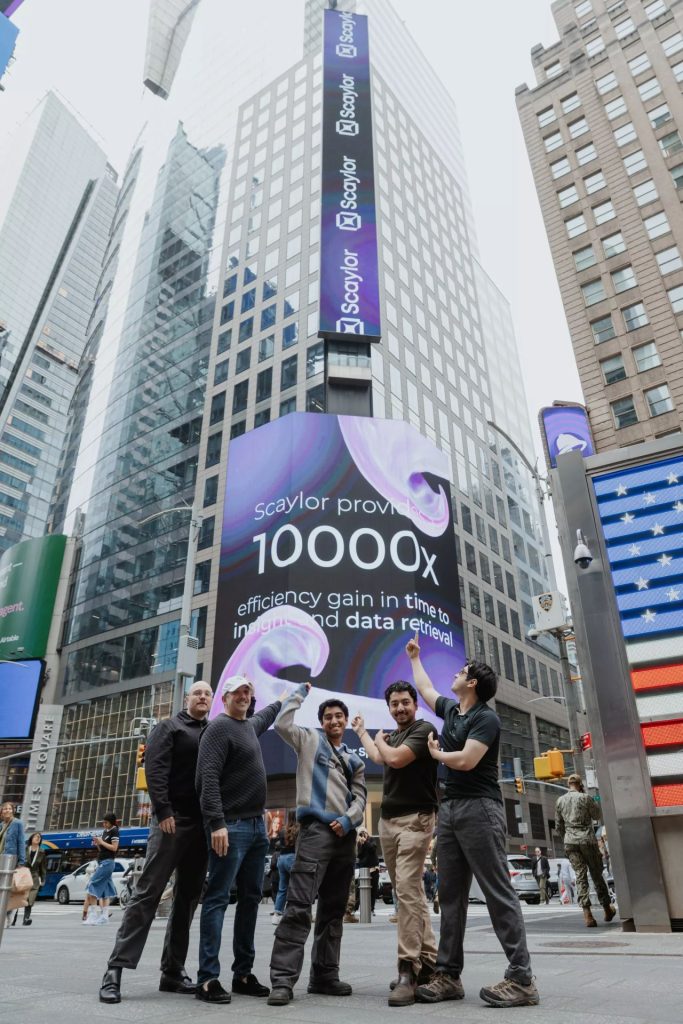
Shazor said he and his brother, Shaheer, are a “perfect match” when it comes to cofounders. Shaheer focuses on the operations and the day-to-day with client interfacing and problem-solving. This allows Shazor to focus on perfecting the product, pitching, and selling.
Plus, together the two have big, bold ideas for how to get their data unification system in front of key customers. The Twitch livestream is one example, but not the only one.
Recently, the brothers sent $2,000 worth of Pro V1 golf balls to the first ten prospects who took a call with their team. Then, the Scaylor team bought a billboard now on display in New York Times Square. Next, Shazor is planning to do some sort of cigar campaign. The list of ideas goes on.
Brickyard as a building block
The Khan brothers learned about Brickyard the same way many founders do. Matt Patterson and Cam Doody, the founders of Brickyard, reached out after watching Shazor in Chicago.
“Matt reached out and said that he was interested. But, he said Brickyard probably wasn’t a good fit for us, as it’s not a good fit for most founders,” Shazor recalled. “I thought that was a strange note to receive from a VC. I was definitely intrigued.”
Shazor took the call, learned about the Brickyard mentality, booked a flight to visit Chattanooga, and was hooked.
“When we saw everything in person. We were like, Whoa. This is a very different environment. Working in Brickyard is an experience like no other. Building a startup is a very specific time in your life. But the early-stage of zero to one is even more specific,” Shazor said.

Since the Scaylor team moved into Brickyard about one year ago, they have learned and grown a lot.
“There’s a lot that goes into it. And I would be lying if I told you it was all easy. But the community here is ride or die. We celebrate and cry with one another,” Shazor said.
But for now, the Twitch camera stays on, and the Scaylor team is back to working on their next bold campaign to onboard additional clients that need data unification.
Like what you've read?
Forward to a friend!