

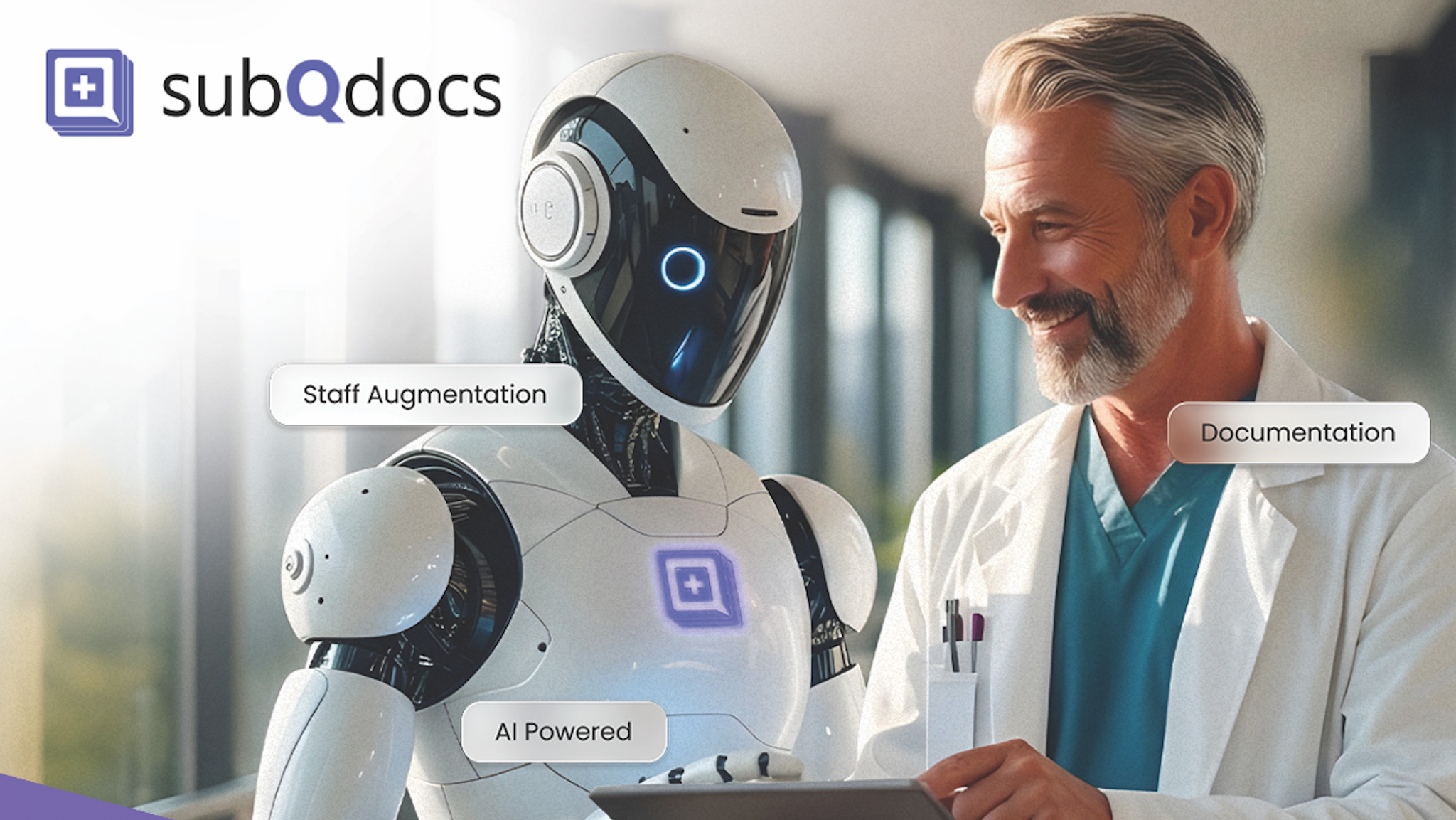
Nashville-based subQdocs is building the AI-native future of dermatology
In just 18 months, subQdocs has gone from concept to contracts — and Tennessee’s investor community is paying attention.
A four-doctor dermatology practice typically runs off a staff of 20. But most of those people are not treating patients. They are chasing paperwork, fielding refill calls and sorting through faxes.
Jason Judd, a data scientist with a habit of building companies that optimize, knew there had to be a better way.
He teamed up with Dr. Adrian Tinajero, a board-certified dermatologist, to co-found subQdocs, a technology platform that “unleashes the power of documentation intelligence for dermatologists.”
The company is currently working on a seed round with involvement from well-known local investors, including Market Square Ventures and Zap. Independent Dermatology Exchange (IDEX), a consortium of 950 dermatology practices united for collective buying power, is also participating. This partnership allows subQdocs to truly be “built by dermatologists, for dermatologists, and funded by dermatologists.” This raise follows a $1.1 million early round last year.
Teknovation recently interviewed Judd to learn more about the startup’s traction and what it means for the future of specialty medicine.
Q: You describe subQdocs as “beyond the Electronic Medical Record (EMR).” What does that mean in practice?
“We’re building an EMR but that’s not actually our core focus. Our core focus is staff augmentation. My goal with all of the software we build is to automate decision-making so that we can take care of 80% of the easy problems, so that physicians can spend their time on the real ones.
Think about inbound doctor phone calls. We believe 40 to 60% of those could completely go away. AI can schedule, reschedule, handle patient prescription refill requests, pull from past visit notes and relay that information back to the patient. A front desk can receive 300 faxes a day. AI can read, parse and structure them and take action based on their content. And inside the exam room, we’re generating the notes, the billing codes, the prescriptions, the labs, the pathology. The whole workflow.
Plus, the AI is constantly learning as it works. It has a memory. So if a physician says ‘Accutane’ and consistently prescribes the generic equivalent, the system recognizes that pattern. It learns to fill in those gaps.”
Q: This technology is designed to reduce the number of entry-level jobs in specialty medical offices. How do you respond to that?
“Today, a practice with four doctors is going to have a staff of 20. We believe that could be cut in half. Our goal is to eliminate the mundane tracking and coordination work that nobody wants to do anyway. Yes, it results in a smaller staff. But that smaller staff is doing higher-quality work for higher pay. The complexity of the work actually increases, and we anticipate compensation goes up alongside it.”
Q: We see how this helps the staffing side of a practice. How does this technology help the patient?
“What’s most exciting to me isn’t the technology, although I’m told the technology is really cool. What we’re after is an experience inside the dermatology office that makes anyone who sees it stop and say, ‘Oh my gosh, that was different.’ The reason it’s different is because patients recognize they’re getting better care.
Imagine you’re in the exam room and a prescription is flagged in real time for a conflict with another medication right there while your doctor is there. That doesn’t exist today. Today, you find out at the pharmacy four days later. Our goal is to take care of patients as fast as we have information. And right now, that doesn’t always happen because we’re pretty bogged down by process.”
Q: AI is everywhere right now. How does this product stand out?
“We recognize everyone is going to put AI on top of every healthcare software. But what we believe is that in the EMR space, the big incumbents are not going to be successful for a couple of reasons. One, bolting on AI after the fact is severely limiting technically. And two, they’re not going to be able to systematically pivot and move. Their way of thinking is just different. Ours is built with AI in mind from the ground up, and as a startup, we can systematically be different.”
Q: What does your current pipeline look like, and where is the business headed?
“Right now we have onboarding contracts ranging from $300,000 up to $4 million. We have two deals in progress that together represent $2 million going out right now. Everything is exploding at once, which is great. There were definitely quiet stretches when we were just getting started. We are not on a mission to do a quick flip sale, which is happening a lot right now with AI companies. Our goal is to build something long-term and sustainable.”
Q: Why Nashville? What does the city offer a health tech startup like subQdocs?
“Nashville is a medical hub, and I live here. It made sense to plant our headquarters here. The energy continues to grow. There’s more happening every year. We’re excited to be part of a tech community that’s even more vibrant now than it was two years ago. You can feel the momentum, and not just because we’re in it.”
Connect with Jason Judd on LinkedIn.
Like what you've read?
Forward to a friend!