
ApexAI is building independence for people with vision loss
"Our goal is to give every vision-impaired person the independence they deserve through tools they can truly rely on," said ApexAI's founder, Maged Shoman.
When Dr. Maged Shoman presented his research findings at the Transportation Research Board Annual Meeting, he was expecting to impress folks in the transportation safety sector. But one of the conversations that ensued led him down a different path entirely.
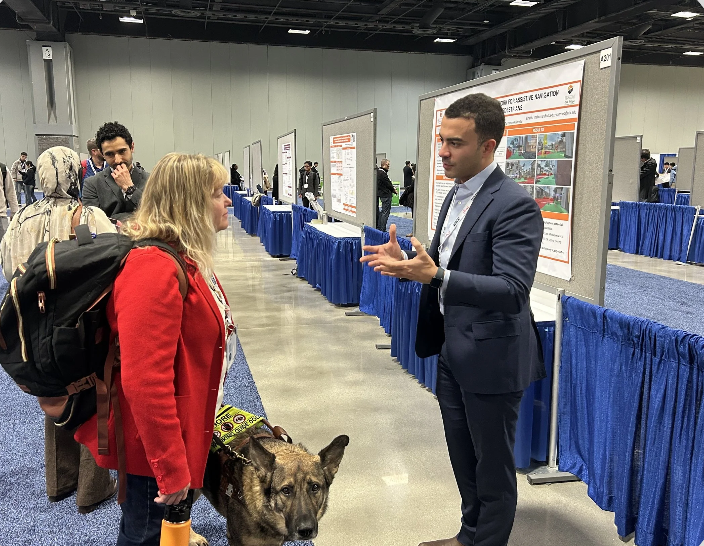
“Her name is Suzetta, and she is a vision-impaired pedestrian safety specialist with a guide dog. I was very engaged in our conversation to the point where I thought to myself, Our technology could make a real difference here,” Shoman said.
That one conversation opened his eyes to an entire population of people who need help safely navigating every day. And it helped Shoman turn years of research at the University of Tennessee into one of the East Tennessee startup ecosystem’s companies to watch.
His company, ApexAI, built ApexVision to safely guide people with blindness or vision impairment.
A pivot in the right direction
Shoman is a research assistant professor in Intelligent Transportation Systems with the University of Tennessee-Oak Ridge Innovation Institute’s (UTORII) Transportation Convergent Research Initiative. At first, his research was focused on how computer vision and deep learning can aid driver safety and logistics for smart cities and intelligent transportation systems.
Most university spinoffs start with an on-campus innovation, then work backward to identify market fit, find customers, and prove commercial viability. With ApexAI, the pathway looked a little different. Shoman already had the research, and after speaking with Suzette, he realized the potential of his technology in a new sector.
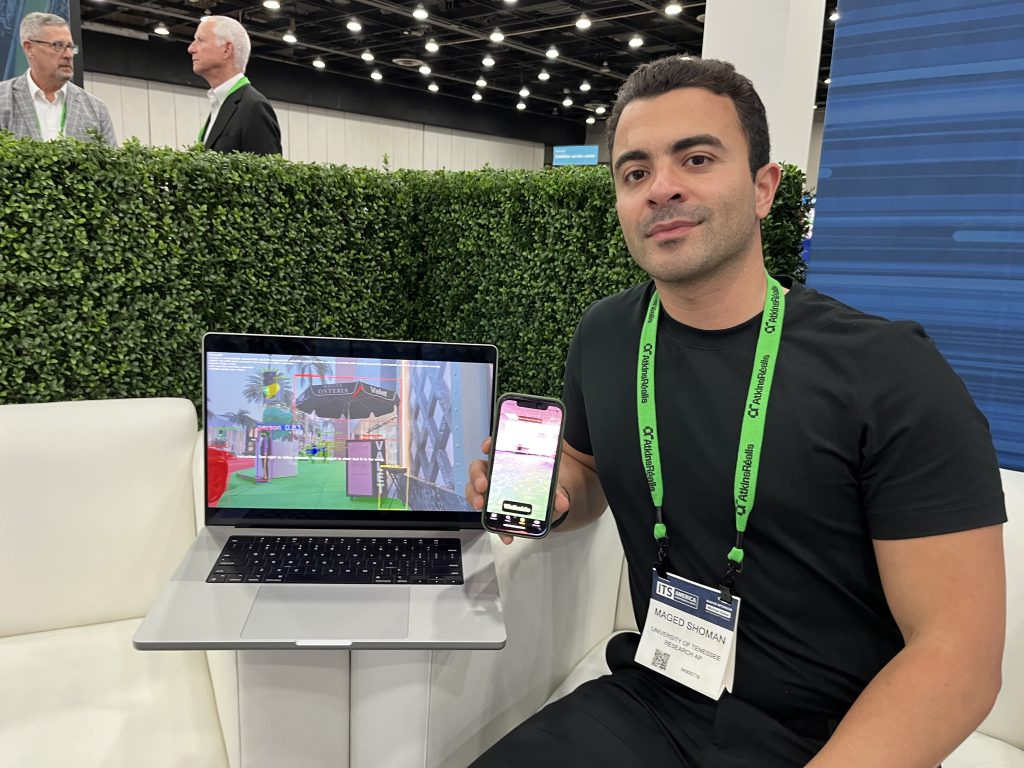 For Shoman, the work also has an unexpected personal draw.
“My parents have mild visual impairments, and I grew up seeing how much they suffered while navigating. I’m building something I wish they had,” he said.
Shoman began to notice that current computer architectures, software, and hardware already have the untapped potential to aid people with vision impairments. But unfortunately, most technology-driven solutions have struggled to understand the need, often due to high costs, clunky software, and/ or power requirements.
Meanwhile, traditional (and sometimes expensive) methods like canes, guide dogs, and human aides have continued to be the preference for many people.
For him, it’s a signal that the market is ripe for innovation that actually works.
How does ApexVision work?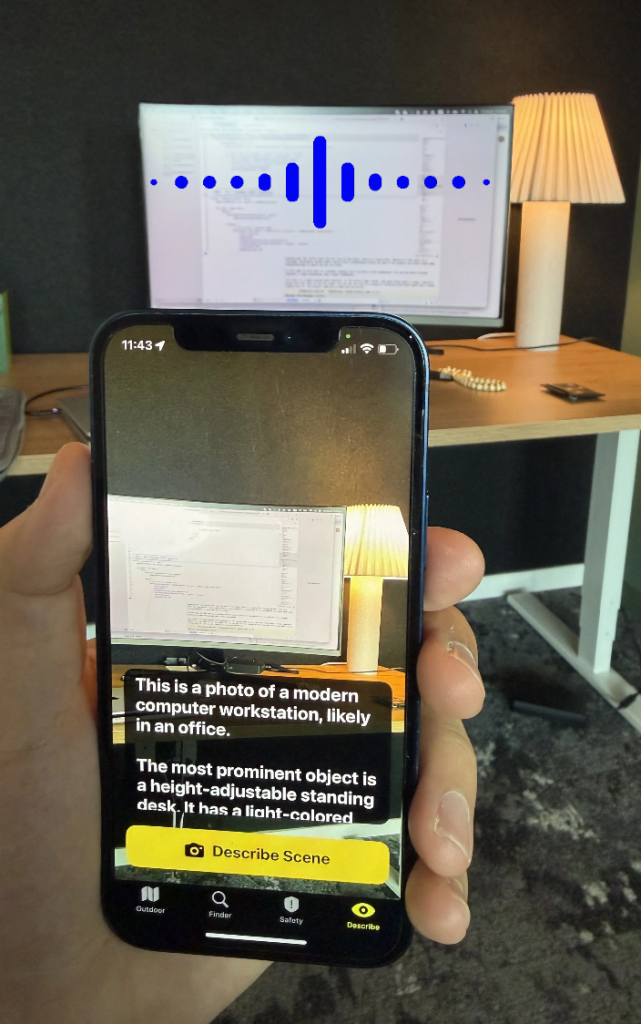
There are two phases to ApexAI’s technology: the first lives on mobile phones, and the second lives in wearable glasses.
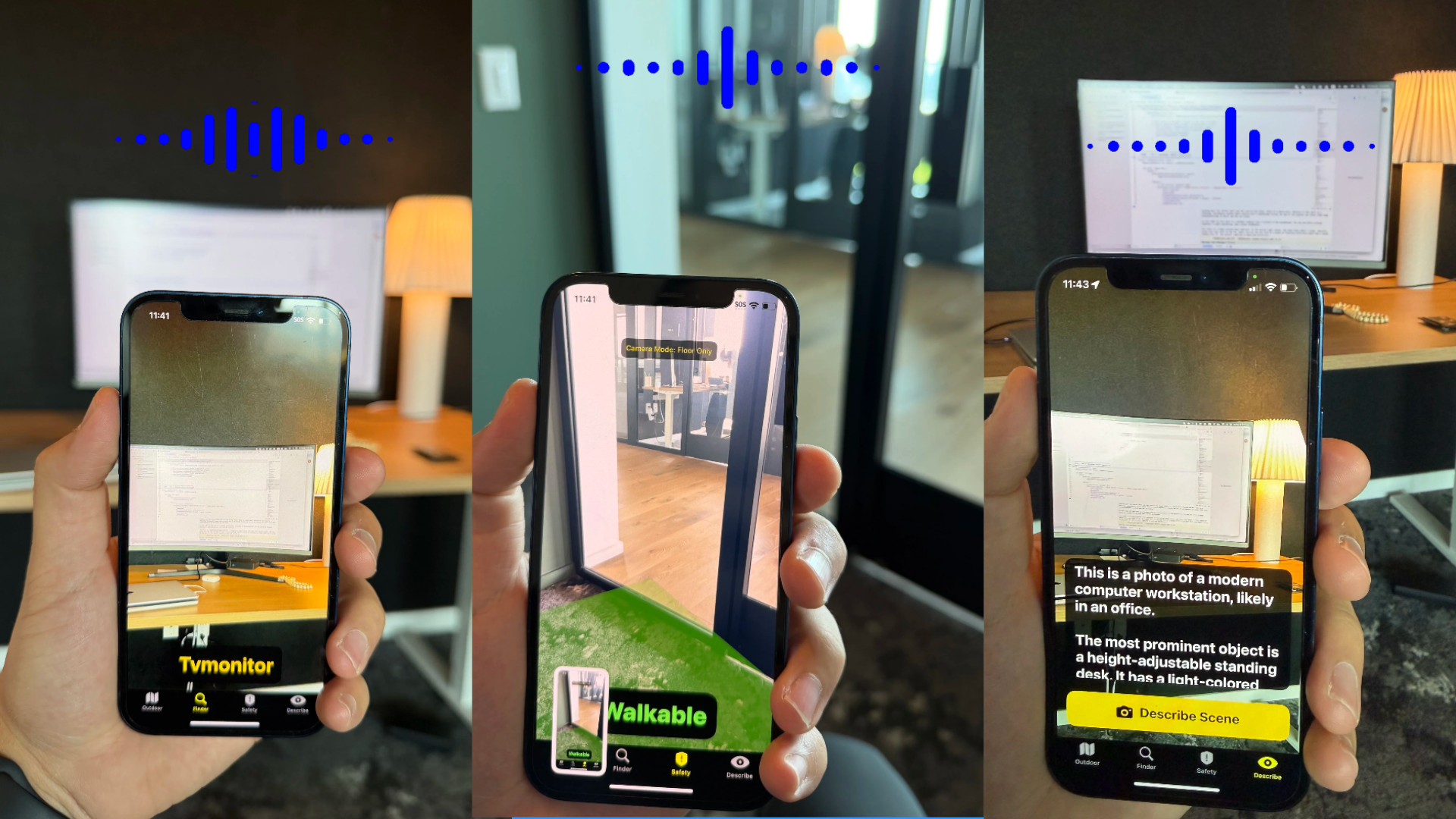
ApexAI is essentially a live-AI assistant for navigation, discovery, and description. It operates in three modes: finder mode, safety mode, and describe mode.
Finder Mode is, as it sounds, a way for people with vision impairment to find things. For example, if someone with sight loss sets their glasses down, they can use ApexVision to help locate the pair. It is voice-activated, directional audio that guides users step-by-step.
Safety Mode helps people get where they’re going without falling or ending up in the middle of a busy road. Indoors, that could sound like audibly helping someone navigate up a steep flight of stairs. Outside, it might mean audibly helping a user avoid potholes, sidewalk construction, or uneven pathways.
Describe Mode is a live description of the scene around the user.
What Shoman is most excited about is ApexAI’s ability to operate entirely on a local device, with no data stored in the cloud.
“It keeps the users’ information 100% private, so they don’t need to worry about whether what they’re looking at through their camera is being shared, stored, or captured in data collection,” Shoman said. “That will also give users the confidence to use the app securely.”
Seeing the impact
Shoman officially launched the business in 2025 and has already received feedback to further iterate on his models. A lot of that feedback came through his participation in the NSF Mid-South Innovation Corps (I-Corps) program, which encouraged him to begin the customer discovery process. Many of those calls turned into early-stage customers.
Now, Shoman’s attention is turned toward building awareness of this product, and he has had no shortage of opportunities to do so.
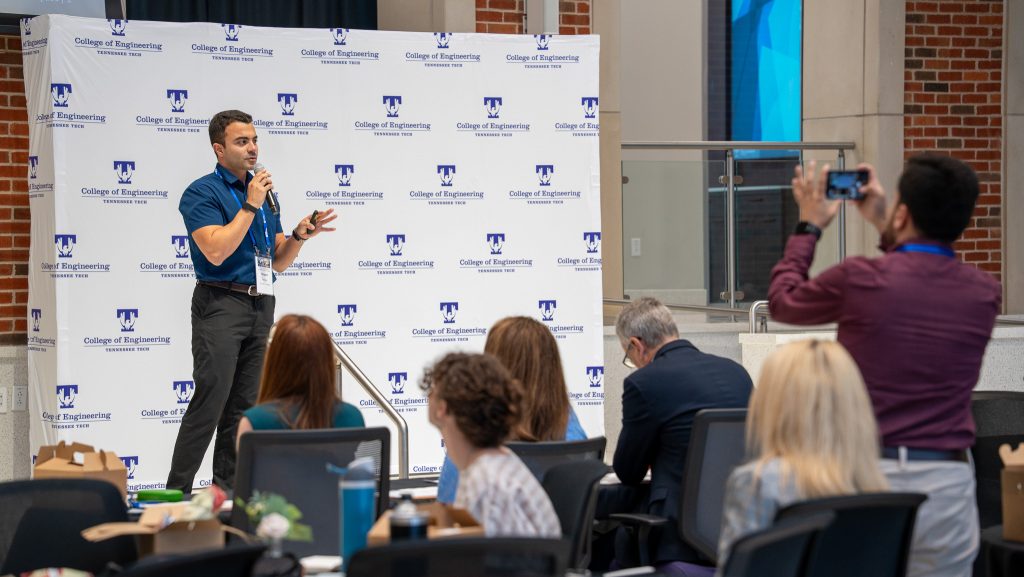
Early in 2026, Shoman presented at Codestock, winning the audience vote for the most impactful company. Then, he was one of 17 founders to present as a part of the inaugural Innovation Night at the Park in Knoxville, and most recently, he presented ApexAI to a room full of AI innovators at the AITechX ‘From Lab to Market’ event at Tennessee Tech University in Cookeville.
“There’s deep satisfaction in building something that directly improves lives,” he said. “Our goal here is to eventually give every person, whether full blindness or any level of impairment, the independence that they deserve, through tools that they can rely on.”
Right now, on the ApexAI website, interested users can join the waiting list. Right now, on the ApexAI website, interested users can join the waiting list to test ApexVision for free. With strong momentum in grants, accelerators, and community partnerships, ApexAI is hoping to scale its impact far beyond East Tennessee.
Like what you've read?
Forward to a friend!