
Tennessee AI startups pitch their businesses at ‘From Lab to Market’ event | Enterprise Sensors Systems takes home top prize
What better way to punt these ideas into the real-world than a pitch competition built into the heart of the day’s programming, giving ten Tennessee startups a voice and a chance at a check?
Tuesday’s ‘From Lab to Market: Accelerating AI Innovation’ event hosted by AI Tennessee‘s Industry Innovation Consortium and AI TechX at Tennessee Technological University was all about speeding up the transition of academic AI research into real-world deployment, commercialization and job creation across Tennessee.
The competition was moderated by Nanda Coimbra of the University of Tennessee, Knoxville Office of Entrepreneurship and New Ventures. The following served as judges:
- Jenny Vipperman, president and CEO of ORNL Federal Credit Union
- Amy Barnas, account executive at Google Public Sector
- David Bell, director and chief AI officer of Universities Space Research Association (URSA)
Who walked away with a check
Judges named first, second and third place winners. A fan favorite was also awarded to the startup the audience felt had the strongest path to commercialization, addressed the most distinct challenge in the market and showed the greatest potential to positively impact Tennessee’s economy.
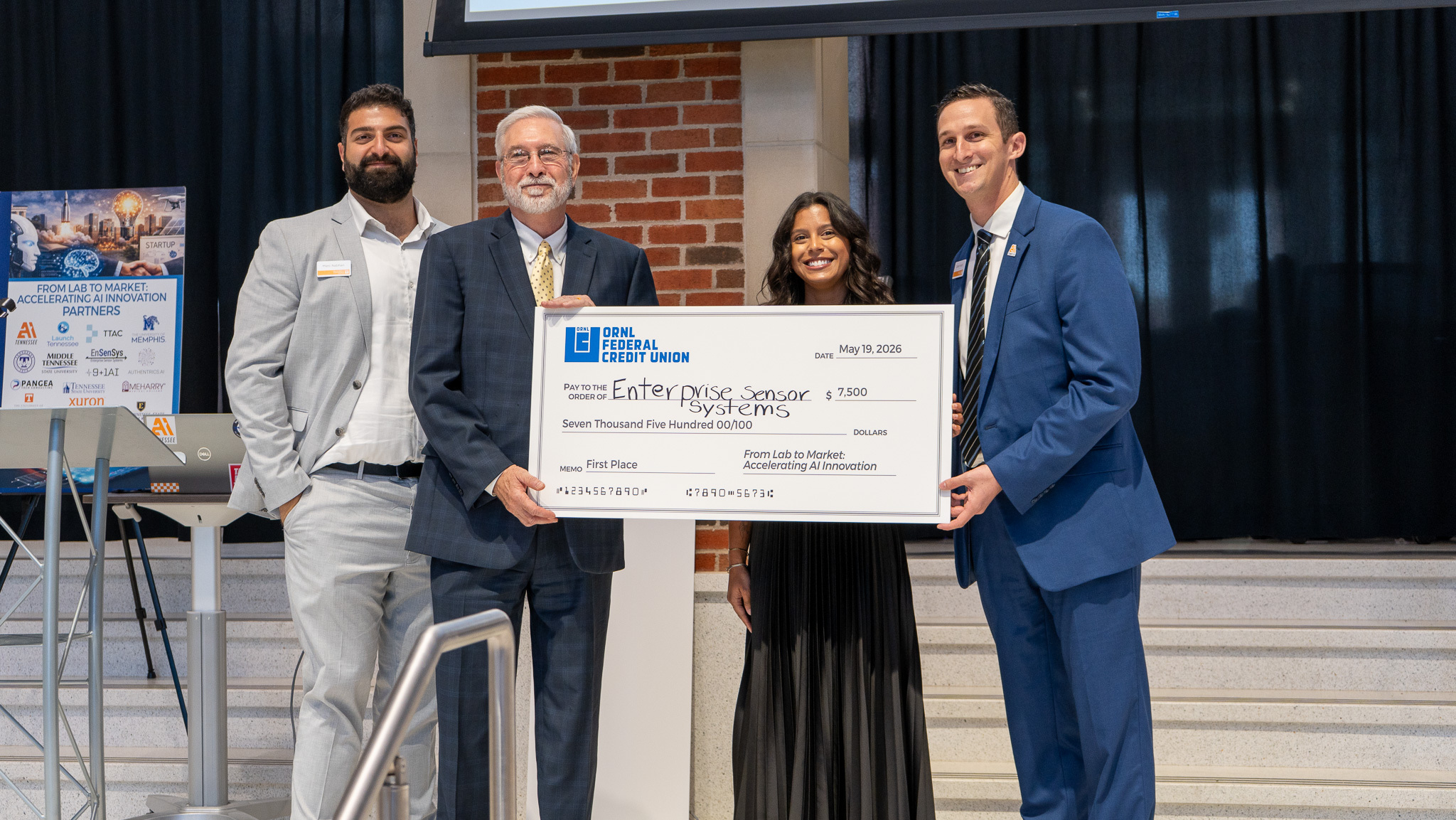
First Place: Enterprise Sensor Systems – $7,500
Bovine respiratory disease accounts for roughly half of cattle deaths in the U.S. each year, and getting a diagnosis currently takes too long. Chief Animal Health Officer James Buck pitched Enterprise Sensor Systems, a chute-side device that identifies the disease in under 60 seconds with no lab, no offsite samples and no biowaste.
Second Place: 9+1 AI – $5,000
Half of heart failure diagnoses happen when patients arrive at the hospital, which is often too late. Co-founder Dr. Bob Davis and 9+1 AI works to catch those cases earlier. The company delivers an instant eBNP reading from any ECG, a result that today takes a few days through a traditional BNP. They are working on a partnership with Le Bonheur Children’s Hospital in Memphis and are 18 months into an three million seed round.
Third Place: CuesHub – $2,500
Dr. Santosh Kumar has spent 18 years studying stress and built the CuesHub app to help people manage it better. The platform draws on more than $50 million in grants and research from 25-plus universities, personalizes recommendations based on 30 days of a user’s data and has shown a 10% stress reduction in a nationwide study. He’s currently targeting executives. With this data, executives can better know which meetings or topics are triggers, if they are in a calm state to negotiate a deal and much more.
Fan Favorite: Xuron – $500
Ian Nott uses AI and extended reality simulation to make medical training more effective. Xuron targets continuing medical education and is closing in on 10,000 users, with a flagship program focused on better care for opioid-risk patients.
Other startups that took the stage
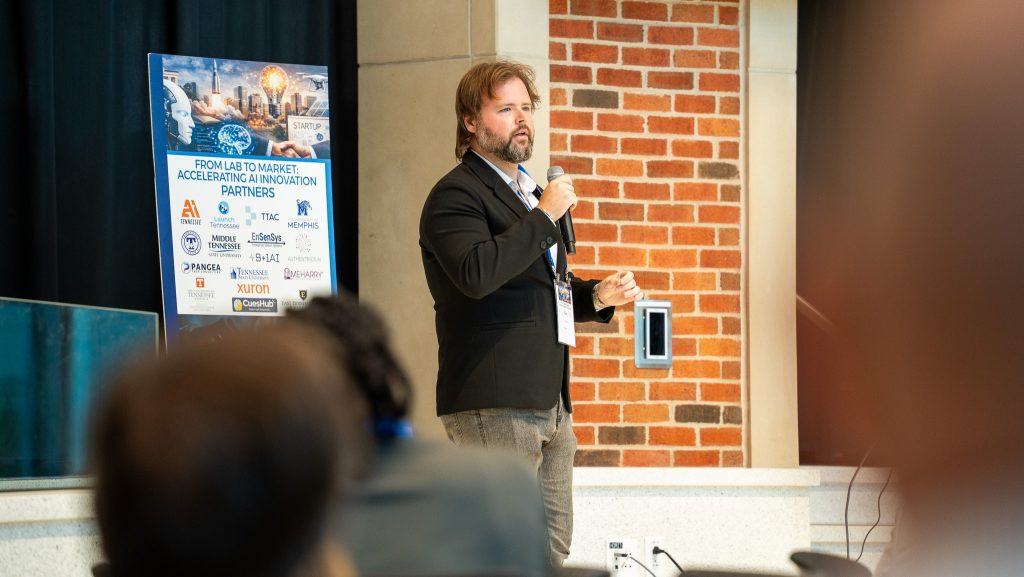
HPC Intelligence: Dr. Tony Skjellum is building a knowledge engine for the programmers who keep supercomputers running. These engineers take three to five years to train and earn great money at frontier AI labs, but there simply aren’t enough of them. Skjellum’s platform is designed to amplify the engineers’ customers already have, with all code staying behind their own firewall.
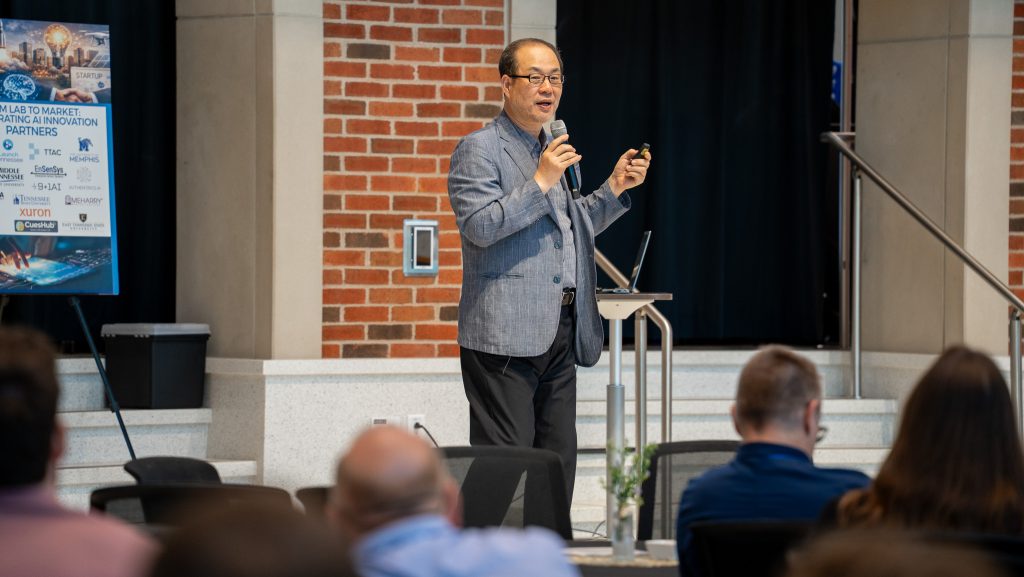
Mappler Lite: Dr.Wansoo Im has spent 38 years in Geographic Information Systems (GIS) and is putting that expertise to work for public health. His platform helps communities understand how environmental factors like food access, air quality and neighborhood conditions shape health outcomes. With this info, he hopes data can inform policy decision-making.
Pangea: Co-founder and CTO Chris Jones’ tech is built on one fundamental question: how do you actually know your AI is working? His platform measures AI system health on a mathematical basis. The Tennessee State University incubator-based company is already working with Deloitte, EY and medical imaging partner LucidHealth for deployment.
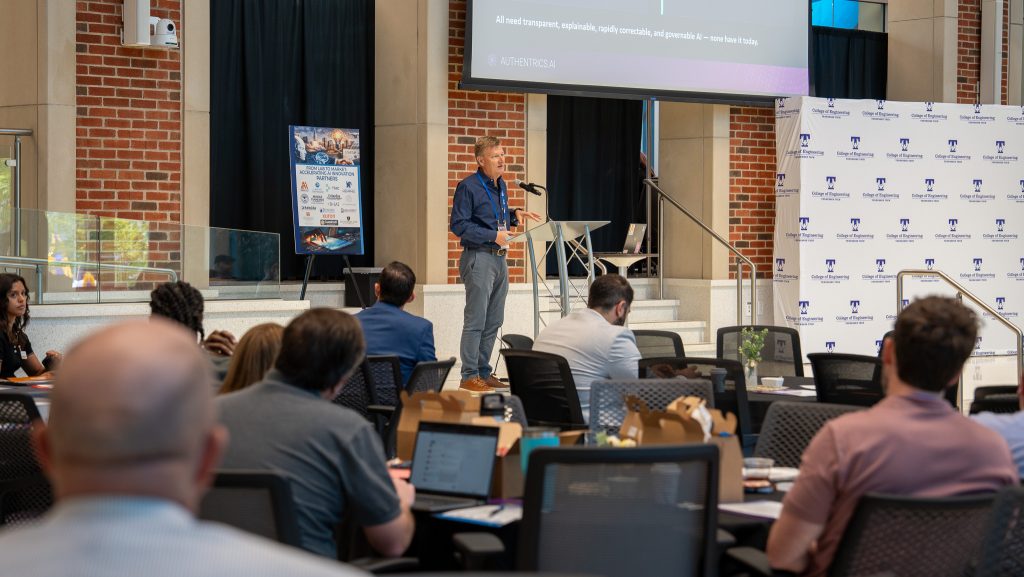
Authentrics.ai: John Derrick pitched his Machine-Learning Resilience Infrastructure (MRI) software, which offers a new layer of governance and transparency for organizations leveraging AI. He is working on a seed round with $1.5 million already committed.
MARVEL: Dr. Shehenaz Shaik has developed a learning framework that classifies voice pathologies from audio recordings. Built using a Bridge2AI-Voice dataset and trained on more than 16,000 recordings, the model achieves nearly 70% accuracy.
Apex AI: Dr. Maged Shoman built a navigation app for people with vision impairment after seeing the limitations of existing solutions firsthand in his own family. The app runs entirely on a smartphone, delivers real-time navigation privately and can help users find objects, identify walkable paths and receive safety alerts without expensive hardware or wearables.
To learn more about Tennessee’s AI initiatives, follow AI Tennessee on LinkedIn.
Like what you've read?
Forward to a friend!