

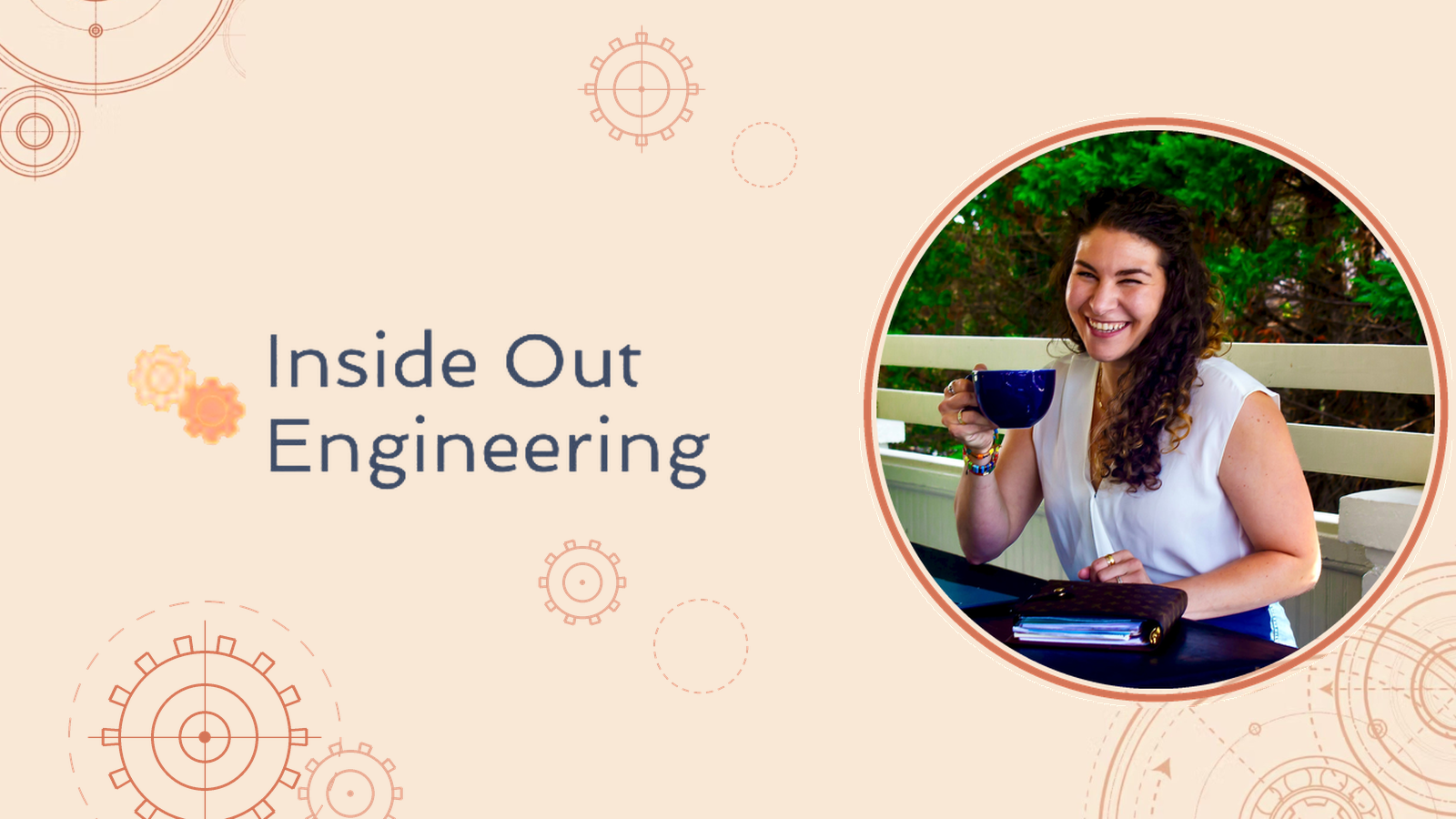
With Inside Out Engineering, Nikki Maginn teaches the next generation of engineers it’s okay to ask for help
Where technical excellence meets human connection: Inside Out Engineering's mission is to spark a lifelong journey of emotional intelligence (EQ) development among engineers.
Nikki Maginn calls an engineering degree “a golden ticket.” It opens doors anywhere. It makes you a fixer, a problem solver for life.
It also teaches some quieter lessons, she says. Don’t speak up. Don’t get emotional. And don’t have problems of your own, because you’re the one who’s supposed to solve them.

“I sought an engineering degree because I was seeking certainty. I was seeking to create order out of the chaos of life,” Maginn said. “You realize as you get into the grown-up world that everything is chaotic. Engineering and physics cannot explain human behavior as much as you desperately want it to.”
Maginn, a nuclear engineer turned industrial engineer, is now the founder of Inside Out Engineering. You can catch her teaching her emotional intelligence programming to engineers at local high schools, the University of Tennessee, Knoxville, and to corporate clients.
Where it all started
Maginn graduated right after the 2011 Fukushima disaster, when nuclear hiring froze. She instead landed in material handling and supply chain. Her career took off when a woman she had never met pulled her into a war room full of executives at their customer, Amazon. Soon, she was briefing vice presidents daily. Wanting other women to have the same access, she started a women’s network at the company.
Years later, a therapist friend in Knoxville asked her to mentor a client, a female engineering student at UT, dealing with sexism at her internship. That student is now pursuing a doctorate in electrical engineering, and the two are still close.
“About two years into our mentorship, she told me, ‘Nikki, I wouldn’t have stayed in engineering if I didn’t have you. I just wish more students had access to what we have,'” Maginn said.
The two launched a mentorship program with the Society of Women Engineers at UT. It wasn’t long after that a director at UT called Maginn. Students kept saying they wouldn’t be graduating in engineering without her help, and the university wanted more.
Now, the UT’s Tickle College of Engineering has asked her to expand the program to all engineers and teach a recurring seminar at UT. She’s also building a program specific to UT’s nuclear engineering department and has a partnership with Purdue University in the works.
Why this matters
Close to 55% of engineers experience some form of mental health distress, with higher rates among women, people of color, LGBTQ engineers and first-generation students.
“Engineers are the least likely group of humans to ever ask for help, because we’re trained not to,” she said. “We are trained to be the problem solver, not have somebody else solve it for us.”
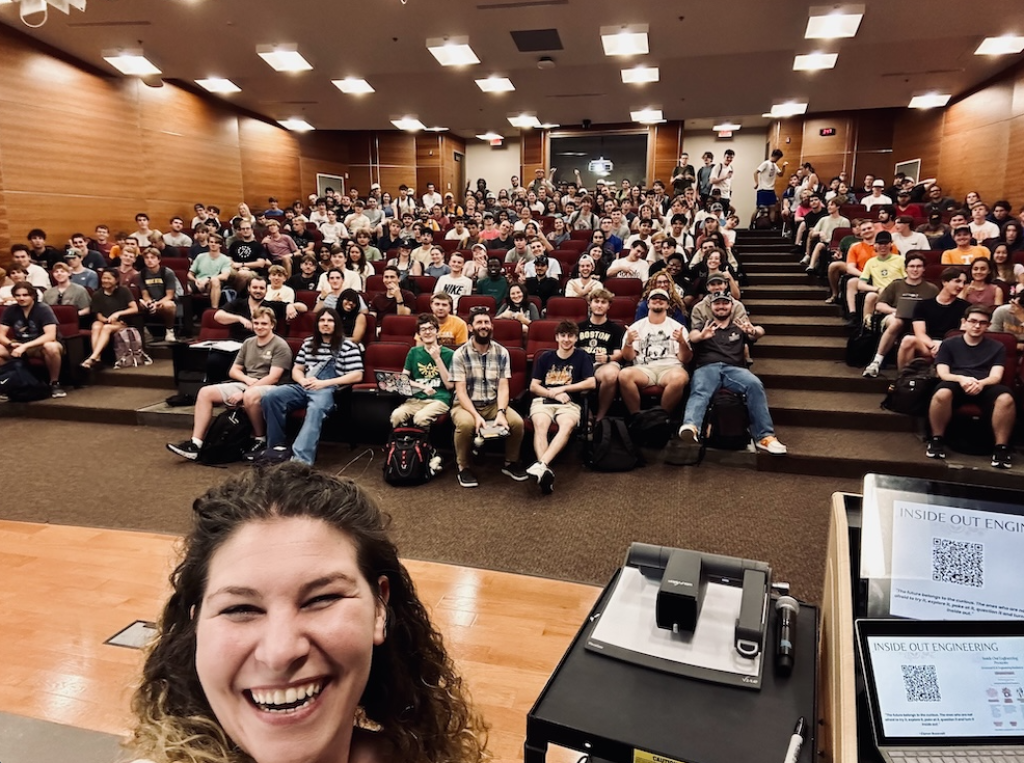
So how does Inside Out Engineering work if the audience isn’t the most EQ-receptive? It’s simple. Maginn avoids therapy language entirely and frames the work as skill-building. She calls it “hiding the zucchini in brownies.” Her curriculum covers three areas: the science of how the brain works, applying engineering problem-solving to personal setbacks, and making real connections without small talk.
The approach wins over skeptics. One male student walked into her first class, saw houseplants, Brené Brown books, and crayons on the tables, and braced for the worst. He found her afterward.
“He said, ‘You’ve changed my life. I just realized I’m a human being, I’m not a machine, and I am not responsible for everyone and everything,'” she said.
Calling on corporate
To this day, when Maginn recounts stories about her students, she truly tears up about the impact she’s been able to have.
While students remain at the heart of her work, Maginn believes the greatest opportunity for impact sits with employers. Engineers already in the field were trained in an era when staying quiet and pushing through was the expectation, even more so than today. Many entered the workforce with deep technical ability but little know-how for communicating across teams, navigating leadership or asking for support.
“This is the work that, yes, I want every engineering student to get, but I also want every engineering adult to get,” Maginn said. “They are out there in the real world, and they need the support more than anyone.”
She makes the business case in a way executives understand. Among her corporate clients, she said, the results show up in project delivery timelines and in metrics that matter to boards.
“Emotionally intelligent employees do things on budget and on time because they respect and value each other at work,” she said.
She wants to work with companies that invest in emotional intelligence training for their existing engineers and connect those companies to universities, building a workforce pipeline that pairs students with emotionally intelligent mentors already in industry.
With East Tennessee’s nuclear sector booming, she sees the moment as great timing for business but also deeply personal. Her grandmother was a “Rosie the Riveter” who designed aircraft carriers during World War II.
“I feel like I’m picking up the baton for the incredible women who paved the way for me to be here,” she said.
Connect with Nikki Maginn on LinkedIn.
Learn more about corporate training and school programming.
Like what you've read?
Forward to a friend!