
UT’s newly-branded Peninsula Innovation District receives national innovation award
The Peninsula Innovation District serves as a gateway to university expertise, helping organizations identify the right partners, discover new opportunities, and explore collaborations that accelerate innovation in Tennessee.
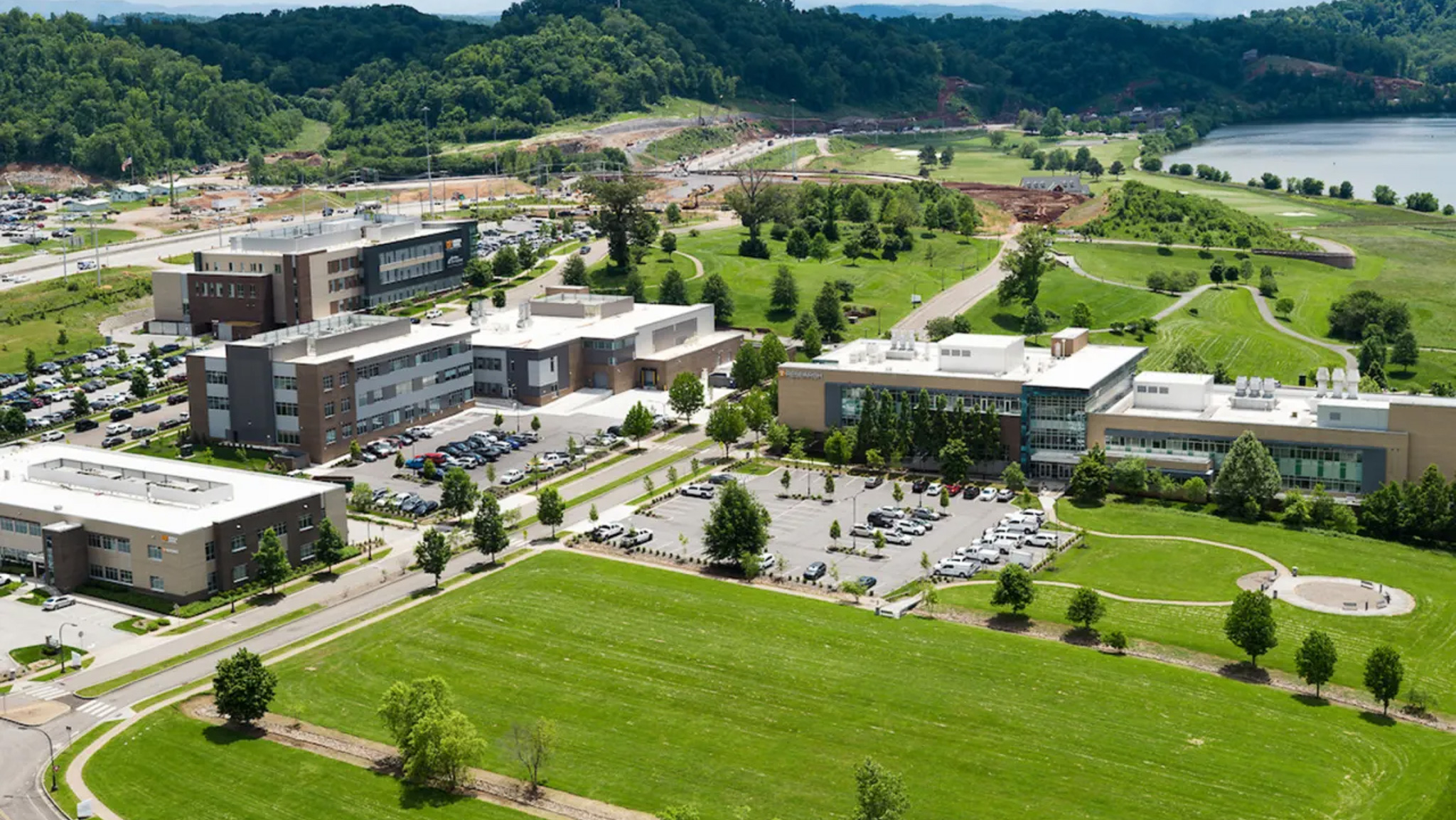
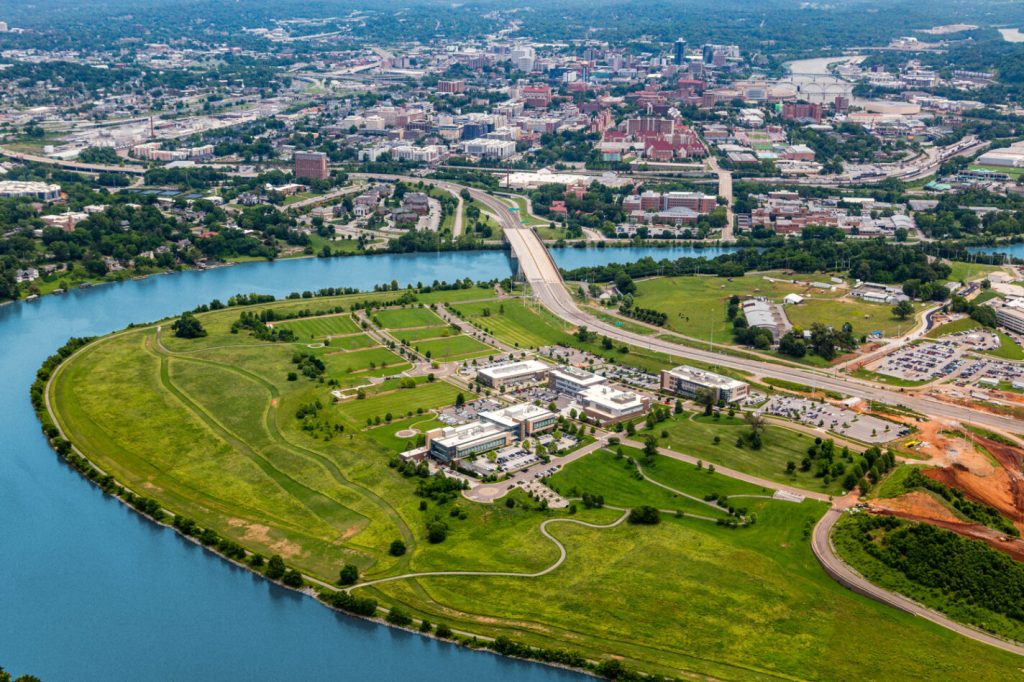
For decades, the University of Tennessee (UT) Research Park at Cherokee Farm, UT Medical Center (UTMC), and the UT Institute of Agriculture sat on neighboring properties, spanning 350 acres. For years, these organizations have operated under their own branding, working in silos, but aiming toward the same North Star goal of attracting high-quality research to East Tennessee.
Now, thanks to the collaborative work of UT System, UT Research, and UT Medical leadership, these three organizations will work together under one united umbrella: the Peninsula Innovation District. The branded district also brings more than $750 million in planned investment and development to the area.
The plan is already paying off, as the Association of University Research Parks (AURP) just named the Peninsula Innovation District the 2026 Emerging Community of Innovation award.

Teknovation sat down with UT Research Park President Brett Malone, who has worked tirelessly to build connections, advance the objective, and build a district that extends beyond university-related research.
This is a brand that we want to extend beyond the university. The goal is to make it easy for entrepreneurs, industry and corporations to operate here.
What’s behind the new name?
If you zoom out beyond the UT Research Park and look broadly at UTMC and the UT Institute of Agriculture, the Tennessee River carves around the land similar to a Peninsula.
Brett Malone, working in step with Dr. Keith D. Gray, president and CEO of UTMC, Keith Carver, senior vice chancellor and senior VP of the UT Institute of Agriculture, and Dr. Deborah Crawford, UT’s Vice Chancellor for Research, Innovation & Economic Development, decided that by joining forces, the three entities could be a stronger magnet for talent, business, and research.
“Of course, we will all maintain our own brands, identities, and strengths, but by creating this umbrella district it makes us easier to locate, market, and focus on our shared goals of growth through innovation,” Malone said.

Together, these institutions present opportunities across industries like nuclear energy, quantum technologies, ag-tech, health and life sciences, and advanced manufacturing.
In the University’s press release, Dr. Gray said it welcomes translational research that extends beyond the hospital system.
The district will create a dynamic environment where researchers, clinicians, and private industry leaders collaborate in proximity to accelerate discoveries, advance patient care, and develop the next generation of treatment innovations.
What makes up the $750 million in planned investment?
The multi-phase master plan for the Peninsula Innovation District is still underway; however, Malone said the next phase is well-identified.
The first phase
It will include two major updates:
- A new park entrance
- The Quantum Foundry
The new entrance creates a bridge between the UT Research Park and UTMC.
This is a big deal.
Since the park’s inception, there has been only one entrance, accessible by heading southbound on Alcoa Highway. The new entrance will create northbound access, where commuters can exit at UTMC and cross Alcoa Highway via an overpass. The Tennessee Department of Transportation (TDOT) shared a visual of the new access point.
“It’s almost like a grand reopening of the park,” Malone gleamed, pointing toward the new entry point currently closed for construction. “We’re hoping to see that construction complete by the end of 2027.”
The UT System announced the plans for the 100,000-square-foot quantum foundry at the end of May. The building will host the Knoxville Quantum Accelerator (K-Quantum) and advance the region’s position as a leader in quantum technologies and systems.
“With the Institute for Advanced Materials and Manufacturing (IAMM) next door, we shine in developing devices and materials,” Malone said. “Our work in the foundry can complement quantum efforts happening in Chattanooga and other parts of the state.”
Plans in phases to follow
In addition to the planned Quantum Foundry, the UT Research Park is also in the early stages of planning for a BioSciences and Engineering Building, whose researchers and entrepreneurs could work in tandem with teams at UTMC. The press release also shared that the UT Medical Center campus is planning a new facility dedicated to medical education and research with a focus on cancer.
And one of the biggest conversation topics regarding the multi-phase Peninsula Innovation District master plan is a 150-room hotel and conference center, complete with an on-site restaurant.
Chrissy Douglas, the Chief of Staff for the UT Research Park, said she’s particularly excited about this development.
“It will allow us to bring companies and industries to the campus through being able to have conferences and dinners here,” she explained. “But, more importantly, something close to my heart is that it will offer extended stays, which will be a great resource to people who have family members at the medical center.”
Thanks to the new entrance, hotel visitors will have easy access to both the research park and UTMC.

Dr. Crawford said these plans represent a bigger purpose and are ultimately the reason that the Peninsula Innovation District was recognized as AURP’s 2026 Emerging Community of Innovation.
[The award] is a powerful affirmation of what happens when researchers, healthcare professionals, agricultural leaders, entrepreneurs and industry partners work together to build something bigger than any single organization could achieve. The recognition reflects the shared vision and momentum behind the Peninsula Innovation District.
Cultivating a community of curious people
“One of the things that I’m most proud of is the fact that our teams have come together to really take building community seriously,” Malone said. “Velocity Coffee (at the research park) is a great example of how that’s already being done – earlier, I saw a brand new governor’s chair at the UT Ag-Institute stop in for a meeting. Innovators from all three institutions come in for coffee and lunch throughout the day.”
Also, on the 14th of October, the research park is celebrating AURP’s 2026 Emerging Community of Innovation Award with a Block party, inviting innovators and partners across the Peninsula Innovation District. Malone and Douglas said this is another example of cultivating community.
That sense of community also leads to curiosity and translational collaboration.

For example, a recent partnership involved specialists from UT’s College of Veterinary Medicine in the UT Institute of Agriculture and UTMC working together on a complex chimpanzee spinal surgery.
Carver said it’s an example of what can happen when community and curiosity collide.
It was a rare example of a veterinary surgeon and a surgeon who operates on people working together. This effort highlights how the peninsula is pulling together expertise from different fields that can make life better for all.
The UT System summarized the Peninsula Innovation District’s role best: It serves as a gateway to university expertise, helping organizations identify the right partners, discover new opportunities, and explore collaborations that accelerate innovation in Tennessee.
For more information, visit the new Peninsula Innovation District website.
Like what you've read?
Forward to a friend!