

Canary Instruments builds real-time radiation sensor for nuclear communities
Canary Instruments says real-time monitoring could build public trust as states like Tennessee scale up nuclear industries.
East Tennessee has long been familiar with nuclear technology, thanks to Oak Ridge’s role in ushering in the atomic age. As a result, the state of Tennessee has built a $95 million Nuclear Energy Fund to support the nuclear resurgence.
However, not every community and not every state is welcoming this industry with open arms. The National Conference of State Legislatures and the Nuclear Energy Institute show that some states like California, Oregon, Minnesota and others maintain moratoriums or restrictions on new nuclear construction, making it hard for new nuclear to get approved.
Plus, some residents across the country also distrust the technology’s safety.
Canary Instruments is developing real-time radiation sensor
The two founders of a startup called Canary Instruments are building a real-time sensor to monitor for radioactive waste and materials, offering a renewed sense of security to communities near nuclear power plants.
Co-founder Walter Xu explained the developing technology this way:

This technology enables nuclear facilities to know in real time if there is an issue. It also serves the community because we can identify leaks in real-time near the source. Then, notify the right people and lead to better, more immediate containment.
Currently, the process for identifying radioactive leaks and waste requires collecting samples, sending them to a lab for processing, and waiting on the results.
The co-founders Xu and Adil Ahmed met through the Department of Energy’s Boost program, which pairs entrepreneurs with technologies from the national labs.
Xu is a California-based design engineer who spent decades scaling hard tech at both startups and major corporations.
Ahmed is a regulatory lawyer who worked for the U.S. Army Corps of Engineers, served as counsel for the U.S. Army, and held a policy role at the U.S. Department of Transportation, where he oversaw projects involving the transport of hazardous radioactive waste.
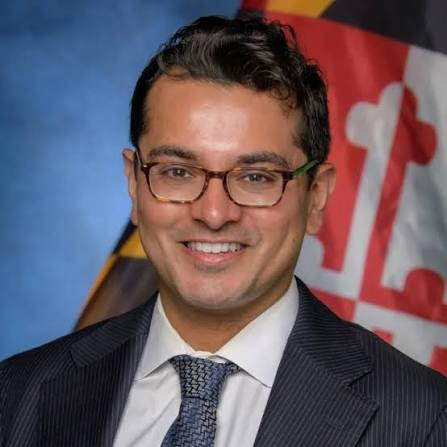
Through that work, Ahmed recognized a critical gap in the nuclear renaissance.
[I realized] how important it was for industry, for government, for society to be able to feel safe and comfortable with what is in their water and what is in their surroundings. We are aiming to provide a sense of assurance and a sense of confidence and a sense of safety that doesn’t exist.
After identifying the problem, Ahmed and Xu began engineering a solution.
“We’re not trying to be a hammer looking for a nail,” Xu said.
How the early-warning system works
The founders said Canary Instruments is building a sensor that detects tritium (a radioactive form of hydrogen) and other low-energy-emitting radioisotopes in waterways near nuclear sites. Canary’s patented sensor uses a solid material that sits directly in the water, so it reports in real time and creates no added chemical waste.
Ahmed and Xu are in the early stages of building and validating the technology with national lab partners.
Over the past year, they also invested significant time and energy in customer discovery by speaking with current and former Nuclear Regulatory Commission regulators, legislators, nuclear operators, and radiological physicists.
Spark connected the company to Oak Ridge
In March, Xu presented Canary Instruments at a pitch competition at the Energy Tech 2026 Conference in Richmond, Virginia. Bill Malkes, the executive director of the Spark Innovation Center, was in attendance and convinced the Canary team to join the Spark Cleantech Accelerator.
“New doors constantly open up, and this accelerator was an obvious choice for us,” Ahmed said.
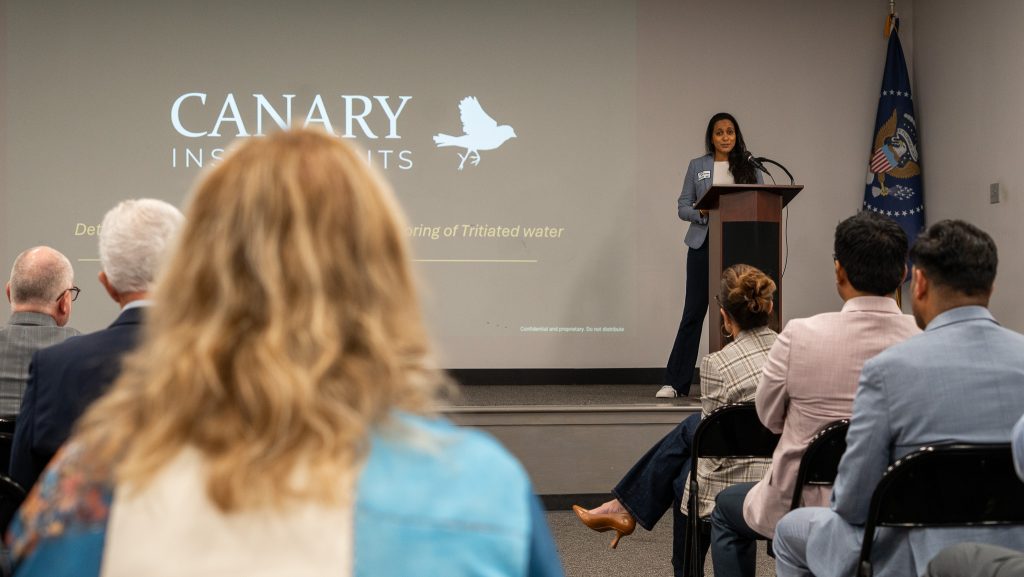
Canary is in the current Spark Cleantech Accelerator cohort in Knoxville and has wasted no time connecting with the nuclear industry in East Tennessee.
“With everything happening here in nuclear, it’s clear that we need to be in this ecosystem for what we’re trying to do,” Ahmed said.
Potential nationwide impact
While the team is currently investing time and energy in Oak Ridge, they are alert to the possibilities nationwide.
One of the most significant indicators of early-stage traction came in the form of a written statement of support from C-10 Research and Education Foundation, a nonprofit near a New Hampshire nuclear plant.
“They basically told us that if our technology existed… and was implemented… they would support the expansion of the nuclear power plant in the area,” Ahmed said. “The public is asking for this. They want this in their communities.”
Learn more about Canary Instruments.
Like what you've read?
Forward to a friend!