

Manufacturing Roundup | What’s the state of manufacturing in Tennessee?
October is National Manufacturing Month, and manufacturing has long been a backbone of Tennessee’s economy.
But with nuclear energy and quantum also emerging as part of the state’s claim to fame, what does manufacturing look like on the shop floor today?
We interviewed economic developers, manufacturing consultants and industry leaders across the state to break it down.
Manufacturing remains a cornerstone
Last year, manufacturing added nearly $70 billion to Tennessee’s economy, accounting for 11.7% of the state’s GDP.
Based on economic development wins over the past two months alone, it’s clear that manufacturers continue to locate and expand across the state:
- Sam Dong, Hawkins County: The South Korean copper producer is expanding its Hawkins County manufacturing operations, creating more than 20 jobs and investing $13.5 million.
- Siemens Healthineers, Blount County: The global technology company is creating more than 90 jobs and investing more than $40 million.
- ArtiCast Jackson, Madison County: The die casting manufacturer is investing $10.3 million and creating 100 jobs at the former Pace Industries facility in Jackson.
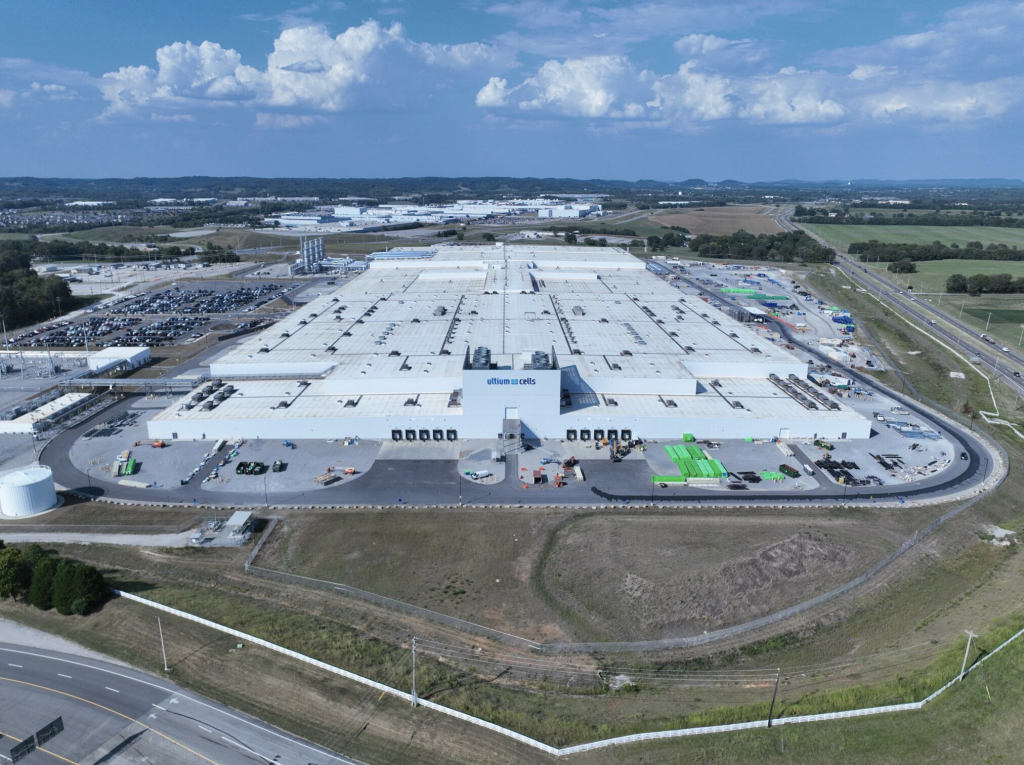
- Ultium Cells, Maury County: The company announced a $1 billion investment to retool its Spring Hill plant, which is expected to be the first in the world to mass-produce prismatic lithium manganese-rich (LMR) battery cells.
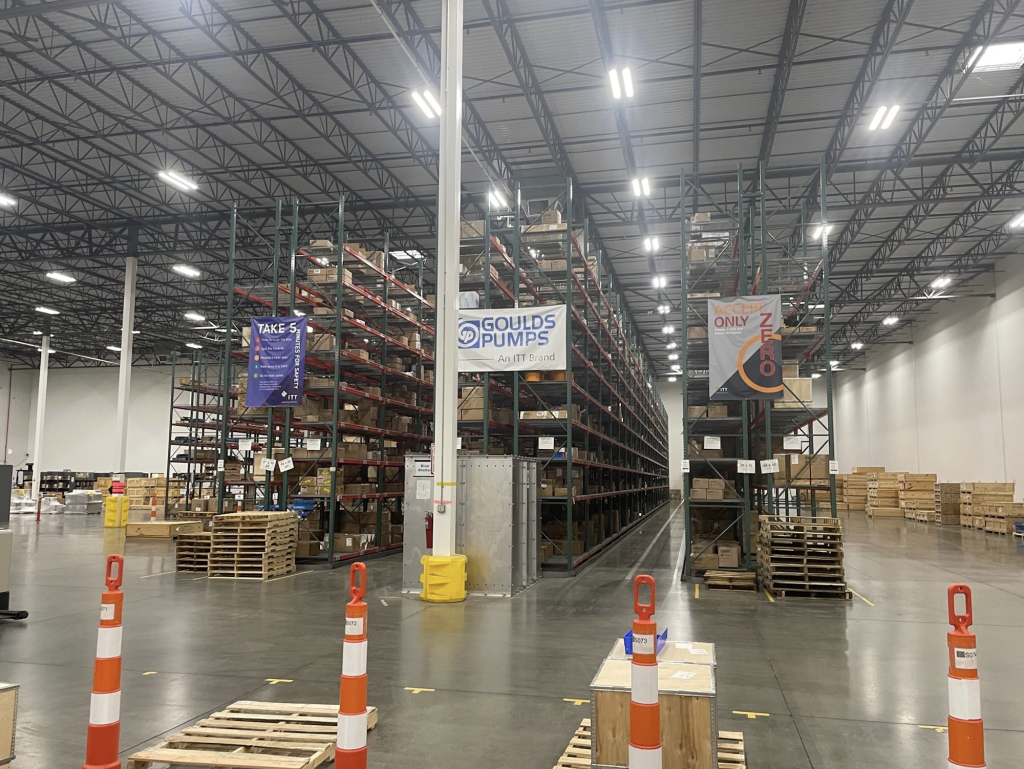
- ITT Goulds Pumps, Shelby County: The global pump manufacturer is creating nearly 60 jobs and investing more than $30 million in the Memphis area.
- Valmont Industries, Marion County: The infrastructure and agriculture equipment manufacturer is creating 84 jobs and investing $45 million in Jasper.
The shift to advanced manufacturing
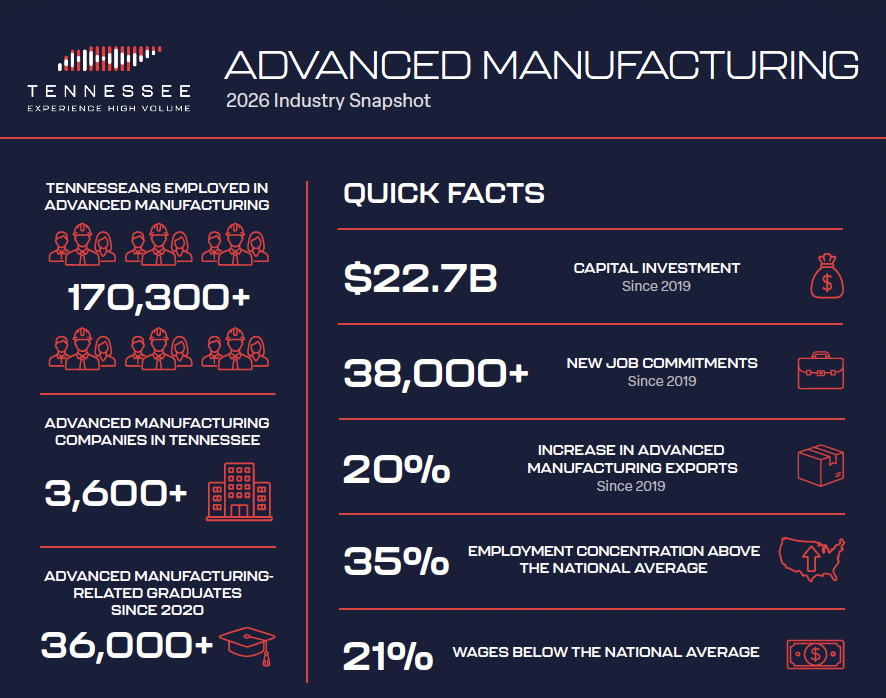
Manufacturing, like any industry, shifts with technology and Tennessee’s advanced manufacturing industry snapshot shows that shift in numbers. More and more manufacturing companies are making the transition to advanced manufacturing.
“There’s two ways to increase manufacturing capacity in the United States. One is to simply build more manufacturing plants, and then the other is to optimize and implement automation at existing plants,” said Todd Reeves of the University of Tennessee Institute for Public Service’s Center for Industrial Services (UT CIS).
Building more plants is a long play that’s costly. Automation also requires time and money, but the foundational facility and people are already there. That’s why the Tennessee Manufacturing Extension Partnership (TMEP), housed within UT CIS, is prioritizing technology adoption roadmaps to help companies optimize before they make that transition.
“You have to optimize before you automate, otherwise you’re not automating a well-run process,” Reeves explained.
Likewise, Director of Economic and Community Development of the Blount Partnership, Alexa Johns, said advanced manufacturing is an active part of her daily conversations.
“The big stereotype I always hear is that automation will get rid of jobs. But really, it’s actually making us more productive,” Johns said. “It’s perfect for jobs that are typically repetitive. They’re able to automate those portions to allow people to advance themselves or apply their skills better internally.”
She also argued that because of advanced manufacturing, the economic development industry may have to reconsider how it thinks about business attraction incentives down the road. Historically, state incentives have favored projects that employ the most people. Today, Johns said, many advanced manufacturing projects arrive with fewer jobs but at far higher capital investment.
As for the Tennessee Department of Economic and Community Development (TNECD), Site Development Director Kirby Lewis-Gill said their goal is to continue supporting advanced manufacturing without losing sight of job creation.
“At the state-level, we really care about companies that create jobs for Tennesseans,” he explained. “Innovation is important, too. That could look like adding a new line that includes components of advanced manufacturing. In that case, our focus would be on the workforce side, making sure manufacturers understand the resources available to help upskill their existing employees to operate new equipment and technologies.”
Demystifying AI on the plant floor
You can’t talk about advanced manufacturing without talking about AI. And manufacturing, a hands-on and traditional industry, has historically faced an uphill battle when it comes to adopting new technology.
Reeves said a major focus for UT CIS is demystifying AI through training programs that range from foundational courses to deep dives into prompt engineering, all while keeping the human-touch there.
How? On Aug. 6, UT CIS and UT Knoxville’s College of Emerging and Collaborative Studies (CECS) signed a memorandum of understanding (MOU) formalizing a partnership to expand AI education for manufacturers across Tennessee. The agreement grew out of a 16-week AI in Manufacturing pilot that CECS and CIS ran with DENSO. Thirty-five engineers from DENSO’s U.S. and Canadian manufacturing sites took part, working through topics such as machine learning, generative AI, predictive maintenance, quality inspection and production line design.

“AI is an important tool for helping our teams work smarter, but it does not replace the knowledge, judgment and creativity our team members bring to manufacturing every day,” said Marty Deschenes, DENSO’s North America chief manufacturing officer.
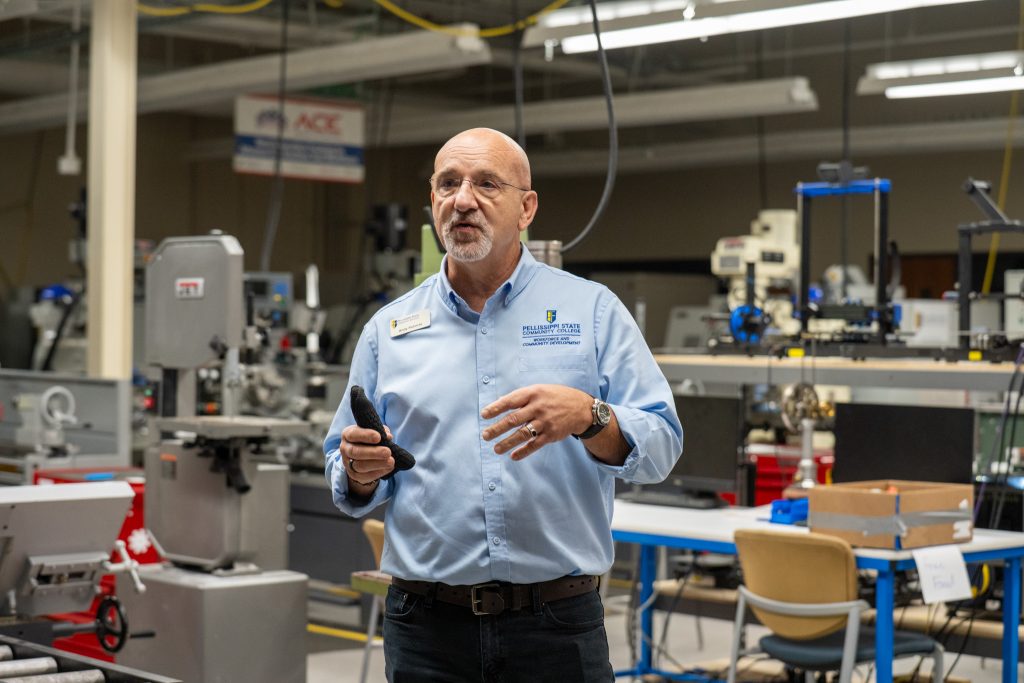
Pellissippi State Community College also recently hosted its fifth manufacturing symposium, this time focused on AI in manufacturing. The symposium ended with a tour of their MegaLab to show how they are training the next generation of manufacturers.
Marcus Blair of Omega Business Solutions gave the keynote, explaining that AI shouldn’t be viewed solely as a tool for headcount reduction. Instead, he said businesses should use it to solve specific problems by applying core manufacturing principles such as waste elimination and standardization.
Simba Jonga of Laborup who knows the industry well as the founder and CEO of this workforce platform specifically designed for manufacturing also spoke. While robotics and AI are advancing rapidly, he echoed that the technology will augment skilled workers rather than replace them. Human expertise in machining and welding remains essential for supervising these advanced manufacturing systems.
Manufacturing specialties seeing growth
Supplying the ‘nuclear renaissance’
Outside of AI, another topic that remains a priority is Tennessee’s nuclear renaissance and how suppliers can tap in.
“We can’t have a conversation about manufacturing without talking about infrastructure, which then leads us to power, which then leads us into nuclear,” Lewis-Gill said.
While that activity is centered around Oak Ridge as seen by Kairos Power recently launching their Nuclear Center for Advanced Manufacturing and Precast (NuCAMP) initiative, Kirby said the state is working toward a federal Nuclear Lifecycle Innovation Campus that could transform Tennessee as a whole.
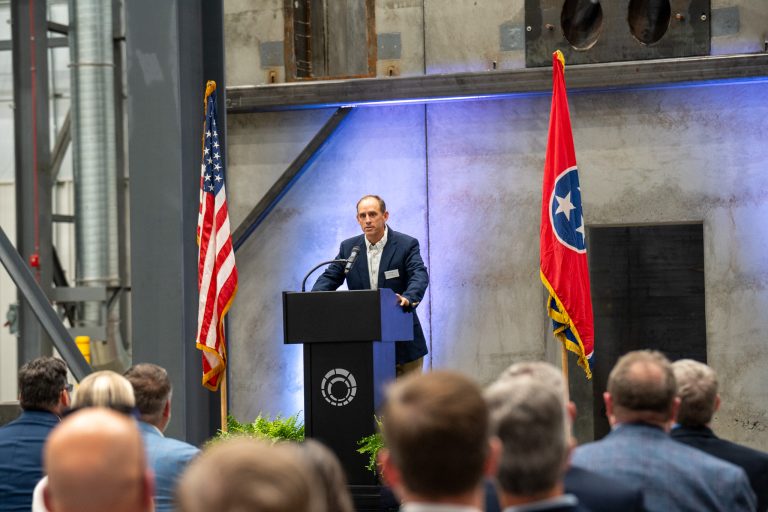
“Nuclear will need parts manufacturers and that’s work Tennessee has done for decades. Even automotive parts suppliers could put that experience to use in the nuclear supply chain. There will be opportunities to retool and get into that cycle,” elaborated Lewis-Gill.
As for Blount County and the greater Knoxville metro, Johns said she’s already seeing manufacturing projects come through for supplying the nuclear boom.
Aerospace and defense are taking off
Aerospace and defense manufacturing are the other sectors dominating conversations.
“I feel like every conversation that I’m in right now is related to an aerospace or defense company that’s being very serious about looking at expansion or growth,” Johns said. “That goes for both existing industries that are already here in the region, or new industries that haven’t had a presence before.”
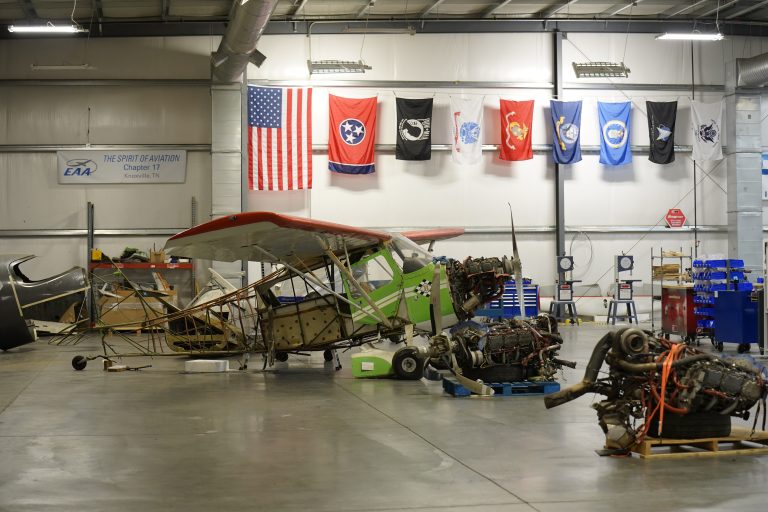
She said those companies want to be near an airport, which in East Tennessee typically means close to McGhee Tyson Airport. They’re also drawn to the experienced workforce around the Tennessee Air National Guard’s 134th Air Refueling Wing and the cluster of aviation companies already in the region like Cirrus Aircraft, StandardAero, and Endeavor Air.
Pellissippi State Community College’s aviation program is also a huge plus. “Industries, once they know we have that, they’re like, ‘Oh wow, you’re helping fuel the workforce actively,’” said Johns.
Getting manufacturing sites ready
But if you’re not seeing this growth in your own community yet, that’s par for the course. With a governor’s election ahead and trade and tariff questions at the national level, Lewis-Gill voiced that market uncertainty is trickling down to manufacturing project activity. According to data from the Tennessee Department of Labor and Workforce Development, manufacturing jobs slipped 1.7% over the past year.
“It might feel like the manufacturing sector is a little bit risky right now even though some areas are booming. There’s a lot of uncertainty in the market. But we’ve been in these spaces before, and Tennessee has such a long history of manufacturing success,” he said. “It’s in these times that you’ve got to innovate. If we do what Tennesseans do and come alongside each other and support each other through the uncertainty, we can make it to that next level of manufacturing success.”
He said that now is the perfect time to prep so that your community can land a project when things settle.
“It’s easy to say we want jobs, but I think now in Tennessee, we’ve had so much success that we’ve got to ask ourselves what kind of jobs do we want,” Lewis-Gill said. That question carries extra weight in manufacturing, because the industry is a foundational building block for so many others.
TNECD has two key tools to help communities get ready:
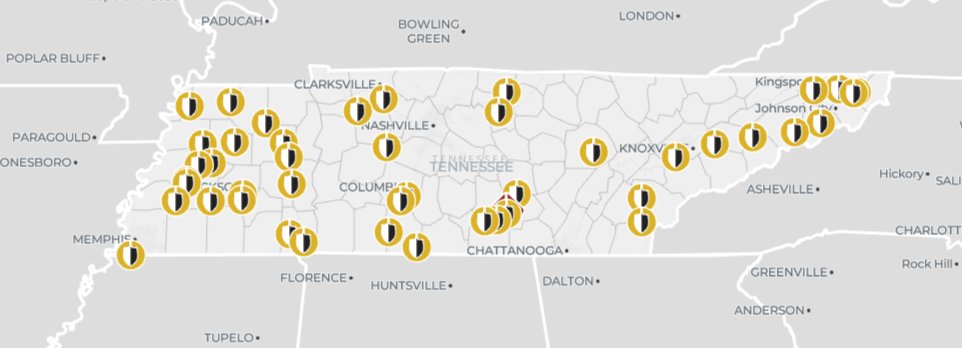
- Site Development Grant: Since 2016, TNECD has awarded about 220 grants that fund physical improvements, such as building roads, extending water lines, grading sites and constructing spec buildings. A couple of years ago, the maximum award increased to $5 million, a significant resource for rural manufacturing communities.
- Certified Sites Program: TNECD guides communities through a multiyear process of due diligence, site planning and preparation that also helps them define what kind of manufacturer they want to attract.
Manufacturing companies to watch
And speaking of creating the types of manufacturing jobs Tennesseans want, here are just a few of the companies that are making waves.
Endeavor Composites
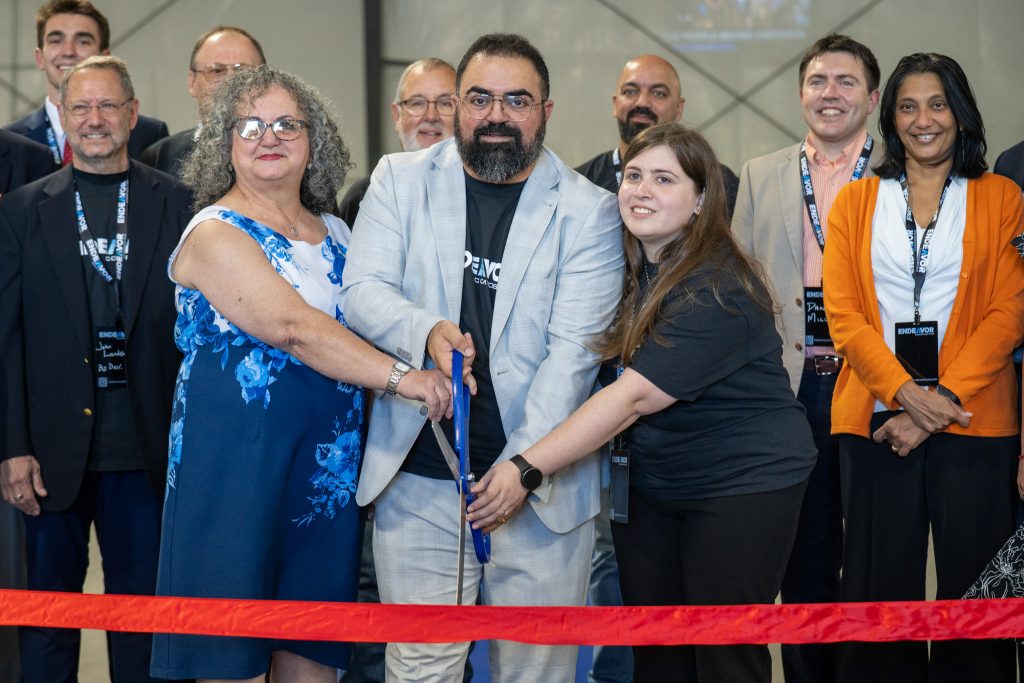
Endeavor Composites recently cut the ribbon on a new advanced manufacturing facility in Louisville. The roughly 22,000-square-foot space houses fiber preparation, wet-laid and air-laid production, research and pilot labs, machining, forming and composite curing. Since launching in 2019, the company has doubled its revenue every year.
“This is a new era of manufacturing. Composites are the new sheet metal,” said CEO Hicham Ghossein. “Our goal is to keep growing and introducing new products that make America the manufacturing powerhouse it is.”
Variable Machines
In composites, getting parts made typically means cutting a mold, which can take months and get expensive, especially for large parts. That cost can break early-stage manufacturers.
David Preiss, founder of Boston-based Variable Machines, built a large-scale, reconfigurable surface of actuated pins that forms complex molds for aerospace, construction and other industries. Preiss is currently scaling the technology in town through ORNL’s Innovation Crossroads program over the next two years, and the company has already landed its first customer, a Tennessee-based startup.
Crucible Zinc
This past April, Korea Zinc launched Crucible Zinc after acquiring Nyrstar’s Clarksville operation, the only primary zinc smelter in the U.S., and plans to eventually produce 13 types of non-ferrous metals there, including 11 that the federal government designates as critical minerals.
True Metal Supply
Founded in 2022, Knoxville-based True Metal Supply manufactures American-made metal roofing and steel siding and has built a national sales division serving all 50 states. The company ranked No. 33 on this year’s Inc. 5000 list with 7,728% growth, driven by innovative products such as a proprietary wood-print steel siding and anticipating the need for a domestic supply.
“We had big dreams when we started the company,” said owner Mason Burchette. “Knoxville is a great market to start a manufacturing company, mostly because it’s so central to everything in the Southeast. It’s really easy to ship in raw material and ship out finished product. Securing our domestic supply chain early has proven really important, considering how international trade has worked out with imported steel and tariffs.”

W.R. Case & Sons Cutlery Co.
In August, the company announced a Knoxville satellite finishing facility. The Pennsylvania knife maker will run select finishing and packaging operations there to keep up with rising demand.
“Case has built its reputation on uncompromising quality, craftsmanship and performance,” said Vice President of Operations Tim Van Horn. “As demand for our products continues to grow, this new Knoxville-area facility will provide the critical capacity we need, and with a workforce who share a strong affinity for the Case brand.”
Morgan Steel
This past March, Morgan Steel announced it is investing $11.7 million to expand its Memphis headquarters and add 119 jobs to boost their processing and fabrication capacity. The company also takes part in apprenticeship programs locally to build a pipeline of skilled manufacturing workers.
DevMar Manufacturing
At the 2026 Nashville NEXT awards, Sharon Reynolds, founder and CEO of DevMar Manufacturing, received the Darrell Freeman Award. Her Nashville-based, women-led company develops patented nanotechnology using titanium and zinc to fight pathogens and reduce toxic plastics in commercial and healthcare settings. She brought her young granddaughter to the ceremony to “show her what’s possible.”
Watch the backstage interview with the Nashville Entrepreneur Center below.
Like what you've read?
Forward to a friend!