Energy roundup | A recap of two events focused on the growing energy economy in East Tennessee
The Tennessee Business Forum ThinkTennessee and the Tennessee Advanced Energy Business Council hosted back-to-back events in Knoxville and Chattanooga.
From northeast to southeast Tennessee, one chord runs all the way through, and we’re not referring to the Appalachian Mountains. Instead, we’re referring to the emerging energy innovation ecosystem, which is becoming almost as identifiable a feature of East Tennessee as the mountains themselves.
Hardly a week passes without a national nuclear announcement, an advanced energy startup launch, or funding flooding into area universities and research centers to propel the region forward.
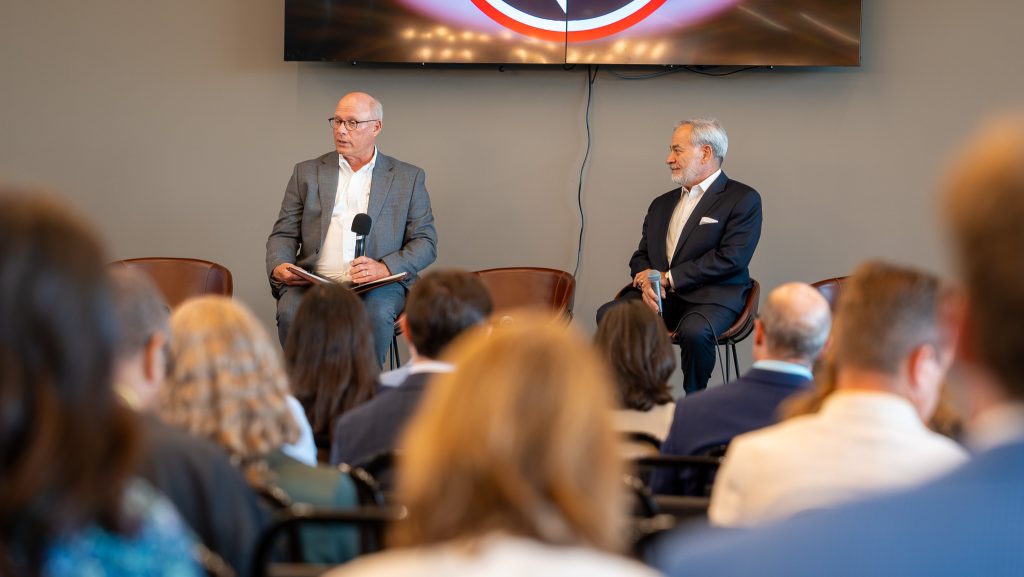
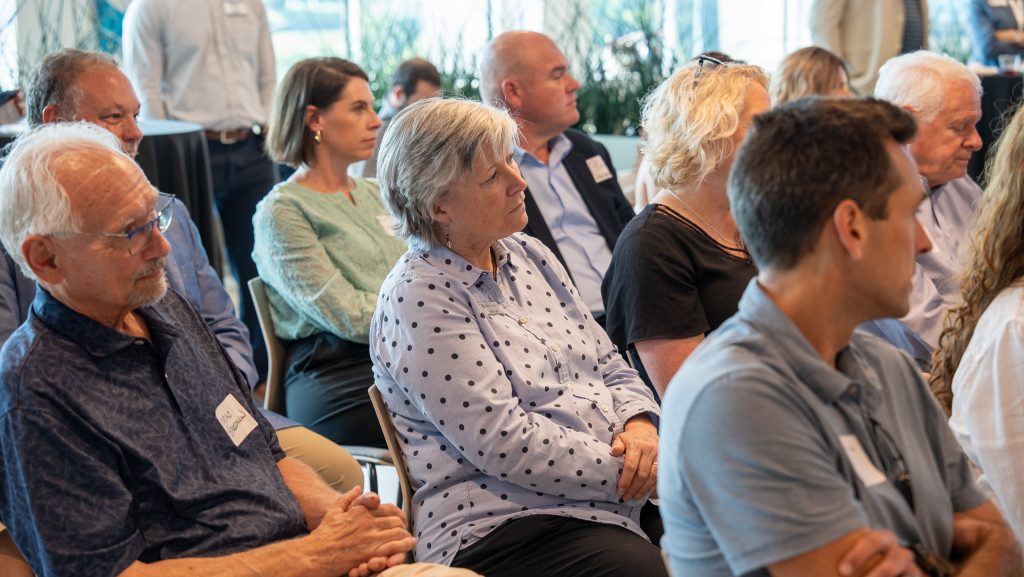
Kicking off the conversation on Wednesday in Knoxville, the Impact of Energy Summit drew a crowd of more than 100 business and community leaders to learn from local energy leaders and Dan Brouillette, the former U.S. Secretary of Energy.
Dan Brouillette
Working smarter, not harder to optimize the grid
Spanning data center construction, artificial intelligence (AI) grid optimization and regulatory hurdles in the nuclear industry, Brouillette shared his candid thoughts on the state of energy nationwide.
“I think we’re much better positioned than people might expect,” he said. “And there are things we can do with the grid that make it even more efficient.”
One thing that gives Brouillette hope is the nation’s ability to keep innovating new ways to get electrons onto the grid.
“We know how to make things. We know how to produce oil and gas; we know how to make nuclear power; we know how to generate electrons. Our challenge is actually getting the product to market,” he said.
However, he said, “antiquated regulatory hurdles” often make it hard to commercialize new power sources quickly. Licensing timelines for new nuclear sites and technologies can stretch from five years to over a decade, depending on the project scope and size.
“We need to move and modernize this licensing process to recognize the changes in the technology and the changes in the safety standards for new nuclear. We know a lot more about this technology than we did during the Manhattan Project days,” Brouillette said.
The role of data centers in grid capacity
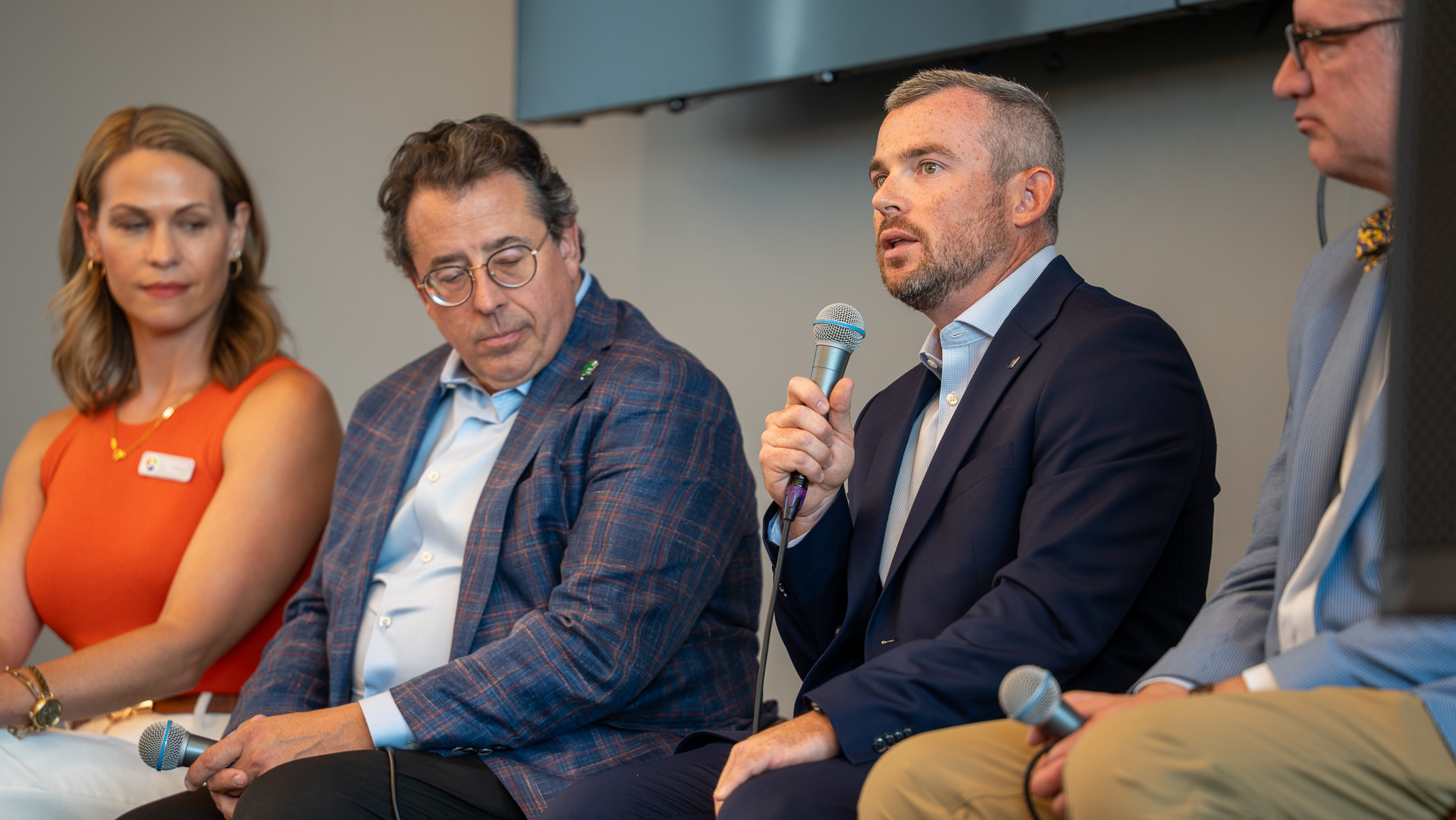
The second panel of the afternoon consisted of four state energy leaders: Gabe Bolas, President and CEO of Knoxville Utilities Board (KUB), Joe Hoagland, the Associate Laboratory Director for Fusion and Fission Energy (ORNL), Huter Hydas, the Director of Systems Planning at the Tennessee Valley Authority (TVA), and Cortney Piper, the President and CEO of the TAEBC. Heath Shuler, the former Senior VP of Federal Government Affairs at Duke Energy, moderated.
The panel opened with a conversation about data centers and the effect this infrastructure has on the state’s power grid. The discussion comes as at least a half-dozen Tennessee counties and numerous individual municipalities have enacted formal moratoriums or temporary pauses on data centers, including Knoxville.
“Communities are worried about increasing electricity rates. They’re worried about land use. They’re worried about water use. All of those are completely legitimate concerns, but the good news is they have solutions, ” Piper said. “What we believe as the TAEBC is that data centers can be an asset to the grid if we plan appropriately. A sustainable solution is to look at policy solutions to address these areas of concern.”
One solution she suggested: data centers could bring their own power source and potentially even contribute energy back to the grid.
Both Bolas and Hydas said finding these kinds of solutions is key to moving data center construction forward while keeping costs low for consumers.
Energy & Innovation Summer Social
On Thursday evening in Chattanooga, an engaged room of attendees learned how innovative industries, like quantum, can accelerate energy solutions across the state.
The panel, moderated by Cortney Piper, featured a robust conversation with Janet Rehberg, CEO-elect for EPB; Tasia Malakasis, CEO of The Company Lab (CO.LAB); and Adam Myers, VP of Economic and Talent Development at the Chattanooga Chamber.
Why should business leaders be paying attention to quantum conversations?
From a non-energy-specific industry perspective, Myers said quantum is all about helping businesses solve complicated problems better, faster and smarter. These use cases can apply to problems in nearly every industry, from healthcare and biotech to logistics, finance and cybersecurity.
From an entrepreneurial perspective, Malakasis said businesses should pay attention to quantum because “there’s hay to be made.”
“Quantum is a tool, just like a computer, just like AI,” she said. “There’s a whole potential industry attached to it, and that’s why we’re focused on the opportunities with it.”
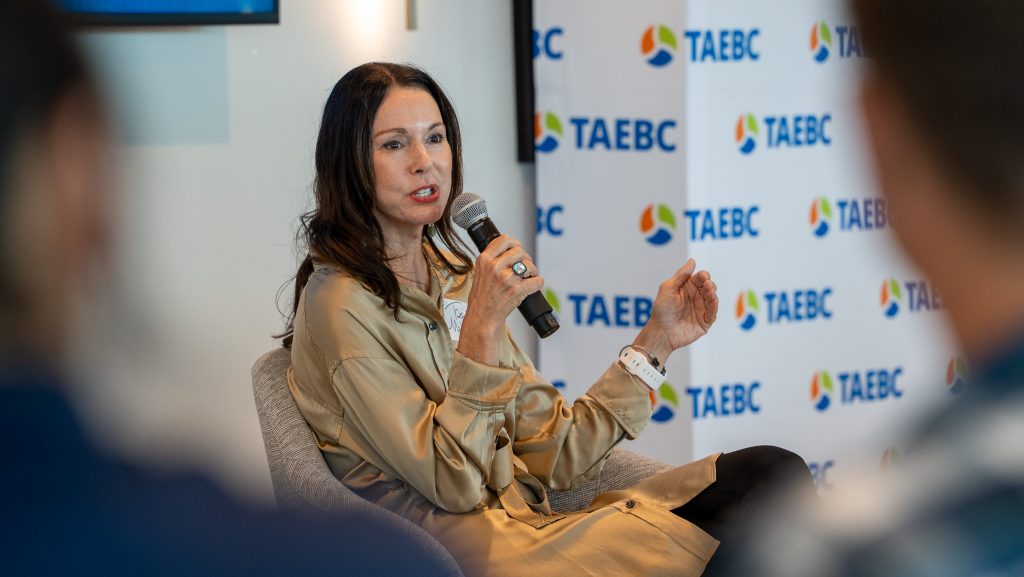
Tasia Malakasis
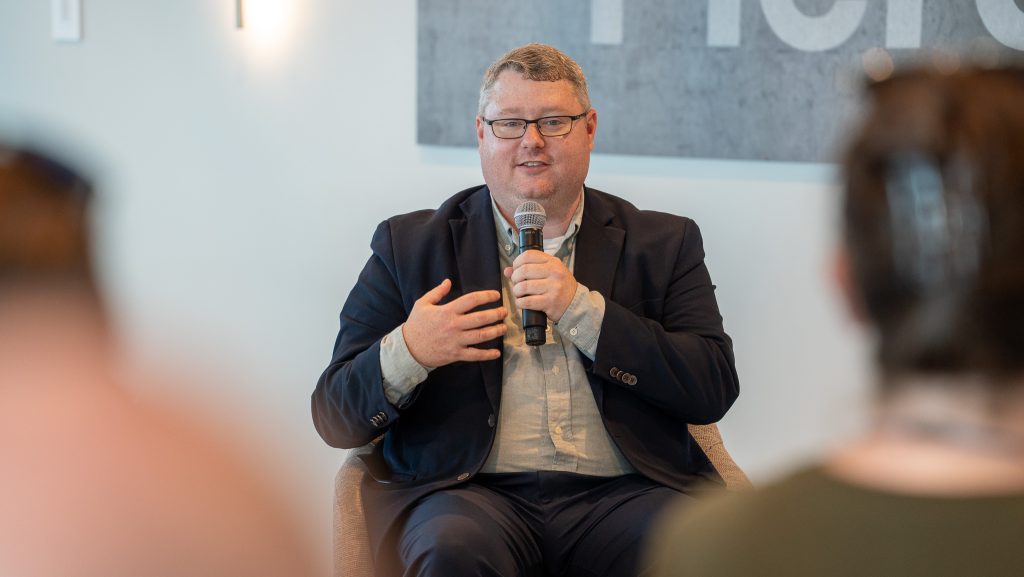
Adam Myers
How can the energy industry directly benefit?
There’s no better panelist to answer than Rehberg, who has been on the pioneering edge of EPB’s adoption of quantum in its R&D portfolio. In 2023, EPB introduced the first commercially available quantum network, and in 2025 the board voted to purchase a quantum computer.
Rehberg said she sees quantum solving a few core issues. First, on the networking side, quantum has the potential to secure communication, information and IP better than today’s technologies, she explained.
Janet Rehberg
“The other side is quantum computing, and we see this as an avenue for optimization,” Rehberg said. “Today’s computers solve things very sequentially. It looks at one option, doesn’t work; it looks at another option, doesn’t work. A quantum computer looks at everything in parallel, through a principle called ‘superposition,’ which means it can solve problems much quicker, more efficiently and with less energy.”
Rehberg wrapped up by inviting business leaders, community members and interested industry professionals to the Quantum in Business event on October 1 in Chattanooga. Find out more here.