

Rise Alarm, The Henry BnB top UTK’s Graves Business Plan Competition
Rise Alarm and The Henry BnB took home the top awards in their respective categories.
Each semester, the University of Tennessee, Knoxville (UTK) hosts the Graves Business Plan Competition — an engaging, two-track pitch event designed to give student entrepreneurs real-world experience.
The event is facilitated by the Anderson Center for Entrepreneurship and Innovation (ACEI) within the Haslam College of Business, and allows participants to pitch their ventures to a panel of experienced judges.
Winners in each category — Growth and Lifestyle — take home $5,000. Second-place teams receive $3,000; third-place teams receive $2,000. Finalists presented their business plans to a panel of judges on April 10 for top honors and seed funding. In total, ACEI awarded $21,250 to student businesses through this semester’s Graves competition, which includes two specialty awards.
Growth Category
Rise Alarm came in first place for the Growth Category of the Graves Competition, taking home a $5,000 prize. The founding team is comprised of Max Gallinek, a supply chain management major with minors in entrepreneurship and applied artificial intelligence (AI), Dan Fishman, a senior in supply chain management and entrepreneurship minor, and Collin Tornstrom, a marketing major.
Teknovation first interviewed Gallinek as a freshman, when he walked out of Vol Court $1,500 richer after winning first place. That same year, 2025, he competed in Graves and took home a $1,000 prize. His idea at the time, ResQTalk, was a voice-to-voice translation service designed to streamline 911 calls so callers and operators could communicate regardless of language.
Gallinek pivoted entering his sophomore year, bringing on a new founding team and a new idea he believes is stronger: Rise Alarm.
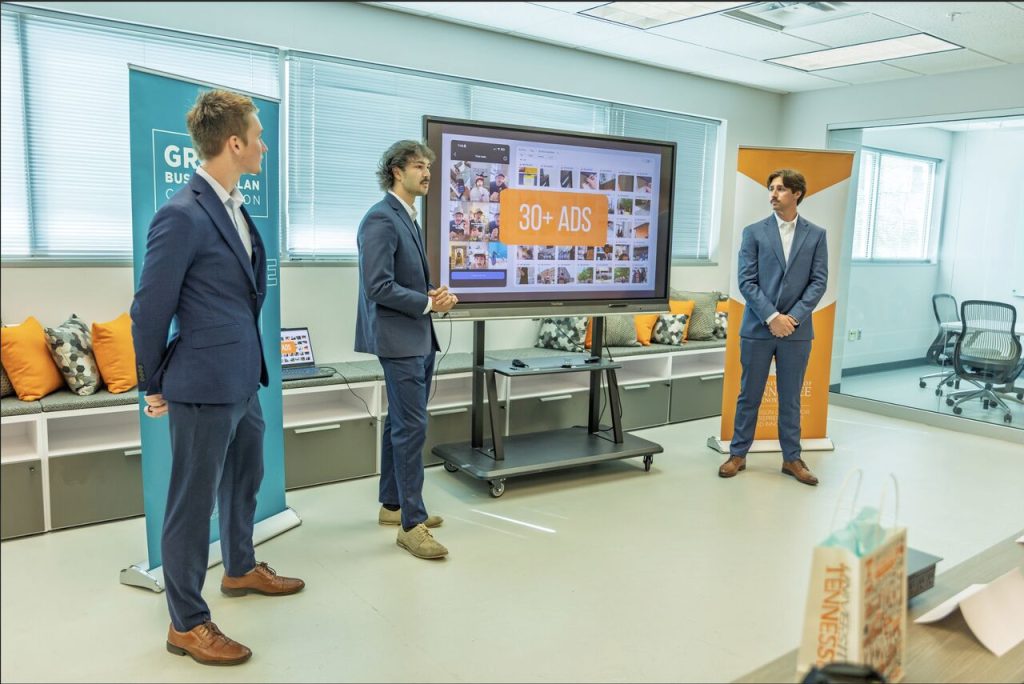
Rise Alarm’s other co-founder, Fishman, said it’s an honor to take home the top prize for this year’s award.
“I’m incredibly grateful to attend a university that puts on such competitive competitions and allows students multiple opportunities to get funding and resources for their businesses,” said Fishman. “It’s such an honor to compete, and we’re all extremely proud of our win.”
According to the pitch, the Rise Alarm is a product that forces people to get out of bed to turn off their alarm. The target audience at this stage is college students who need to get up for class, work, or routine purposes. The “pod” can be placed anywhere within the home and will not stop ringing until it is scanned by a phone.
Second place and $3,000 went to Arbor AI, founded by Patrick Ragozzine, who is earning a J.D. from the Winston College of Law. Arbor AI, built for solo and small-firm attorneys, is a research and case management platform powered by a proprietary system designed to eliminate AI falsehoods and improve reliability. Ragozzine aims to give smaller firms affordable AI tools to help them work more efficiently and compete against larger practices.
“I started this project with a vision for better legal technology, but absolutely zero coding experience or understanding of how these models work,” Ragozzine said. “This win is a deeply humbling validation that a willingness to learn and sheer stubbornness can turn a challenging idea into a reality.”
New Horizon Precision came in third place in the competition, receiving a $2,000 award. The company was founded by Spencer Dore, who has been pursuing drones for agriculture applications for a couple of years now. His company is already in operation and includes services in crop management, pasture improvement, land maintenance, and land analysis.
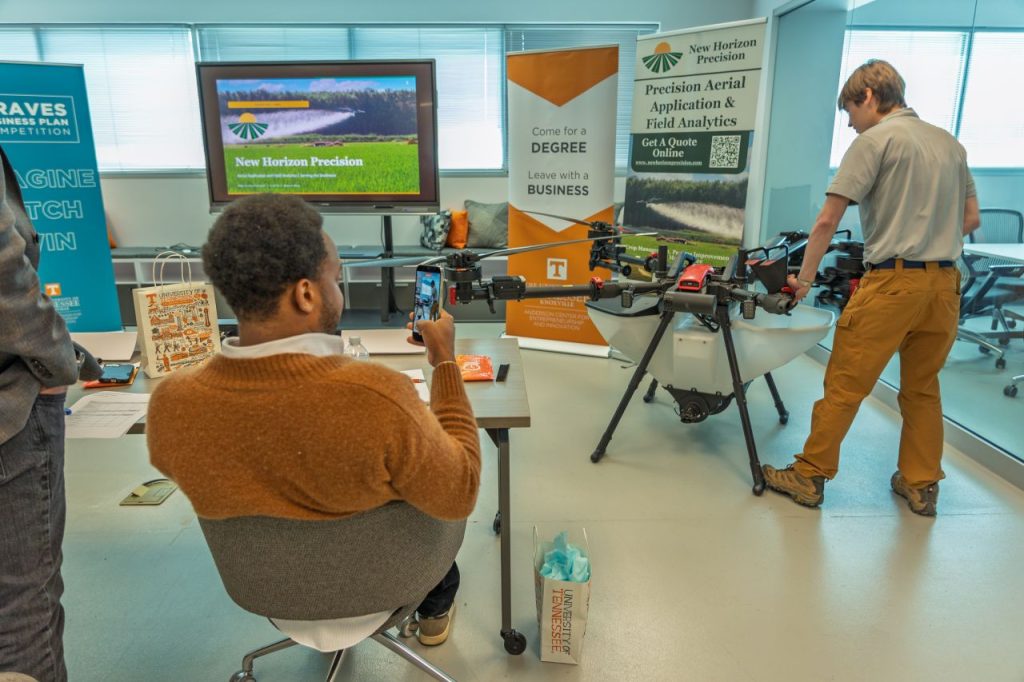
“Farmers spend over $21 billion on chemical applications annually in the U.S. We can increase a farmer’s yield with more cost-efficient and precise spraying,” Dore said in a Teknovation interview in March.
Lifestyle Category
The Henry BnB, founded by Katy Daniels, a biosystems engineering doctoral candidate, took home the top prize of $5,000 for the Lifestyle Category at the Spring 2026 Graves Business Plan competition.
After participating in several pitch competitions, Daniels has become an expert at sharing her dream of building a bed-and-breakfast that offers a unique homesteading experience, showcasing traditional Appalachian lifestyles. She came up with the idea to save her family’s Tennessee farm and preserve the traditions she grew up with.
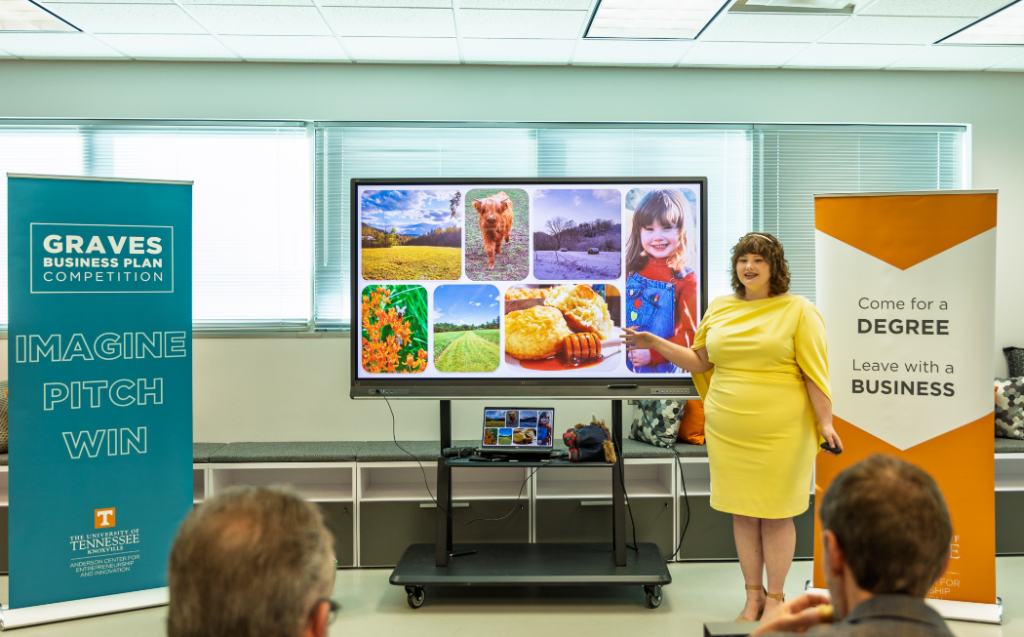
“Winning the Graves Business Plan Competition is life-changing, as it brings me one step closer to saving my family’s farm and turning it into a place where others can experience and preserve Appalachian culture,” said Daniels.
The second-place prize in the lifestyle category and $3,000 went to Soletek, founded by sophomore political science major Gavin Fallgren. Fallgren’s product is a protective sticker applied to golf irons to extend their longevity and shield them from turf scuffing. The product, which is a thin piece of filament, protects the clubs without interfering with the game or user experience.
Third place in the lifestyle category and $2,000 in funding went to senior management major Anderson Baker and his company, A22 Handstand Helper. His product targets athletes who can kick into a handstand but cannot hold it. The harness supports inverted training, which is beneficial for total-body strength.
Special Awards Honoring Student Businesses
Beyond the prizes in the growth and lifestyle categories, two additional awards were granted at the spring 2026 Graves Business Plan Competition. The UT Entrepreneurs Club (UTEC) Prize of $1,000, awarded to the best pitch by a UTEC member, celebrates student leadership and engagement in UT’s entrepreneurial community. The spring 2026 UTEC Prize went to Rise Alarm.
New Horizon Precision won the $250 Spark Innovation Award, a prize granted by the Spark Innovation Center at UT’s Research Park at Cherokee Farm to a company that aligns with its mission of supporting clean technology.
Like what you've read?
Forward to a friend!