
Fueling the flight: Pellissippi State’s Aviation Program supports the region’s record growth
Pellissippi State’s Aviation Program is soaring, but with 600+ interested students and only 25 spots, it needs instructors and scholarship partners.
With McGhee Tyson Airport (TYS) recently recognized as the fastest-growing airport in the nation by passenger percentage, aviation companies like Cirrus Aircraft, StandardAero, and Endeavor Air have invested in Knoxville-area bases.
Because of this traveler growth, the area is also seeing a great demand for a specialized technical workforce.
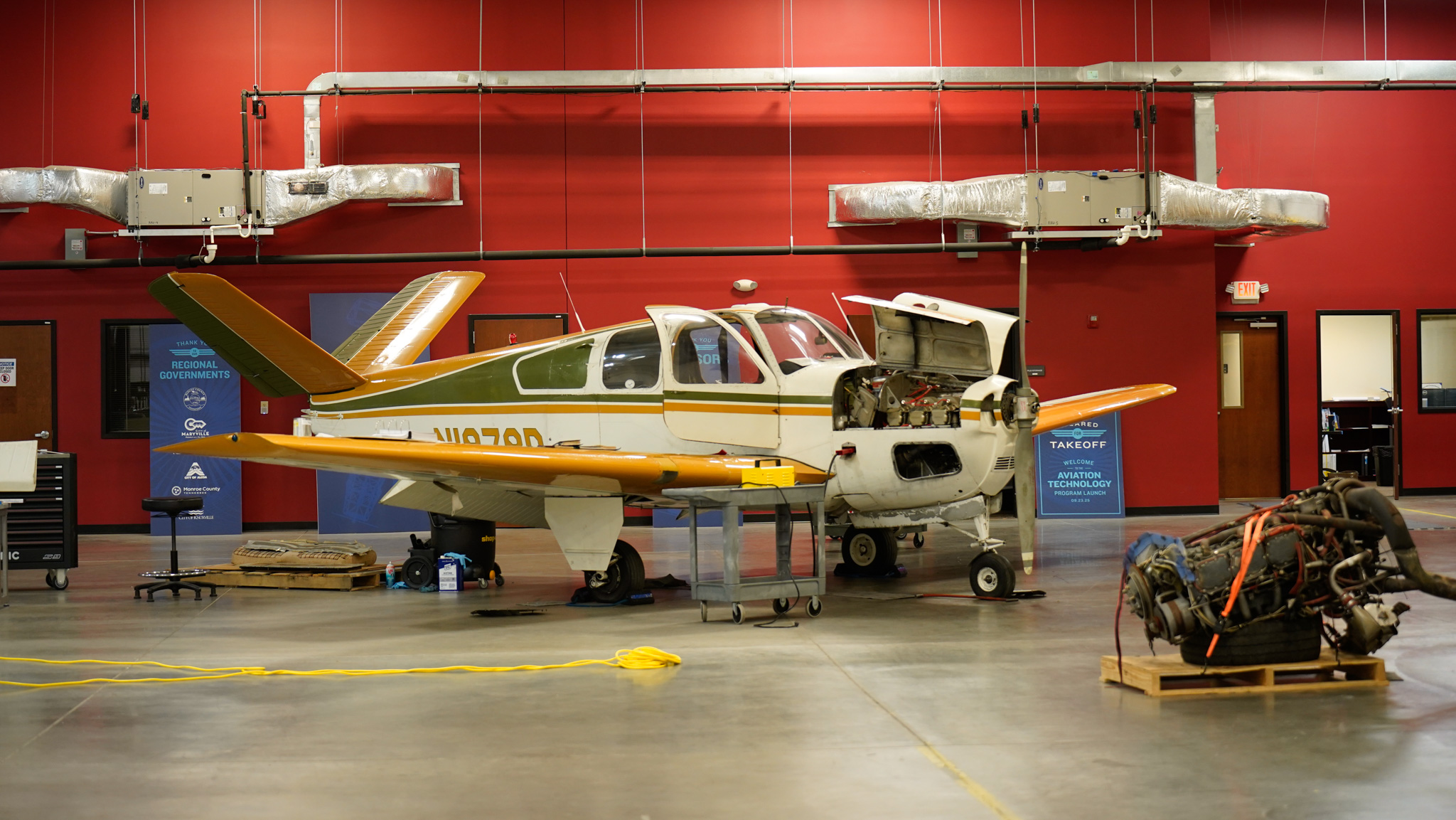
Enter Pellissippi State Community College’s Regional Aviation Technology program. This 18-month track provides a much-needed, hands-on education and talent pipeline to ensure the region’s workforce can deliver.
We covered the program’s launch back in September 2025. Since then, interested students have shown up in big ways. Now, the program is recruiting more business partners and faculty to take the program to new heights.
About the program
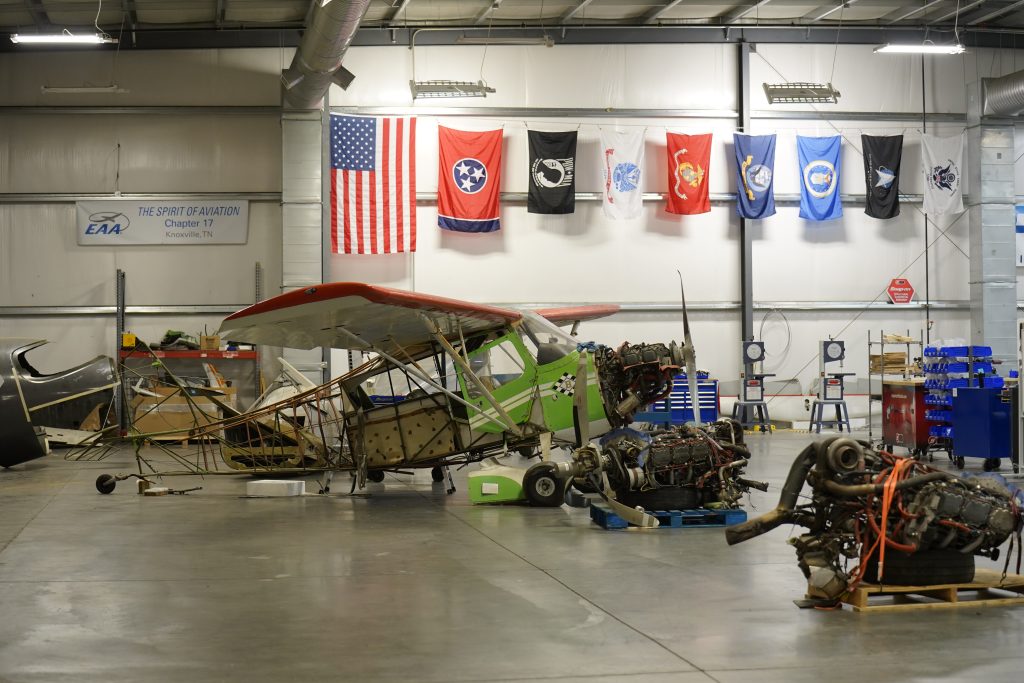
The program is an Aviation Maintenance Technology School (AMTS) that offers a unique dual advantage. Students graduate with an Associate of Applied Science degree while earning their Airframe and Powerplant (A&P) certification.
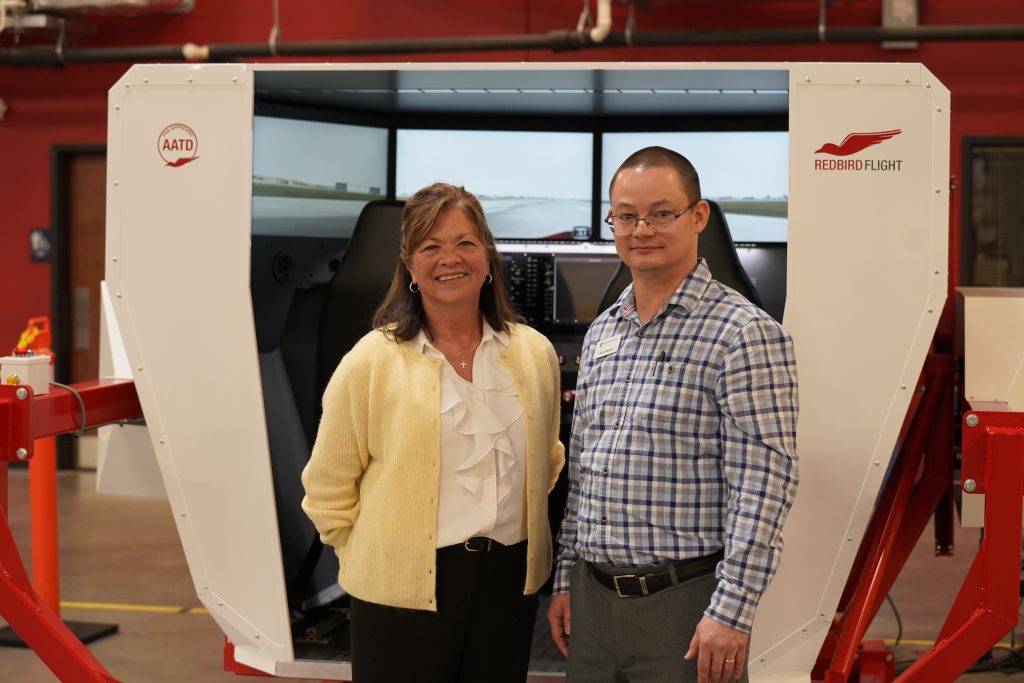
“We’re only the second program in the state that has that combination of credentialing at program completion,” said Jesse Martin, Program Director.
A unified effort
The initiative was born from a collaborative effort to address an upcoming workforce gap. Local employers and military representatives active in Blount Partnership‘s Aviation Collaborative voiced concerns that while the region was growing, an entire generation of mechanics was nearing retirement.
“Our Aviation Collaborative started meeting several years ago to talk about growing workforce challenges,” said Jessica Belitz, Director of Workforce Development at Blount Partnership. “Data showed a 10-year demand of about 745 aircraft mechanics in the Knoxville region.”
Bringing the vision to life required a mix of support from government leaders in Blount, Knox, and Monroe counties, as well as the cities of Alcoa, Maryville, and Knoxville, to get the facility leased at Triangle Park in Maryville.
“We were fortunate enough to get a $2 million grant from the Governor’s GIVE grant,” said Patty Weaver, Vice President of External Affairs at Pellissippi State. “That $2 million allowed us to purchase a lot of the equipment we would need. Our foundation stepped up and purchased an airplane. It took us about 18 months to get the program up and running, and it was a total group effort.”
Safety and ethics
Because aviation is a high-stakes industry, the curriculum emphasizes that technical skill must be matched by a high ethical standard.
“On average, if you’re flying in a commercial airline, you are about 10 times safer than driving in your car because of how rigorously airplanes are inspected,” Martin explained. “What we’re trying to instill with our students is that this is a highly ethical field. If you make a mistake, you have to own it. You do everything you can to stop that plane before it takes off. You don’t worry about embarrassment, you don’t worry about reputation. It’s about safety.”
Strong career possibilities
For students like Cale Godfrey, the program provides an education that was previously out of reach.
“I work at McGhee Tyson airport, but I live in Knoxville. The closest school is up in Morristown, which is too far of a commute with my work schedule,” Godfrey said. “If it wasn’t for Pellissippi opening up this program, I wouldn’t be back in college. Having a school that’s so close by really is a benefit to the community overall.”
Graduates can expect starting wages of $30–$35 per hour ($65,000/year), with a clear path toward six-figure salaries.
“Delta in particular has a flow-through program, through Endeavor,” Martin said. “Somebody who comes into the program right out of high school could be at Delta by age 23, making $100,000 a year.”
But it is also worth noting that aviation companies are not the only ones that should be interested in these skilled workers. Weaver said the precision, ethics, and technical mastery make these grads some of the most versatile and valuable workers in the state.
“Take Arconic, for example. These students are learning mechanical and electrical skills that can be applied to their world. Same for the nuclear world,” said Weaver.
An economic development play
The program is already a major asset for economic recruitment. Since its launch, PSA Airlines has opened a large maintenance base at TYS, and Belitz specifically said that having the program was a factor in their decision.
“This program shows prospects that if they choose to invest here, they’ll find a community that is committed to helping them build and sustain the talent pipeline they need to be successful,” said Belitz. “Over time, we believe this will not only help us retain the great aviation employers we already have but also create new opportunities to recruit additional aerospace-related companies to the region.”
Support the pipeline
Though students, faculty, and community leaders already see this program making an impact, there are still some hurdles to overcome.
While the Tennessee Promise and Tennessee Reconnect programs offer significant tuition funding for local students, these students still must source the estimated $2,200 in required testing fees.
“We’re always looking for scholarship partners. There are testing fees that are involved. It costs about $2,200 in fees to pass the needed exams,” said Weaver.
The second challenge is that student interest has far exceeded initial expectations.
“We didn’t think we’d get this large of interest till the second year, but we have over 630 people who have submitted an interest form,” Weaver noted. “For the fall cohort, there are specifically 71 who are interested, but we can only take 25.”
The cap is mandated by FAA requirements, which require faculty to be certified A&P technicians and maintain a strict student-to-teacher ratio to ensure instructional quality. However, many qualified professionals are hesitant to leave higher-paying private sector roles for the classroom.
If you are interested in sponsoring a scholarship or learning more about becoming an instructor, Martin encourages you to connect with him via email.
Like what you've read?
Forward to a friend!