

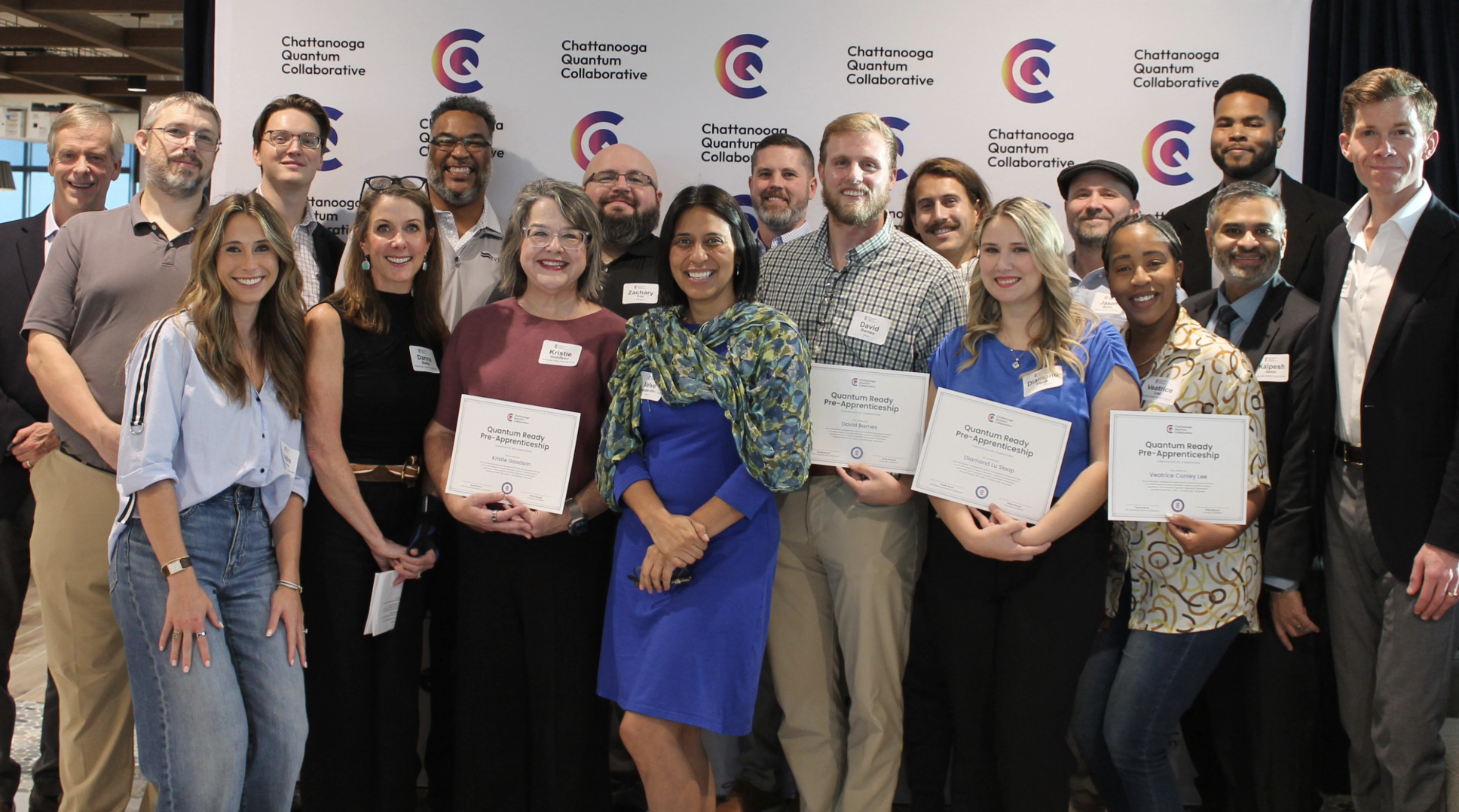
Tennessee adds 17 quantum-ready professionals to its workforce
Seventeen professionals from sixteen Tennessee employers just completed the inaugural Quantum Ready Pre-Apprenticeship, a 12-week program designed to upskill the current workforce and build quantum know-how inside the companies where they already work.
Quantum has been part of Tennessee’s tech conversation for a while now, but lately it’s hard to go a week without hearing about it. We rounded up much of that momentum over the summer in our quantum roundup.
The latest example came last week, when the Quantum in Business summit in Chattanooga invited area business leaders to “dream big” about how quantum technologies could fit into their operations. Dreaming big is that first step.
The next is figuring out what quantum actually looks like inside a company, and the Chattanooga Quantum Collaborative (CQC) is already working on that, starting with graduating the first quantum-ready cohort.
At the cohort’s Oct. 8 graduation ceremony, Chattanooga leaders spoke about why quantum literacy matters and why it’s so important to carry that knowledge into industry.
“Research opens the door to new possibilities, and industry adoption carries that work into economic impact,” said Interim Vice Chancellor for Research at the University of Tennessee at Chattanooga, Mina Sartipi. “We’re proud to help prepare professionals who can bring quantum knowledge and capabilities into Tennessee companies.”

Benefits to the employee and employer
Over the 12 weeks, participants worked through online coursework, heard from speakers at organizations including EPB, qBraid, Davidson Technologies, Experian and Terra Quantum, and got hands-on time with quantum platforms. They came away with a foundation in quantum computing, networking and sensing. Each graduate also finished a capstone project to uncover real use cases for their own employer or sector.
Jason Barks, Lead Automation Architect at Integrity Business Automation, used his capstone to tackle getting patients to medical appointments on time.
“Routing patient trips is a hard scheduling problem, and a late ride can mean a missed dialysis appointment,” Barks said. “Every trip or vehicle you add multiplies the number of possible schedules, so I identified where quantum optimization could come in once current methods reach their limits.”
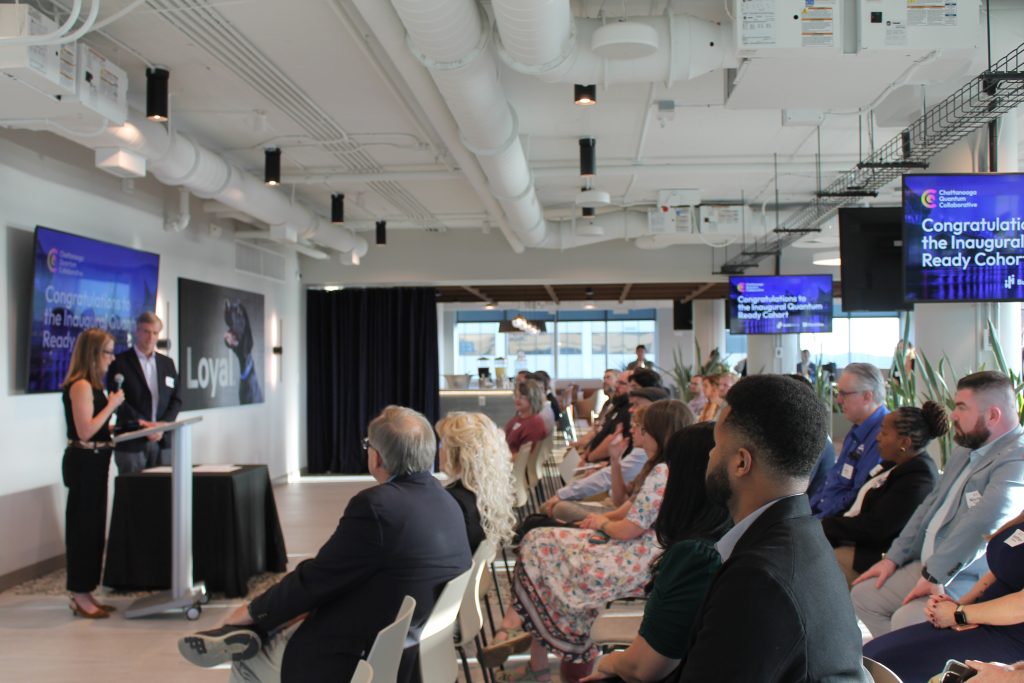
For employers, the payoff is there, too.
“Southern Champion Tray is intentional about stewarding the continued development of our team members and about adopting technologies that benefit our employees and customers. Having Hudson Quatro participate in this program supports both. He returns with a foundation in quantum that will help us understand where it could have meaningful applications for our business,” said Greg Lanter, IT Director at Southern Champion Tray.
Employers or professionals interested in participating in future cohorts can find more information here.
Like what you've read?
Forward to a friend!