

This Kingsport startup wants outdoor gear to break down, not pile up
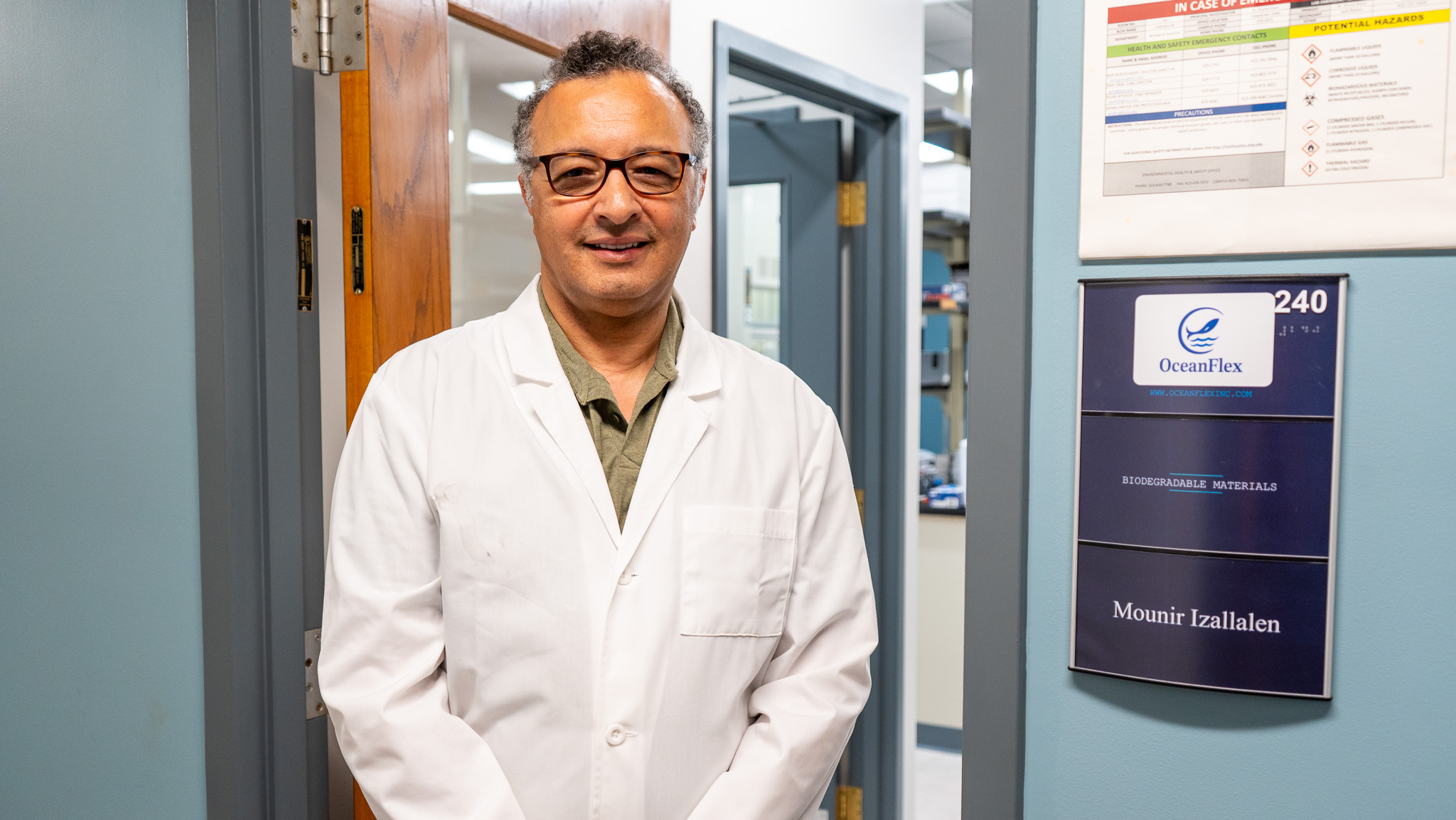
Mounir Izallalen left a materials-science career at Eastman to build OceanFlex, engineering biodegradable alternatives to the plastics in fishing lures and other outdoor gear.
About six months ago, a conversation with a fisherman gave Mounir Izallalen a big idea for his next venture. Today, he’s gearing up to fundraise with a minimum viable product (MVP) in hand and a mission to make the planet a greener place.
“I was talking to a fisherman who expressed a need for biodegradability in fishing lures, and it made me realize how much outdoor sporting equipment can end up in the environment,” Izallalen said. “This outdoor space is an area that is calling for an end-of-life solution for these plastics in the case of accidental release.”
In response, Izallalen founded OceanFlex from inside a laboratory at the ETSU-Valleybrook campus.
His company is developing biodegradable elastomers, with outdoor and sporting goods as one of the markets it targets. Fishing lures are its first application within that space. Izallalen’s products are engineered to perform like the plastics they replace but break down instead of persisting as microplastics.
He and his two co-founders, Rick Schoenfield and Ray Garcia, have bootstrapped the company so far, and he is now preparing for a pre-seed round. He recently enrolled in ETSU Valleybrook’s 2681 Core accelerator, the Northeast Tennessee program focused on mentorship and getting growth-stage startups ready to raise capital.
“We strongly believe that we are in a good place now, and have a good chance at growing this company,” he said.
A career spent in biology
Izallalen has spent his career circling the same question.
“My passion has always been thinking about naturality, how we could leverage biology as a way to innovate, to decrease our dependency on fossil-based resources,” he said.
He tried it from several angles: genetic engineering of biofertilizers during his doctoral work to cut chemical fertilizer usage, then microbial fuel cells during his postdoc, using bacteria to power off-grid devices in remote locations.
The pace of that work eventually pulled him away from the lab bench and toward industry.
“I began to think that I was more fit to work in industry than in academia, just due to the pace of innovation,” he said. “I wanted to see what I was building actually reach the market.”
His first stop was a startup called TetraVitae Bioscience, which used bacteria to convert corn into butanol, a widely used industrial chemical.
“That was my first exposure to the startup space, and I loved it,” he said.
Eastman began the process of acquiring TetraVitae in 2011, a process Izallalen described as a firsthand education in how deals between startups and large corporations get structured. In 2013, he moved to Kingsport to work for Eastman, where he developed biodegradable and compostable materials for single-use foodservice ware and food packaging.
“There were definitely more resources, but also a lot of accountability and expectation, and a fast pace to turn ideas into market-ready products,” he said.
Pioneering product on his own
Izallalen said he learned a lot at Eastman, but always had the urge to start something of his own.
“I kept coming back to the idea that I had something worth building myself. It was just a matter of finding the right problem,” he explained.
Then, the conversation with the fisherman pointed him down a straightforward path.
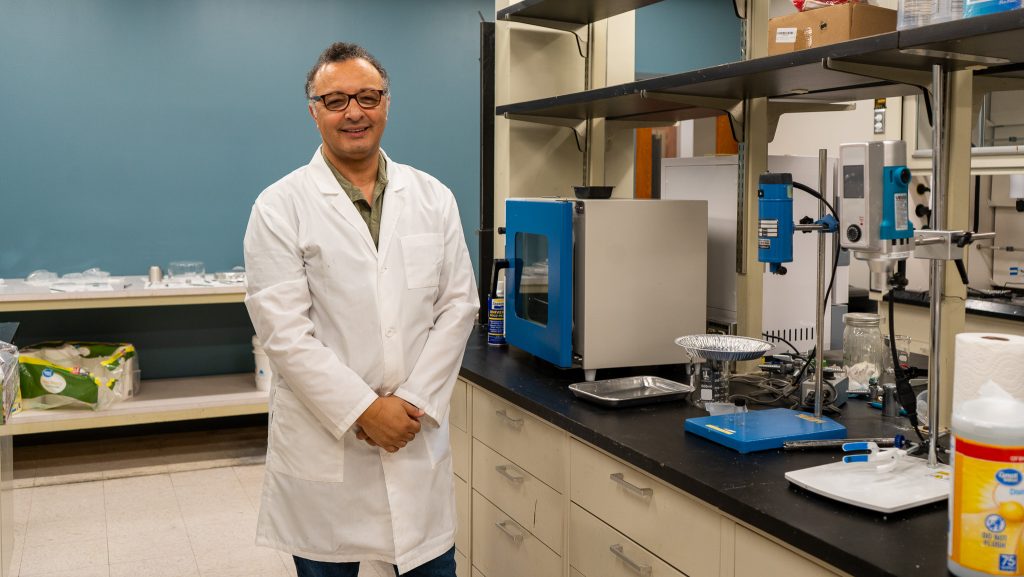
“Our challenge is making sure that we maintain the experience for the customer, so the performance is not negotiable,” he said. “It has to provide that positive impact on the environment. We need a solution that is both sustainable and affordable, so people see it as an equal alternative.”
He could have taken his innovation and idea anywhere, yet Izallalen chose to stay put in the town he’s grown to love.
“We really like living in this area. We didn’t want to move. This facility has all the tools and space we need,” he said. “I felt like all the stars aligned for me to start this company.”
To learn more about OceanFlex, visit the website.
Like what you've read?
Forward to a friend!