

The physician hiring process is broken, and Tessellate has an innovative solution
For the last decade, Paul Vernich has been obsessed with solving one problem: physician hiring, attraction, and retention.

He has seen firsthand how physicians are evaluated solely based on their credentials rather than their personalities, passions, and how they would fit into the broader hospital system’s culture.
The hiring process for physicians has also become competitive, with demand outweighing supply. Vernich has built his career and businesses around finding the right incentives and motivations to help physicians choose one hospital over the other.
The problem for hospitals is retention. The problem for physicians is alignment.
According to the American Medical Association, nearly 60% of physicians leave their initial post-training job within three years, and data show the mean duration for recent graduates is under two years.
“This happens because residents are not trained on how to look for a job that’s going to be a good fit for them. They’re really solving for two things: location and compensation,” Vernich said.
After that first experience, physicians broaden their scope – and that’s when other factors start to come into play. Some care heavily about pay, while others are more sensitive to workload, staffing, culture, career progression opportunities, and geographic location.
“The problem is that physician recruiters are measured to get bodies and seats; they’re measured to fill roles as quickly as possible,” Vernich said. “Every vacancy is going to cost a hospital about a half a million dollars. Both sides of this marketplace are suffering right now.”
Building a better model for hiring
Current solutions to this problem include job boards, job postings, and various physician hiring marketplaces; however, Vernich said all these options miss the mark.
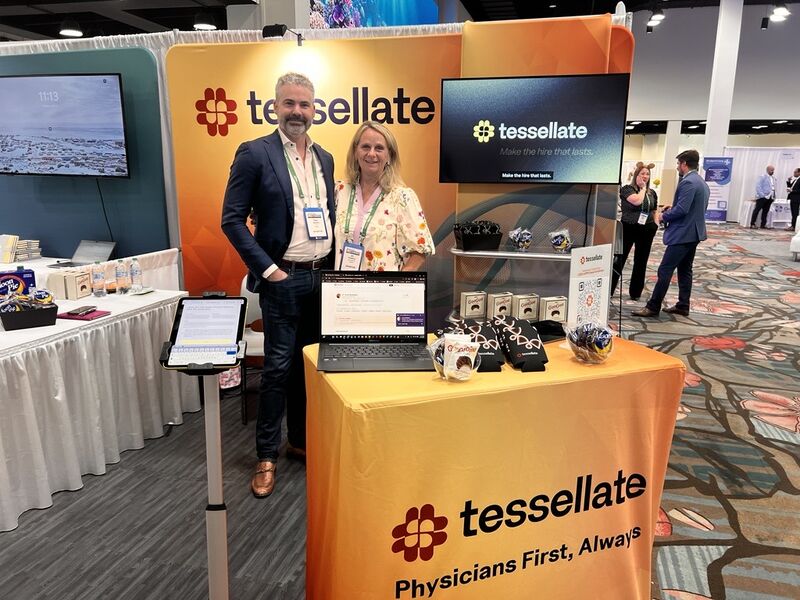
Tessellate is not a job board. Not a marketplace. And not a hiring agency. Instead, the platform operates like a virtual talent agent for physicians.
“We help validate the opportunities they’re considering and negotiate the contract,” Vernich explained.
One unique attribute of the platform is that all physicians remain anonymous until they formally apply for the role. They can anonymously browse roles, communicate with hospital systems, and ask hard questions before the job interview.
How to monetize this platform?
Many platforms charge a matchmaking fee when the hospital and candidate formalize the hire. But, Vernich wanted to do things differently.
“We try to go through over 100 criteria to help with alignment – so there is high intent and no friction. We don’t charge a placement fee. Both sides are very happy with that, and now comes the opportunity for us to monetize,” Vernich said.
On Tessellate, physicians share their preferences, needs, values, and non-negotiables across hundreds of criteria. The company’s data shows what physicians are converting on. From that data, Tessellate is building a paid physician hiring intelligence platform to show employers where they’re winning, why they’re losing, and what they can do to attract the ideal candidates.
The data shared on the intelligence platform is aggregate and does not disclose any one physician’s personal responses or information.
Already, Vernich and his team have secured five contracts.
Like what you've read?
Forward to a friend!