
Rassket wants to slash forecasting errors, fix the grid and give back
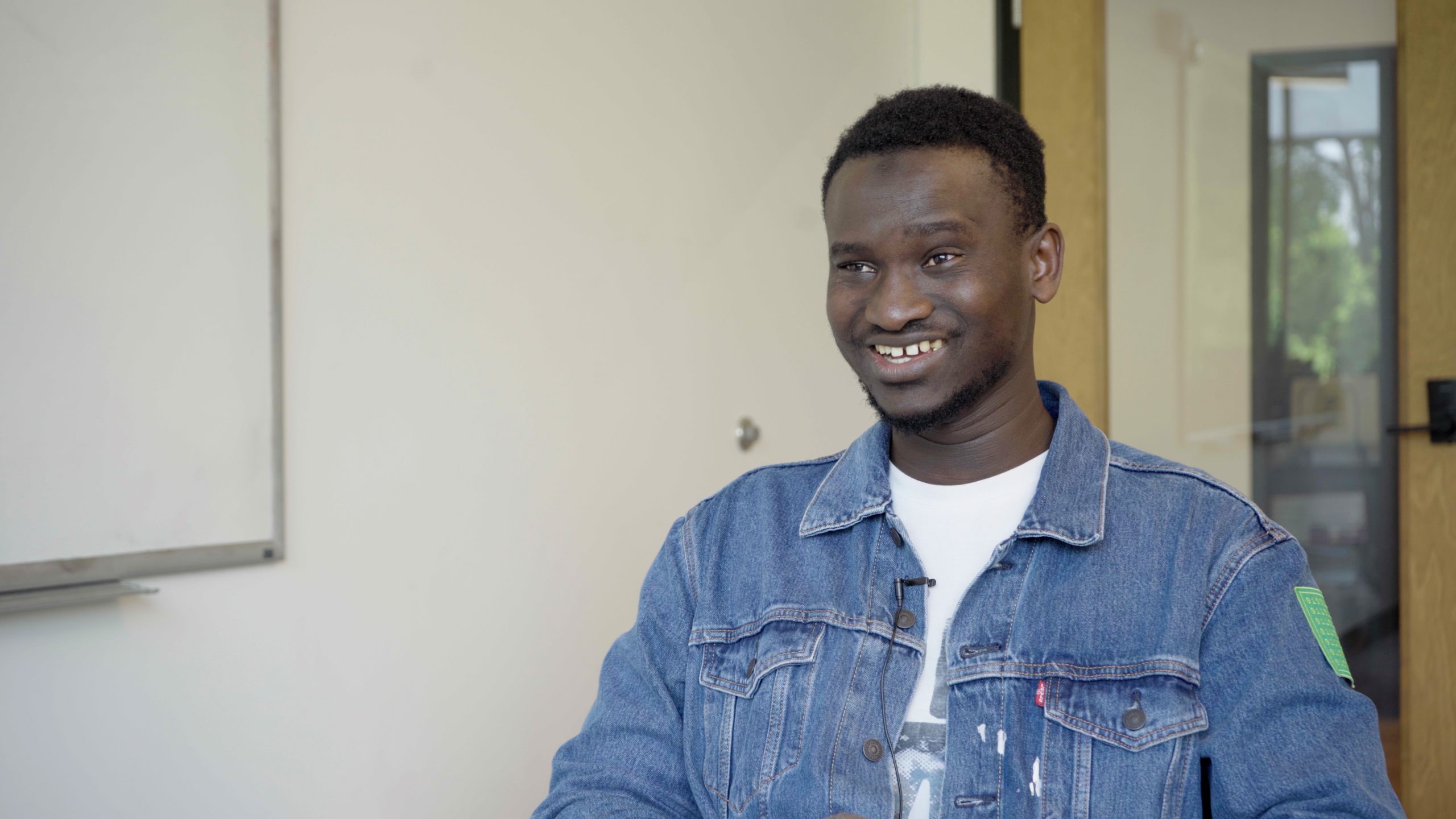
The San Francisco-based data scientist is one of four founders in CO.LAB's 2026 Energy Innovation Accelerator.
Sankung Fatty has always been thinking about the big picture. As the first college graduate in his family tree, he has tasked himself with creating a net-positive impact on the world. The avenue he has chosen to do so is through energy conservation.
“I think about something that will have an impact on our society,” he said. “Everybody uses electricity. If the light goes out, everybody suffers. And if I can contribute 1% to reduce the error in this sector, that would be a very positive impact.”
Fatty is a proud Gambian and has, throughout his life, been dedicated to making life better for his people. In some remote villages, Gambians lack access to power, let alone clean water and basic resources. Fatty spent many of his college days sending money, time, and support back to help them.
“This has given me a different perspective,” Fatty said. “I want to build something that is going to save the climate as well, reducing the amount of fuel we are burning and the natural resources we are using.”
He noted how consumption, energy use, and environmental effects have directly affected countries overseas, like Gambia. It’s why he felt so passionate about becoming an entrepreneur and solving the problem.
A new method to forecast consumption
In the United States and most developed countries, electricity demand is predicted weeks or months in advance. Fatty said when those predictions have inaccuracies, the cost ripples through to ratepayers. And, for the data scientists who track and predict the usage, it can be equally frustrating.
As a data scientist at the University of San Francisco’s computer science department, Fatty kept running into the same frustrating loop: clean the data, preprocess it, train a model, and then start all over again
“Data scientists will tell you that training AI forecasting and predictive analysis takes a lot of time. But you know what takes the most time? Cleaning bad data. Because garbage in, garbage out,” he said. “There are existing platforms that claim to do this – but they are either too ‘black box’ or too shallow.”
So, Fatty started working on an alternative solution.
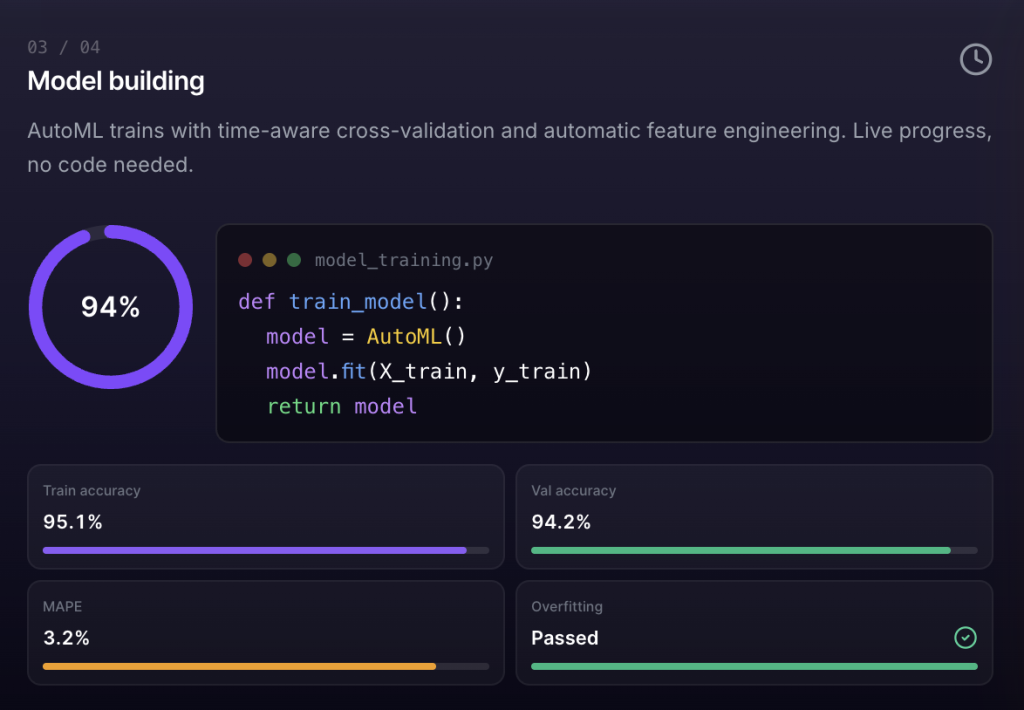
“We had the idea to create an auto machine learning (ML) that understands the domain, and can operate like an expert engineer in any specific domain, and can explain it in a language that people understand,” he said.
He founded an ML platform company called Rassket, which can connect directly to an energy operator’s existing database, processes, and trains on company-specific data, in order to generate accurate demand forecasts in minutes rather than months. What sets Rassket apart from other AutoML tools, Fatty said, is that it isn’t generic. The platform builds models tuned to a specific company’s data and operations, and critically, it can explain its reasoning in plain language rather than just outputting a number. Rassket recommends which model to train on, but the final call stays with the user.
“You can ask Rassket, and it will break it down to human language that you understand,” he said. “It’s not just a black box tool that spits out a result.”
Fatty said Rassket is now tackling the issues of forecast error and energy theft, which he said could cause up to $120 billion worth of problems for companies and consumers each year.
What does Rassket mean?
According to Fatty, the name Rassket is a homage to Africa, in many ways. Fatty said the name has two meanings: ‘Rass’ is named after Haile Selassie,” who went by ‘Ras,’ and served as the former Emperor of Ethiopia.
“His legacy is important because Ethiopia is the only African country never officially colonized,” Fatty said.
And the ‘Ket’ comes from the word ‘Rocket,’ according to Fatty. He said the idea is that the process is supposed to be ultrafast.
How did Rassket come to Chattanooga?
Fatty is currently in Chattanooga as one of four founders in The Company Lab (CO.LAB) 2026 Energy Innovation Accelerator, a six-week program designed to help early-stage startups connect with real industry partners. One week in, he said the experience has “felt more like a month.”
“We have a lot to digest, a lot of expert feedback, being able to talk to people who are leading in this industry,” he said. “It’s validating our hypothesis about what energy operators actually need.”
Fatty said the program’s location mattered to him. Chattanooga’s energy ecosystem, anchored by TVA and EPB, puts Rassket in front of the kind of operators he built it to serve.
But, beyond the tangible results of his technology making an impact with utility companies in the United States, Fatty said his mind is still fixated on supporting his community overseas.
“My goal ultimately is to have a portion of revenues go back to Gambia, to help support the people and provide them resources,” he said. ” I see the value in adding impact to society. As humans, I feel that is very deeply rooted in us. We want to create something that can impact people in our surroundings.”
Like what you've read?
Forward to a friend!