

The founders of Memvid are trying to fix AI’s worst habit: forgetting
Co-founders Mohamed Omar and Saleban Olow leaned on a viral marketing campaign and GitHub momentum to launch Memvid, a self-hosted memory layer for AI agents.
Artificial intelligence tends to have a bad long-term memory. Any person who regularly interfaces with chatbots like ChatGPT, Claude, or others would understand this fault.
To prove just how bad that memory can be, a company called Memvid, based in Chattanooga, posted a job titled “AI Bully” with the job description of stress-testing and exposing memory limitations of chatbots.
The pricetag on that day-long job was $800.
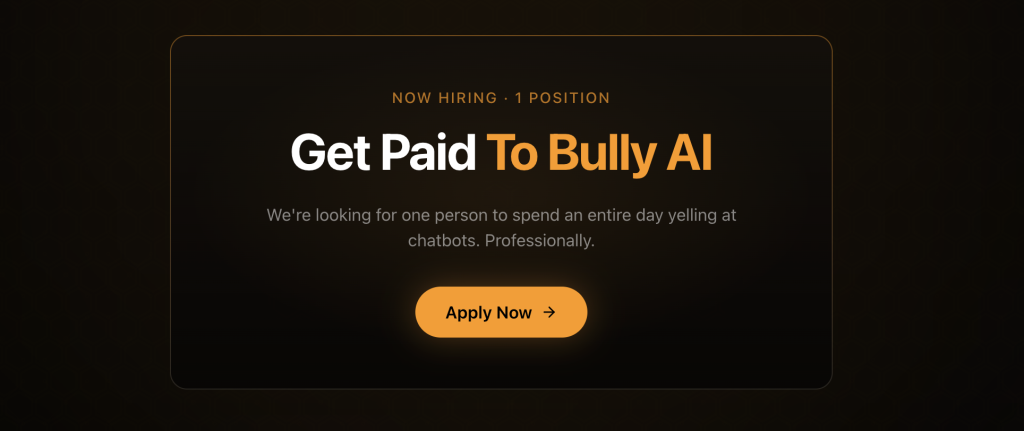
“We hired an individual to sit in a room and chat with these chatbots and record the memory over time. They can get angry and annoyed with it. But, we did this to prove something,” said Mohamed Omar, co-founder of Memvid.
The proof was in the response from major media outlets like Business Insider, Inc., The Guardian, and Entrepreneur, and the global story sharing among founders, CEOs, and technical teams.
“AI agents by default are very forgetful, and when they forget, they can hallucinate. This is a known problem and frustration for companies,” Omar said. “We want to solve that problem.”
The road to traction
The co-founders of Memvid, Mohamed Omar and Saleban Olow, met in Minnesota. They first started working together to roll out AI agents for healthcare systems in 2024, right around the time that AI chatbots started taking off commercially.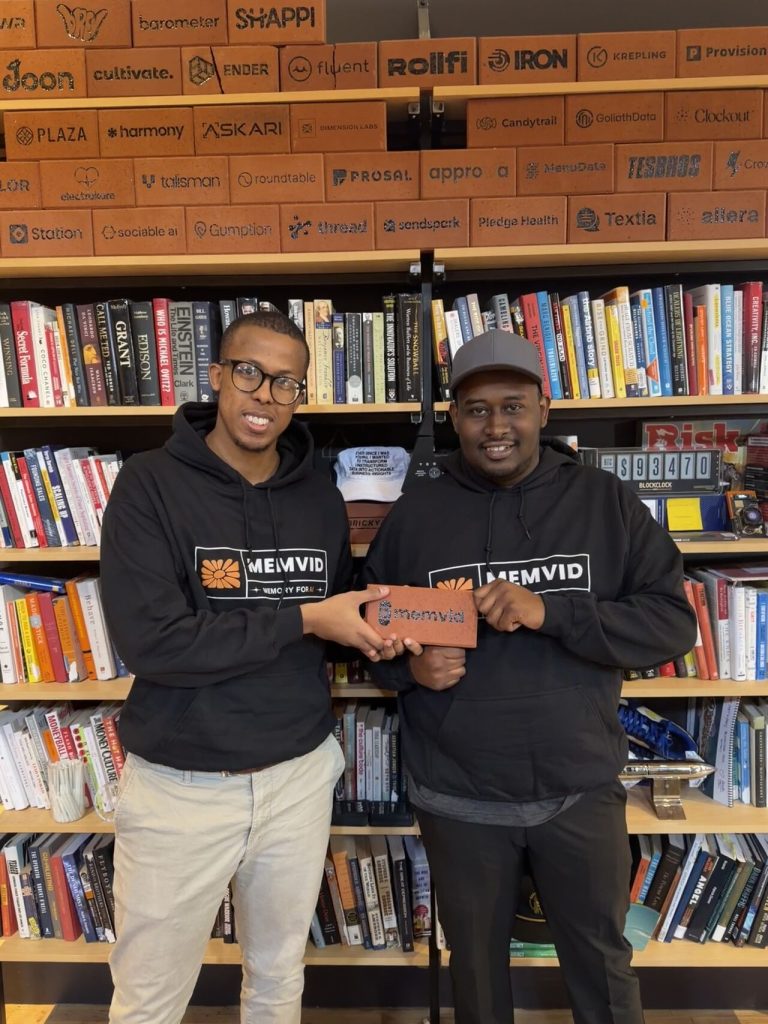
They weren’t strangers to the startup scene. Omar worked for a small media company that was acquired by Morning Brew in 2022, and then bounced around in go-to-market roles for various tech startups before launching Memvid.
Omar, the company’s CEO, said he is a self-taught developer with a background in economics, whereas Olow, the company’s CTO, holds a Master’s in machine learning and computer science. Together, Omar said, it makes them a solid team.
“We are outliers as founders, in that we are two immigrant kids from Minnesota,” he said. “We have both been through rejection, but it just gives us a stronger conviction in what we’re trying to build.”
One of the relatively immediate problems they ran into while building their healthcare AI agents was hallucinations and forgetful AI memory. So, they built an internal tool to retain that information.
And it worked well.
Omar and Olow found it so useful that they uploaded the code to GitHub, which is an open-source platform for developers.
“We went mega viral overnight. So we got about 10,000 developers who downloaded our code and used it within the first week,” Omar said. “And, within six months, we had about 60,000 developers use our code, so it has just kept growing.”
It became evident that their product had deep potential, but the backbone of it was open source. So, they decided to build an additional, proprietary layer to the code and technology.
They identified three ways customers were using the platform
“A portion of the skeleton of the product is open source,” Omar said. “Then we have a part of our product that is closed source, so all of our injection pipelines and retrieval pipelines are all closed source.”
And they identified three ways in which people were leveraging the product.
- Improving AI agent memory.
- Unifying data – bringing all data under one “source of truth.”
- Enterprise search across all the data.
The other two depend on getting the memory layer right first.
“Memvid is a business platform that allows companies to do just those three things. Keep a memory and record, unify your data, and do enterprise search,” Omar explained.
Flipping the script on AI ownership
When a company currently leverages AI agents, with big-name platforms like ChatGPT or Claude, data is housed on their server. But the founders of Memvid don’t think that’s right.
So, they built their platform to be self-hosted.
“One of our core innovations is our file format. You are able to store all of your data in a single file, and that file can live anywhere. You can put it on your AWS, on your Google Cloud, or you can host it on your private servers, wherever you want,” Omar said.
One of the reasons they feel so strongly about self-hosting is being able to offer businesses real privacy, but as an added advantage, AI genuinely works better when it can have a 360-degree view of company data.
Omar said they are looking to target a lot of mid-market companies for the rollout of their platform. They also have a base of startups that already leverage the platform and open-source code.
What’s next for the Memvid team?
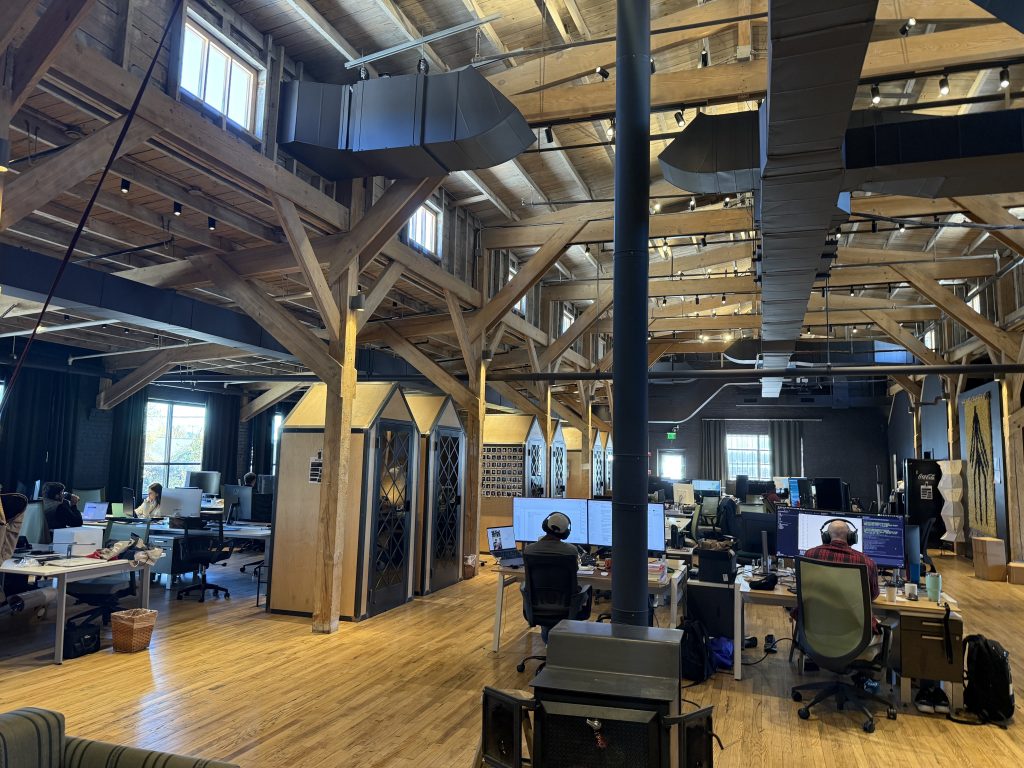
Aside from future planned marketing campaigns, to draw more interest, Memvid is gearing up to open a fundraising round in the fall. They’re working to grow their team, build a robust go-to-market strategy, and continue product development.
In the fall of 2025, Omar and Olow landed investment from Market Square Ventures in Knoxville and Brickyard in Chattanooga. As a part of the agreement, the founders moved to Chattanooga to work out of the Brickyard, with no distractions, until they reached their first million dollars in revenue.
So far, Omar said it’s been a comforting experience being around other founders who are also building from zero to one.
Like what you've read?
Forward to a friend!