

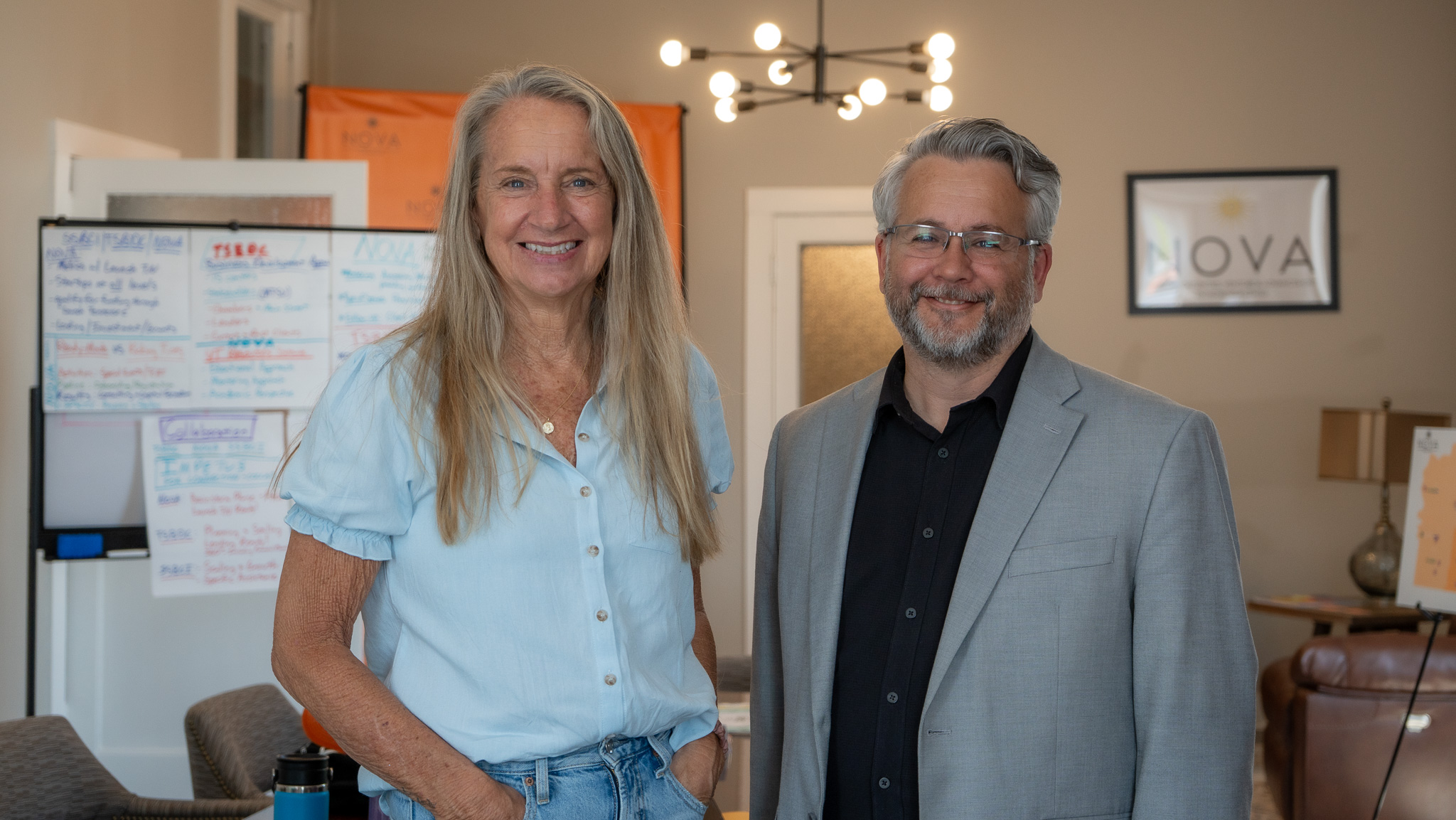
How NOVA is changing the mindset around rural entrepreneurship in Tennessee
Rural Frontier Entrepreneurship is the creation and development of innovative enterprises that leverage existing community assets to strengthen economic resilience and social well-being in rural areas.
For the first time in state history, entrepreneurs and small business owners in Southern Middle Tennessee have an entrepreneur center built specifically for their region — and the thought leadership emerging from the center in Pulaski may end up mattering to every small town in Tennessee.
The NOVA Entrepreneur Center opened roughly seven months ago, the product of a partnership between LaunchTN, the University of Tennessee System, and two founders who decided that rural entrepreneurs deserved a seat at the table. NOVA stands for “New Opportunities, Venture, and Advancement.” It officially became the state’s ninth entrepreneurial support hub in September 2025.
We filled a geographical void in a region that’s never had representation before.
We traveled to Pulaski to interview Shelley Sarmiento and Payson Johnston, both of whom are highly successful entrepreneurs and the co-founders of NOVA EC.
The right people for the job
Sarmiento co-founded White House Black Market before it was sold to Chico’s in 2003. She also owned a traveling fashion store called the Little White Fashion Truck, which was featured in publications across the country for its innovative approach.
Johnston built a successful career at Cisco before leaving to found and scale a Silicon Valley fintech company called Crowdz, whose assets were sold to a private equity firm in June 2024. Since then, he has helped launch a couple of other companies and worked as an instructor of business at UT Southern. Soon, he will be transitioning to tech entrepreneurship at Vanderbilt University.
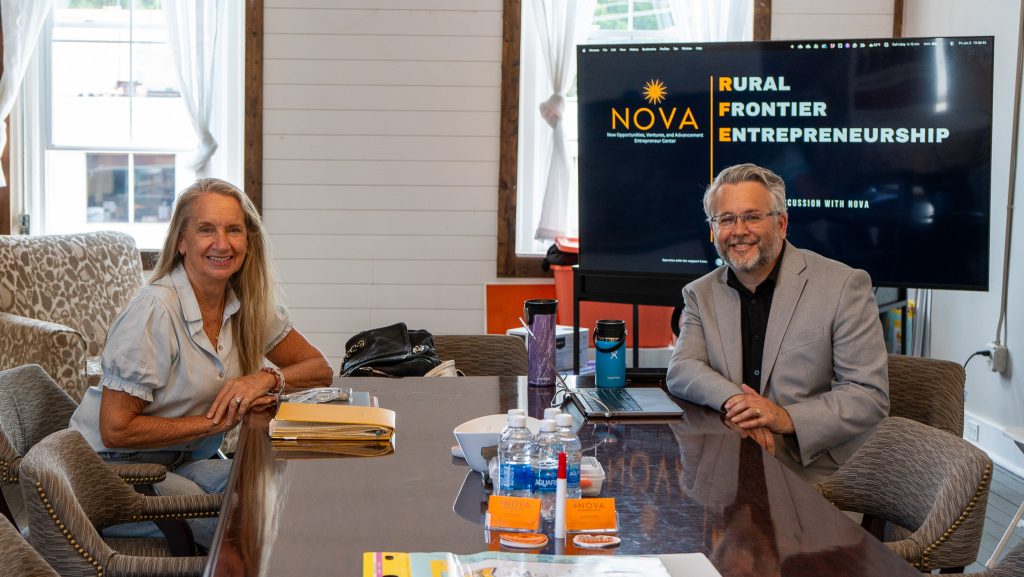
Sarmiento said thier collective desire to give back to others is the fabric that makes their partnership work.
“We’re big city people. We have big world experience, and we have big ideas. We just wanted to do one more big thing, and this might just be it,” she said.
They could have reinvested anywhere. Yet, they chose Southern Middle Tennessee.
They chose Pulaski.
Why Tennessee should be watching
It would be easy to file the founding of NOVA under “good news for Pulaski” and move on. But that would be a lapse in judgment.
NOVA is not intended to be a one-off local project. Backed by the UT System – UT Southern and LaunchTN, it was built to serve as a proof of concept for the entire state. The model its founders are stress-testing in real time could become a playbook for other rural communities across Tennessee — and beyond.
Johnston said the goal taps into a broader statewide initiative.
We want people to know our experiences and help them not make the same mistakes. If we can accelerate their success and build the region as a result, that would be our goal.
What is Rural Frontier Entrepreneurship?
The NOVA founders call their approach “Rural Frontier Entrepreneurship (RFE),” defining it as the localized creation of businesses that leverage a community’s unique assets, skills, and traditions to drive economic growth. It’s a phrase they repeat often, almost like a mantra, because it represents a deliberate break from the way innovation usually gets imported into a town.
A rural community cannot be treated the same as a big city, Sarmiento said.
“In a big city, you move fast and break things. But here, every touch point, every relationship, and every detail matters,” she said.
In towns like Pulaski, many businesses are generational — passed down through families — so newcomers aren’t competing against other startups so much as against decades of established trust. For example, in a big city, there may be hundreds of doctors, lawyers, or accountants. But in a small, rural town, there may be one doctor, one lawyer, and three accountants. In many cases, families have deep generational expertise.
Rather than working with founders to replace those businesses, NOVA equips current owners with new technologies to help them operate more efficiently, and it helps entrepreneurs think outside the box about the gaps they can fill.
RFE empowers new and existing businesses to build and fortify meaningful ventures where resources may be limited, but creativity and connection thrive.
Door knocking in a 13-county region
The model also demands a level of hands-on outreach that would be foreign to a metro accelerator. Building a community of founders in Southern Middle Tennessee isn’t a matter of sending a calendar invite. It’s all word-of-mouth and requires door-knocking and relationship-building.
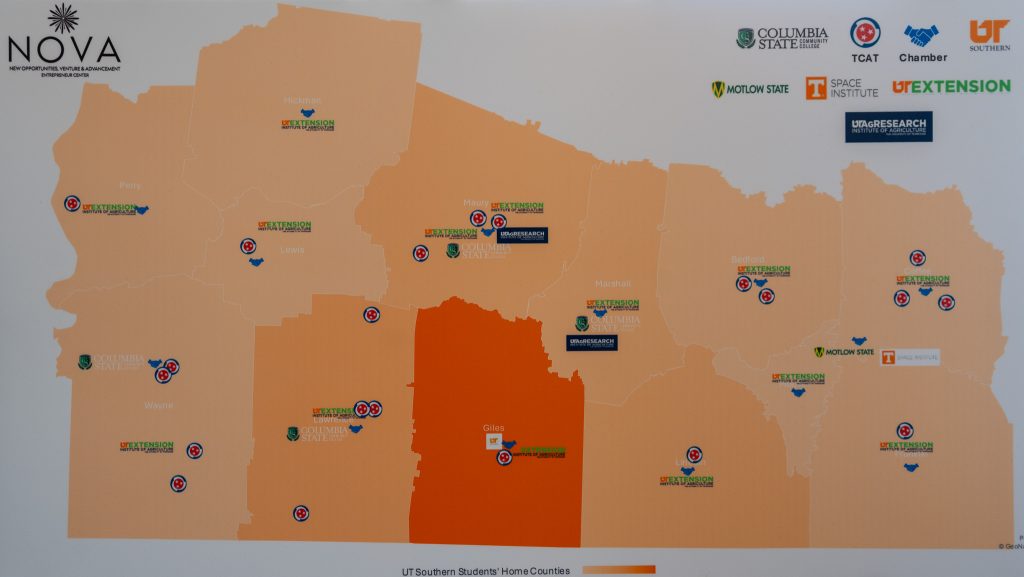
Since launching the center, she and Johnston have hosted roughly 35 events and drawn more than 1,200 people through its doors. NOVA’s influence stretches across a 13-county region, meaning their events take place all across Southern Middle Tennessee, not just in Pulaski, where they’re headquartered.
Blending technology with tradition
NOVA’s larger ambition is to merge two worlds that rarely speak to each other: advanced technology and the region’s traditional economic base.
Johnston explained the unique approach RFE takes towards integrating technology.
Frontier represents tech, engineering, healthcare, space, AI, advanced manufacturing. Then you have rural, what we’re known for: agriculture, supply chain, and SMBs. We need to bring the two together. Making tech come in so that it can enhance the things we already excel at.
In a rural town, the barrier to entering that new era is a comparatively small ask. Johnston added that the amount of money required to change a life here is strikingly achievable.
“What I saw in London and Silicon Valley, and Shelley saw in New York, is that big cities have this ecosystem of seed and pre-seed that’s comprised of multiple millions of dollars. But here, $10,000 could change somebody’s life,” he said.
Under their RFE framework, pre-seed funding ranges from $10,000 to $50,000 — modest by coastal standards, but transformative by local ones.
The proof is in the engagement
Sarmiento and Johnston launched the center together, leaning heavily into the shared goals of UT Southern, the Tennessee Main Street Program, the Tennessee Department of Economic and Community Development, and the Giles Chamber to shape their vision and their application.
For example, Jessie Parker, the CEO of the Giles Chamber, was an integral advocate for NOVA’s existence, playing a significant role in the application process. Today, NOVA is headquartered in an office space above the Giles Chamber in the Makeshift Building downtown Pulaski. The two entities work together symbiotically to support small businesses in Pulaski – and beyond.
Just seven months in, the numbers suggest the proof of concept for NOVA is viable. NOVA has served 51 startups and logged 245 mentoring sessions. This blew Johnston and Sarmiento’s initial engagement goals out of the water.
But Sarmiento said getting the center off the ground wasn’t a walk in the park.
Getting where we are has been hard. We’re breaking in, making a difference, learning things. We’re entrepreneurs, and we have big plans for this city, region, and state. We’re really just getting started.
Connect with Shelley Sarmiento and Payson Johnston at the NOVA Entrepreneur Center.
Learn more about Rural Frontier Entrepreneurship.
Like what you've read?
Forward to a friend!