

3D high-tech start-up, TreisD announces relocation of headquarters to UT Research Park
The high-tech company also announced an innovative study of sinkholes, using 3D artificial intelligence technologies to predict their occurrences.
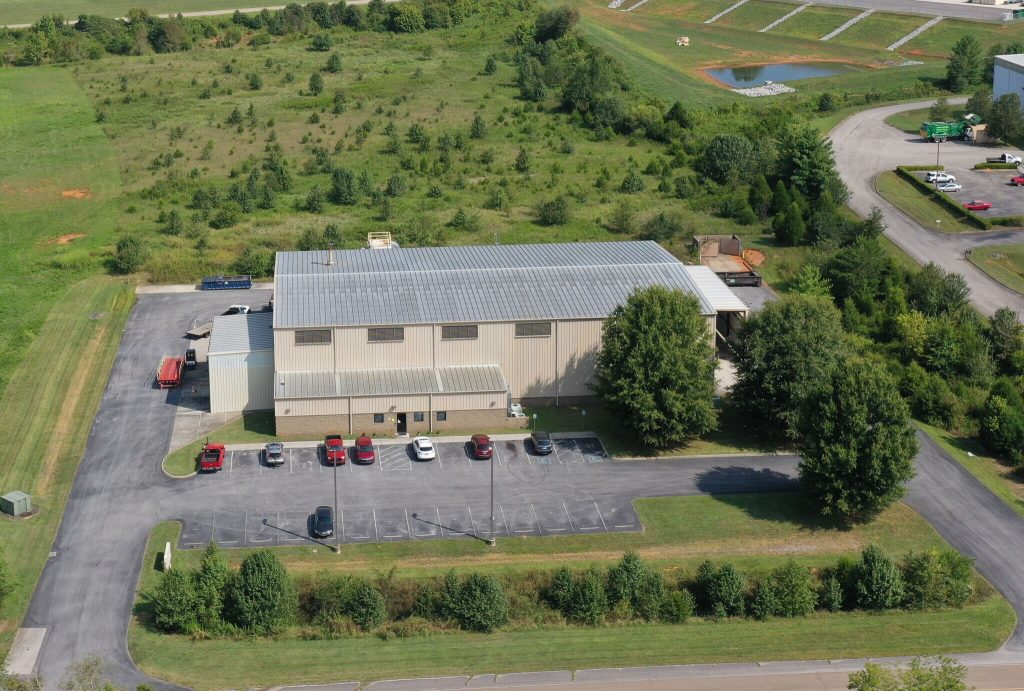
In an exciting announcement from one of Knoxville’s newest start-ups, TreisD shared that it will officially be moving operations to the area. This comes on the heels of the company’s announcement in July that it signed agreements to lease a 20,000-square-foot industrial building in the Eastbridge Business Park in Mascot, to build out manufacturing operations.
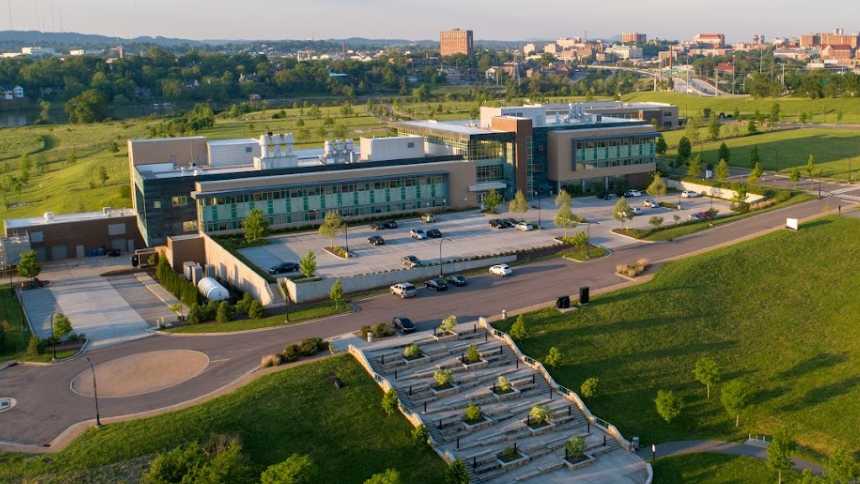
After many long discussions, the company’s founders decided to relocate its headquarters to the University of Tennessee (UT) Research Park at Cherokee Farm in the Innovation South building. It’s a 30-minute drive from their Masoct facility.
“Working with Brett Malone and his team at UT and its research park has been wonderful,” said Leslie “Jerry” Nims, TreisD’s Chairman and Founder. “We are a high-tech, visionary company, and UT Research Park is a great fit for us. We’re eager to further advance additional, real-world applications of TreisD’s innovative technologies, utilizing the world-class resources of UT and supporting the community through the benefit of tech startup-supported research. Looking to the future, we believe this area will become a national innovation center.”
Teknovation interviewed Nims on Friday morning. He said the company originally had its sights set on Southern France. The co-founders of TreisD, Nims and John Brandon, had an offer from the French government to assist in relocation; however, Tennessee came on the scene at the “right time.”
On Tuesday afternoon, we also sat down with Malone, the Chief Executive Officer of the Research Park. He attributes TreisD’s draw to more than just strategic alignment. He said it’s the park’s “curious community” that is the real lure.
“As a research park, we should be taking an active role in bringing big companies to town. It supports our strategic mission of place-based innovation, and in order to do that, we need to make a research park that is desirable to be in. Whether it’s through the beauty of the park itself, or through the curious, creative people who work here,” Malone said.
TreisD, as the name suggests, is a 3D imaging company that specializes in turning 2D visual elements into digitally replicated 3D visual models suited for the human eye. Then, they print it on a film that cannot be replicated.
One of the applications of this technology is intended to help with identifying, combating, and preventing counterfeit items. One example the company uses is 3D printing commemorative entertainment and event tickets to include irreproducible image features for authentic branding and anti-counterfeiting products.
Another technological application
Upon conversations with the research park, TreisD discovered another potential market fit: assessing sinkholes.
You may think, What does a 3D printing company have to do with sinkhole prevention? But, it turns out there’s actually a lot of need for 3D companies to enter the geological assessment space.
TreisD announced a partnership with the Cherokee Farm Development Corporation (CFDC) to launch a feasibility study focused on visualizing and mitigating sinkholes. The study aims to equip experts with tools to accurately assess the depth, magnitude, and positioning of sinkholes underground using TreisD’s proprietary 3D AI technology.
“This project is exactly what the University of Tennessee and UT Research Park are here to do,” said Brett Malone, CFDC President and Chief Executive Officer (CEO). “ This is the kind of mutually beneficial private-public alliance that highlights the best of our region.”
Malone was the catalyst for the idea, and Nims and Brandon thought about it and decided that it was a good application fit. The company’s technology has been developed and researched for many, many years. However, from a business side, TreisD is still in a pre-revenue start-up phase.
“We have done satellite imagery, we’ve developed a whole medical system for 3d imagery. But we’ve never gone down into the ground, subterranean, and we thought it was a great, challenging idea. So that’s how that deal came together,” Nims said.
He mentioned that the TreisD technology is both applicable and desirable to many industries, but they’re still looking for the most cohesive fit.
In this case, the company plans to apply large language models (LLMs) and large vision models (LVMs) to create true-to-scale 3D images of sinkholes, replicating the human visual system’s depth perception.
Unlike traditional LiDAR and ground-penetrating radar, which produce 2D representations, TreisD’s goal is to generate immersive, accurate 3D visualizations that can be viewed the same as with the human eye.
Sinkholes are a persistent issue in East Tennessee due to the region’s limestone-rich geology. As groundwater dissolves the rock beneath the surface, voids form that can eventually collapse, causing damage that the U.S. Geological Survey estimates costs at least $300 million annually nationwide.
Investing in the future workforce
In addition to the feasibility study with UT Research Park, TreisD has also partnered with the College of Emerging and Collaborative Studies (CECS) at UTK, offering a capstone course for students titled “Capturing Legacy 3D Image Data for AI Model Training Project.”
“We also hope to continue collaborating with other UT colleges and departments,” said John Brandon, TreisD CEO. “UT’s top-rated polymer science program at the Institute for Advanced Materials & Manufacturing was a major factor in TreisD’s decision to locate in Knoxville.”
Nims said one of the most exciting parts for him is getting to see the students use the Nimslo 3D camera, which he invented back in the 1980s in Japan.

The camera takes 3D pictures without requiring glasses or a headset. It captures multiple images that, when processed, create a moving 3D “gif” effect. The camera allows users to create 3D images that match the human visual system.
The Nimslo camera was the first step in the technology that TreisD operates with today.
Malone said the Research Park played a big role in helping TreisD relocate, but it didn’t happen in a vacuum. Several other partner organizations played key roles in providing connections, making introductions, and selling the state of Tennessee.
“I’ve noticed in my past year as CEO of the Research Park that Knoxville is really good at collaborating to engage with these big companies like TreisD. This is a win for the whole community,” he said.
So next time you see the TreisD team around the UT Research Park, be sure to give them a sweet Southern welcome.
Like what you've read?
Forward to a friend!