

ASTERS pivots, progresses, and prepares for the launch of it’s tech in July!
After incubating at the University of Tennessee, Knoxville (UTK), for a couple of years, ASTERS and its co-founder Aniirudh Ramesh plan to fly the nest.
When we first connected with the ASTERS team in early 2024, they were developing a real-life, real-time evacuation system for active shooter situations. The technology aimed to use artificial intelligence (AI), a network of cameras, and real-time decision-making algorithms to safely evacuate people from buildings or venues during an active shooter event.
Since then, the company has been featured on WBIR, the local NBC affiliate, won prize money with the Anderson Center for Entrepreneurship and Innovation at the University of Tennessee, Knoxville (UTK), and has secured a spot in a very exclusive accelerator program.
During that time, Co-Founder Aniirudh Ramesh also shared that ASTERS has slightly pivoted its focus to reduce risk and liability, while still providing the same core value proposition.

A Strategic Pivot
“There is unlimited liability in real-time scenarios, so in the fall we pivoted to more of an AI-based simulation and decision intelligence company that focuses on security operations based on the feedback we got from the DHS agency we were working with,” Ramesh said.
ASTERS, which stands for “Active Shooter Tracking and Evacuation Routing for Survival,” was co-founded by Ramesh and his advisor at UTK, Dr. Subhadeep Chakraborty. The two felt compelled to develop a solution for evacuating people in the face of gun violence at schools, sporting events, and concert venues.
The Gun Violence Archive (GVA) defines a “mass shooting” as an incident in which four or more victims are shot or killed, not including the shooter. According to GVA data, there were 503 mass shootings in 2024 and 30 “mass murders,” defined as incidents in which five or more people were killed.
“Real-life operations are hard. Real-life operations are expensive. And real-life operations are massive liabilities. You cannot leave decisions about human lives up to AI,” Ramesh said.
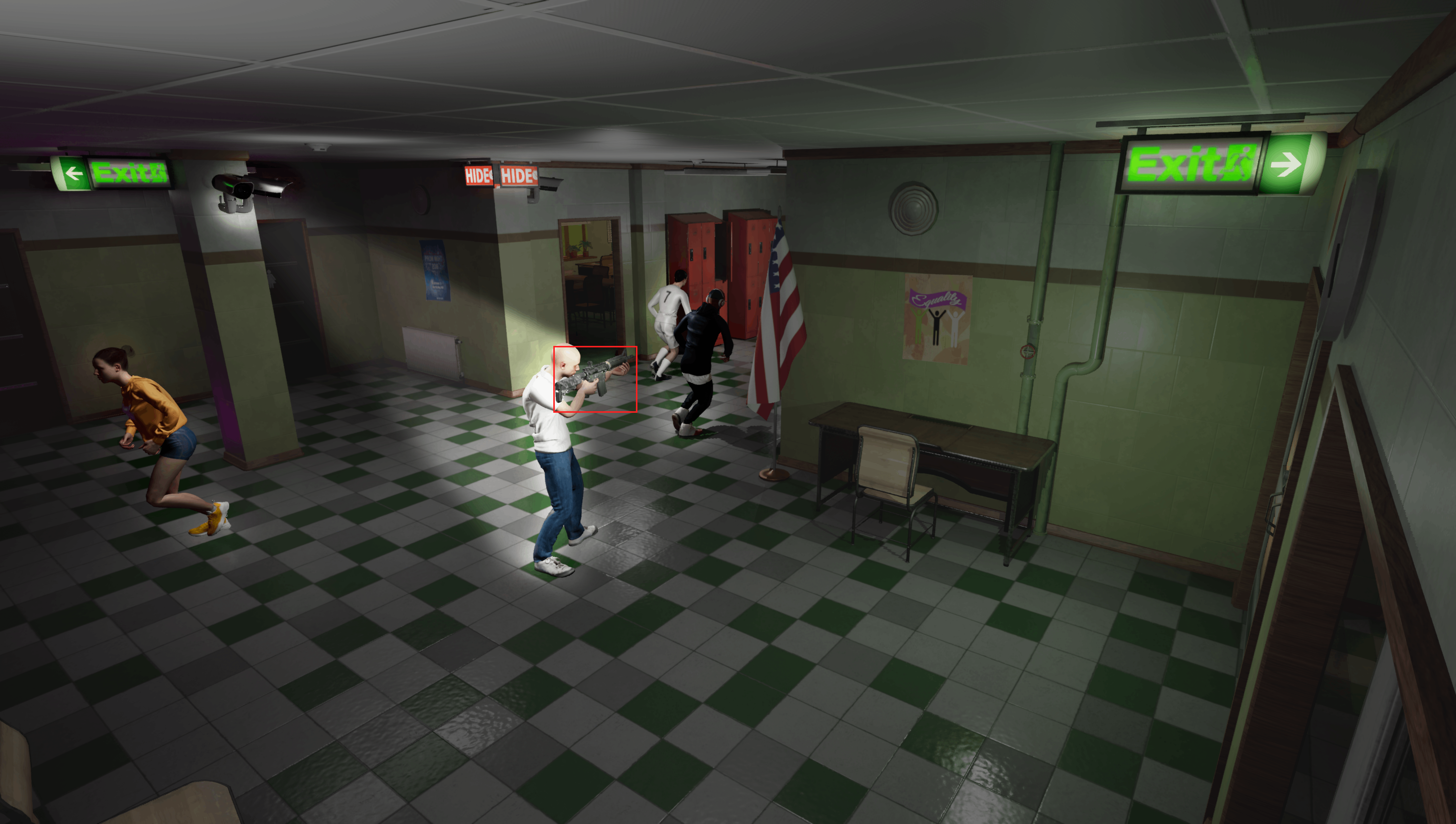
Now, the ASTERS team is focused on simulation technology that aims to improve operational efficiency for security teams. They are creating three-dimensional mockups of venues, schools, and workplaces, incorporating digital avatars (agents), and simulating potential real-world emergencies.
Ramesh explained the three tiers of ASTERS’ updated approach:
- Generative AI for 3D assets – Converting building floor plans into 3D environments for simulations and synthetic datasets used to train our AI model.
- Simulating general operations – Running simulations of events and scenarios within the 3D spaces to better model risk and edge-case scenarios.
- In-depth scenario analysis – Using advanced algorithms to analyze specific cases, develop safety plans, and decision support protocols that support execution.
Gaining Momentum
Using this new model, Ramesh was accepted into the University of Chicago’s Polsky Center for Entrepreneurship, Innovation, and Data Science Institute’s flagship AI Accelerator program called “Transform.”
With a very low acceptance rate, ASTERS was the only out-of-state team to be selected.
“We didn’t expect to get into the UChicago program. The interview process was rigorous and very competitive,” Ramesh said. “Halfway through, it’s been an amazing experience.”
ASTERS and the other five start-ups will receive approximately $325,000 in total investment as part of participating in the program.
The Transform Accelerator’s demo day is set for July during Tech Chicago Week, one of the largest tech conferences in the country. Ramesh hopes to have a minimum viable product (MVP) ready to pitch by then.
Funding Hurdles
One of the most pressing challenges Ramesh has encountered is the freeze in federal funding. As a high-risk technical start-up primarily targeting government agencies such as the Department of Defense (DoD) and the Department of Homeland Security (DHS), many funding opportunities come from programs like the National Science Foundation’s (NSF) Partnerships for Innovation (PFI) and Small Business Innovation Research (SBIR) grants.
“We were ready to submit another proposal to NSF, but now the entire PFI website is archived,” he noted.
Additionally, the DHS Center of Excellence he was working with got impacted by the DHS-wide budget cuts, closing another potential pathway Ramesh was counting on.
In the meantime, he is supporting ASTERS with income from his day job as a PhD candidate and researcher at UTK. And, supplementing with the investment from the Transform Accelerator.
“I’m focusing on laying low, building the product, engineering, and preparing to have a competitive application once grant opportunities open back up,” Ramesh said.
He shared plans for a capital raise upon completion of the accelerator in July.
Connect with Aniirudh (Ani) Ramesh.
Like what you've read?
Forward to a friend!