

Whitecoat Learning Platform lands key healthcare contracts, $1.6 million funding, and momentum moving into 2026
The Whitecoat team shared the onboarding of 10+ notable, high-volume clients in the past year, such as the Virginia Hospital & Healthcare Association, Tennessee Hospital Association and Northern Arizona University.
The training pathway to becoming a nurse isn’t linear. The combination of needed skills, reviews, supervisors, patients, and learning pathways can make for one big administrative mess. Not to mention all of the background work, communication, and planning involved in just getting a student nurse in the hospital to practice.
For example, when a student nurse goes to practice at a hospital, they need to know which building they’re going to, which floor, what unit, and who their preceptor is. And, before they walk through the door, they need to make sure that they have their flu vaccination, COVID vaccination, completed HIPAA compliance, and fire safety training.
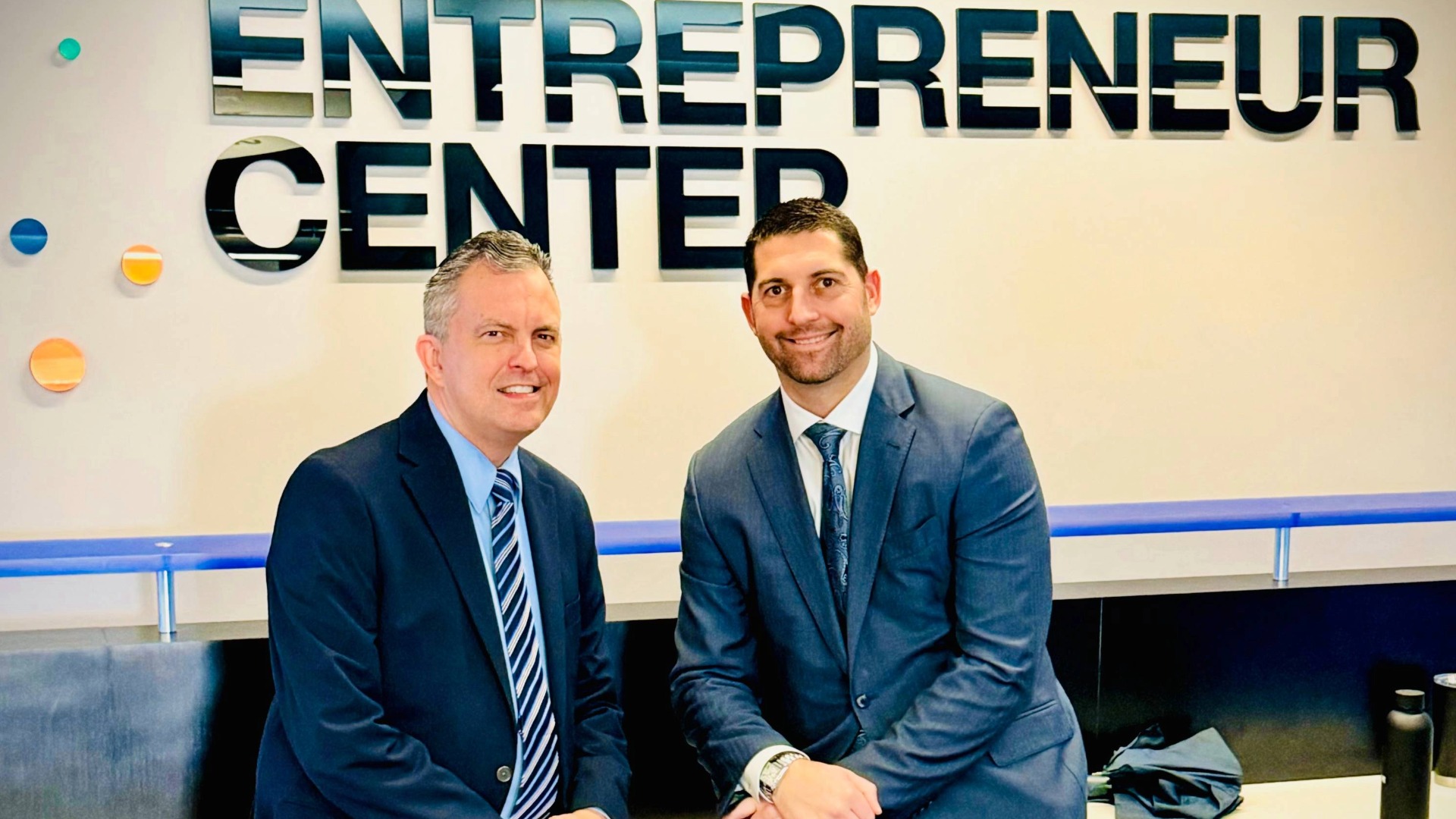
Liam Woodard noticed this problem a couple of years ago and set out to solve it, alongside Craig Myers, a Cleveland, OH-based clinician.
“Just think – that’s one person, one spot, one unit, right? But when you think about it from a program or institution perspective, with multiple students, it becomes highly complex very quickly. And, that’s not including measuring that student’s learned skills once they get there,” Woodard said.
They wondered – What if this whole process could be managed on one platform?
So, Woodard and Myers co-founded Whitecoat Learning Platform in early 2025.
How does Whitecoat work?
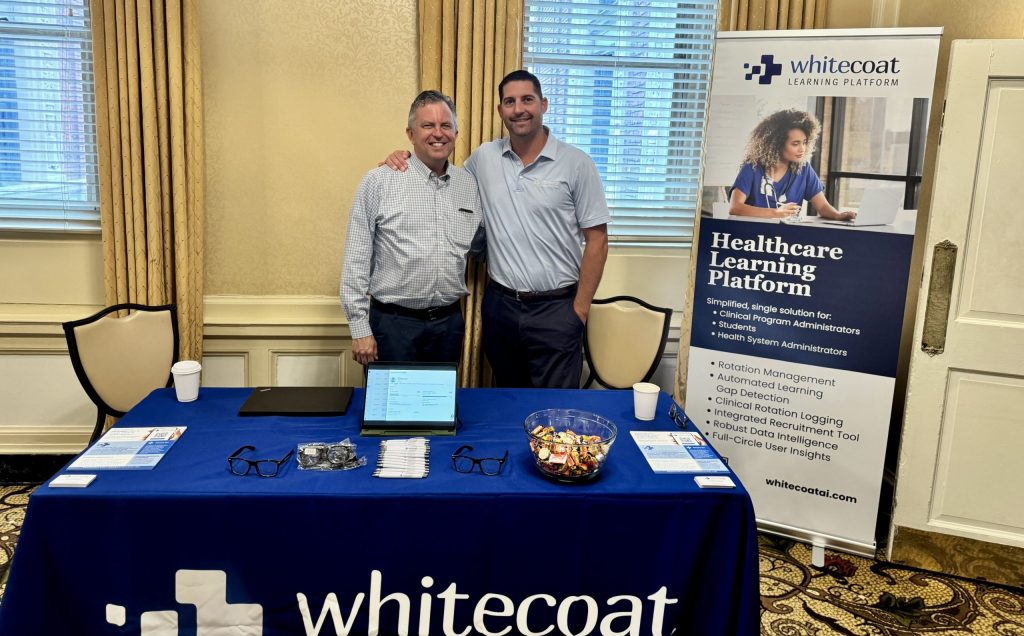
Whitecoat helps keep all the administrative onboarding tasks in line before the student or “learner” enters the doors. The platform serves as the primary source for gathering and relaying information. It also uses artificial intelligence to collect data and leverage insights about each learner.
In terms of assessing skills, the traditional method for preceptors is to send their learners an email at the end of the week with what went right and what went wrong. This approach left room for error, built bias, and lacked real-time feedback for learners to immediately apply.
Whitecoat introduces a simpler model.
Each learner has the preceptor scan a QR code (unique to them) to provide quick insights after each interaction. “We designed this to be quick and easy for the preceptor. No more than 60 seconds,” Woodard said. “Then, their scores and data go directly into our system. This results in a wealth of data for both the learner and advisors, especially compared to the old end-of-week email method.”
Data that works for you
One of the biggest benefits of Whitecoat, Woodard said, is its unique ability to capture data insights during a specific rotation or training experience and use them to prove credibility on the job market. He believes it could shift the landscape for healthcare workers, job seekers, and hiring managers.
“The institutions can look at the Whitecoat reports for an individual and see where they trained, who they trained with, and what the outcomes were from that experience,” Woodard explained.
Before a platform like Whitecoat, institutions could not be sure if a prospective hire struggled in one area versus another. Instead, they find out the hard way–once the person is already on the job.
“Whitecoat isn’t just managing clinical education,” Woodard said. “It’s turning readiness into something that institutions can see, trust, and act on in real time.”
Woodard and his team at Whitecoat have already seen the impact of these real-time data points. They have noticed some learners on their platform using their insights for articles, presentations, and conference topics.
“To us, that’s really exciting to see how in a very short period of time, the data is so actionable that people are using it as a way to stand out as thought leaders in their industry,” Woodard added.
Traction heading into 2026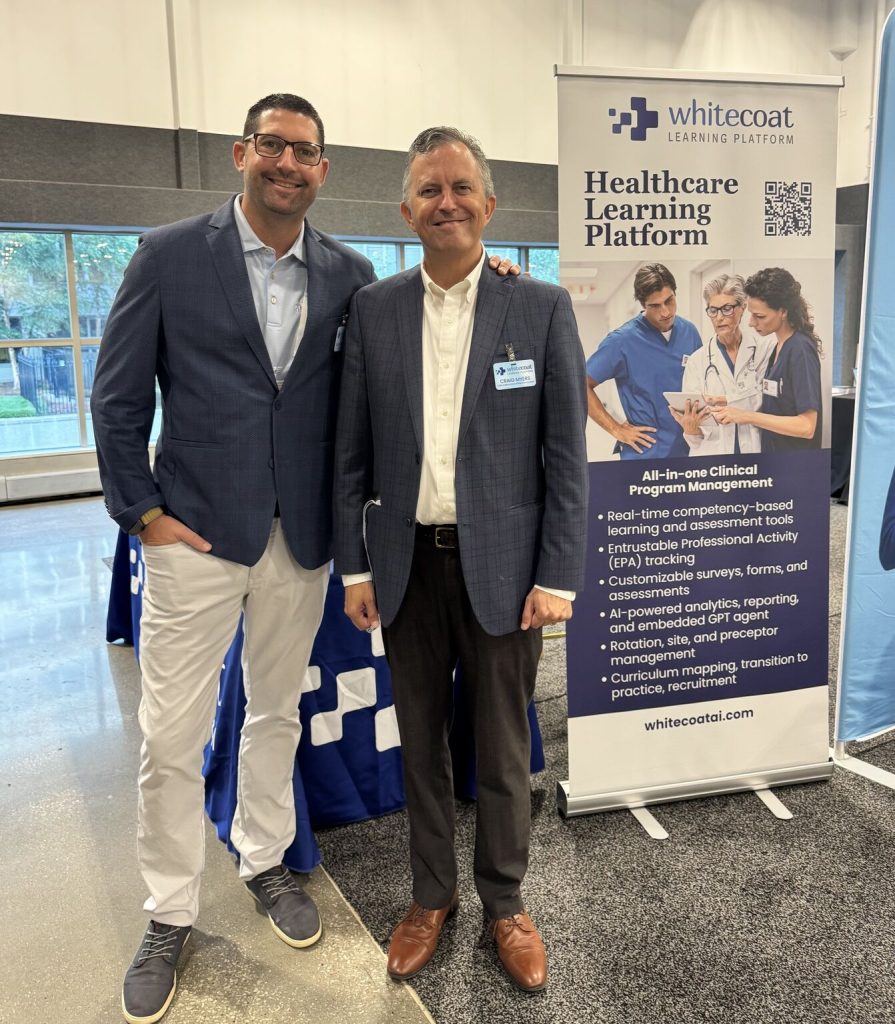
The team at Whitecoat reported some exciting developments since Teknovation first covered the company in early 2025.
Most notably for the startup, they shared the onboarding of 10+ notable, high-volume clients, such as the Virginia Hospital & Healthcare Association, which has 26 member health systems, representing 117 community, psychiatric, rehabilitation, and specialty hospitals throughout Virginia. Whitecoat also signed a contract with the Tennessee Hospital Association, and Northern Arizona University.
Some of the work Whitecoat has already initiated supports state-specific initiatives tied to the federal Rural Health Transformation Program, which focuses on funding activities around rural health initiatives in America; such activities could include upskilling, innovating new delivery methods for care, or creating new rural system models.
“We are well-positioned to help support those workforce development initiatives,” Woodard said.
Right now, Whitecoat has 11 full-time employees, which is pretty significant considering Woodard and Myers just launched the platform officially one year ago.
Additionally, they boasted a strong cap table comprised of healthcare leadership, well-known Nashville healthcare angels, including PYA’s Jeff Pate, two rounds of investment from Launch Tennessee’s InvestTN fund, and funding from Knoxville-based Market Square Ventures. Among all of these partners, Whitecoat Learning Platform raised $1.6 million last year in just three months.
Looking toward the rest of 2026, the Whitecoat AI team is focused on strengthening its software’s offerings, making it more customizable, and onboarding new clients.
Learn more about Whitecoat Learning Platform.
Like what you've read?
Forward to a friend!