
Voltair wants to stop powerline sparks before they start using autonomous drones
"What we're really trying to do is build technology that allows utility teams to have visibility into their infrastructure," said co-founder Avi Gotskind.
Trees toppling onto power lines have sparked more than 1,000 wildfires in California alone over the last decade. And since 2015, power lines have caused six of the State’s 20 most destructive wildfires. One of the worst, the “Camp Fire” in Butte County, which destroyed the town of Paradise, California, killed 85 people, and did an estimated $16.5 billion in damages. It points to a problem: utilities are often years behind on routine inspections of the infrastructure they’re responsible for maintaining. This especially matters in places like California, where dry, windy conditions brew the perfect storm for wildfires to run rampant.
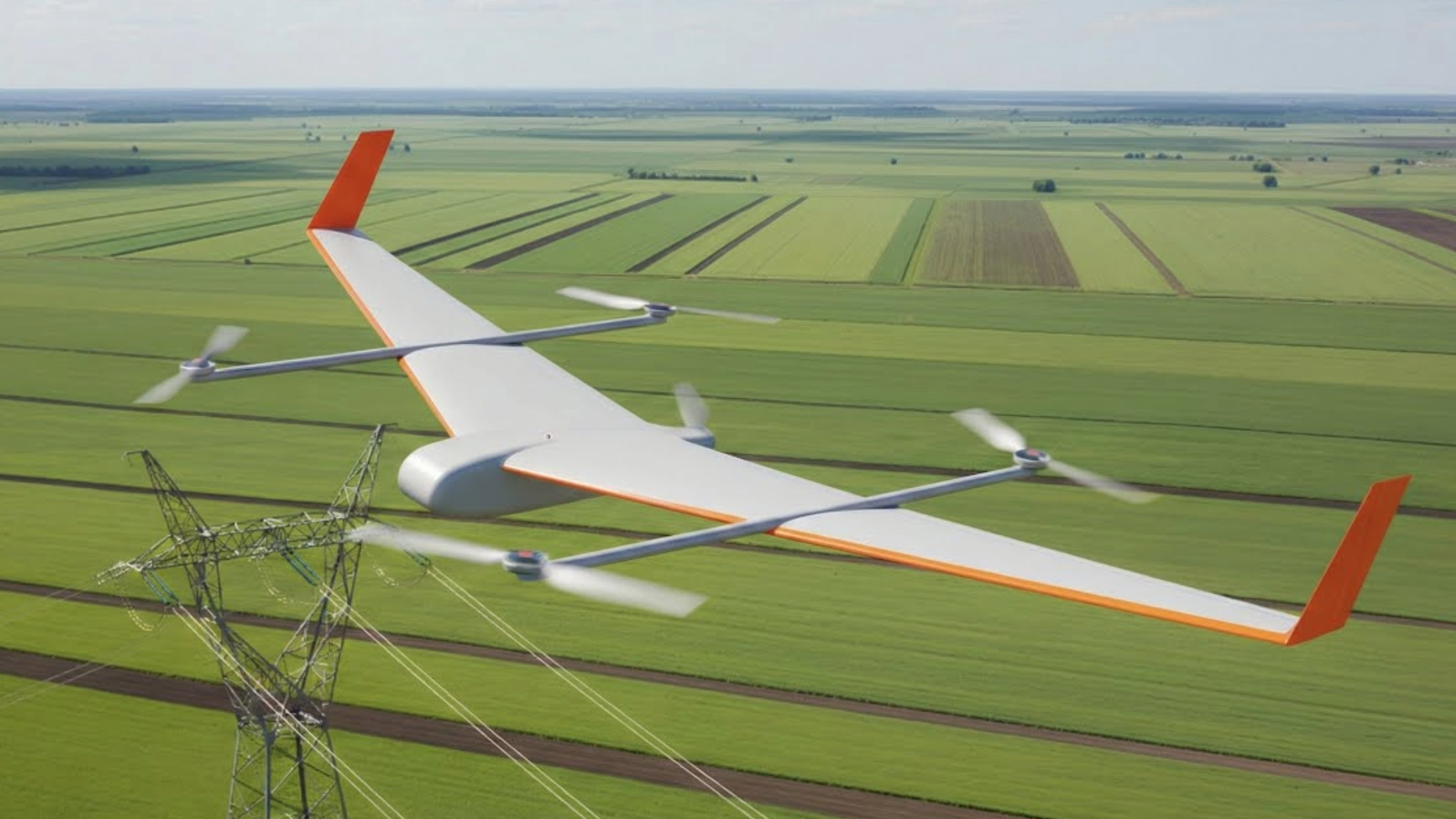
That’s the problem Voltair is trying to solve. The San Francisco-based startup just wrapped up The Company Lab (CO.LAB) 2026 Energy Innovation Accelerator in Chattanooga. They are focused on building fixed-wing autonomous drones that can provide utility companies with regular updates on power line health.
“What we’re really trying to do is build technology that allows them to have visibility into their infrastructure,” said co-founder and Chief Growth Officer Avi Gotskind.
Gotskind explained that utilities have hundreds of miles of aging infrastructure and not nearly enough eyes on it. Voltair’s vision is to deploy autonomous drones at charging stations throughout a utility’s service area. When the utility companies need data, preventative maintenance, or even just eyes in the sky, the drones will be ready to launch and inspect lines on demand, no truck or pilot required.

Right now, they are doing this through part 107 waivers, which allow the drones to fly beyond a visual line of sight; however, Gotskind is hopeful that regulatory changes coming down the line may make it simpler for Voltair and other innovative drone companies to operate.
“Part 108 is set to be codified, which would make our processes even simpler,” he said.
The FAA originally aimed to publish the final rule by spring 2026, though a couple of extensions for public comments pushed the target. The final codified rule is realistically expected later in 2026, with implementation extending into 2027.
Voltair was one of four startup teams that participated in CO.LAB’s 2026 Energy Innovation Accelerator in Chattanooga. It was a first-of-its-kind six-week program that focused specifically on helping early-stage energy startups land real customers.
Gotskind and his other co-founders, Warren Weissbluth, Hayden Gosch, and Ronan Nopp, are focused on learning.
“We want to learn as much as possible. We want to hear the problems these utility companies are facing. We want to meet the people doing it. We want to meet the linemen, the operations team, the managers, anyone who can give us insight into the day-to-day challenges,” Gotskind said. “A drone can do a lot of things. It’s really just a flying sensor in the air. We want to learn how to best fit their needs.”
Learn more about Voltair here.
Like what you've read?
Forward to a friend!