
UTC’s new Kennedy Health Sciences Building will reshape nursing education — and the regional workforce
The 90,000-square-foot facility slated to open in 2027 promises to dramatically expand the university's ability to train nurses amid a statewide shortage.
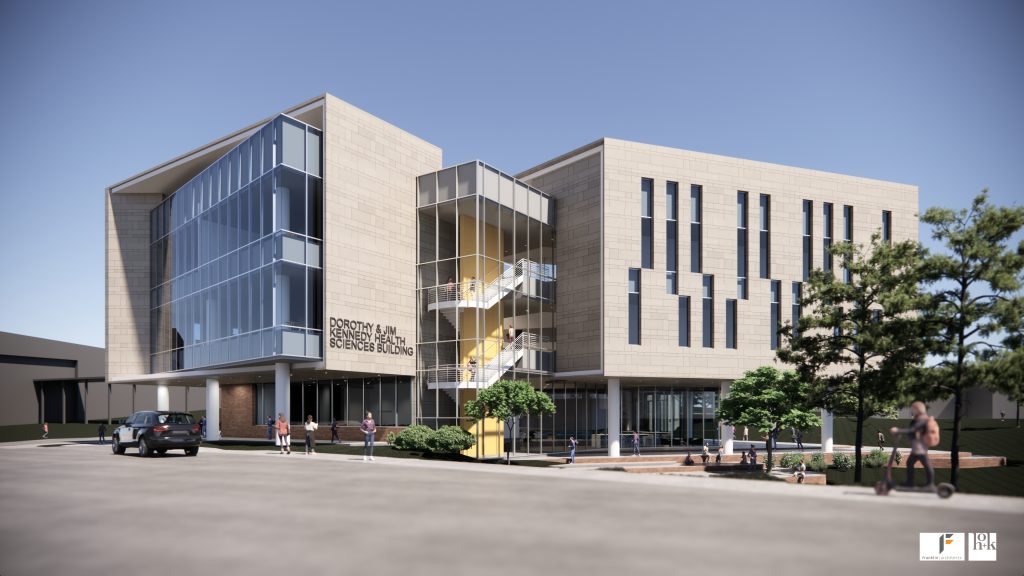
The University of Tennessee at Chattanooga is preparing to open a landmark $80 million health sciences building in 2027 that will nearly double its nursing enrollment capacity and bring cutting-edge simulation technology to the region’s growing healthcare corridor.
The Dorothy and Jim Kennedy Health Sciences Building was made possible in part by an $8 million gift from the Kennedy Foundation, Inc., which has been labeled the single largest donation in the UTC College of Nursing‘s history. The facility will sit at the heart of Chattanooga’s healthcare corridor, across the street from Erlanger and down the road from Parkridge Medical Center and CommonSpirit-Memorial Hospital.
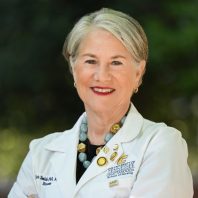
Dr. Chris Smith, dean of the UTC College of Nursing and the university’s chief health affairs officer, sat down with Teknovation to discuss what the building means for students and the nursing profession.
Q: When will the building open, and what can students expect?
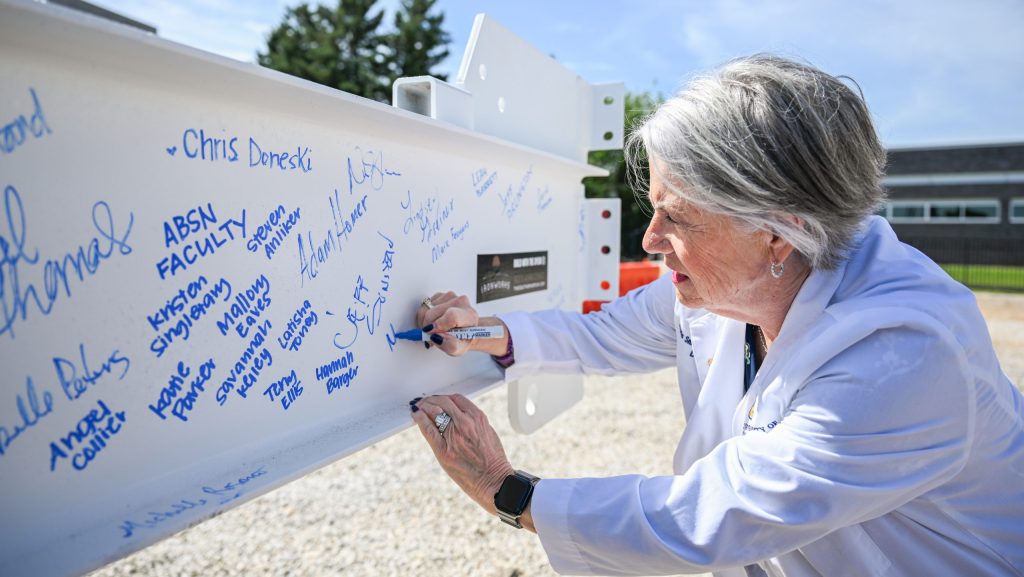
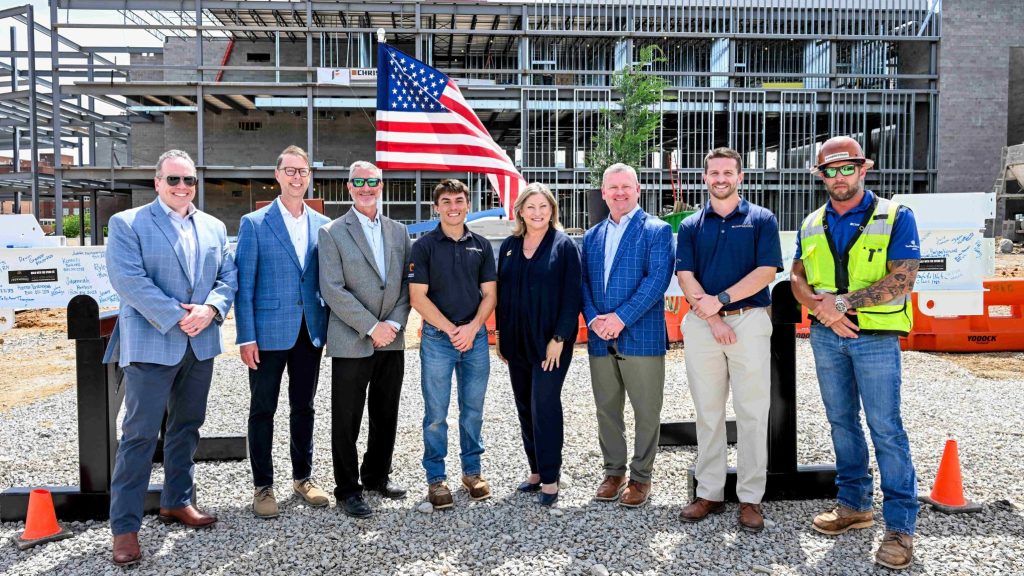
The building is scheduled to be completed in June 2027, and just had a topping-out ceremony. If everything goes according to plan, we’ll start fall semester classes there in August 2027. We’ll use that summer to get settled, making sure the technology is working in the classrooms and simulation centers, making sure everyone’s furniture and computers are in place. About 70% of the building will be dedicated to instruction and simulation technology.
Q: What will the expanded simulation space allow you to do that you can’t do now?
Honestly, in our current limited space, we’re already doing most of what we plan to do over there — the difference is scale. We’re going from roughly 15% simulation space to nearly 40%. That means more students moving through simulation experiences at the same time.
“We’re also adding dedicated spaces we don’t have now. In the new building, we’ll have a dedicated labor and delivery suite, a dedicated emergency room, an ICU, four patient rooms that mirror what you’d actually see in a hospital, a real nurse’s station and a medication room. It’s going to be much closer in depth to what a new-to-the-workforce nurse would experience walking into Erlanger on their first day.”
“We’re increasing enrollment by about 150%, so we simply need the space to support that many more students in simulation simultaneously. Plus, the nation terribly needs more nurses.”
Q: Why does the nation, and our region, need so many more nurses?
The workforce shortage is a national issue, but it’s also felt here locally. We’re turning away qualified applicants not just because we don’t have classroom space, but because we don’t have enough faculty or clinical placement slots in acute care and primary care facilities. In Chattanooga alone, four or five nursing programs are competing for placements in the same hospitals.
“I looked at some data from the American Association of Colleges of Nursing before this conversation. Their most recent 2025 figures show that Tennessee nursing schools turned away 8,984 qualified applicants to baccalaureate and graduate nursing programs. Almost 9,000 qualified people who wanted to become nurses and couldn’t get in, despite the fact that we desperately need more nurses. If even a fraction of them had been admitted, it would put a significant dent in the shortage.”
“When we accept 40 students, and you’re number 41, you either find another school, change your major, or reapply. That’s a hard reality, and this building helps us change it. The new facility will also be open to other working nurses and healthcare systems for continuing education opportunities and workforce development partnerships, which will greatly help.”
Q: How is emerging technology — VR, AI, advanced mannequins — shaping what you’re able to teach?
We’re going to have a dedicated VR space that supports immersive experiences you simply can’t replicate in a traditional classroom. Students will be able to observe a surgery in an OR without ever leaving campus. We originally designed the VR space for our nurse anesthesia students, but as the building has taken shape, we’ve seen opportunities to use it across all of our programs.
“The simulation mannequins themselves are remarkable now. I was down in the simulation lab just this morning, and I watched a faculty member, Dr. Chris Doneski, have a conversation with one of the mannequins. He introduced himself, asked the mannequin its name, and asked what was wrong. The mannequin responded in real time. It wasn’t pre-programmed responses. That’s AI-supported verbal interaction combined with voice-tracking technology.”
“These mannequins can have seizures, strokes, cardiac events, anaphylactic reactions, and respiratory failure. When I went through my BSN program a very long time ago, I completed my entire OB rotation without witnessing a birth. We now have a mannequin that labors and delivers a neonate, and students must be present for the delivery and perform the full postpartum assessment of both mother and newborn. Being able to practice that in an environment where a wrong decision isn’t life or death is invaluable.”
Q: Can you give an example of a simulation making a real difference for a student?
One of our anesthesia students was practicing in a simulation. The simulated patient developed malignant hyperthermia, a serious medical emergency in anesthesia that a practitioner might see once in a career, if ever. The student did not know what to do since it was such a rare thing, and the simulated patient died on the OR table. Our team debriefed about it extensively — what they should have done instead and how to be better prepared if that situation ever arose again.
“That student recently came back to see me. He told me he had been in a real OR that week for his clinical rotations when a patient developed malignant hyperthermia. He, a student, was able to manage the patient through the event and the patient survived. The anesthesiologist asked how he knew what to do, because the anesthesiologist himself had never seen a case before. The student was able to say that he learned it in our simulation lab.”
Like what you've read?
Forward to a friend!