

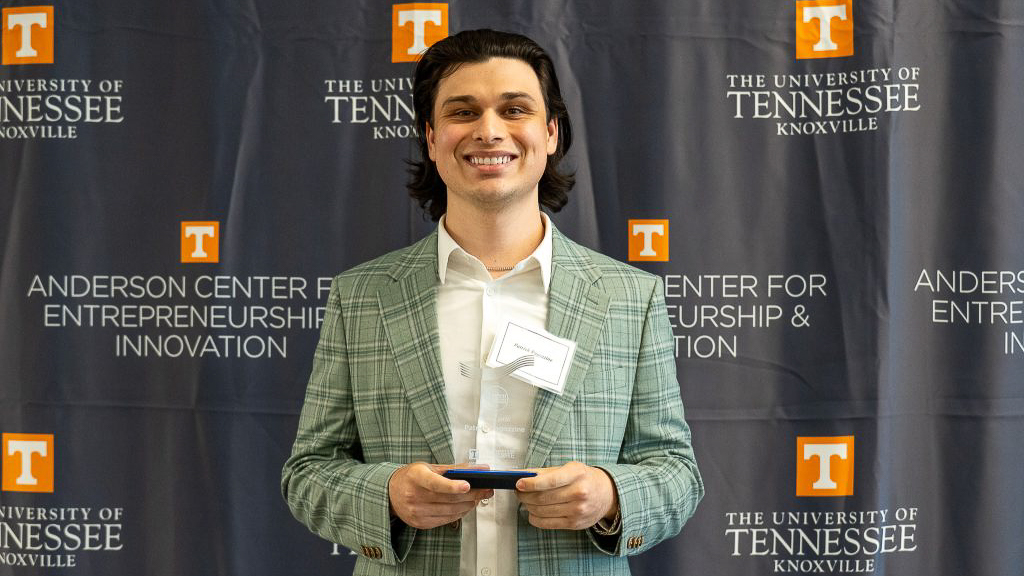
ArborAI could be the partner boutique law practices didn’t know they needed
The system, created by UT law student Patrick Ragozzine, is a research platform for boutique law practices in East Tennessee to help with case and trial preparation.
Patrick Ragozzine was sitting in a legal research class at the University of Tennessee when he realized the artificial intelligence tools his future profession leans on had some flaws. Some AI systems fabricated cases that did not exist. Others missed the ones that mattered. And, most cost a fortune just to get started.
“I was shocked to learn how expensive the existing systems were and how mediocre they are,” he said of the tools he encountered in class. “The high-end platforms could run a single attorney more than $1,000 a month, and still return unreliable results. A small firm can’t afford that.”
So Ragozzine, a rising third-year law student with no prior background in technology, decided to build something better himself.
He built Arbor AI, a research tool aimed squarely at the solo practitioners and small firms in Tennessee’s legal landscape. And, this summer, through his participation in the Anderson Center for Entrepreneurship and Innovation (ACEI) Summer Studio program, Ragozzine is getting a beta version into the hands of a small group of personal injury attorneys in East Tennessee.
An aspiring entrepreneur enters law school
Ragozzine grew up in North Georgia and said he wanted to run a business for as long as he could remember. From setting up lemonade stands to knocking on doors to cut neighbors’ grass, he was convinced that he would launch a company straight out of high school.
“It ended up being a lot harder than I thought it would be in my head,” he said.
So Ragozzine gave school another shot, starting at a two-year program before deciding on law school and earning a spot at UT’s Winston College of Law. What drew him to the profession was the idea that a law degree could be a lever for helping people.
Teaching himself the technology
Although his focus is still on becoming an attorney, the creation of Arbor AI emerged as Ragozzine’s pathway to make a long-standing impact on the profession. Step one: he had to teach himself the fundamentals of large language models (LLMs), neural networks and how AI systems actually work.
From there, he had to reverse-engineer the harder problem, which was turning raw judicial opinions into material a model could learn from and use to produce structured legal reasoning.
“I learned – quality in, quality out. It helps when you start with a particular focus and geographic area,” he said.
At that point, he began reaching out to resources both on and off campus to accelerate the creation of his product. Ragozzine said he sought feedback from his professors, including guidance on the ethical standards for using AI in legal research, then pitched and won second place in the Graves Business Plan Competition at ACEI. Then, he went on to take first place at the highly competitive ACEI Boyd Venture Challenge.
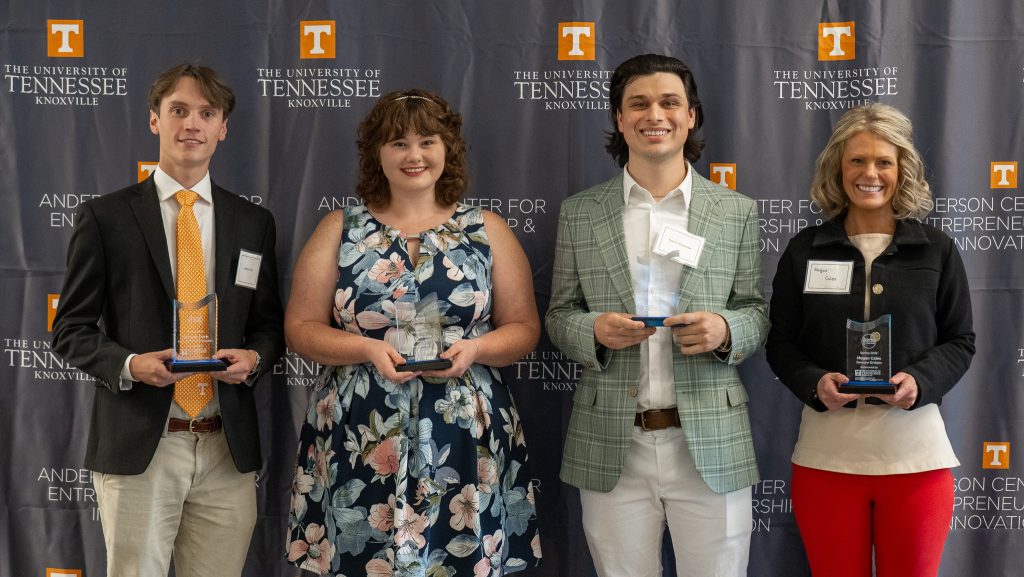
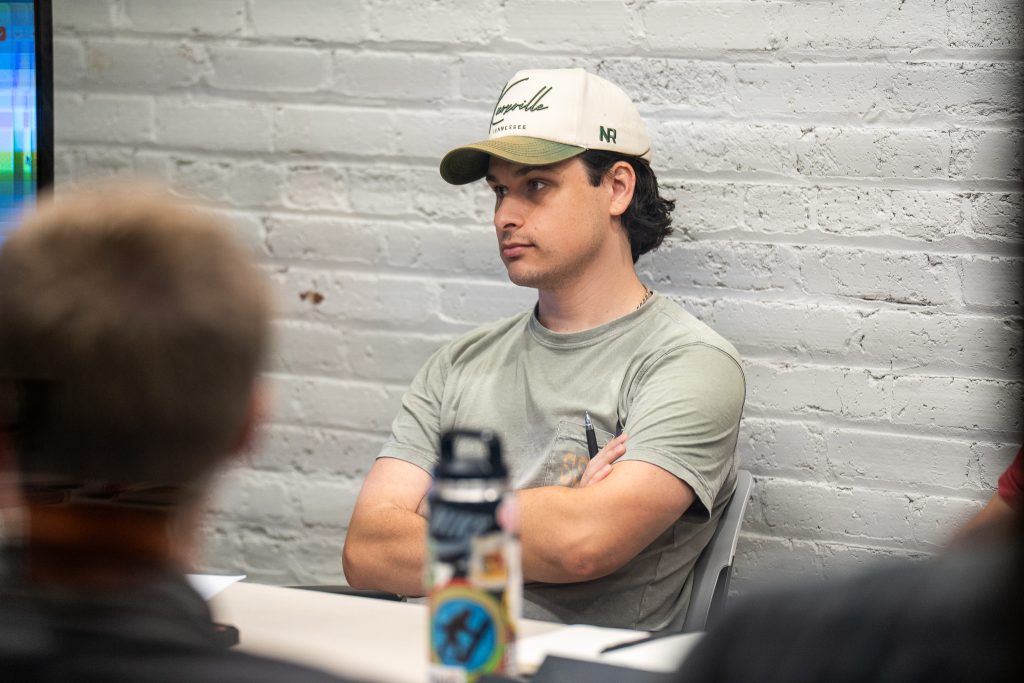
And those wins connected him with the 121 Tech Hub community, where he is now spending the summer building his business through the ACEI Startup Studio.
“They have been guiding me through the startup process, and I’ve learned a lot just by being around those folks,” he said.
What Arbor AI does
Ragozzine intentionally built Arbor AI to help lawyers’ caseloads. An attorney can upload intake notes from a client meeting, case facts, police reports, or other evidence, and then the system extracts and organizes the facts, pulls relevant case law, flags potential risks or gaps in the record, and keeps track of documents the attorney still needs to obtain.
To start, he has deliberately kept the scope narrow, starting with one jurisdiction and one practice area.
“The AI reasoning is dramatically improved when it focuses on one specific jurisdiction and one specific practice area,” he said. “So my jurisdiction is Tennessee and my focus area is personal injury.”
Proving the tool with a small group of boutique and solo firms, he said, lets him refine it before opening it more widely.
Ragozzine decided to go to law school to “help people,” and he sees Arbor AI as an avenue to do just that.
“Access to these tools levels the playing field,” he said. “The best legal representation too often goes to those who can afford it, but Arbor AI is a way for smaller firms to offer strong, affordable advocacy. Ideally, my goal is to improve efficiency for solo and small firms so that they can take more clients, lower their fees, and perform better.”
He hopes a tool like Arbor AI can also help boutique firms go toe-to-toe with the largest firms.
Ragozzine still has the bar exam ahead of him, roughly a year out, and the grind that comes with a final year of law school.
But building a company has already changed his plans. He started out wanting to practice business law, and now he is eyeing a future in patent and intellectual property work, which much more closely tethers him to the startup ecosystem he has grown to love.
If you want to learn more about Arbor AI, watch Patrick Ragozzine present at Startup Studio Demo Day on August 20.
Like what you've read?
Forward to a friend!