

Tennessee researchers aim nuclear technology at ovarian cancer
ORNL, UT researchers unite to develop targeted radiation therapies that could transform treatment for one of the state's deadliest diseases.
Ovarian cancer is one of the hardest cancers to beat. It’s often caught too late, spreads fast and tends to not respond well to chemotherapy.
With how aggressive this cancer can be, scientists from Oak Ridge National Laboratory (ORNL), the University of Tennessee, Knoxville and UT Health Science Center knew all hands on deck were needed to try to explore treatment innovation. They have joined forces under an initiative called DART (Development and Advancement of Radiopharmaceutical Therapies), just one of five current convergent research initiatives of the University of Tennessee–Oak Ridge Innovation Institute (UT-ORII).
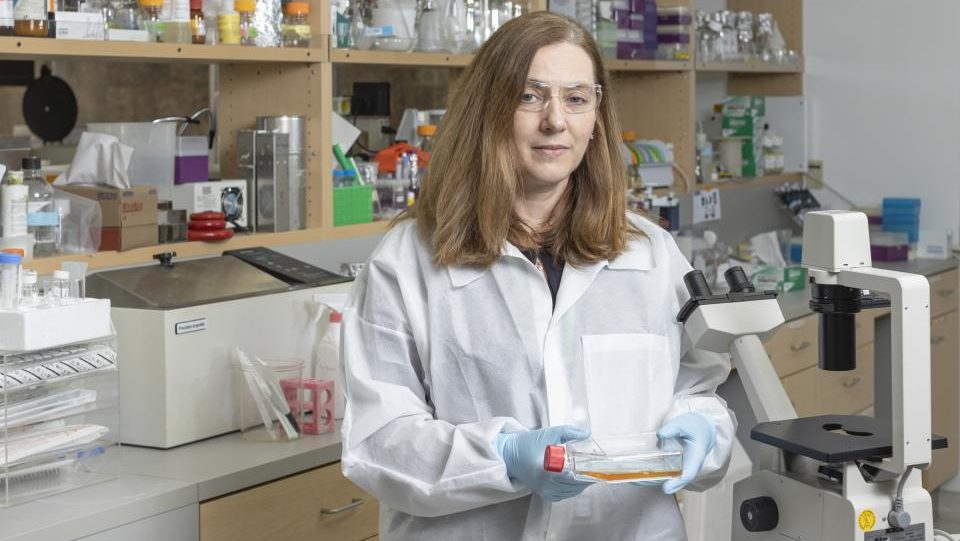
“When ovarian cancer goes metastatic, there are not really a whole lot of options,” said Sandra Davern, who leads ORNL’s Radioisotope Research and Development Section in the Isotope Science and Engineering Directorate. “This is a unique cancer that needs a lot of attention and is not really getting it.”
But now, there’s a sense of new hope with this crew dedicating their time to advancements.
The basic idea
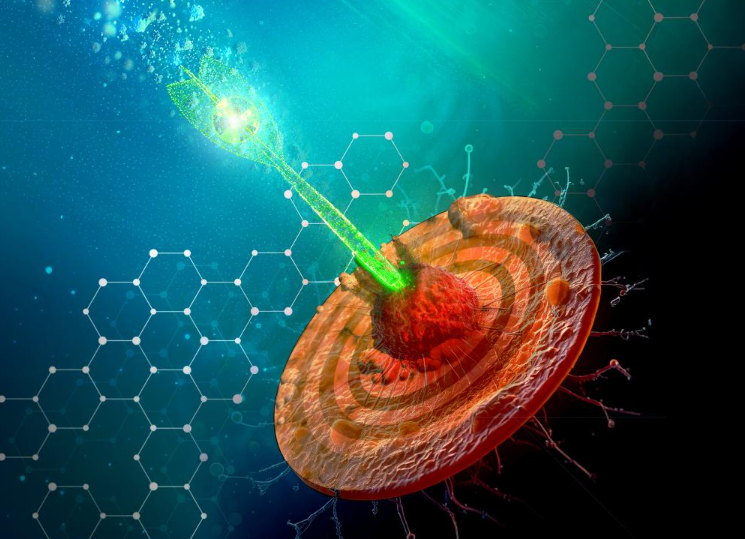
The team is developing radiopharmaceutical drugs that can find cancer cells in the body and deliver a tiny, targeted dose of radiation directly to them. The radiation comes from alpha particles — a type of energy that only travels a few cell-widths before stopping. This is exactly where the team is spending their time.
“Targeted alpha therapy is uniquely suited to this disease pattern because alpha particles travel only a few cell diameters, delivering highly potent, localized DNA damage without harming nearby healthy organs,” said Junming Yue, a professor at UT Health Science Center’s College of Medicine.
In other words, the radiation hits the tumor hard and stops before it can damage anything else. Plus, initial studies indicate that the alpha therapy treatments could be effective in patients who have become resistant to beta therapy.
Tennessee ties
Having this initiative centralized through ORNL makes sense. ORNL has been producing medical isotopes for decades. It already supplies actinium-225, used in cancer clinical trials around the world, and actinium-227, the raw material behind an FDA-approved prostate cancer drug.
But the deep expertise in cancer biology from the UT researchers takes this one step further. One is studying how chromosomes change shape inside cancer cells, which quickens tumor growth and treatment resistance. Another has spent years building cancer cell and mouse models specifically for testing new ovarian cancer drugs.
“We anchored our proposal on the strengths we have in Tennessee, but also the problems of high cancer rates and lower outcomes,” Davern said. “Together, we can potentially do something that’s bigger than any one institution can do.”
A “Radiopharmaceutical Corridor”
The primary goal is to create a viable treatment option and improve the chance of survival. But an overarching goal is to also develop a “Radiopharmaceutical Corridor” in Tennessee.
UT-ORII is hiring a Governor’s Chair in Nuclear Medicine to lead high-profile research and work collaboratively with a growing network of radioisotope and radiochemistry researchers through DART. ORNL has already hired four dedicated scientists in computing and isotopes, while the UT Health Sciences Center has brought on three researchers and UT has made its first related hire.
Davern sees the corridor as a natural fit with the state’s broader energy ambitions.
“The workforce that we can build around radiopharmaceutical development and radioisotope production aligns quite well with the workforce that is required for nuclear energy,” she said. “But we know partnerships are really important to make things happen. We’re uniting for impact. We’re tackling cancer through collaboration.”
Vanderbilt University Medical Center is already on board, working with the team to automate how radiation doses are prepared and delivered to patients. More hospitals, universities and companies are expected to join.
Like what you've read?
Forward to a friend!