


Second day of TVC National Summit features three major presentations
Former Congressman Zach Wamp, ORNL Director Stephen Streiffer, and UT, Knoxville Chancellor spoke ahead of two other sessions.
Day 2 of the Tennessee Valley Corridor’s (TVC) 30th anniversary National Summit in Oak Ridge featured three significant presentations.
First up was former Congressman Zach Wamp, who shared the story of traveling to Oak Ridge the morning after he had been elected to represent the Third District in November 1994 and being confronted by a reporter from The Oak Ridger newspaper. The reporter asked, “What are you going to do to address the challenges that Oak Ridge faces?” His answer was the inaugural Oak Ridge Summit in May 1995, which evolved into the annual TVC National Summit that celebrated its three-decade milestone where it all started.
Noting that while he started it, once he left Congress and ran for Governor, his successor – Congressman Chuck Fleischmann – could have elected to go in another direction. Instead, Wamp credited him with continuing and expanding the TVC which he described as “a shared legacy.”
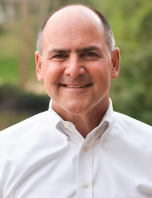
The former Congressman again reiterated his oft-quoted reminder that “the power to convene is greater than the power to legislate.” He added, “Regionalism is not a fad, it is a trend,” and he urged attendees to “take control of our own fate” rather than leave it to others to determine the outcomes.
He also talked about the influence that a book co-written by the late George Kozmetsky and a speech by him at the University of Tennessee, Knoxville (UTK) further inspired the first Oak Ridge Summit. The title of the book was The Technopolis Phenomenon, and it advocated for an innovative approach to economic development that involves linking technology commercialization with effective public and private-sector initiatives to create new infrastructures for economic growth, diversification, and global competitiveness.
Stephen Streiffer
The Director of Oak Ridge National Laboratory (ORNL) picked up on Wamp’s history of how the TVC came to be and has evolved into the organization that represents 13 Congressional Districts across five states.
“Those threats are behind us. This region is moving forward,” Streiffer said. He proceeded to talk about four areas of emphasis at ORNL.
- Increasing U.S. competitiveness, particularly as it comes to artificial intelligence (AI). “AI will change everything; it already has,” Streiffer said.
- Accelerating innovation, particularly in quantum computing and networking.
- Unleashing American energy. He heaped praise on Secretary of Energy Chris Wright, crediting him for being very engaged with ORNL and the Department of Energy’s other national labs. Streiffer also used an example that involved Kairos Power, and a project completed in 15 days. “When we get the stars aligned, we can do it quickly,” he explained.
- Strengthening national security.
Donde Plowman
The UTK Chancellor said that she previously worked for Kozmetsky at “that other UT.”
Noting that “the visibility of the university is higher than it has ever been,” among the topics she covered were student successes – from retention to graduation and job offers – and the research priorities.
UTK’s new research strategy is based on three foundational elements:
- Place-based innovation;
- Strong partnerships with industry and government; and
- Strong statewide coalitions.
With those foundational priorities, there are five core areas of focus:
- Advanced materials and manufacturing;
- AI;
- Energy and environment;
- Future mobility; and
- Human health and wellness.
Like what you've read?
Forward to a friend!