

LSTCON 2026 | Top trends shaping Tennessee’s life sciences industry
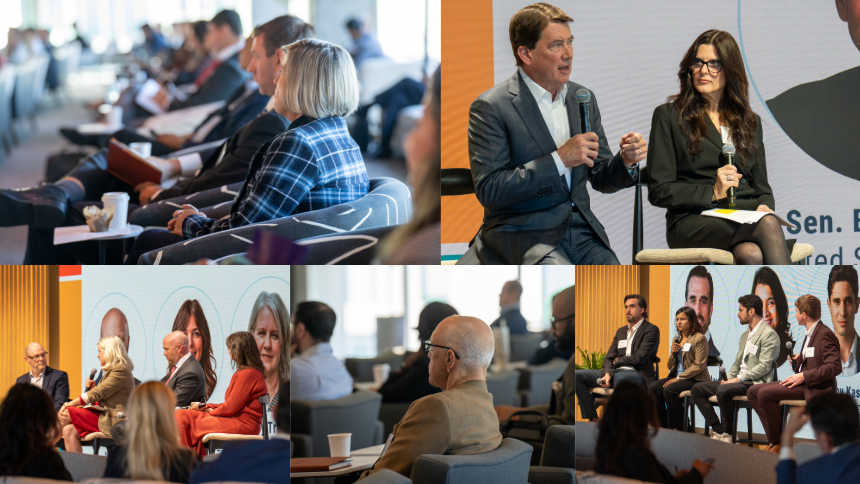
Life Science Tennessee’s annual conference, LSTCON, brought the state’s life sciences community together on Nov. 5 at Revance headquarters in Nashville to connect, exchange ideas, celebrate progress and explore the opportunities ahead for an industry that is steadily raising Tennessee’s national profile.
Board Chair Jenn Adams of August Bioservices opened the day with an example, looking back at Tennessee’s presence at BIO 2026 in San Diego. She described it as an “exciting showcase of Tennessee’s tremendous assets, including world-class research institutions, emerging biotechnology companies, and our growing pharmaceutical manufacturing sector.”
That message was only amplified in a fireside chat with U.S. Sen. Bill Hagerty.
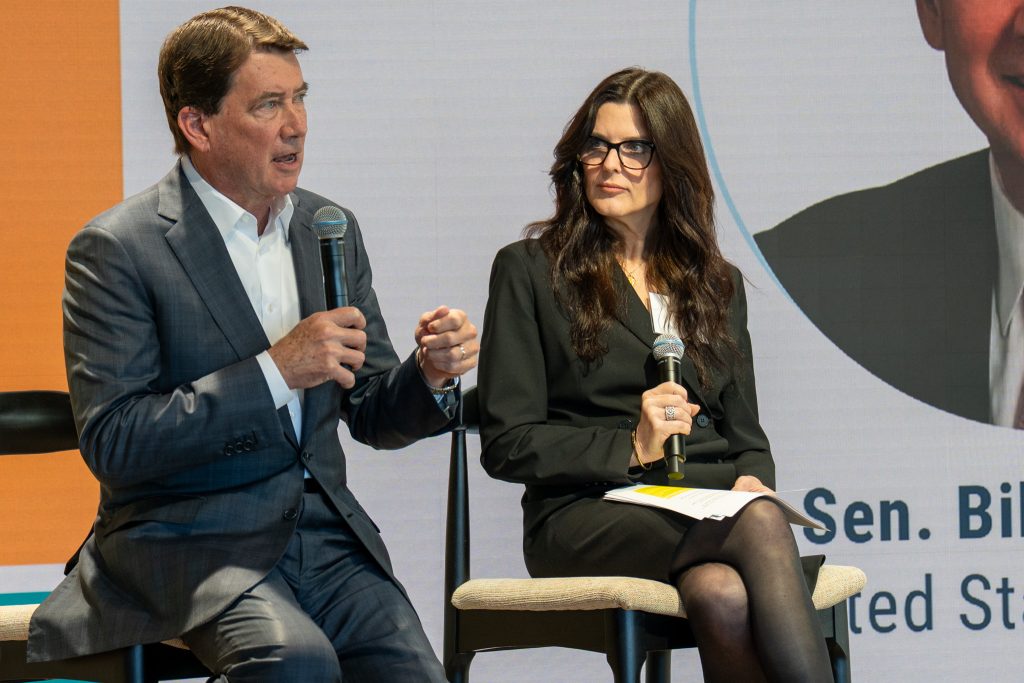
Coming just days after Election Day, he encouraged the industry to keep raising Tennessee’s life sciences profile by leveraging state assets like Oak Ridge National Laboratory (ORNL), Vanderbilt University, the University of Tennessee and St. Jude Children’s Research Hospital. Another way to do so? Lean into bipartisan priorities such as R&D tax incentives and pharmaceutical onshoring.
Still, he noted, many startups and investors nationwide continue to look to larger hubs for early-stage life sciences research and development.
“America is the most exciting place to invest, bar none,” Hagerty said. “The question is, how can we get more of that to happen here in Tennessee?”
His answer is deeper collaboration between these institutions and the private sector. “I think the ingredients are all here,” he said. “The DNA is in this room to make that happen.”
Trends shaping the industry
From there, the day dove into a number of panels that displayed where the industry is at and where it’s headed.
Regenerative medicine is all the rage
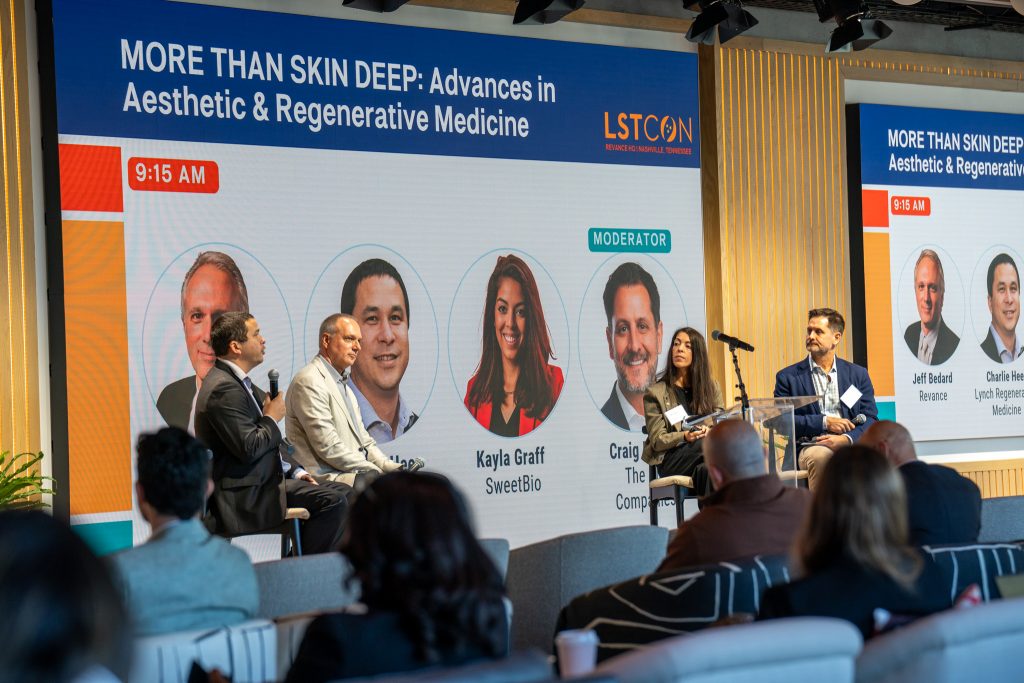
Jeff Bedard of Revance, Charlie Hee of Lynch Regenerative Medicine and Kayla Graff of SweetBio, moderated by Craig Reavis of The MJ Companies, discussed regenerative skin health as a growing focus for Tennessee companies, spanning everything from wound care and tissue regeneration to the expanding world of aesthetics.
And these experts said you can’t talk about regenerative skin health without mentioning GLP-1 medications. These medications do have an impact on the skin, and are fueling demand for secondary treatments like peptides and hormone replacement.
Tthe panel agreed that at the end of the day, adoption depends on rigorous science, clinician education and a clear value proposition.
Our north star is science first, and product fit second.
Bringing better care to rural communities
In hard times, health-related business closures, transportation challenges and staffing shortages get felt across the entire country. But, the impact truly trickles down to often hit rural patients the hardest.
Jim Stefansic of OmniBuds and Santosh Kumar of CuesHub, moderated by Brad Day, discussed how wearable sensors, remote monitoring and AI-assisted screening can help be a bridge.
For instance, specialty care is readily available in Tennessee’s metro areas, but options drop off quickly outside city limits where the nearest specialist may be a few hours away. That’s where these tools come in. Wearable sensors can track vital signs and chronic conditions from home. AI-powered remote monitoring helps care teams catch warning signs early. They aren’t meant to replace expert care, but rather to make earlier diagnosis and routine check-ins more accessible.

How best to commercialize life sciences research will continue to be a conversation
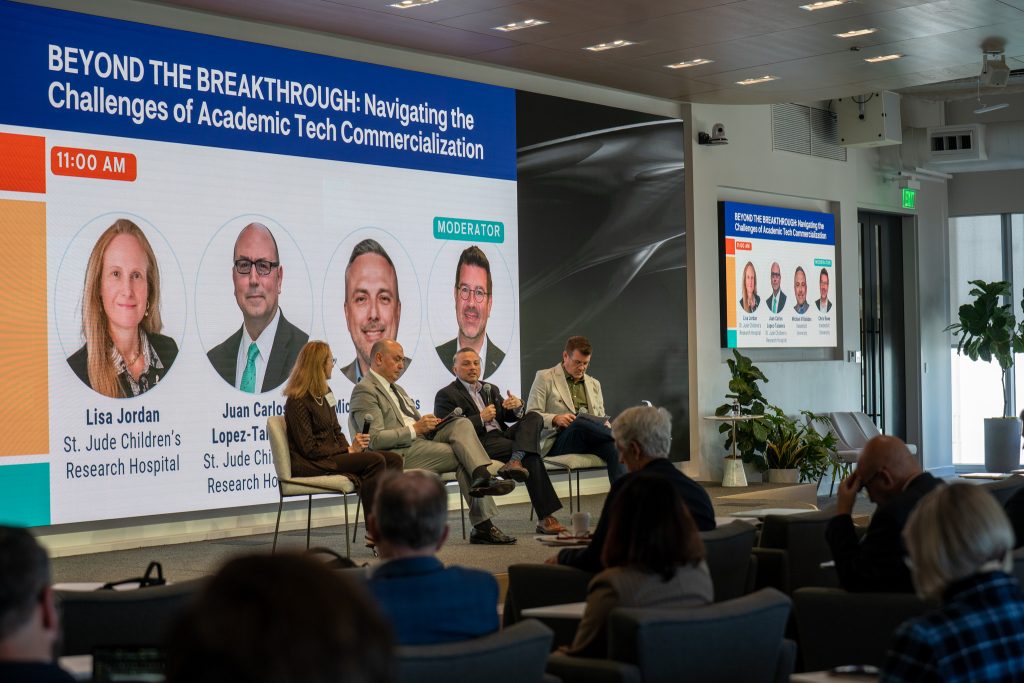
Lisa Jordan and Juan Carlos Lopez-Talavera of St. Jude and Mike Villalobos of Vanderbilt, moderated by Chris Rowe of Vanderbilt, unpacked the gap between academic research and industry. Much of it comes down to differing priorities.
One’s thinking of a product, the other’s thinking of the biology that’s necessary and the target. It is possible that that promising discovery can become indeed a credible development opportunity.
Because of the different pulls, panelists stressed the need for each side to understand where the other is coming from. Their advice:
- Treat early academic technologies as proof of concept, not finished products, and expect that key studies may need to be repeated to industry standards.
- Protect intellectual property before publishing as it’s critical to attracting investment.
- Remember that institutions like St. Jude weigh public benefit, especially for pediatric patients, alongside financial returns.
- Think creatively about partners, and build strong ties among researchers, tech transfer offices and investors.
- Don’t hesitate to reach out to university tech transfer offices directly and often.
Capital is back, but the bar is higher
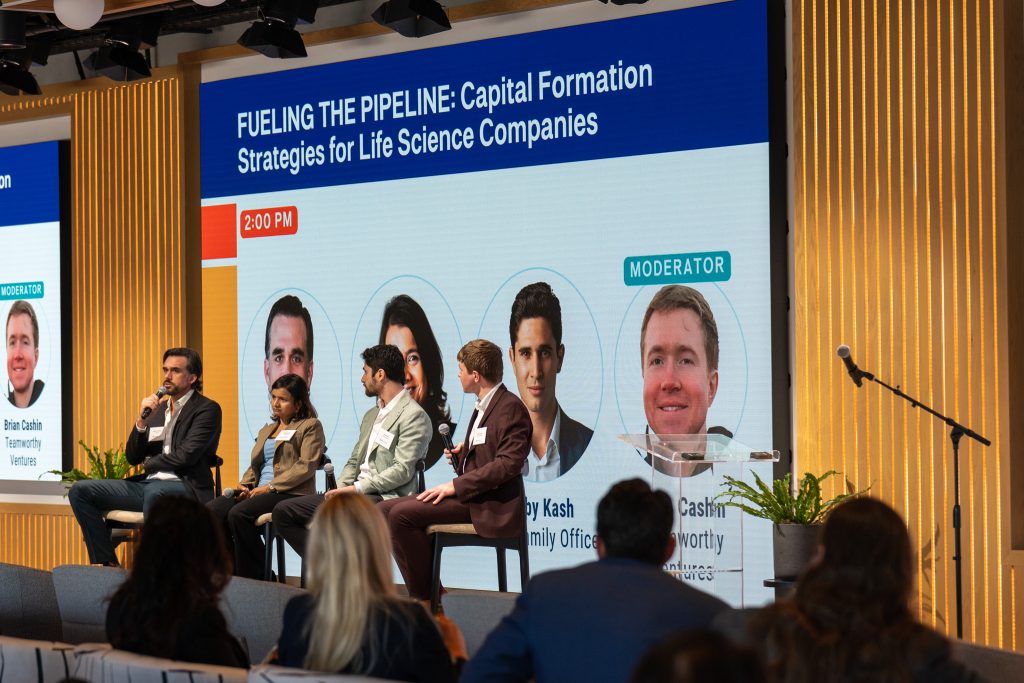
Life sciences capital is returning, but investors want more before they write checks, according to Shahila Christie of Future Ethos Fund, Charles Caldwell of J.P. Morgan, Colby Kash of Kash Family Office and Brian Cashin of Teamworthy Ventures.
These days, therapeutics companies often need extensive clinical proof of concept to land institutional funding. Device companies may have to foot the bill upfront and get super close to launch before outside funding comes. Services businesses are having to go the extra mile for commercial traction and strong industry partners, but it pays off. The panel has seen a major increase in pharma services businesses drawing significant investment lately.
Even at the earliest stages, investors want founders to know who will pay, why they will pay and what a plausible exit looks like. A strong team and clear intellectual property terms matter too, and non-dilutive funding such as SBIR grants can help validate a company before private investors step in.
Panelists also pointed to AI as a major disruptor even on the venture capital side of things.
The greatest value creator in AI is using the algorithm to decide which technologies not to move forward with.
Nevertheless, when the right opportunity comes along, it’s that much more meaningful due to the nature of the industry.
You get a great ROI in many different sectors, but biotech is one of the few sectors you can get a great ROL, which is a return on legacy.
Health care and life sciences will converge more and more
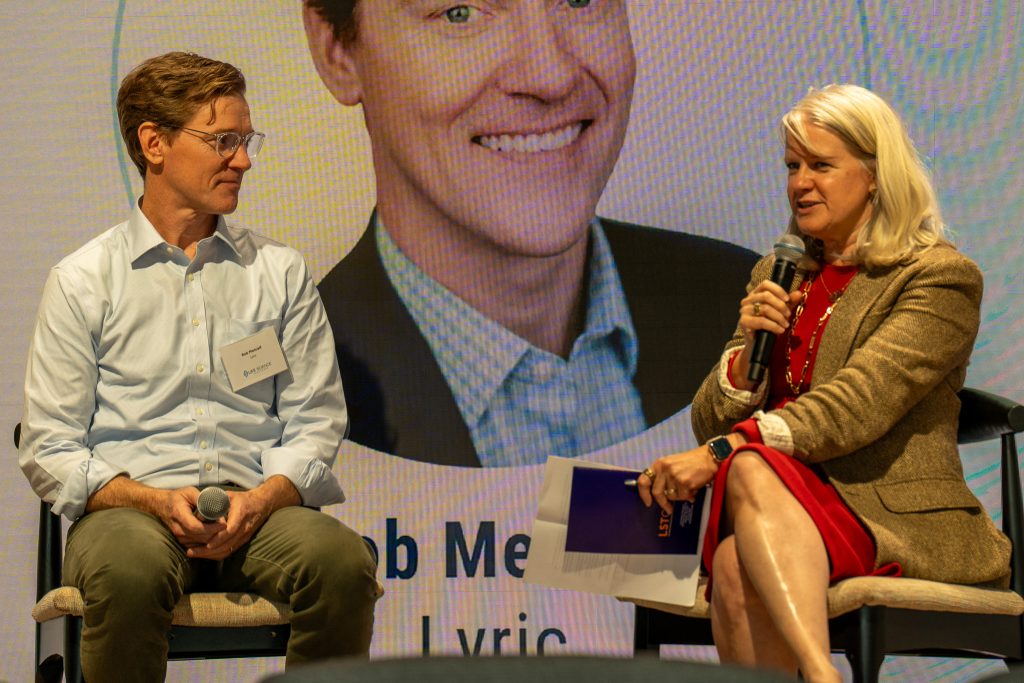
The day closed with a Tennessee success story. This year, Lyric acquired Nashville-based Concert, which spent more than a decade making genetic and diagnostic testing understandable for health plans.
Life Science Tennessee Executive Director Abby Trotter sat down with Rob Metcalf, who led Concert through its growth and acquisition, to talk about the deal’s impact.
Trotter has long described technology as the bridge between health care and life sciences, and she called Concert a standout example of that bridge in action. Metcalf agreed, noting that the company sat right at that intersection, bringing genetics expertise to Nashville to solve hard problems where science, clinical care and reimbursement meet. After Vanderbilt, he said, Concert became the city’s second-largest employer of genetic counselors.
Still, he wanted the crowd to know that there’s always room for more.
It was a meaningful exit. Any time that happens, you kind of can move forward a generation. People who worked alongside Concert will go on to start and fund their own companies. There are so many interesting businesses to be built that are adjacent to life sciences. They need to be built, and they need to stretch into areas where the market is going.
Follow Life Science Tennessee on LinkedIn for more industry news.
Like what you've read?
Forward to a friend!