

Caddis Tech’s aquatic drones solve algae problems in waterways without toxic chemicals
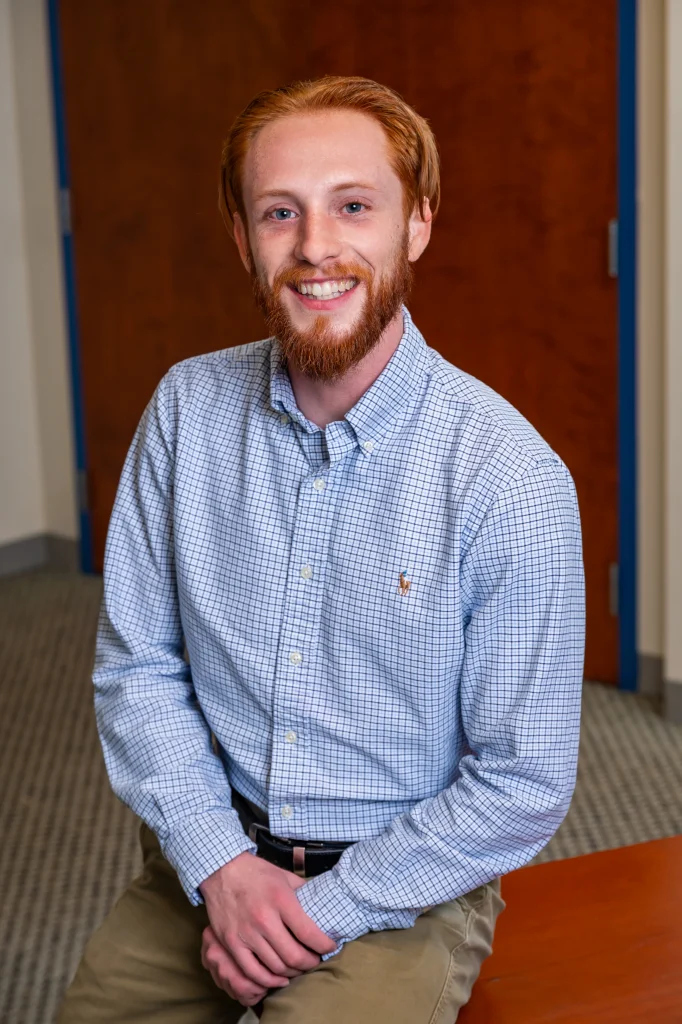
Resourcefulness is a defining quality of Caddis' founder, Kendall Byrd, who is a participant in the Spark Cleantech Accelerator.
The Spark Cleantech Accelerator’s Fall 2025 cohort is nearing its close. All participating innovators will present at the upcoming Tennessee Advanced Energy Business Council (TAEBC) Opportunities in Energy event on November 19.
The program is a great way to bring founders in the clean technology sector to East Tennessee, which has a growing reputation for advanced energy across the nation.
Kendall Byrd, the founder of Caddis Tech, is a great example of the type of talent that Spark attracts to the region.
“My advice to founders: just decide, and the universe will get out of your way,” he said.
That quote just about sums up Byrd’s very resourceful, driven, and relentless persistence to find opportunities where others see obstacles.
Resourceful beginnings
He grew up in a small town in Georgia, and his initial passion was to see the world.
So, he did.
Ever since high school, Bryd has been working the system to make his dreams come to fruition. He found an interesting short-term work-for-housing situation, which allowed him to travel to Northeast Africa almost completely free.
That was the launch pad for the many solo-travel trips that followed. Byrd said he’s found “resourceful” ways to go just about everywhere: South America, Europe, Africa, you name it.
Resourcefulness is just one word that describes his keen ability to find opportunity wherever he goes.
At the end of 2020, he found himself asking the question that so many young adults do: “What do I want to do with my life? What assets do I have? What do I enjoy?”
Two themes came to mind: biology and drones.
“Was there a way to combine the two? I wanted to find out. So, I spent one thousand dollars on my first drone,” he said. “But I quickly realized that it’s not the drone that adds value– it’s what you put on the drone.”
He wanted to learn. He wanted to improve. So, he sought out an opportunity to teach him.
Byrd moved to Chattanooga, Tennessee, to work for a drone start-up called SkyTec. The company has been around since 2015 and is a global leader in remote sensing and geographic information systems (GIS) technology. There, Byrd learned the ins and outs of drone technology and got paid to do so.
Once he had gained experience with SkyTec, he decided to return to college to pursue his master’s degree. He did a cross-country search for the school that had a proven track record of academic innovation and commercialization. Byrd had an idea for a business but needed the resources to make it concrete. He found Ohio State University (OSU) to be the best fit for his commercialization goals.
While there, his advisor, Dr. Jiyoung Lee, helped direct his ambitions to build an aquatic drone that removes algae from any waterway without using harsh chemicals.
Gaining Momentum
Byrd wasted no time getting to work. He built the first iteration of his aquatic drone in his basement using just $300 worth of materials. It turned out good. From that prototype, he was able to prove that a UVC light attached to a drone could effectively remove algae from water.
“I made the prototype and established proof of concept with $300. Imagine how much more I could do with $10K, or $100K?” he said.
Upon hearing about his invention, Byrd’s advisor at OSU’s tech transfer office recommended he apply to pitch his business concept at Rev1 Ventures. Unsuspecting… Byrd was accepted, ended up winning, and landed a two-year contract to build his business with the help of Rev1.
That first pitch contest was the catalyst for a series of pitch competition wins. To this day, Byrd has secured about half a million dollars in non-dilutive funding to further his innovations.
Byrd formalized his company, Caddis Tech, in 2024.
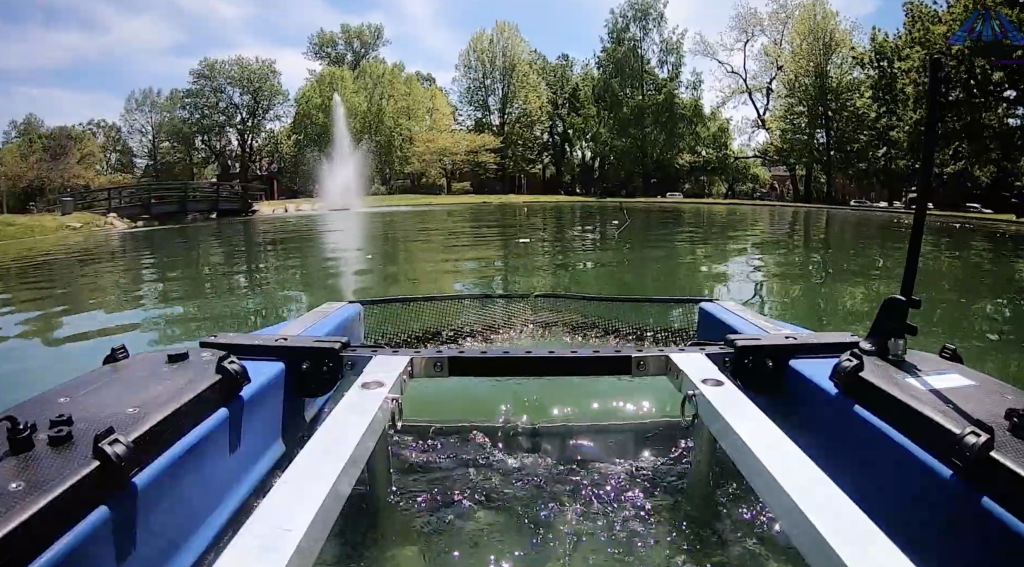
“We began deploying our aquatic drones to two early adopters this year to show that our products worked at scale,” he said.
Caddis Tech uses non-chemical UVC technologies in its MANTA drones to tackle harmful algae blooms and protect ecosystems. These systems were developed through nearly 1,500 research hours and two pending patents.
Byrd said the first version of his drone technology can clean about 15 gallons of water per minute. It also works in a range of smaller water bodies, including golf course ponds, municipal reservoirs, recreational lakes, and agricultural irrigation systems.
“Columbus, Ohio, is very SaaS-centric. Sometimes, as a hardware company, it can be difficult to get the support we need. So, I heard about Knoxville and the Spark program, and how it’s been very supportive of innovative hardware,” he said. “So, I applied. Got accepted. And, and decided to spend three months in East Tennessee.”
Byrd will pitch Caddis Tech at the Tennessee Advanced Energy Business Council (TAEBC) Opportunities in Energy event on November 19 for the Spark Cleantech Accelerator Demo Day.
“I also want to shout out my amazing team. Without them, none of this success would be possible,” he said.
Meet the Caddis Tech team here.
🎥 Feature demonstration video courtesy of Caddis Tech YouTube.
Like what you've read?
Forward to a friend!