


A third of veterans face PTSD, and UTK researchers learned how to detect it with biosensors
“It’s very valuable for industry and university researchers to collaborate,” said David Gaddes, a private-sector researcher.
Researchers at the University of Tennessee, Knoxville (UTK), are working with a private tech company called CFD Research to build a small, affordable device that can diagnose Post Traumatic Stress Disorder (PTSD) by looking at many biological markers in a single drop of blood.
Right now, PTSD diagnosis mostly depends on interviews and self-reported symptoms, which can be subjective. And, it’s something a large population of people struggles with daily.
About six percent of Americans struggle with varying severities of PTSD, which includes about 30 percent of military veterans who experienced combat, natural disasters, and other traumatic events, according to the U.S. Department of Veterans Affairs. Some of these individuals are uncomfortable discussing those symptoms with a counselor, employer, or even family members.
That’s why Jayne Wu, a professor in the Min H. Kao Department of Electrical Engineering and Computer Science, and Shigetoshi Eda, a professor in the School of Natural Resources, wanted to tackle the disorder head-on.
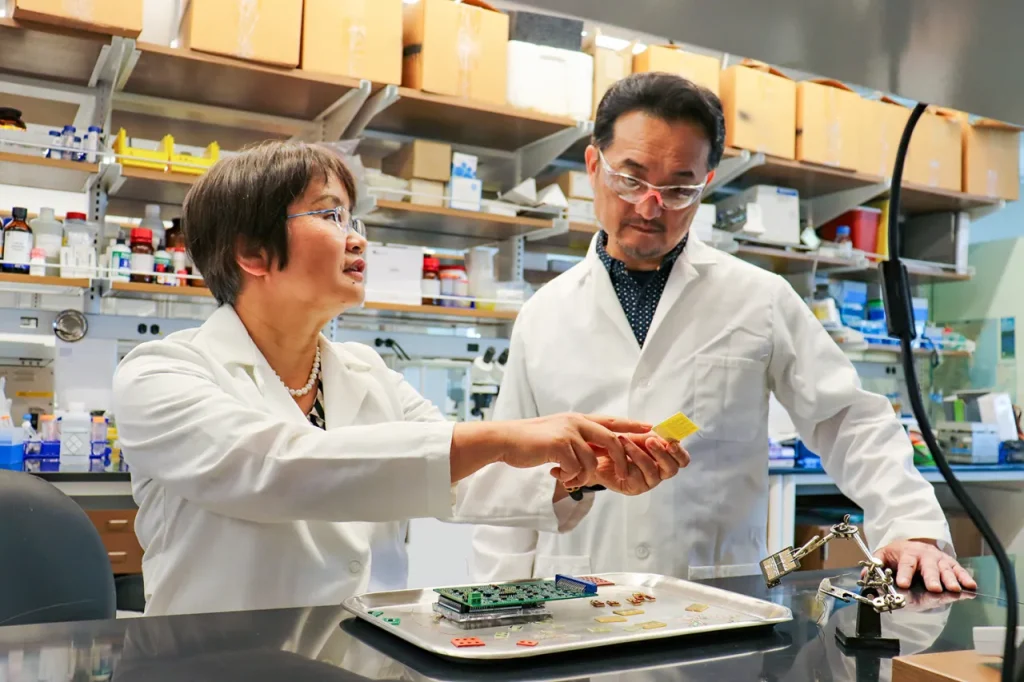
“With PTSD, diagnosis is complicated. Every patient’s condition is different,” Wu said.
According to UTK, the two researchers learned to detect PTSD in humans using a handheld biosensor that they originally developed to help dairy farmers quickly diagnose diseases affecting their herds. The device uses AC electrokinetics-integrated capacitive, or AiCAP, a technology the researchers created that applies a specific AC signal to move bioparticles toward sensors that identify disease-causing microbes.
They patented the system, which can now identify a wide array of biomarkers to diagnose numerous diseases ranging from bovine tuberculosis to human influenza.
However, in order to bring this useful tool to market, Wu and Eda are leaning on the help of CFD Research, based in Huntsville, Alabama. The company reached out to the University in 2023 to seek guidance, given their contract with the U.S. Military to create a low-cost, minimally invasive diagnostic tool for PTSD.
Long story short, they wanted to incorporate the research from Wu and Eda into their devices. It was the perfect match.
The handheld biosensor is a game-changer for PTSD diagnoses because the disorder is associated with many biomarkers, including proteins, fats, carbohydrates, and nucleic acids like DNA.
Wu and Eda worked with CFD Research’s researcher David Gaddes to develop a sensor that can identify more than a dozen PTSD-related biomarkers from a single blood sample.
“We’re hoping that this would be… very easy for a doctor to run and operate — they put a sample in, they get an answer out,” Gaddes said. “This is why it’s very valuable for industry and university researchers to collaborate.”
Gaddes presented the team’s device at the Military Health System Research Symposium in Orlando, Florida, in October 2024. He said it was very well received, with multiple attendees asking to help prototype it or be alerted as soon as it becomes commercially available.
The team hopes to get FDA approval so the device can also be tested for use with other conditions like cancer, organ damage, or sepsis. They’re aiming for something portable, inexpensive, and usable right in a doctor’s office without having to send samples to a lab.
Wu said that although further research is needed to establish clear correlations between biomarkers and treatment plans, “PTSD is a great example to demonstrate the potential benefits of our sensor array in furthering personalized medicine. Multiomics sensing can promote holistic treatment approaches for PTSD by providing a biological foundation to tailor and optimize integrative whole-person care.”
Learn more on the UTK website.
Like what you've read?
Forward to a friend!