

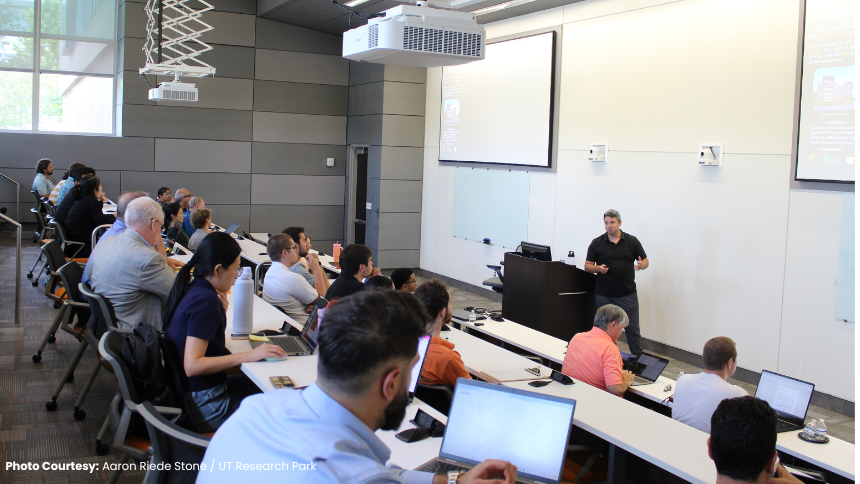
A big, bold, and bright discussion about battery-tech
Dr. Thomas Zawodzinski said the most important way battery companies can stand out in the space is to never stop innovating.
According to the National Renewable Energy Laboratory (NREL), as of March 2024, the U.S. has a database of about 700 companies and 850 facilities in North America that serve the lithium-ion battery industry through various supply chain segments, including mining, material processing, cell and pack manufacturing, research and development, services, end-of-life management, and product distributors.
So, among all these players, how can a battery entrepreneur stand out?
It’s a great question that was answered by three of East Tennessee’s key voices on the topic: Dr. Thomas Zawodzinski, Dr. Brian Washington, and Dr. Don DeRosa.
Zawodzinski serves in the Department of Chemical and Biomolecular Engineering at the University of Tennessee, Knoxville, and in the Division of Materials Science and Technology at Oak Ridge National Laboratory (ORNL). He holds the title of Governor’s Chair in Electrical Energy Storage with a joint appointment at UT-Knoxville and ORNL.
Early in his career, Zawodzinski developed what is now the standard approach for all work on fuel cell membranes, an approach that continues to evolve today.
His laboratory focuses on three key components in three main areas: components, devices, and core techniques.
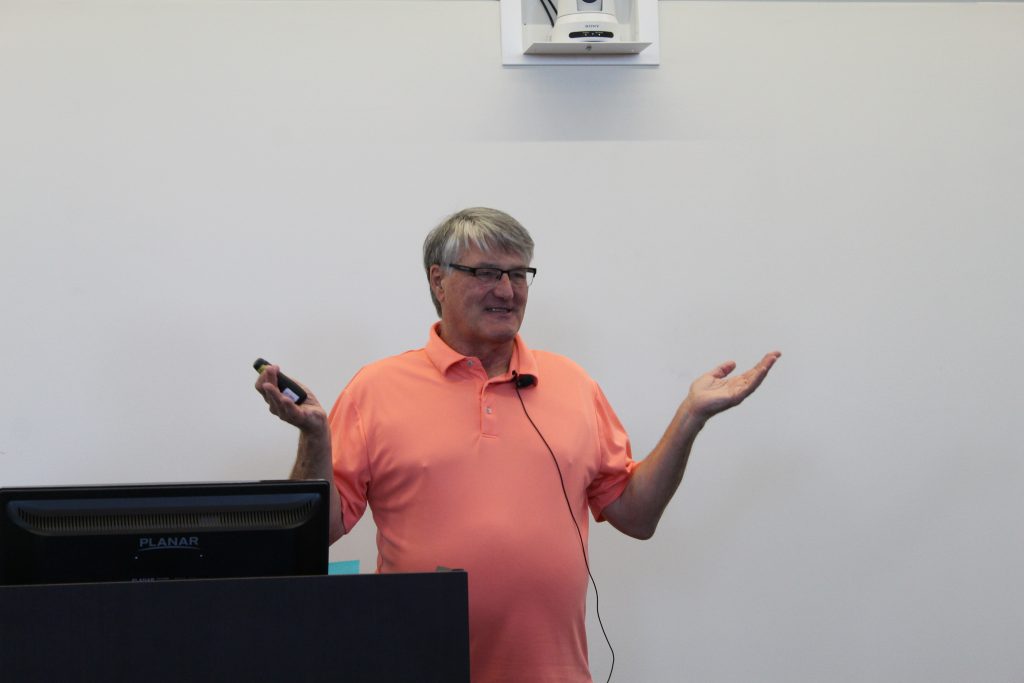
His team has found ways to improve technology and materials in fuel cells, membranes, redox flow batteries, and metal-air batteries. In the process, they’ve discovered biosensors and sensors that can be used to detect chemical warfare agents, artificial muscles, and electrochemical reactors.
Zawodzinski would say the most important way battery companies can stand out in the space is to never stop innovating. The chemistry can always be improved, the casing can always be refined, and the techniques for production can always be enhanced.
Notably, he emphasized that lithium-ion batteries are not the solution to every problem. Sometimes, the chemistry had to change to bend to the needs of its use case.
DeRosa, the Founder of Eonix, is a prime example of the chemistry portion. He has been working for more than a decade to enhance lithium-ion battery chemistry so it operates at maximum efficiency and safety. When compared to other batteries, Eonix is non-flammable and can be adapted across a range of industries.
DeRosa shared that his ATLAS platform, which rapidly develops custom electrolytes for advanced lithium-ion batteries, has been used for electric vehicles, electronics, defense, and grid applications.
“There are dozens of ways to do the chemistry for batteries, even though they’re all lithium-ion,” DeRosa said. “But, not all that chemistry is sound.”
He pointed to the recall of the Chevy Bolt in 2020 as an example. The batteries had a high risk of catching fire if they were charged to 100% capacity. Owners of the car could either return it or have to follow a pretty strict set of safety measures, which included not charging the car over 90%, recharging before it drops below 70 miles of charge, and re-parking the car outside immediately after charging to avoid housefires.
“There’s so much money flowing into battery companies, yet so many of them fail,” DeRosa said, emphasizing the importance of due diligence and investing in the right companies with the right chemistry.
Washington is standing out differently. While the world is focused on enhancing Li-ion batteries, he is turning his attention to recycled aluminum. His company, AluminAiry, is focused on creating batteries for stationary and backup power solutions. His unique chemistry generates electricity through a reaction between aluminum and oxygen from the air.
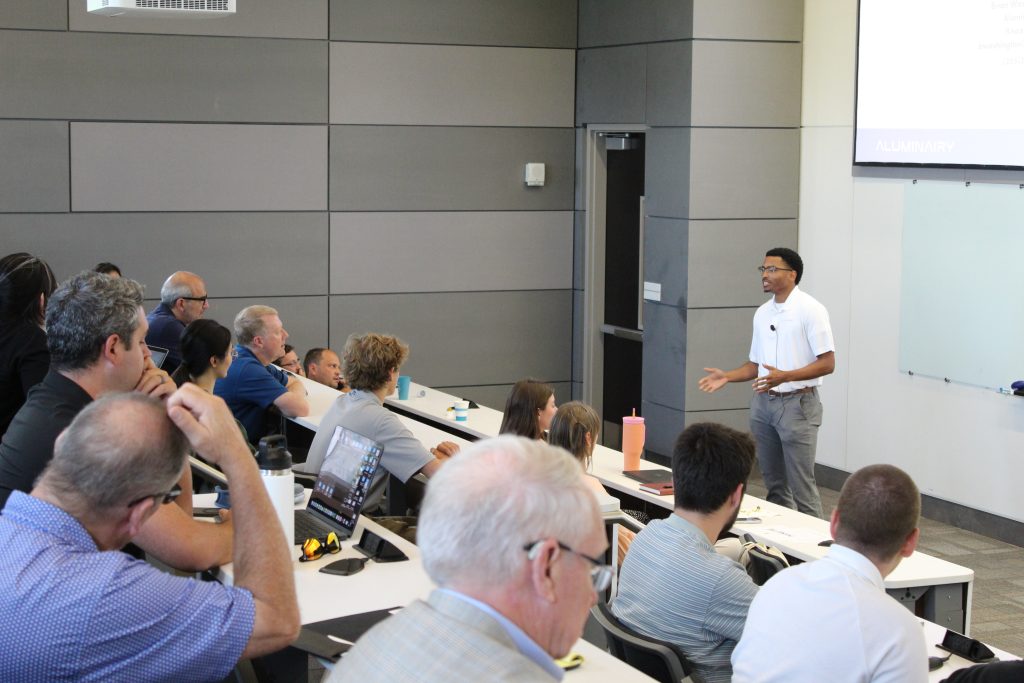
Recycled aluminum cannot be recharged. But the batteries can be repurposed by switching out the aluminum plates, which Washington said takes only a few minutes. Aluminairy will rely on its mechanical refuel system to perform on-site aluminum swaps so customers don’t have to handle the process manually.
“Recycled aluminum is one of the most readily available materials in the world,” Washington said. “By using it to build batteries, the practices are far more sustainbale and ethical than the lithium-ion industry.”
Both DeRosa and Washington walked the audience through their unique chemistry and R&D processes.
Like what you've read?
Forward to a friend!