

Nuclear is NOW in East Tennessee | One of the largest nuclear conferences wraps in Knoxville
Day two of the Nuclear Opportunities Workshop (NOW) focused on innovation, workforce and what's next. Like day one, none of it happens without alignment.
Day one of NOW was all about nuclear strategy and deployment, and how statewide alignment has made East Tennessee the “Nuclear Epicenter” of the U.S. Read Katelyn Biefeldt‘s Teknovation recap of day one here.
Day two shifted the conversation to future nuclear innovation and workforce development. Still, that alignment theme carried through.
Fusion is NOW
There’s no doubt that nuclear is here, but that NOW includes fusion alongside fission.
Fusion has long been fission’s “pesky little sibling,” said Scott Hsu, fusion partner at Lowercarbon Capital. But given rising energy demand, fusion has had to grow up fast, putting it on a real path to viability. Getting there will take the same statewide alignment fueling fission.
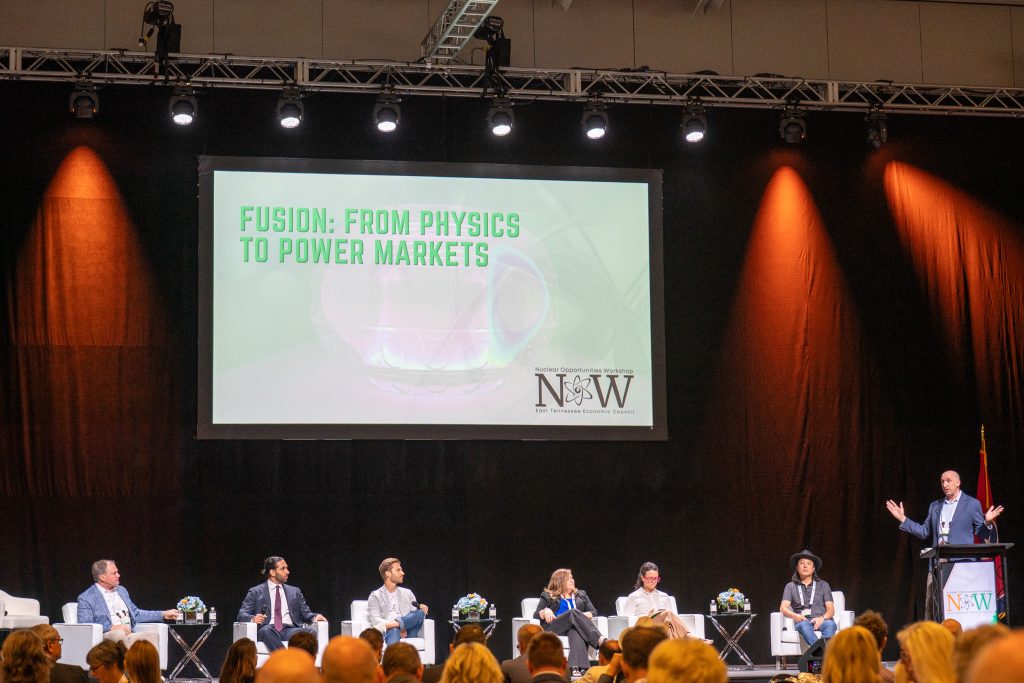
Hsu explained that states are racing to attract fusion companies, the high-paying jobs they bring and a slice of the $100 billion in projected annual fusion revenue by the 2040s. California, Washington, New Mexico and Wisconsin have led on fusion so far, but he noted that Tennessee has emerged as the leader on fusion regulation.
Lowercarbon Capital sees this as a huge step in the right direction, and Hsu announced that they have made an equity investment in Type One Energy.
Similarly, Guin Shaw of Rutherford Energy Ventures added that ORNL and Rutherford are building a public-private partnership to create shared fusion testbed infrastructure at the lab.
Panelists agreed that drawing fusion companies to any state requires speed and alignment. Getting the right people in the conversation early. Not having to wait weeks for licensing answers. The mindset that it’s not fission or fusion, but both. Simply add “and fusion” to existing programs and regulations would greatly help.
Powering fission and fusion
None of this nuclear innovation matters without a reliable grid. Mike Skaggs, TVA‘s interim president and CEO, then gave a status update.
TVA has 3,700 megawatts under construction. This includes:
- 1,450 megawatts at the test-fired but not-yet-commissioned Cumberland Combined Cycle Plant.
- 1,500 megawatts coming online next year at the Kingston Energy Center.
- A new 500-megawatt plant in Caledonia, Mississippi.
- 100 more megawatts at the Shawnee Fossil Plant.
- Another 1,000 megawatts that can be optimized in their existing fleet through upgrades.
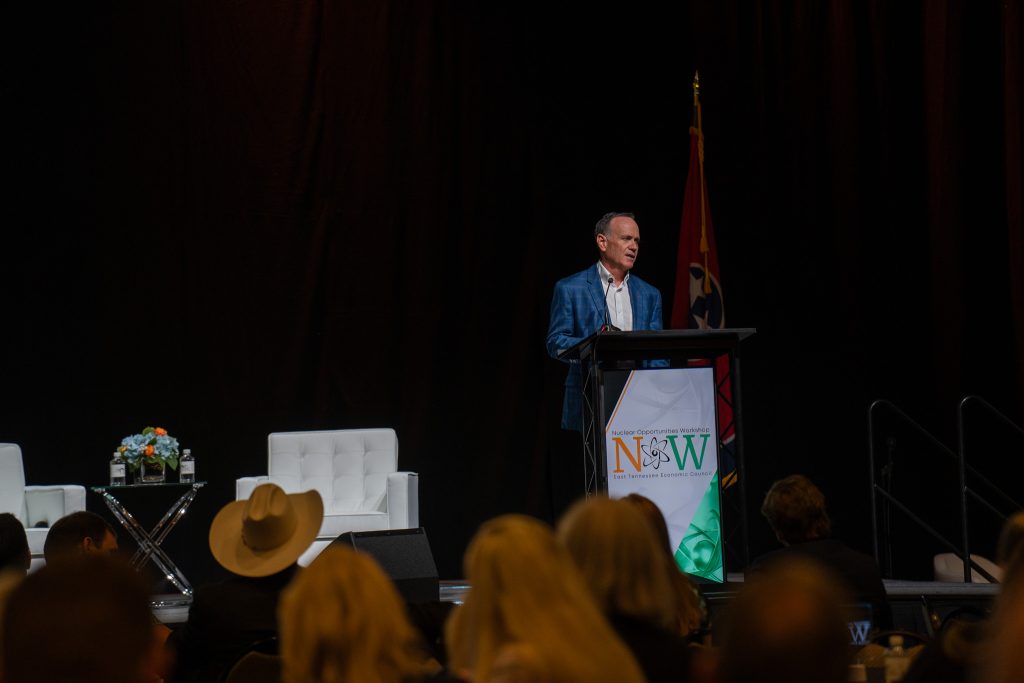
But the main point? TVA is very pro-nuclear.
They are in talks with GE Vernova Hitachi, Kairos Power, NuScale Power and Type One Energy about new reactors under the TVA Act. GE Vernova Hitachi has proposed several small modular reactors at Clinch River and Bellefonte. TVA is also talking with NuScale about small reactors near Hartsville.
Going forward, four principles will guide TVA’s approach to new nuclear:
- Financing has to come from outside TVA, since its capital is tied up in grid and transmission work.
- A market off-taker for the power still needs to be found, and TVA is helping locate one.
- Risk to customers and the Valley must be minimized.
- As the eventual licensee and operator, TVA needs any new plant to meet the same safety bar as its existing fleet.
Demand and supply of the nuclear workforce
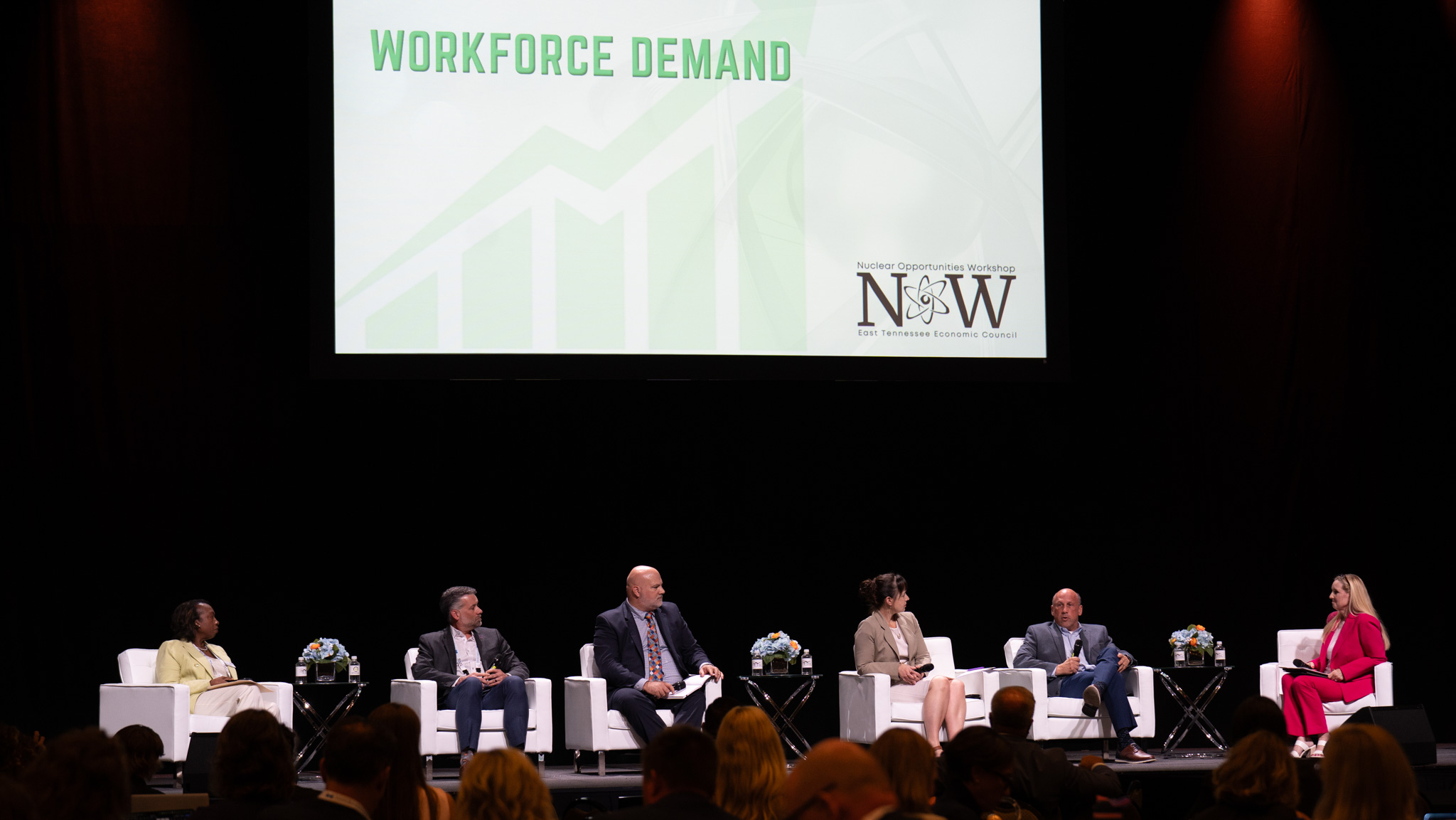
The audience was excited to hear these updates, but wheels were already turning about the jobs needed to power this growth. It perfectly teed up a workforce panel.
Oak Ridge Associated Universities (ORAU), in partnership with Deloitte, presented findings from a study of 15 Tennessee Nuclear Network (TN²) organizations
Tennessee’s more than 150 nuclear-related organizations and $10 billion in investment already support about 16,000 direct nuclear jobs — a figure that could reach 40,000 with secondary and tertiary work. Demand is projected to peak in 2032, driven by a growing need for chemical plant operators, nuclear reactor operators, electricians, welders, plumbers and steamfitters.
The study warned that without action, supply gaps will open. Demand will surge, but will eventually steady. Nevertheless, the state is well-positioned to act with state funding and this sense of alignment.
Employers said the ideal hire brings reliability and strong communication — traits often found among workers from automotive, aerospace, pharmaceutical and military backgrounds. Panelists called for introducing nuclear careers earlier in schools and showing industrial, mechanical and civil engineers how their skills translate into nuclear. It’s also important to let non-technical roles like accountants, marketers and human resource professionals know that they will be needed as well.
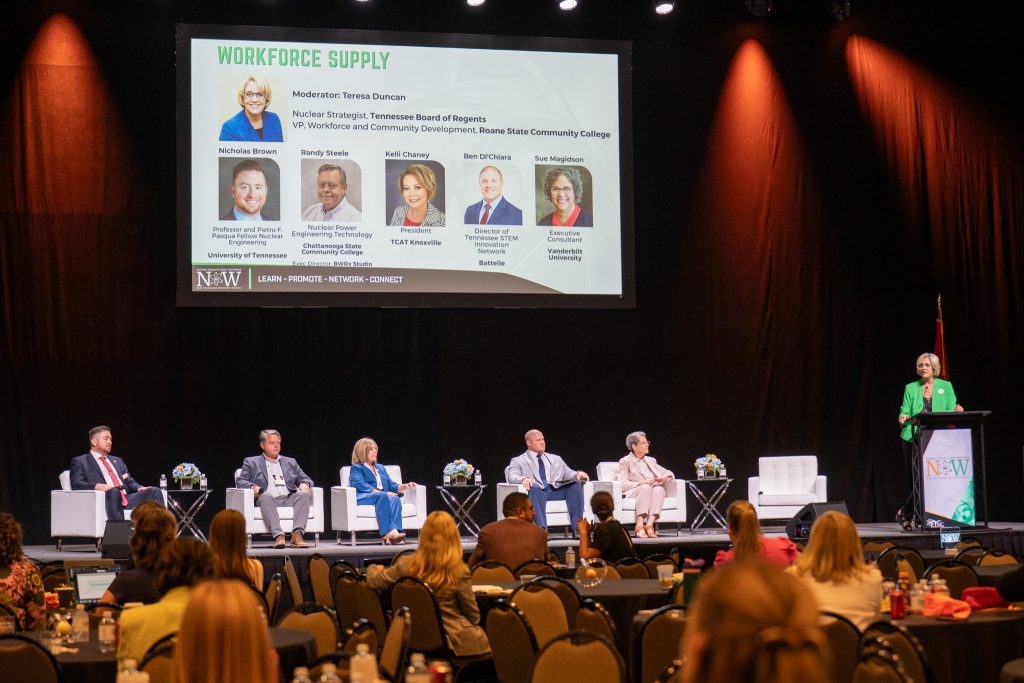
A follow-up panel featuring educators then took the stage to show what solutions are already in the works.
The Tennessee STEM Innovation Network has a K-12 nuclear pathways program, soon expanding to third through fifth grade in collaboration with TVA. For higher education, Chattanooga State Community College continues to explore partnerships with TVA as proof that shorter degrees or apprenticeships are a valuable pathway.
Nick Brown spoke for UT’s nuclear engineering program, ranked third nationally.
“We’re on a workforce development grant with Chatt State, TCAT, Roane State, ORAU, TVA and UCOR focused on curriculum development for reactor safety and training,” Brown said. “That leans into our land-grant mission. We’re excited to build curriculum from K-12 through the Ph.D. level, align our nuclear engineering minor with industry standards and help bring the workforce into nuclear safety culture.”
Want to know what progress has been made come next year? Mark your calendars for the NOW Conference on Aug. 3–4, 2027, at the Knoxville Convention Center.
Like what you've read?
Forward to a friend!