

MARVEL is an ETSU research project listening for disease in the human voice
"With a certain level of accuracy, we can say that this person is perfectly fine. Or, we can say they're in fact facing some undiagnosed voice disorder, respiratory disorder, or a neurological disorder."
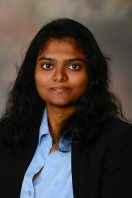
For most people, a voice is just a voice. For Dr. Shehenaz Shaik, it’s a data stream that may carry early signs of disease.
Shaik and a team of collaborators at East Tennessee State University (ETSU) are building MARVEL. It’s short for “machine learning-based classification framework for voice evaluation across multiple disorders.” The AI tool listens to a short clip of someone’s voice and screens for the possible presence of neurological, respiratory and other disorders.
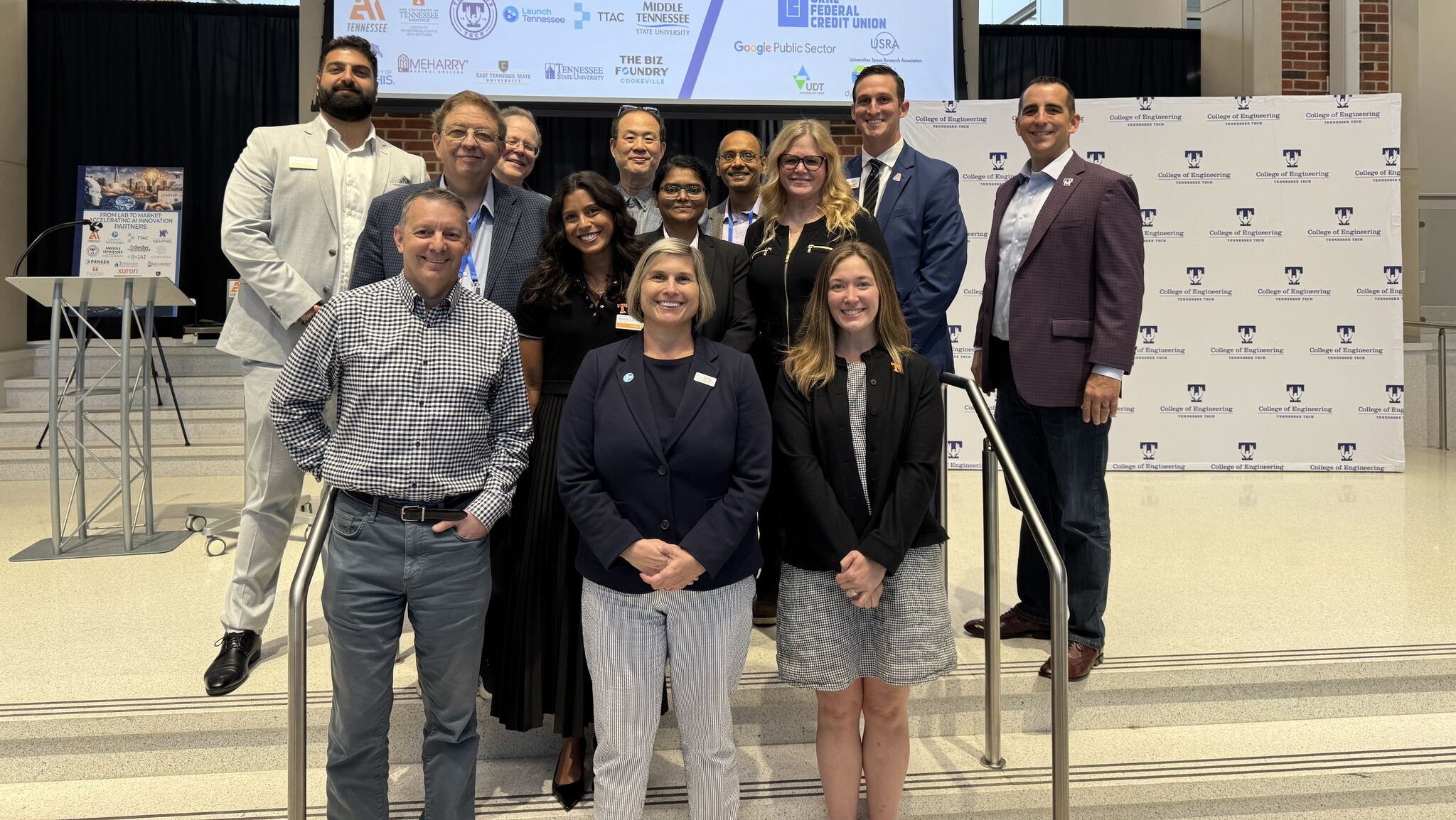
MARVEL recently pitched at AI Tennessee‘s “Lab to Market” event.
Cross-collaboration breeds innovation
MARVEL grew out of a cross-department collaboration at ETSU, bringing together Shaik and Dr. Ahmad Al Doulat in computing with Dr. Kendrea Todt from the nursing department and Dr. Lady Catherine Cantor-Cutiva from audiology. Plus, a number of graduate students.
Together, the team began building on the Bridge2AI Voice data set, a large collection assembled by a University of South Florida-led team that pairs thousands of voice recordings with the corresponding health conditions of the speakers. When the ETSU team began, the data set held around 19,000 clips. Since then, it has grown to roughly 62,000 clips.
The model currently reaches 70% average accuracy, but the team is eager to keep iterating to get that number up. Part of what they are exploring is pairing the analysis with an app so people can get a screening result immediately.
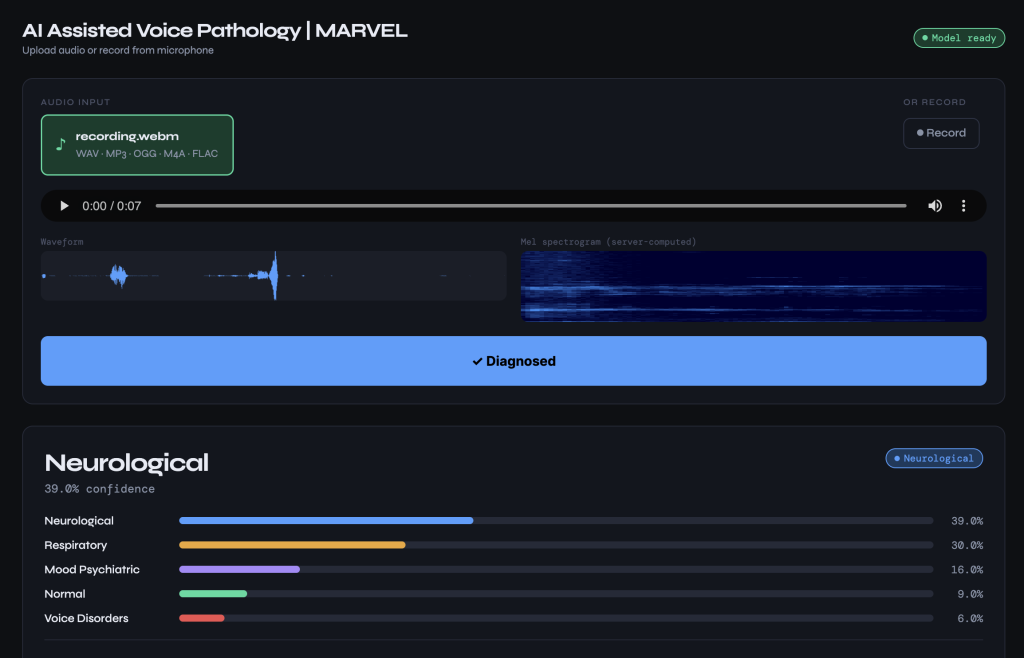
“We definitely need some input regarding what the look and feel for the app should be. Some patients may not be quite savvy with such tools,” explained Shaik. “But we also want to bring in physicians and speech specialists to help decide exactly what kind of information should be shared with patients directly and what needs to be debriefed live.”
Shaik envisions a few ways MARVEL could fit into people’s lives: as a subscription tool individuals use to self-monitor and decide when to see a specialist, as a pre-screening step physicians run during a regular visit or as a recurring check built into workplaces or schools like a flu shot.
Why this research matters
Almost 10% of people are affected by some kind of voice-related problem, according to Shaik. Right now, getting evaluated for a voice-related issue often starts with a physician referral, followed by scheduling and traveling to see a speech specialist.
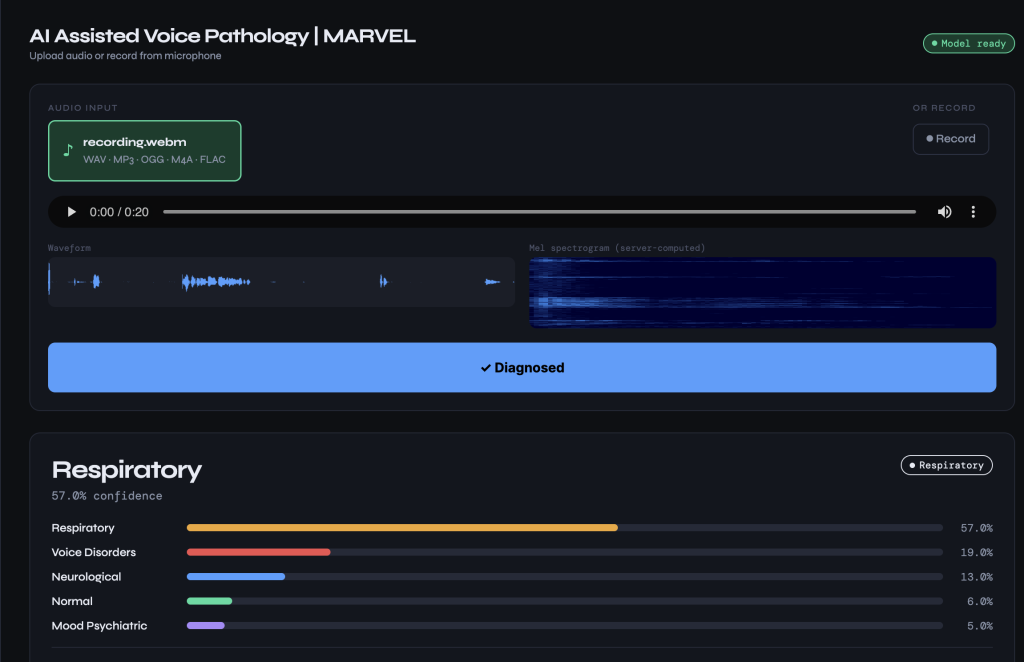
Shaik has lived in the Tri-Cities area for about three years and points to Johnson City’s concentration of hospitals and specialists as a strength for the region. But once you leave the city limits, specialty care options rapidly decrease.
“This diagnosis can be done by anyone in a non-invasive manner,” Shaik said. “For rural areas, that specialist might be two to four hours away. This can make speciality care more accessible.”
Like what you've read?
Forward to a friend!