

ORNL deploys ‘Pathfinder’ | The new quantum computer will accelerate research and discovery
The acquisition of IQM's Pathfinder will support the development and integration of quantum with high-powered computers (HPCs) to solve real-world problems in logistics, medicine, cybersecurity, defense, and more.
It’s hard to bottle the potential impact of quantum computing. Much like the public launch of the internet in the early 1990s, there’s no reliable way to predict how much it could change human lives, discovery, and industry. But researchers in the quantum field say the commercial possibilities are vast.
From scientific discovery and medicine to cybersecurity, finance, and logistics, almost every industry has a complex problem that could use a quantum solution.
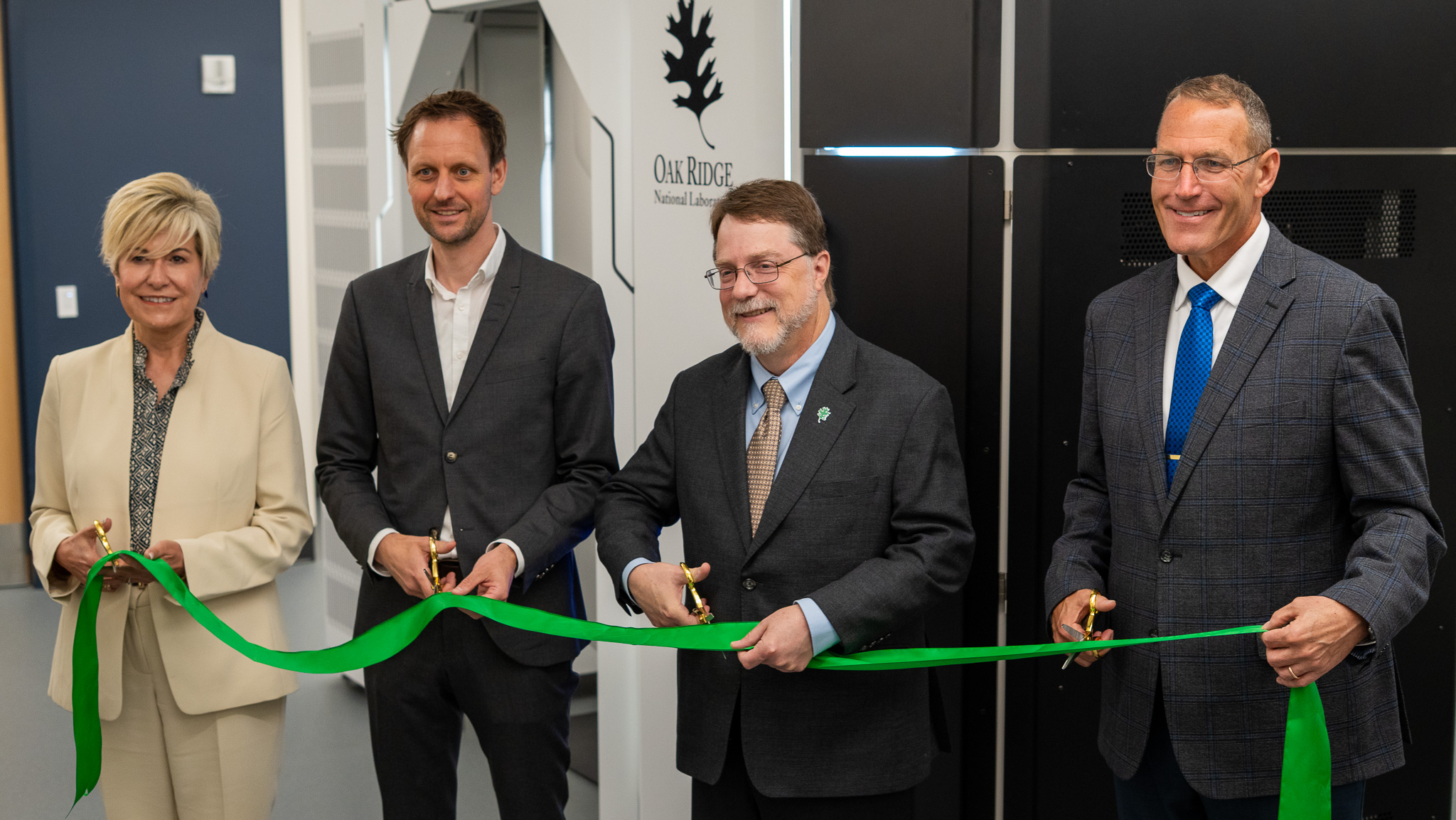
This week, IQM and Oak Ridge National Laboratory (ORNL) announced the installation and deployment of a new quantum computing system called Pathfinder, a 20-qubit machine from IQM’s Radiance Quantum Computing line.
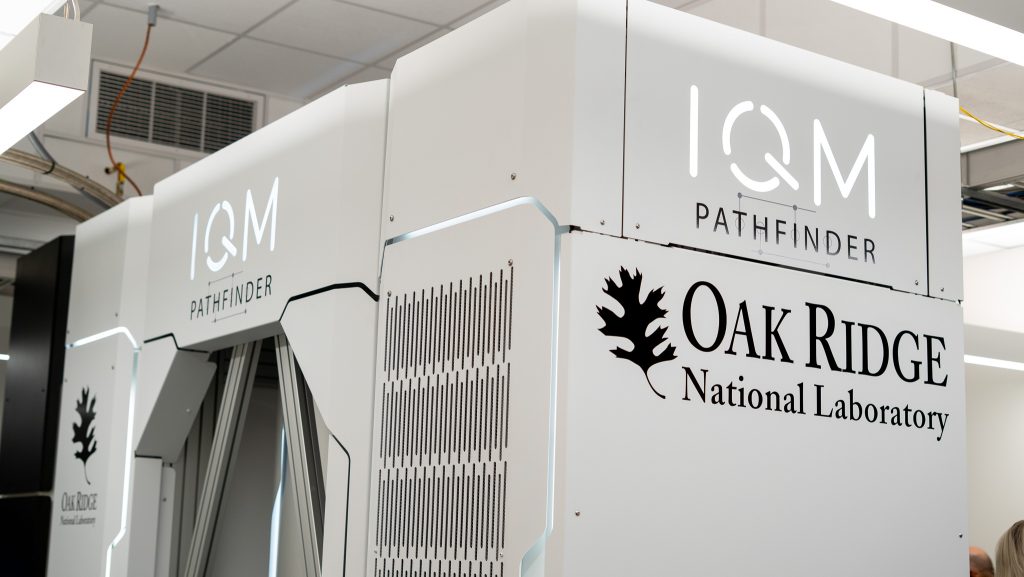
Pathfinder is housed inside ORNL’s 100,000 square foot Translational Research Capability (TRC) building, which was built with this kind of work in mind.
“The TRC building was designed specifically to support quantum information sciences research,” said Stephen Streiffer, director of ORNL. “Having an on-premise quantum computer changes what we can do and changes what’s possible.”
It is ORNL’s first commercially procured 20-qubit quantum computer, and it carries a notable distinction: IQM chose the ORNL campus in East Tennessee for its first quantum installation in the United States.
“Quantum becomes useful when it works inside real computing infrastructure, and there is no better place to prove that. Oak Ridge is a place where serious computing is done,” said Jan Goetz, CEO and co-founder of IQM.

Combining high-performance computing with quantum capabilities
Streiffer said the best scientific path to discovery isn’t pitting high-performance computing (HPC) against quantum, but marrying the two.
Using on-site supercomputers like Frontier, the soon-to-arrive Lux AI cluster (expected in 2026), and Discovery (expected in 2028), ORNL scientists such as Amir Shehata and Claire Marvinney can experiment with what’s possible in the quantum realm.
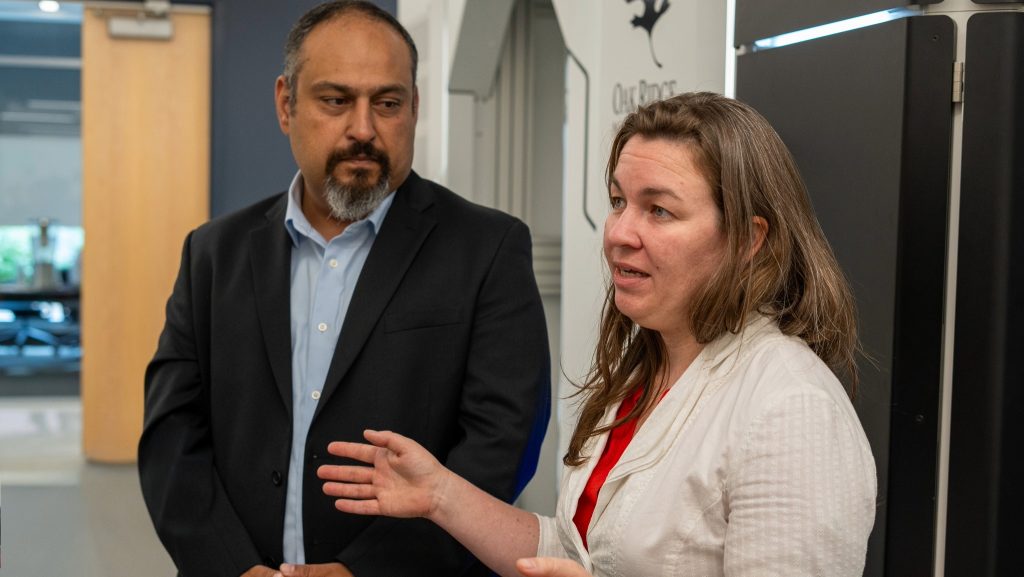
“We’re trying to figure out how you can effectively connect this machine to some HPC cluster. We’re not starting with Lux or Discovery; we’re going to start with some smaller cluster that we have,” Shehata said. “It’s a test bed that will allow us to work through the challenges that could arise when connecting these two technologies together.”
“I’m very excited that this system is up and running for our scientists here at ORNL to begin these studies. The science is here, and now we get to actually demonstrate it,” Marvinney said.
What makes quantum the ‘holy grail’ of problem-solving?
Picture a regular computer as one person trying every door in a maze, one at a time, until they find the exit. A quantum computer sends out multiple explorers to try every door at once, finding the exit far faster.

Normal computers operate with bits, which are either 0 or 1. Quantum computers use qubits, which can be 0, 1, or both at the same time (superposition), or somewhere in the vast space between. Qubits can also be linked (entanglement), so the behavior of one affects the other.
As in the maze, quantum can crack in minutes what would take a traditional computer years, a leap that matters for science, medicine, and national security.
“Those are some of the industries that could leverage quantum and eventually affect normal people in their everyday lives. But it will be a long time before people like you and me have our own pocket-sized quantum computer. That is not in the near term for these systems,” Marvinney explained.
ORNL is once again front and center for innovation
At Tuesday’s ribbon-cutting ceremony for Pathfinder, one of the more moving sentiments was that ORNL is again positioned to lead the national charge.
With the first U.S.-based IQM system now in hand, Dr. Georgia Tourassi, associate laboratory director of the Computing and Computational Sciences Directorate, said it feels like the start of a new chapter.
“Pathfinder is exactly what the name suggests, a test bed that will literally help us find the path to quantum high-performance computing. Achieving this integration can enable a fundamentally new computing platform, the same way that GPU was pioneered at ORNL to help unlock today’s advances in artificial intelligence,” Tourassi said.

Now it’s in the hands of the lab to do what it does best. IQM’s deployment model gives partners like ORNL direct ownership and control of their quantum infrastructure, including the intellectual property.
Like what you've read?
Forward to a friend!