


A sit-down with Tasia Malakasis | How her cancer diagnosis opened doors for a Tennessee startup
Tasia Malakasis has spent years championing Tennessee startups. Facing a breast cancer diagnosis, she found herself on the other side of the equation, helping bring a Memphis med-tech innovation to East Tennessee for the first time.
You never really know what’s going on in someone’s life.

For people in Tennessee’s entrepreneurial ecosystem, Tasia Malakasis needs little introduction. She’s the CEO of the Company Lab (CO.LAB), a fierce advocate for Chattanooga startups, the quantum revolution, and mobility innovation — a connector of people, ideas, and capital, and a unifying voice for the region’s founders.
Yet, since the start of 2026, she has been quietly battling breast cancer.
She had self-discovered a concerning lump at the end of 2025; physicians confirmed the diagnosis in January.
Malakasis had a double mastectomy on May 4 to stop the spread of invasive lobular carcinoma, a particularly difficult form of the disease, known for forming chains of tumors that are hard to detect on screenings and challenging to remove.
True to form, she approached it like a founder.
“I had been approaching it with a business mindset — what do I need to do? Read articles. Make appointments. Get second opinions. Research. Prepare my team while I’m out of the office,” she said.
But the Friday before her surgery, the rotating list of to-dos stopped. Reality sank in.
“Life is going to look different now,” she said.
Discovering the options — and a 50-year gap
After her diagnosis, Malakasis found herself navigating a maze of specialists: a medical oncologist, a radiation oncologist, and plastic surgeons. The appointments came fast.
“It was all happening so fast, and I was left wondering what choices I had in the process,” she said.
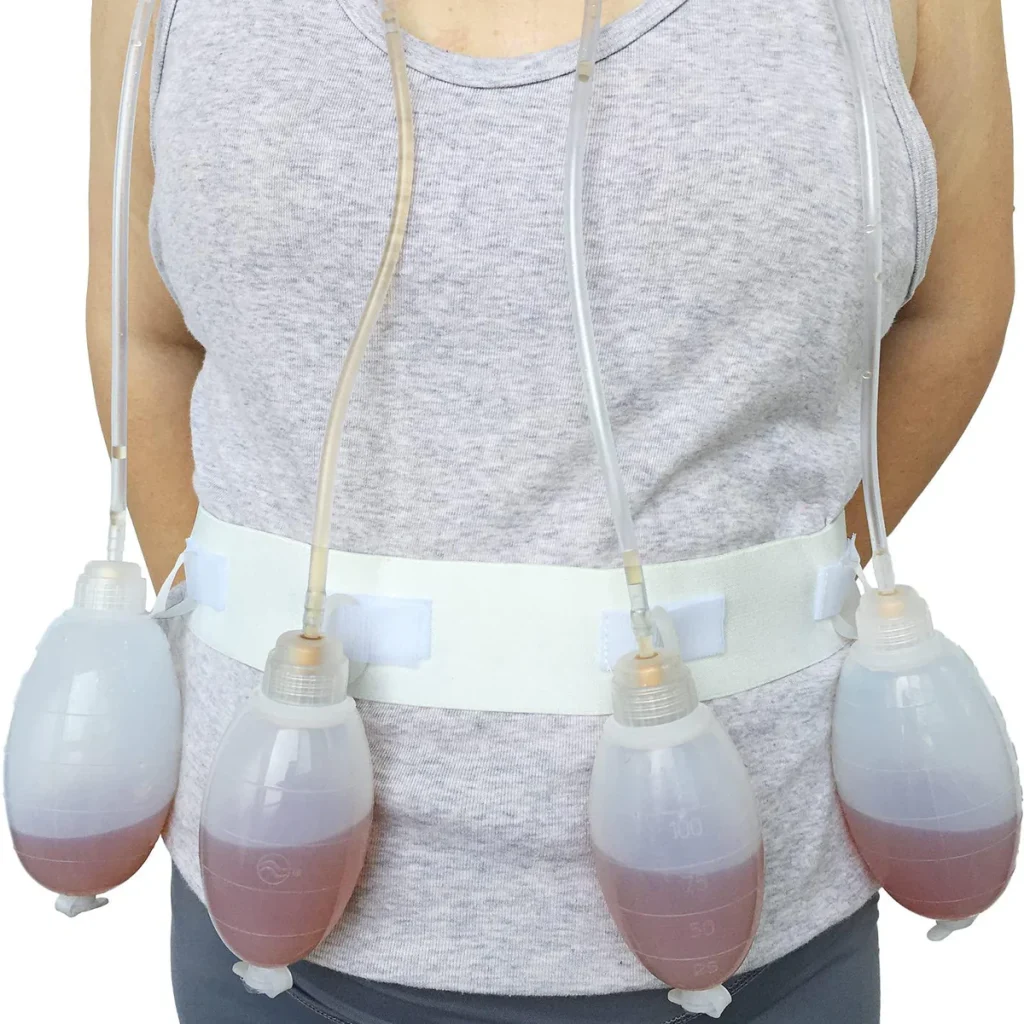
One choice that hadn’t meaningfully changed in five decades was post-surgical drainage. After a mastectomy, patients are typically sent home with Jackson-Pratt (JP) bulb drains, a manual, analog system that requires emptying three or four times a day, measuring the fluid, and recording the output.
“At first, I didn’t really know anything about drains. But after your surgery, you can’t manage them yourself because it’s painful,” Malakasis said. “This was one of the parts I became most nervous about.”
Thousands of comments across online forums, YouTube videos, and blog posts confirm what she describes. The frustration is widespread, the system is nearly universal.
The United States dedicates at least $1 billion annually to breast cancer research, according to the Breast Cancer Research Foundation. The National Institutes of Health (NIH) notes that breast cancer consistently receives more research and clinical funding from public entities and nonprofits than any other cancer type.
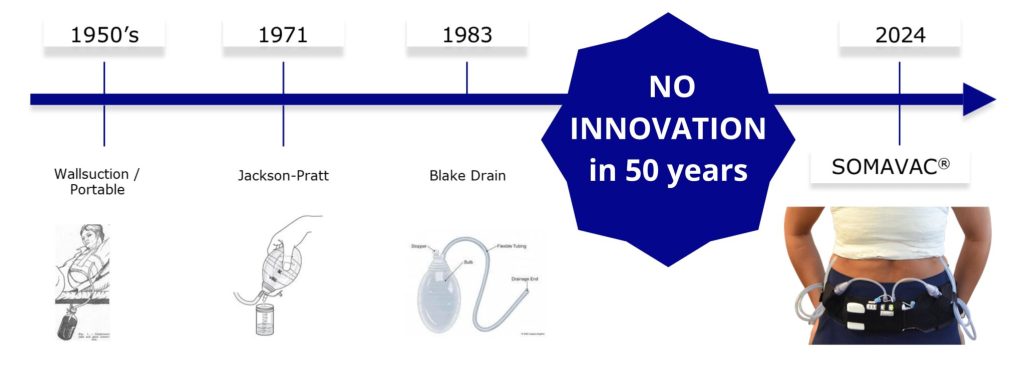
And yet, for 50 years, post-surgical recovery hardware has remained unchanged.
“Breast cancer is the number one researched, the number one funded, the number one talked-about cancer of all,” said Jane Berz, board chair for Somavac. “Yet no one invested in the recovery. And that’s what we’re doing.”
What is Somavac?
Somavac is a Memphis-based med-tech startup building the first real alternative to the JP bulb drain in half a century.
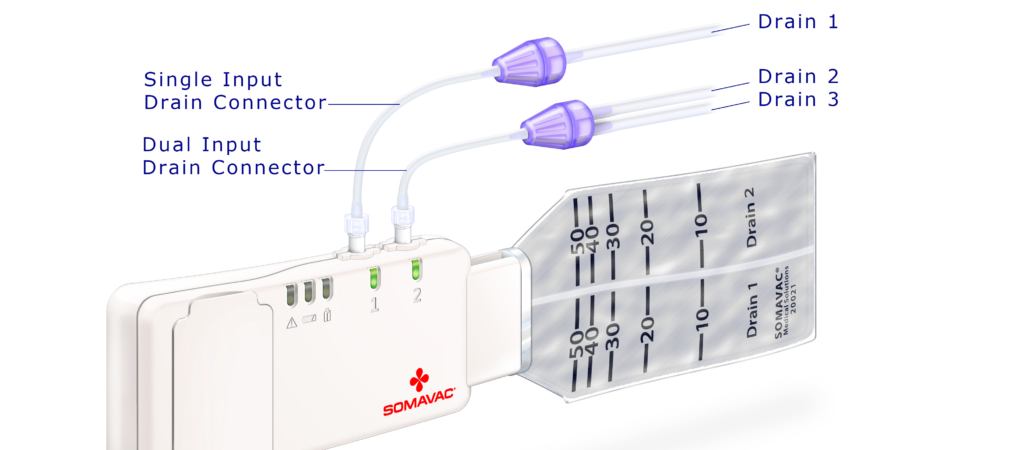
The company has developed a portable, battery-powered electromechanical pump that uses negative-pressure vacuum therapy technology to remove post-surgical fluid. The U.S. Food and Drug Administration (FDA) has cleared it for use following mastectomies, plastic surgeries, and other general procedures.
Where the traditional JP bulb is a $0.50 manual system that patients must manage themselves, Somavac is discreet and self-contained.
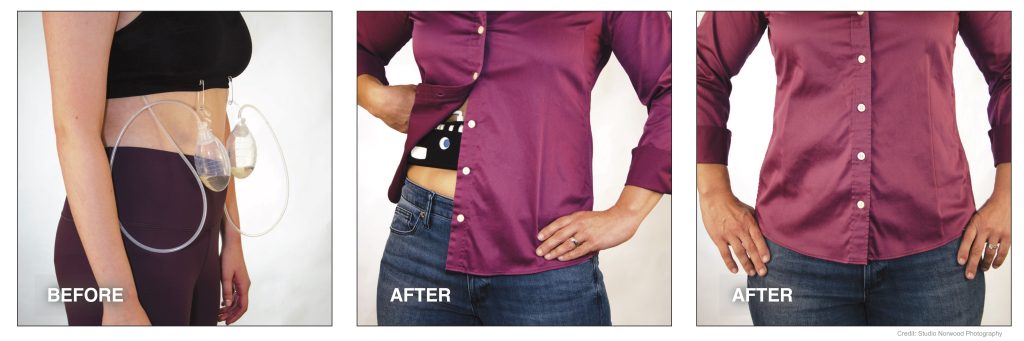
“You can put your shirt over it,” said Elizabeth Hoff, Somavac’s founder. “It pulls the fluid out into a waste collection unit. Patients don’t have to touch the fluid or worry that it’s going to get on them. They simply throw it in the kitchen garbage and put a new bag in.”
Early data from Somavac studies also show that patients can have their drains removed 30% sooner than with traditional methods, thanks to the device’s negative-pressure therapy technology.
A Tennessee connection, accelerated by urgency
Malakasis had first met Berz in Chattanooga before her diagnosis, through her work at CO.LAB. She knew about Somavac — its FDA clearance, its growing list of hospital partners, and the women it had already impacted.
After her diagnosis, she became determined to use it.
“I became interested in using Somavac, having heard Jane’s passion for the product and all the lives it had already touched,” Malakasis said. “The only problem is that Somavac hadn’t been approved to be used at Erlanger.”
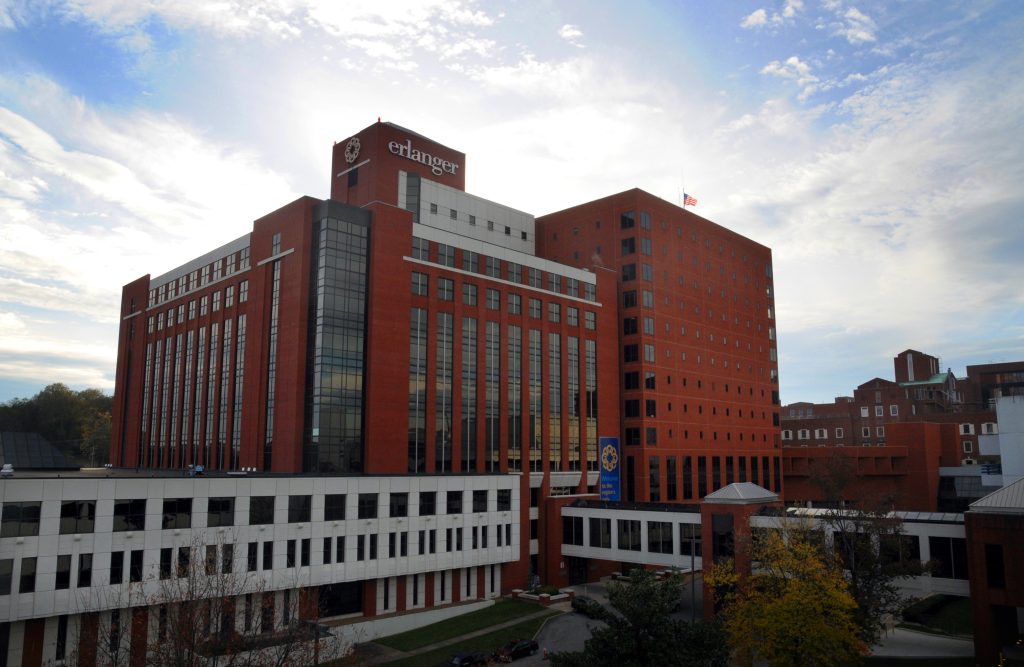
Hospital approval for new medical devices typically takes months or years. Malakasis, facing a surgery date four weeks out, decided to compress that timeline.
“I got real serious about it,” she said. “Somavac would be helpful for me. But, even bigger than that, helping Somavac get used at Erlanger became about helping somebody else, too. It became about helping a Tennessee startup. It became about helping the hundreds of thousands of women who may come after me with this diagnosis.”
She connected with Sheila Boyington, Chair of the Erlanger Health board.
“I said — personally, I’m having a double mastectomy in your hospital in the next four weeks. I want to use this product. Can you help me get it approved for my surgery?” Malakasis said.

Thanks to Boyington, the Somavac team, Elizabeth, and Jane met with the hospital board. Within weeks, Erlanger Health System in Chattanooga became the first hospital in East Tennessee to use Somavac specifically for Tasia’s post-surgical care. This sort of timeline would normally have taken months or years.
“My core belief in all of this is that this diagnosis happened for a reason,” Malakasis reflected, just days before her surgery. “Maybe this is the reason. It’s my raison d’être to support startups. I now get to use a new product in my own life and be an advocate for them beyond just my role with CO.LAB.”
What patients say
Malakasis reported that the Somavac system was “working great” in the days after surgery and that she needed it for about a week, a timeline consistent with the company’s clinical data on accelerated drain removal.
For others, the experience has been equally profound, particularly for those who have been through several rounds of surgeries and drains.

Lynne Brewer is one of those breast cancer survivors who had a long road to recovery. She was diagnosed with breast cancer in 2023. After her bilateral mastectomy, she used traditional JP bulb drains — and within eight weeks, developed an infection that required a second surgery and 14 more days of drainage. She went on to have four surgeries over two years for her reconstruction, all requiring drains.
For her final surgery, at the University of Mississippi Medical Center, she told her surgeon she was worn down by the drains. He listened. And, after her final surgery, she woke up with Somavac.
“I normally average 14 days with the JP bulbs. I had Somavac taken off in six days. I am perfect now. No infections,” Brewer said. “Plus, it gave me the independence and the freedom that I could recover, not on my own, but in my own way.”
Hoff sees advocates like Brewer and Malakasis as central to how Somavac grows.
“There is nothing in med-tech like good old-fashioned feet on the street,” she said. “Our patients are the best pressure because they want and deserve the best recovery care available to them.”
What’s next for Somavac
Somavac currently has a Series A+ round open, seeking $8-10 million to continue scaling operations, outreach, and marketing to hospital systems across the U.S. Since the genesis of the company, the team has raised about $12 million.
The rollout of the medical device has been very successful, by all measurements.
Somavac is currently in the VAC process in notable hospitals such as UPenn, UT Southwestern, Houston Methodist Hospital, Henry Ford Hospital, and more. Plus, they’ve been fully approved at HOAG Hospital in Orange County, CA, Portsmouth Naval Hospital in Norfolk, VA, Ohio State Hospital in Columbus, OH, and eight institutions in the Mississippi/Tennessee region, including United Methodist Medical Center in Jackson, MS, and Baptist East Hospital in Memphis, where each institution has completed 100+ procedures using Somavac.
Longer term, Hoff and Berz see the platform technology extending beyond breast cancer recovery into orthopedics, general surgery, and cosmetic procedures.
Finding purpose in the diagnosis

“She’s a warrior, charting her own path through all of this,” Berz said of Malakasis.
It has been about three weeks since her early May surgery, and Malakasis is still engaging, still supporting, still showing up for Tennessee founders, including, in a very real way, for Somavac.
“I’m not saying this is the reason I got breast cancer, but I would like to believe that my story can be a benefit to other women,” Malakasis said. “For me, it gives purpose to this journey.”
Learn more about Somavac.
Connect with Tasia Malakasis, CO.LAB.
Connect with Jane Berz, Chair of the Somavac Board.
Connect with Elizabeth Hoff, Founder of Somavac.
Like what you've read?
Forward to a friend!