

Four founders, six weeks | CO.LAB has big plans to help its energy accelerator companies partner with industry
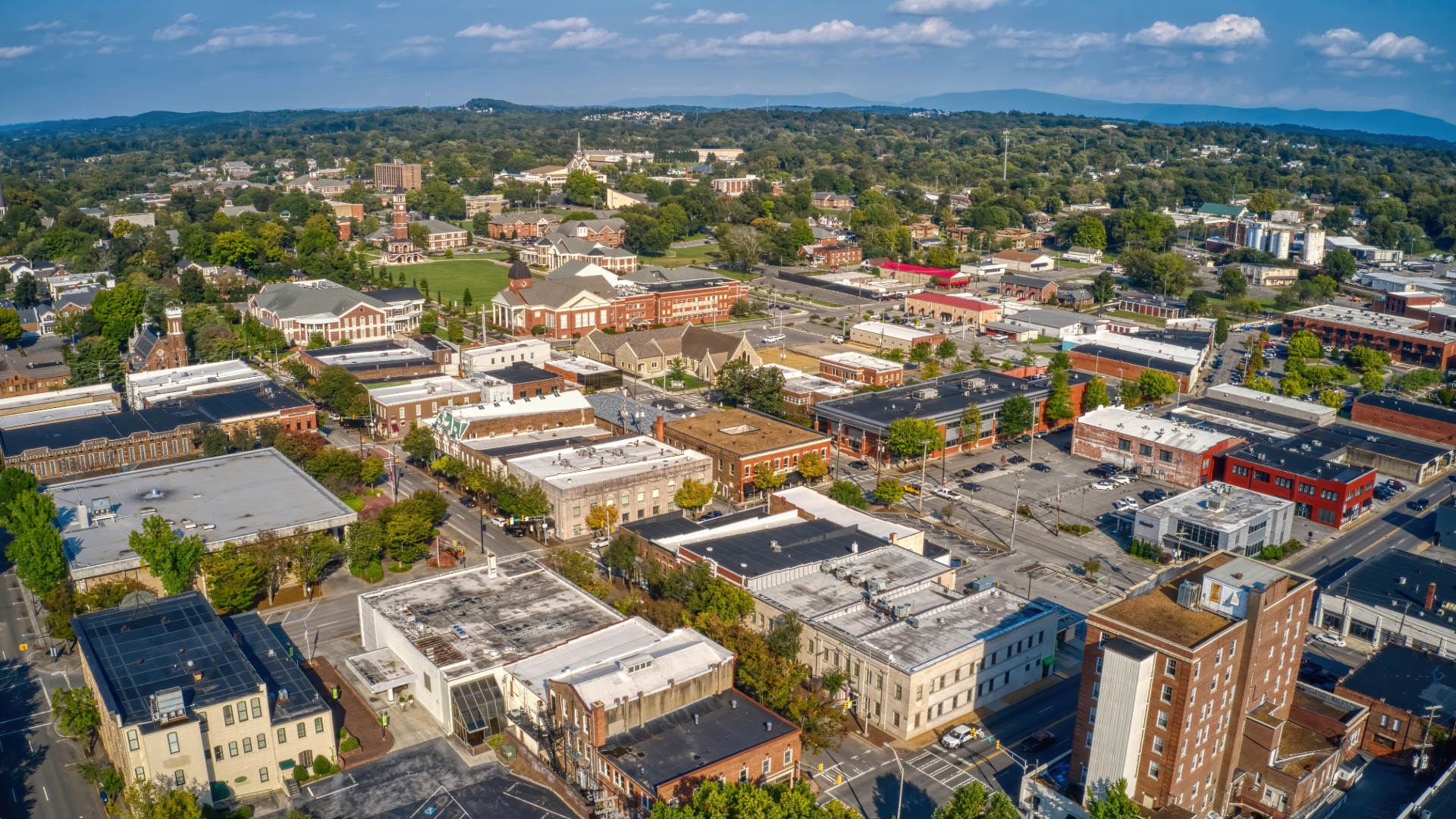
The four startup teams from across the United States will spend the next six weeks building their next generation energy companies from a Chattanooga base.
One of the things that Chattanooga does well is connect startups to the surrounding legacy industry. Whether it’s a private, corporate entity, like Volkswagen, or a large public utility like EPB, founders who engage with The Company Lab’s (CO.LAB) accelerator programs can almost always bet on making some sort of game-changing industry connection.
This year, CO.LAB is taking it one step further. Instead of operating like a traditional accelerator, the 2026 Energy Innovation Accelerator focuses on helping early-stage startups land real customers. This is the first of four accelerators the center has planned for this year, doubling its footprint. In 2026, those four cohorts will include the Energy Innovation program, the Smart City and Advanced Manufacturing Accelerator, the Freight and Supply Chain Accelerator, and the Quantum Tech Accelerator.
Each program will run for six weeks, requiring the founders to travel to Chattanooga for the duration of the program.
On Thursday, three of the four founders were working from the Society of Work coworking space in Chattanooga’s Northshore neighborhood. The fourth founder joined virtually; he was attending a conference related to his company. Each of the founders shared that Chattanooga, so far, has been a worthwhile experience. And, this cohort is only one week into their six-week program.
The companies include CubeNexus, OwnWatt, Rassket, and Voltair Labs.
OwnWatt
OwnWatt founder Yingchen “YC” Zhang said he came to Chattanooga for the industry access. He was building his business, OwnWatt, just outside of Denver, Colorado, when he first learned about the CO.LAB accelerator.
“I’ve had my focus on the energy industry, and the Valley here is such a base for energy with the Tennessee Valley Authority (TVA) and EPB,” Zhang said. “When the program contacted me, it was a no-brainer. I need to be in this community, talk to these innovative energy companies, talk with the people here, and see if we can provide solutions for them.”
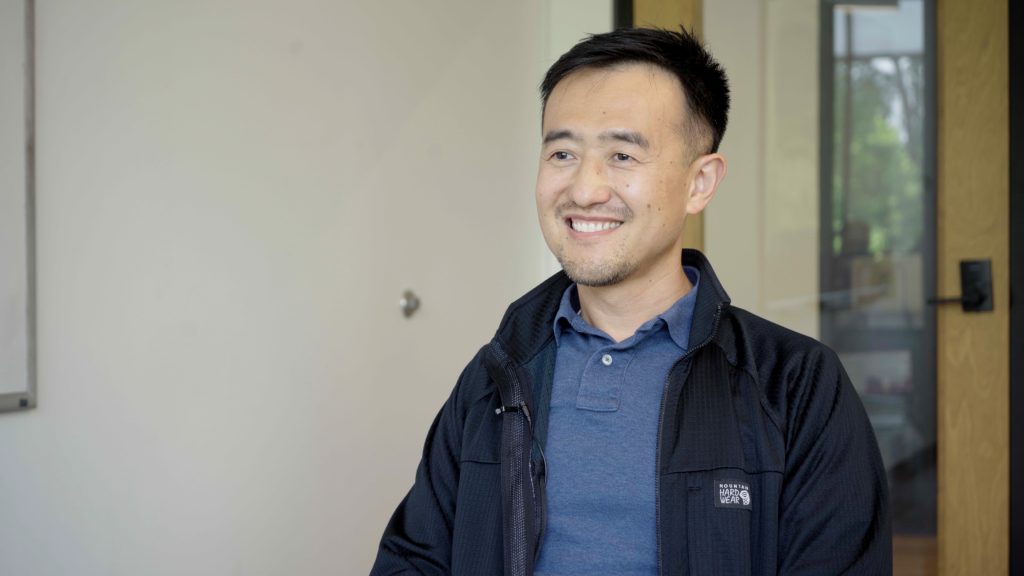
OwnWatt is a gamified mobile platform that helps the general public become more informed and aware of their energy use. The app uses data and predictive modeling to help users cut energy costs and reduce their carbon footprint.
“We made it like a game to help people enjoy the process, learn about themselves, and help them make better decisions about their electricity use. The goal is to save energy and ultimately save the planet,” he said.
Zhang was especially open to joining the program since he’s no stranger to East Tennessee. He shared that he spent some time in Knoxville at the University of Tennessee and at Oak Ridge National Laboratory.
Rassket
Sankung Fatty is another founder who joined the program from across the country. He has been building his company, Rassket, in San Francisco, California. He is a data scientist who has become passionate about translating data into a common language that end-users can understand and take action on.
“The electricity that is powering your home, your office, your city, has been predicted weeks ahead, and oftentimes, when those predictions are wrong, it costs money. These forecast errors are costing utility companies and end users millions,” Fatty said. “At Rassket, we provide an easy software solution that helps energy operators be able to make accurate predictions in minutes instead of months or weeks.”
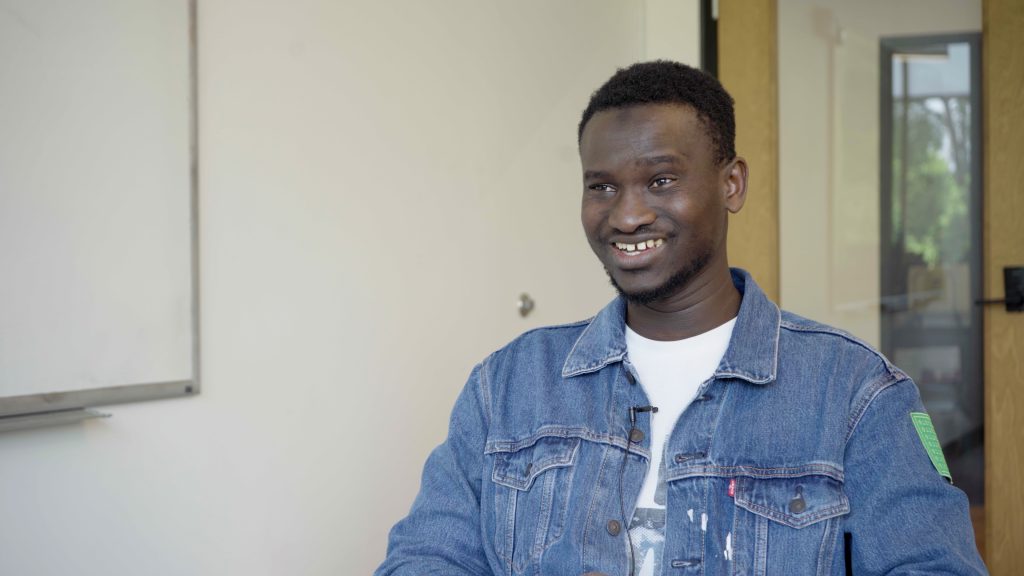
Fatty is passionate about making a difference on the planet, especially when it comes to energy consumption. He believes Rassket is a part of his mission to make people’s lives better.
“Everybody uses electricity. It is the infrastructure that everything depends on. If the light goes out, everybody suffers. And if I can contribute 1% to reduce the error in this sector, I think that would be a very positive impact,” he said.
CubeNexus
Steven Brandt, the co-founder and CEO of CubeNexus, called in virtually from Miami, where he was boothing at a conference. He’s been building his company for about a year, and said they’re at the stage where getting key customers in the door is pivotal.
According to Brandt, CubeNexus is a real-time decision intelligence platform that organizes complex spatial data into a clear, cube-based 4D map of space and time – from underground to the sky. Brandt and his co-founders first realized the need for this sort of data software when they served in the military. Now, the CubeNexus team hopes it can also prove useful for other industries like telecommunications, energy, and logistics.
The potential for those industry connections is what drew Brandt and his team to the CO.LAB accelerator.
Voltair Labs
Taking a different approach, Voltair Labs joined the Energy Innovation Accelerator to bring to market their drone maintenance solutions for powerlines across the United States. Co-founder Avi Gotskind explained that the company is passionate about using drones for routine powerline maintenance, giving utility companies and field technicians critical information on demand.
There are miles of powerlines across the country, and each inch needs to be routinely checked to prevent sparks, wildfires, and damage. This is especially an issue in California, where the Voltair team is based.
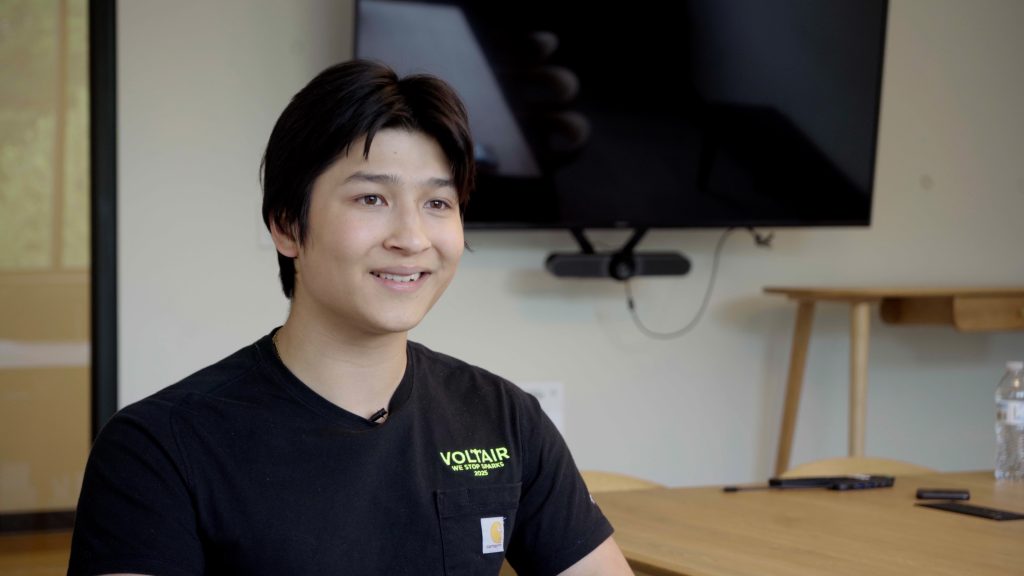
“What we’re really trying to do here is build technology that allows them to have visibility into their infrastructure,” Gotskind said. “Right now, somebody has to come out and fly the drone along the powerlines to inspect. But we believe this process can be done autonomously. We distribute charging stations throughout their service area, and drones will check lines as prompted.”
Bryan Barringer, the program director, said this year CO.LAB recruited these companies to Chattanooga to undergo the accelerator programming. The goal was to bring strong innovations into the local legacy industries, establish meaningful connections, and help build customer pipelines.
For four founders who traveled from across the country to plug into Chattanooga’s energy ecosystem, the real work and the real connections are just getting started.
Like what you've read?
Forward to a friend!