
The next frontier of production AI: Quantum-ready systems, talent and partnerships in Knoxville
"The opportunity to take advantage of the resources that we have right here in Knoxville and in Tennessee is astounding. The only way we are going to learn and understand more is by working together," said CGI's Chief Technology Officer Dave Henderson.
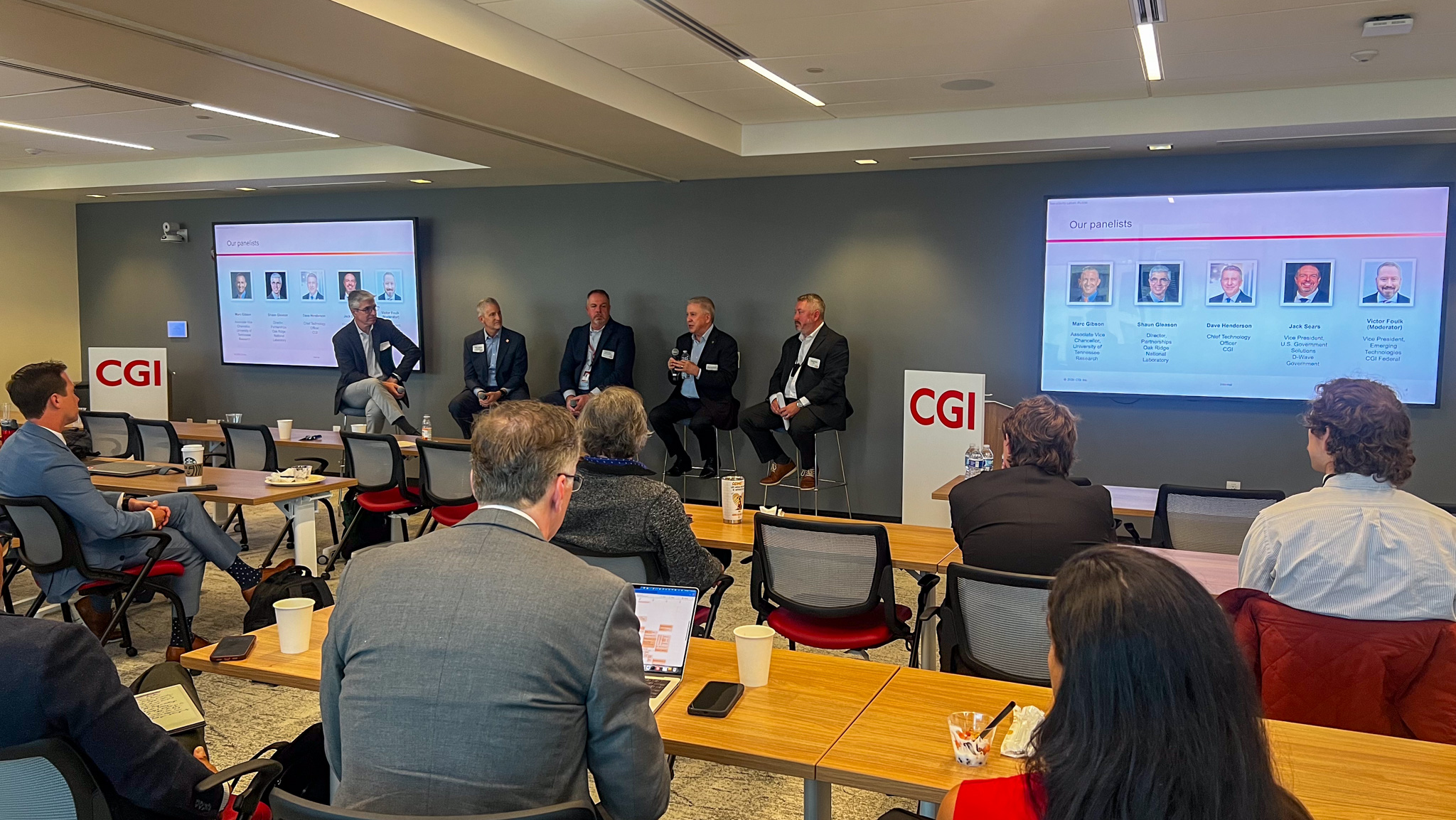
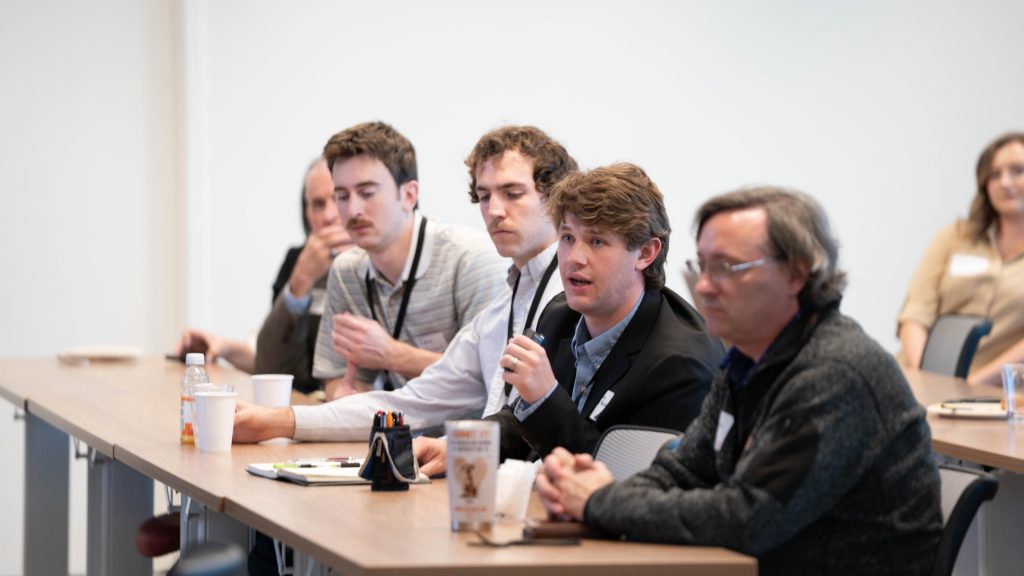
CGI hosted a panel discussion on Tuesday morning to explore how the region’s ecosystem can transform emerging technology into real-world capability. This conversation embodied one of CGI’s core commitments to bring forward insights people can act on.
Cheryl Ball, chief policy officer for the City of Knoxville, opened on behalf of Mayor Indya Kincannon. She noted that Knoxville is becoming an internationally recognized innovation destination. Ball also announced that the city is increasing its support of Innovate865 to further solidify this recognition.
“Our vision is for Knoxville to be a region where bold ideas become the companies, the jobs, and the solutions that shape the future,” Ball said. “We are not simply standing by watching what is happening. We are actively helping to shape the future of AI.”
Victor Foulk, vice president of emerging technologies at CGI Federal, moderated the following panel participants:
- Marc Gibson, University of Tennessee, Knoxville (UTK) Research
- Shaun Gleason, Director, Partnerships, Oak Ridge National Laboratory (ORNL)
- Jack Sears, Vice President, U.S Government Solutions, D-Wave
- Dave Henderson, Chief Technology Officer, CGI
Where is the AI industry heading?
Henderson has watched Knoxville’s innovation ecosystem grow since CGI located here in 2021. From that vantage point, and from recent work trips across the world, he described a major shift in how organizations are approaching AI.
“A year ago, boardrooms were not dominated by this AI topic,” he said. “Now, it is the dominant priority for all our clients. The industry has moved from an AI-assisted world to an agent-native one, where businesses can deploy AI to complete complex work without writing a single line of code.”

But with this now comes an organizational concern.
“Technology has now far outstripped our human ability to change. The priority for CGI and its clients is locking AI into enterprise operations in ways that drive real business value,” Henderson explained.
Students are and will be one of the most promising forces in this transition. Unlike organizations that live by the traditional processes they have used for decades, students just entering the workforce today are open to new workflows.
“Your biggest inhibitor to adopting AI is you,” he told the audience.
How is quantum computing delivering value today?
Technical or not, quantum can be hard to explain. Sears opened by painting a picture of how quantum works, noting that AI is made for predictions and insights, while quantum computing is ideal for optimization. When you use both, the results are only compounded.
“Quantum annealing is designed to solve massive optimization problems with thousands of variables and constraints. Think 10,000 packages, 4,000 trucks, and 1,000 addresses with one-way streets, red lights, and bridge restrictions all factored in. Classical computers either solve problems like that slowly or incompletely. Ninety percent of D-Wave’s customers complete their compute jobs in under one second,” he explained.
This tangible outcome is the exact reason major airlines are using D-Wave’s computers to reschedule entire workforces in a few minutes when disruptions occur. Sears offered more real-life use cases.
“At the Port of Los Angeles, quantum optimization produced a 65% increase in container loading and offloading efficiency. A Japanese pharmaceutical partner used quantum computing to train large language models 1.4 times faster and with roughly 80% better accuracy,” said Sears.
How is UTK evolving in the face of AI and quantum?
Gibson was direct about where universities stand right now.
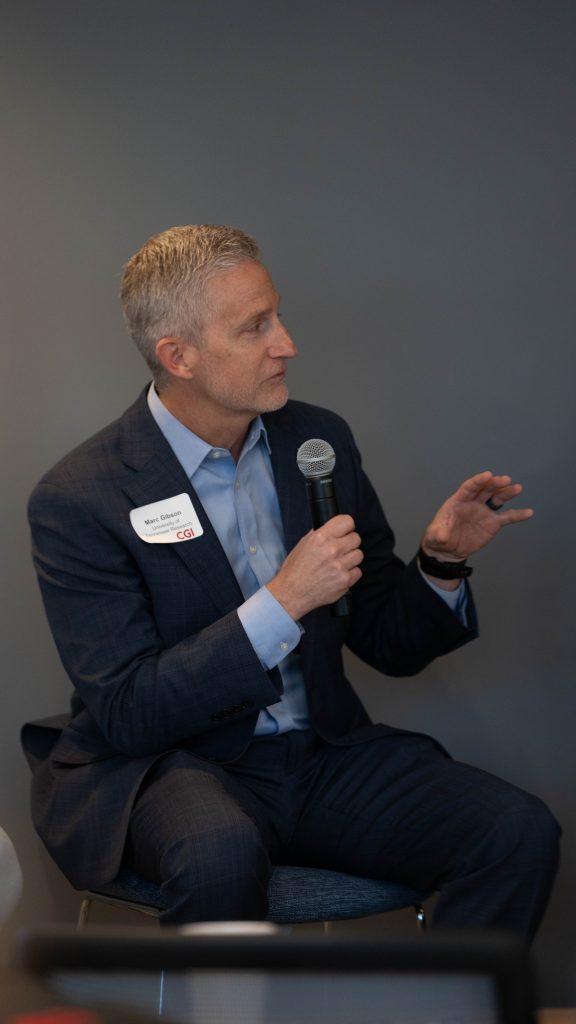
“Traditional curriculum at four-year institutions hasn’t changed in 200-plus years,” he said. The economy is shifting faster than academia has historically moved, and all universities are facing that crossroads.”
UTK is responding through deep industry partnerships. One of his favorite success stories has been a supply chain and psychology crossover.
“A supply chain company approached UTK to express interest in hiring their psychology graduates because they are natural problem solvers. However, it can take up to 10 months to train them on the technical side once they are hired. That conversation helped spark UTK’s push to build a certificate program that gives psych students these technical credentials before graduation,” said Gibson.
The university has also launched the College of Emerging Collaborative Studies. Students across any discipline can now earn credentials in artificial intelligence, cybersecurity, and related fields without changing their major.
Finally, Gibson shared that a recent statewide assessment found that more than one million Tennesseans hold university credit hours but never completed a degree. UTK has really invested in online pathways to bring those people back and make them more competitive in a rapidly changing world.
How does ORNL support this AI and quantum regional mission?
Gleason pushed back on the idea that ORNL is a closed system of classified science and encouraged the crowd to get more involved, as the majority of their efforts are open and public.
He explained that most people see ORNL’s mission as advancing science in energy and national security. While that is true, it is often forgotten that they also have a responsibility to create economic opportunity for the nation.
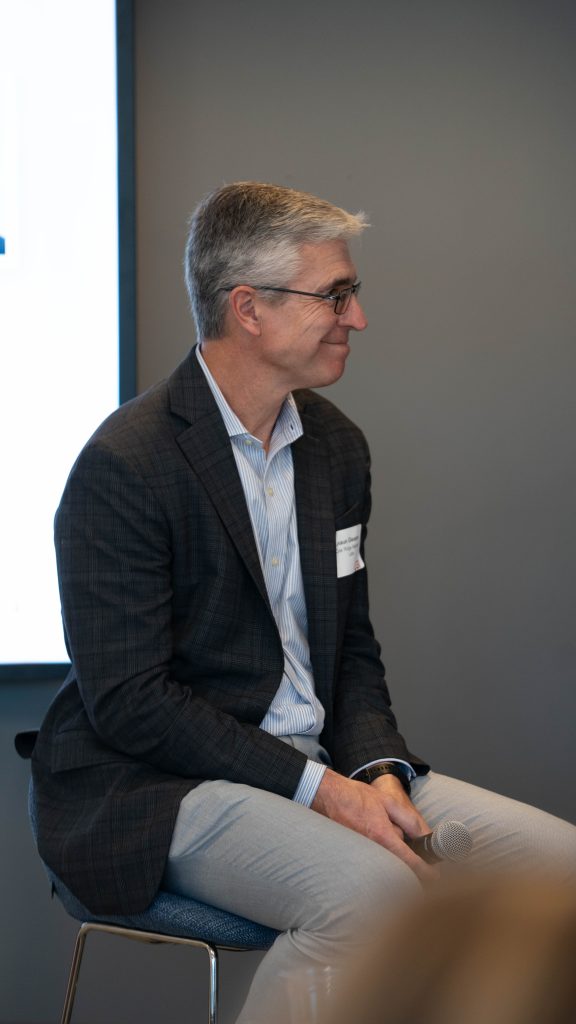
One of his favorite examples of fulfilling this economic responsibility happened about 15 years ago. ORNL worked with a small gaming company to bring graphics processing units into high-performance computing for AI. That company is now what we know to be Nvidia, an AI icon.
“Jensen Huang used to come to the lab all the time,” Gleason said. “Nvidia is now the most valuable company in the world.”
This is not the only time businesses are allowed to use ORNL resources. In fact, Frontier, the fastest open-science computer in the world, is a user facility. Businesses with a compelling idea or use case can apply for a time slot to use it. ORNL also provides user-facility access to six different gate-based quantum computing platforms.
With ORNL employing over 1,000 intern students every summer and now being a key player in building the American Science Cloud, their dedication to this mission is strong.
What can people in the room do today?
The panel closed with a lightning round on actionable steps each panelist wanted the audience to walk away with.
Gleason encouraged anyone in the room to reach out directly rather than assuming the lab is inaccessible. “Don’t be intimidated,” he said. “My team and I can put you in contact with the right people, the right scientists, the right software developer, the right whatever.”
Gibson asked industry partners and students to show up with real challenges. He also introduced Caleb Knight, director of AITechX, as another great contact option. “The university’s $100 million faculty investment is still being shaped, and industry has a seat at that table to shape curriculum or recruit faculty around specific problems,” he said.
Sears pointed to three entry points available right now through D-Wave: a free quantum computing course, free compute time for students and researchers through the Launchpad Program, and an active hiring pipeline open to people from non-traditional backgrounds, such as paralegals and history or humanities majors.
Henderson urged folks to leverage the unique opportunity to shape the local future. “The opportunity to take advantage of the resources that we have right here in Knoxville and in Tennessee is astounding,” he said. “We can’t wait for AI to plateau. We can’t wait for quantum. The only way we are going to learn and understand more is by working together.”
Like what you've read?
Forward to a friend!