
Plan for Profit: A 2026 business planning workshop recap
How local entrepreneurs are moving past survival mode by mastering the core numbers that drive growth.
It’s a startup tale as old as time: you’re giving everything you have to your business. Time, money, and tears. You are crazy busy, taking on every customer or opportunity that comes your way because you feel like you can’t afford to be picky. It is a pure scarcity mindset. But somehow, within all this busyness, you’re not exactly profitable.
The Workshop Mission
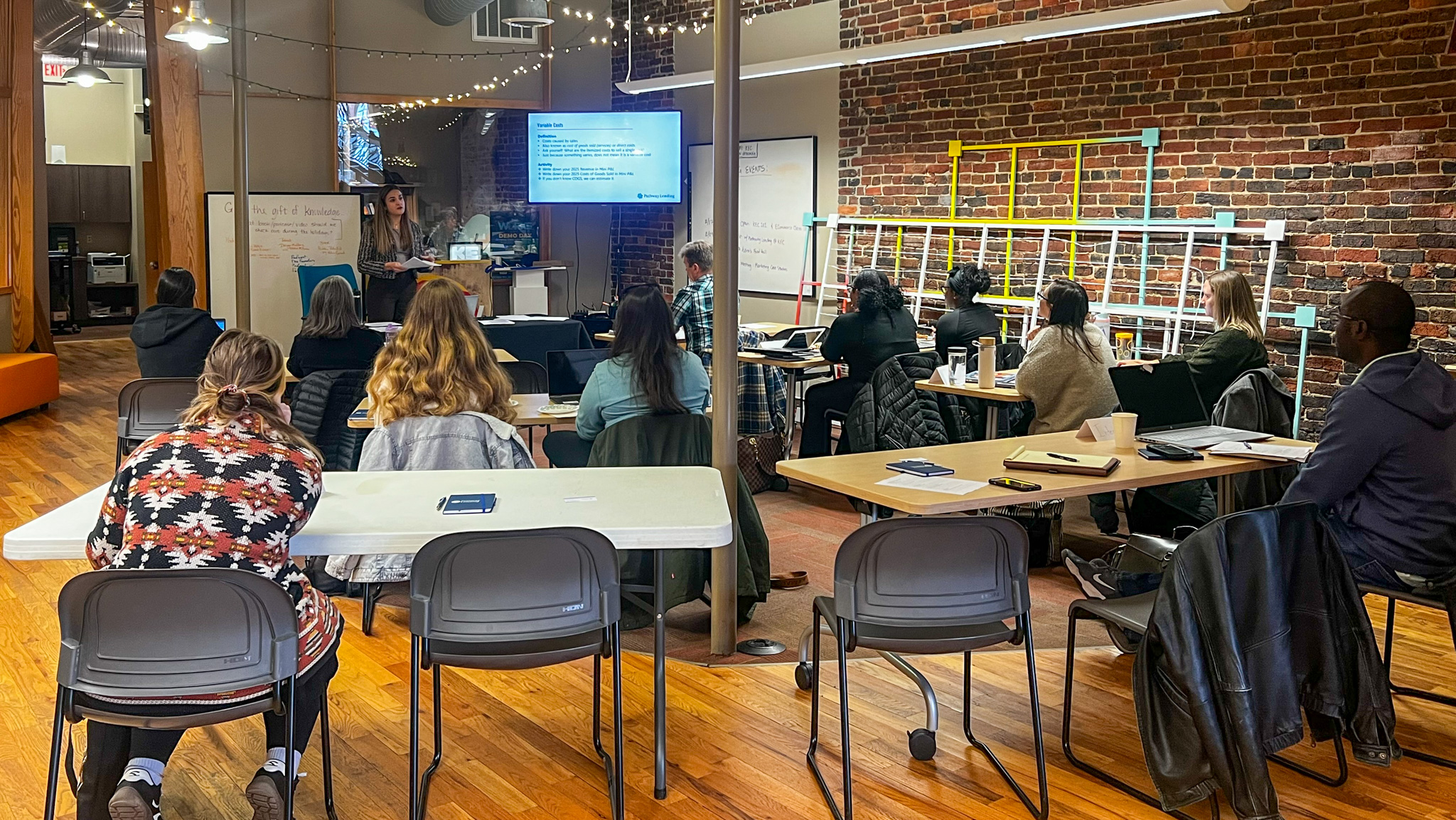
On Feb. 23, the Knoxville Entrepreneurship Center (KEC) and Pathway Lending hosted this event to change that narrative. This hands-on workshop was designed for small business owners who want a realistic plan for 2026 in a common language.
About Pathway Lending
As a nonprofit community development financial institution, Pathway Lending provides lending solutions and educational services to support the development, growth, and preservation of underserved small businesses throughout the Southeast. They deliver capital and capacity through the 865 Opportunity Fund, a $6 million loan fund launched to improve access to capital for minority or woman-led businesses across Knox and surrounding counties.
Key Takeaways
This interactive workshop hosted a handful of local entrepreneurs, ranging from Trent Richardson in environmental consulting and the Knoxville City Lifestyle publication to cosmetic brands and even an indoor Nerf battlefield.
The goal was simple: business profit clarity, not perfection. Whether attendees were currently using QuickBooks or Wave, or weren’t quite there yet with a formal system, the common theme among the group was overcoming a scarcity mindset. Moving past that survival mode and into true capital profitability is all about setting up a strong foundation by focusing on three key areas:
- Establishing a Long-Term Vision: Knowing exactly why you started your business and what you want to get out of it is critical. You have to have a target to aim for; whether your “why” is personal freedom, the ability to travel, or a specific retirement goal. This vision serves as the anchor for every business decision you make.
- Planning with the End Goal in Mind: Working backwards is the key to a realistic plan. You have to ask the hard questions: What annual revenue do you actually need to support your long-term vision? How long will it realistically take you to get there? For example, because you should plan for about 25 years of retirement on average, utilizing a retirement calculator is a great resource to help you work backwards from that number to find your current revenue requirements.
- Building Financial Literacy: Accounting jargon can be overwhelming. Instead, it’s important to focus on the core numbers that actually drive growth. This includes understanding the difference between variable and direct costs, as well as learning how to read a P&L (Income Statement) to see the true health of their business.
Guidance and Support
Attendees were able to discuss each concept step-by-step, taking the time to work through them using their own business numbers. Guidance and support were provided throughout the session by Pathway Lending’s Senior Business Advisor, Kristen Munson, and Gregg Bostick, Director of the Tennessee Small Business Development Center (TSBDC).
Follow KEC to stay up to date on future programming.
Like what you've read?
Forward to a friend!