

Planned new ORNL facility will target one of fusion’s toughest remaining challenges
The partnership will zero in on building and testing “breeding blankets,” which are systems inside a fusion power plant that create tritium, a key fuel for fusion reactors.
The U.S. Department of Energy, Oak Ridge National Laboratory, and Kyoto Fusioneering have formed a new public-private partnership to address one of the most complex challenges in bringing fusion energy to the commercial market. Kyoto Fusioneering is a private fusion technology company headquartered in Japan with operations in the United States, the United Kingdom, the European Union, and Canada.
The collaboration focuses on developing and testing tritium breeding blankets. These systems line the interior of a fusion power plant and are responsible for producing tritium, a key fuel required to sustain fusion reactions. Without a reliable and efficient breeding blanket, a fusion power plant cannot operate.
Fusion energy has long been viewed as a potential source of clean, reliable, and abundant power. Still, both public and private researchers must overcome several engineering and scientific hurdles before commercial deployment becomes possible.
According to ORNL, the lab and Kyoto Fusioneering are working toward building a major new test facility known as UNITY-3. The facility will evaluate full-scale breeding blanket technologies under fusion-like nuclear conditions and will be located at ORNL in Oak Ridge.
“Moving breeding blanket technology from theory to real-world application is crucial in realizing a path to fusion energy,” said Troy Carter, director of ORNL’s Fusion Energy Division. “By combining ORNL’s deep expertise in fusion systems, materials, and blanket research with Kyoto Fusioneering’s unique technology and engineering expertise, and integrated test platforms, this partnership can strengthen the public-private fusion ecosystem and support the commercialization of fusion energy.”
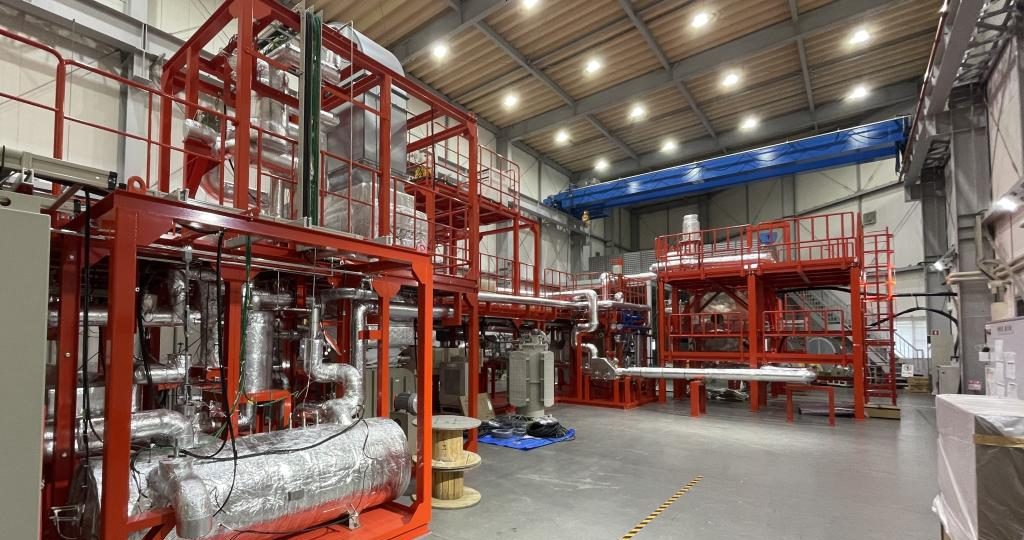
UNITY-3 will join Kyoto Fusioneering’s existing international test network, which includes the UNITY-1 blanket and thermal cycle testing facility in Japan and the UNITY-2 fuel cycle facility under construction in Canada.
“Partnering with ORNL allows us to tackle one of fusion’s hardest remaining cross-cutting challenges, validating breeding blanket performance in a nuclear environment,” said Bibake Uppal, Vice-President and Head of Kyoto Fusioneering America. “This collaboration operationalizes the DOE’s Build-Innovate-Grow strategy, combining ORNL’s deep scientific lineage in fusion nuclear science and engineering with KF’s fusion technology and engineering expertise.”
Like what you've read?
Forward to a friend!