
How can a business partner with Oak Ridge National Lab?
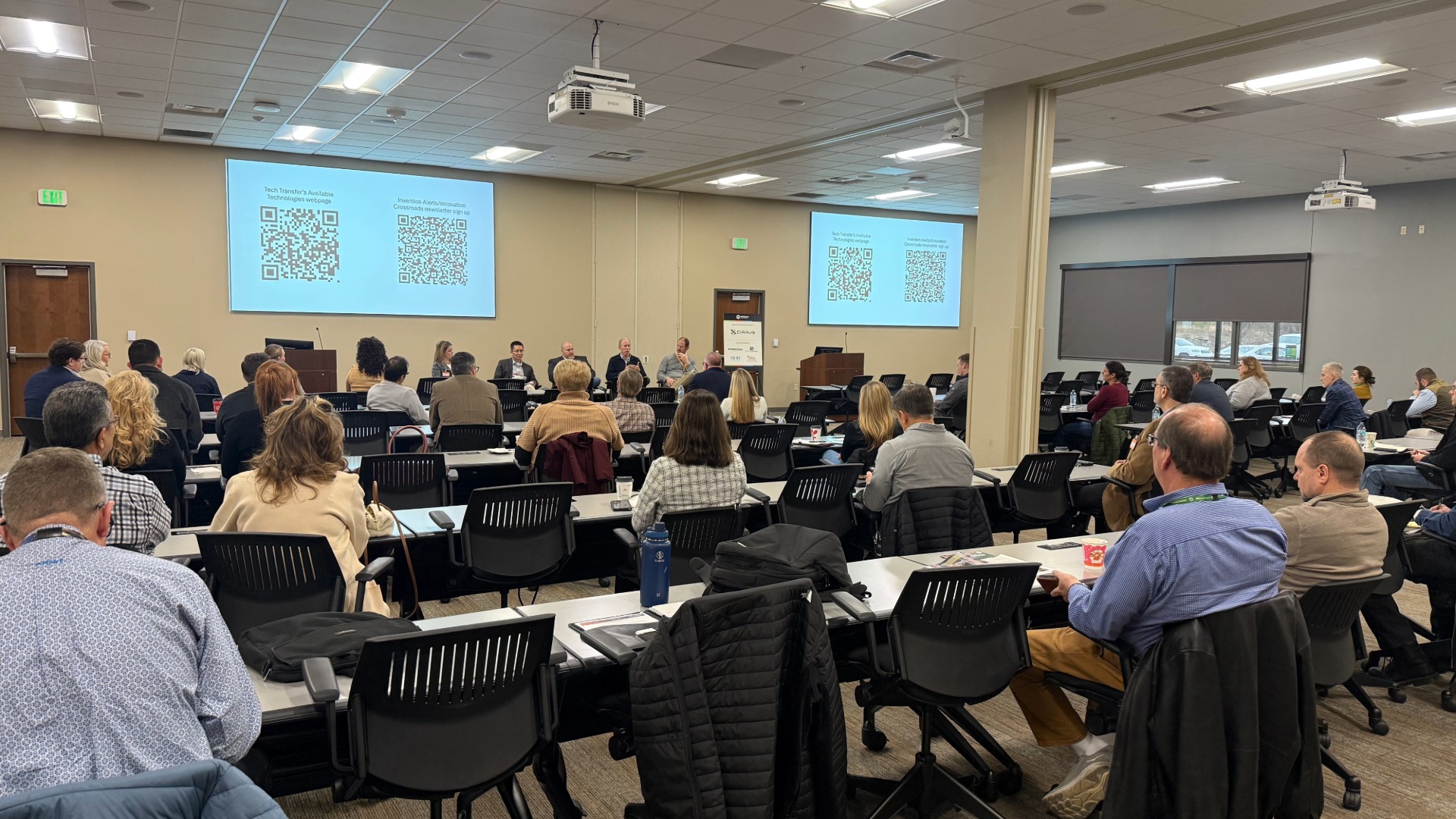
On Friday, the Knoxville Chamber collaborated with Oak Ridge National Laboratory (ORNL) to host a session on how businesses could better utilize the lab's resources.
There are two unique pathways available to businesses and entrepreneurs that want to leverage the resources of Oak Ridge National Laboratory. An event jointly hosted by the Knoxville Chamber and ORNL, broke down the two unique pathways options have benefits and drawbacks
The two distinct pathways are a Cooperative Research and Development Agreement (CRADA) or a Strategic Partnership Project (SPP).
An SPP is essentially work-for-hire performed by the national lab. Read more about SPPs here.
- The lab performs work for a nonfederal partner (businesses, nonprofits, state/local governments).
- The partner funds 100 percent of the lab’s costs.
- The lab does not share ownership of inventions; the partner typically owns or negotiates rights to resulting IP.
A CRADA is a collaborative research partnership between the lab and a nonfederal partner. Read more about CRADAs here.
- Both the lab and the partner contribute resources, which may include funding, equipment, personnel, or expertise.
- Both parties share in the research direction and share results.
- Data generated under a CRADA can be protected for up to five years, supporting commercialization.
On Friday, at ORNL’s Manufacturing Demonstration Facility (MDF), Alex DeTrana, a senior commercialization manager with the lab, spoke with Jonaaron Jones, the President of Additive Parts Sales for Beehive Industries, and John Lin, the Principal of Technical Response, about how they partnered with the lab to accelerate their corporate innovations.
Beehive Industries, for example, commercialized technologies that emerged from the lab. Now, the company is re-engaging with ORNL, this time to learn new casting technologies for large 3D printed jet engine parts.
“What we needed doesn’t currently exist,” Jones said. “It forced us to look at ORNL for help with the process, and hopefully, new casting methods will help us cut production time and costs.”
DeTrana said the engagement process is relatively simple. “The initial steps require curiosity and initiative on the side of the company,” he said. “From there, we can see what equipment, resources, and talent we have available to help.”
Learn more about strategic partnerships at ORNL.
Like what you've read?
Forward to a friend!