

High school founder’s start-up, Spikey, aims to stop date rape before it starts
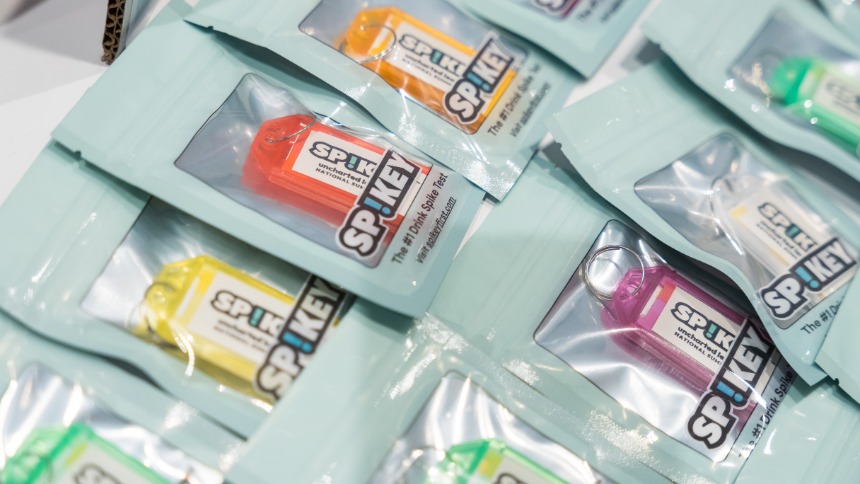
Spikey packs rapid-drug test strips into a compact keychain for ease of use on college campuses, to prevent the use of date rape drugs in drinks.
A Nashville high school student has created a solution to an issue adults have faced for decades.
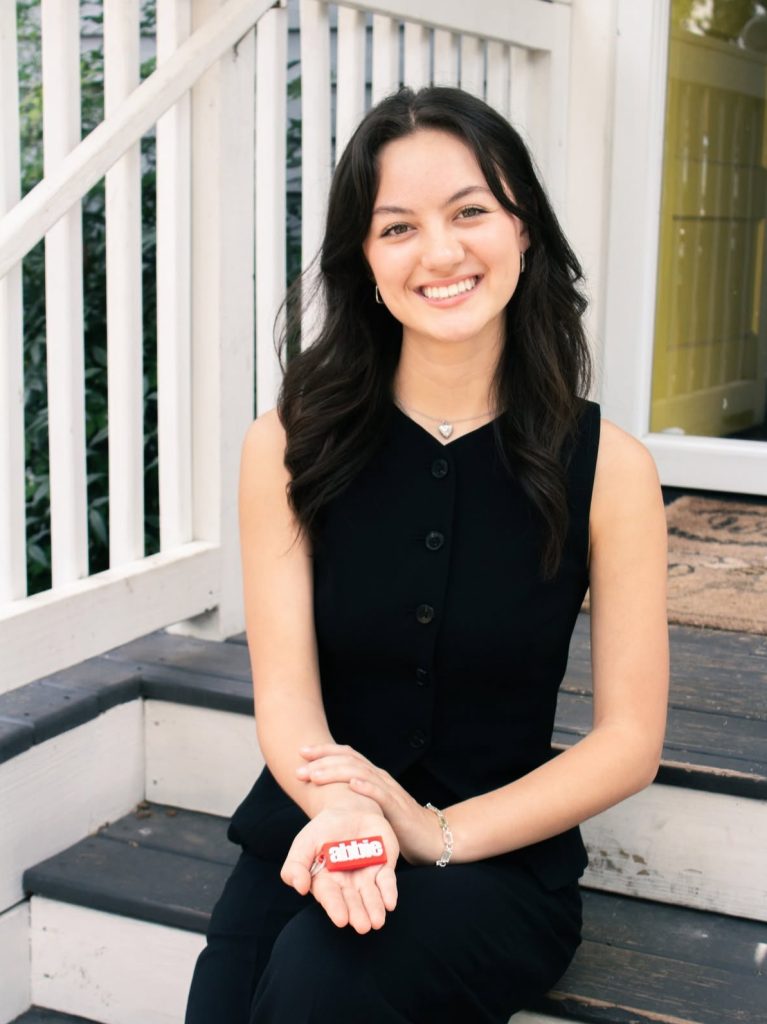
She invented a discreet way to test drinks for drugs, aiming to help people avoid being roofied and collect evidence to hold perpetrators accountable.
According to NPR, about one in 13 college students is unknowingly drugged during their time on campus. Yet roughly 90 percent of these incidents go unreported—often due to a lack of evidence, narrow time windows for rape kits, underage drinking, or the stigma surrounding sexual assault.
Abigail Goddard first became aware of the issue at the age of 15, after a family friend shared a harrowing story.
“My family member told me that in her freshman year of college, she was given a drink, and the next thing she knew, she woke up in a hotel room, naked, with no memory of the previous night,” Goddard said. “She realized, after piecing it together, that she had been drugged and sexually assaulted.”
Unfortunately, stories like this are all too common on college campuses.
“When I heard her story, it really shook me,” she said. “I would be a freshman in less than two years and could be caught in a similar situation without the tools or awareness.”
Solving a Persistent Problem
That conversation sparked Goddard’s curiosity with questions many female students have been wondering for decades now: What tools existed to help students detect drink tampering? How could someone prove to the police that their drink had been spiked?
She discovered that drink covers were the most common solution—but they weren’t widely used.
“Drink covers communicate ‘I don’t trust you,’ and most college students aren’t going to want to be that obvious,” she said. “It’s not something people feel comfortable bringing to a party or on a date.”
More importantly, drink covers don’t address the root issue: someone is attempting to harm another person without consent. Law enforcement needs tools to identify and stop those individuals.
Goddard believed quick-action drug test strips could be the answer. They would offer a fast, discreet way to check drinks while also collecting evidence.
But how could a junior at Ravenwood High School make that solution accessible?
“I spent a lot of time cold-calling pharmaceutical companies and ultimately found the best partner for this project in the UK,” she said. “At first, I tried to hide my age, thinking it would be a disadvantage. But I soon found that people were even more willing to help when they learned I was in high school.”
The test strips from her UK partner are compact and can detect GHB—the most common date-rape drug—as well as amine-based drugs like ketamine and cocaine. Either side of the strip changes color if the drink is tampered with. The results appear in just 15 seconds with 98 percent accuracy.
Next, Goddard needed to figure out how to package the strips in a way students would actually carry and use.
She surveyed college students and found that most women only bring two items to parties: their phone and their keys.
Using the 3D printer in the Williamson County School District’s CTE lab, she designed and printed a prototype keychain that discreetly holds the test strips. She filed a provisional patent for the delivery method.
In August 2024, Spikey officially launched.
Building Momentum
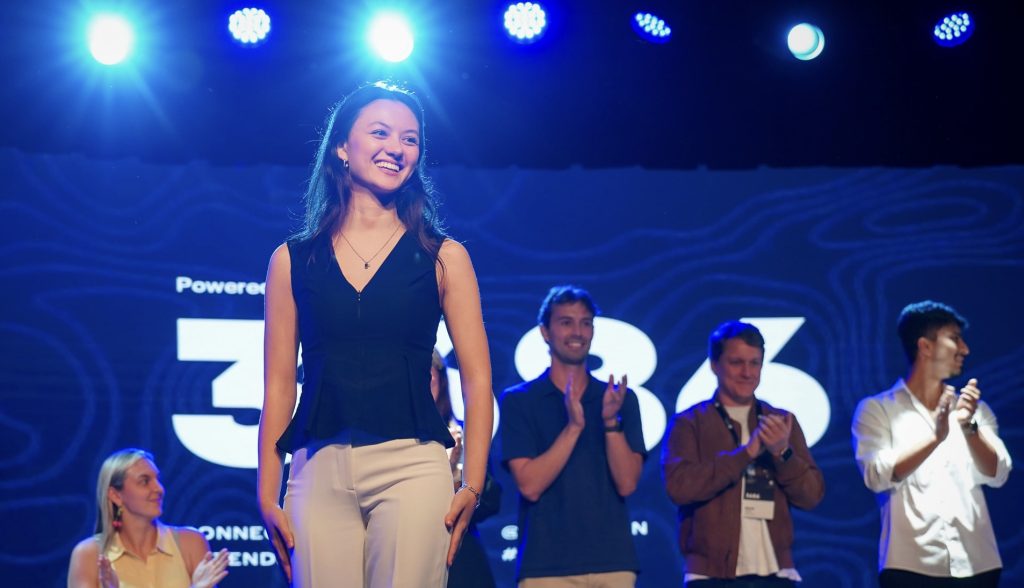
Over the past year, Goddard has competed in 11 pitch competitions to secure non-dilutive funding for Spikey. That includes the prestigious 3686 Launch Tennessee pitch competition, where she won the Audience Choice Award.
“I was really excited because it was my first pitch competition against adult founders,” she said. “It was so special to pitch in front of so many of our supporters and people who helped us along the way.”
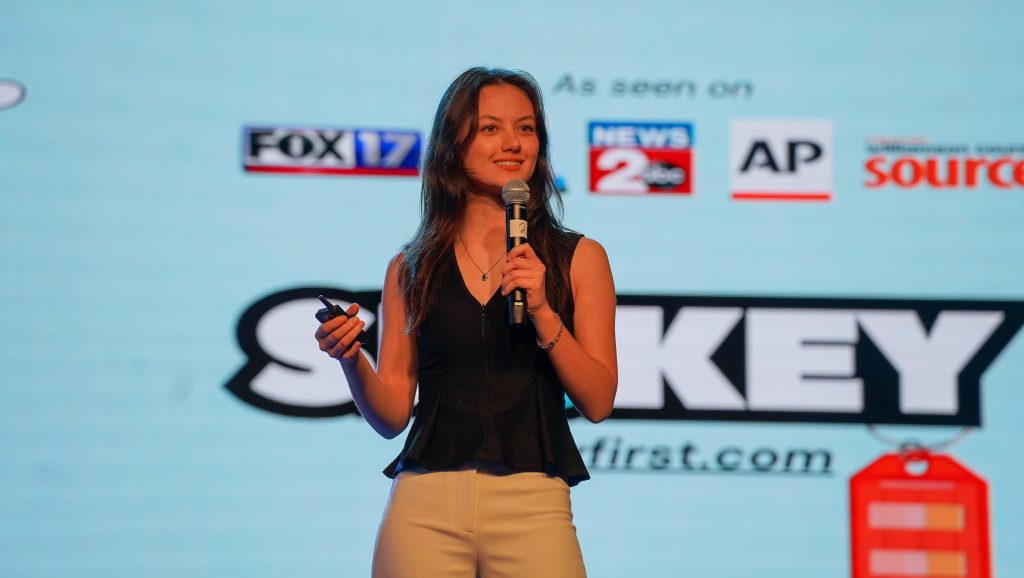
Still, the early days of Spikey were challenging. Goddard spent hours creating social media content, with the impression that ‘virality’ was easy to come by as a Gen Z business owner.
“I was posting Instagram reels every day, reaching out to media outlets, and sending about 100 direct messages daily to sororities, influencers, and organizations trying to sell our product,” she said. “Until I realized one day that I was doing it all wrong.”
She learned that many influencers and sororities expect free products from big brands in exchange for social media promotion. Asking them to pay for bulk orders wasn’t working.
So she pivoted her method.
“Our first orders came from me throwing Spikeys in my backpack and walking onto the Vanderbilt or Belmont campuses to sell them in person,” she said. “That worked really well. Every person I talked to could relate to the problem. I could sell up to $400 worth of product in a single day.”
The real breakthrough came through a partnership with Greeks Against Sexual Assault at the University of California, Berkeley. That opened doors to sororities nationwide and led to Spikey’s first custom bulk order from the National Alpha Omicron Pi sorority. The pilot launched at two of its largest chapters: Ole Miss and the University of Tennessee, Knoxville.
Most recently, Spikey partnered with the Safe Bar program through the Sexual Assault Center in Nashville. Through that partnership, Goddard will distribute 3,000 Spikeys to bars across the city.
As of early October, about 5,000 people are carrying Spikeys. It’s enough to test an estimated 15,000 drinks.
What’s Next for Abigail Goddard?
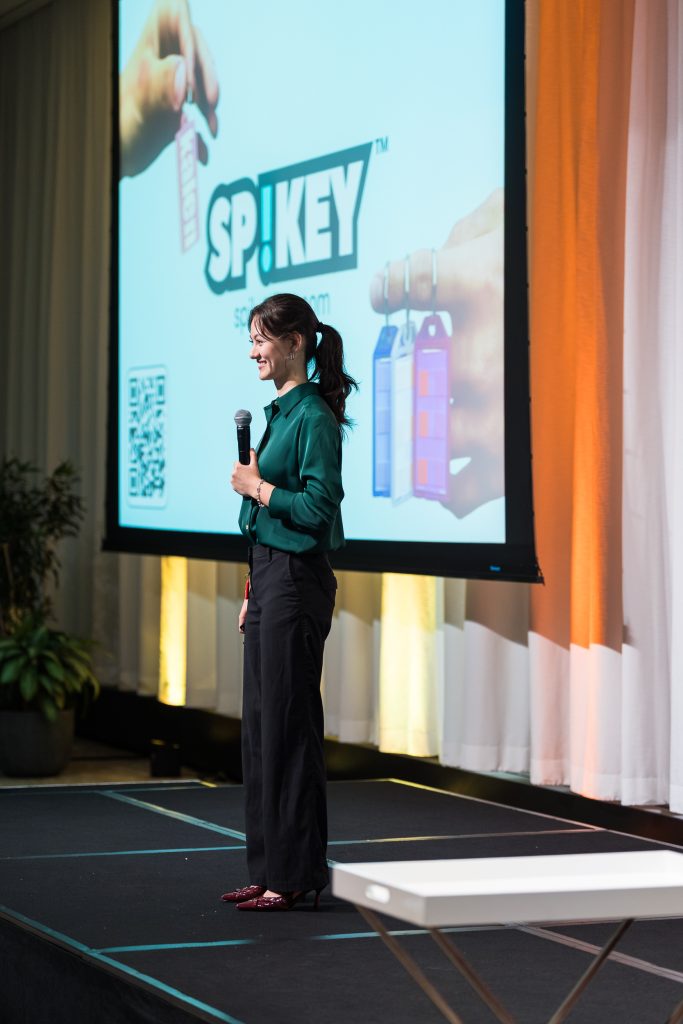
Like many high school seniors, Goddard is focused on college applications. She has already earned a pre-collegiate scholarship at the Blair Academy for Music at Vanderbilt University, where she is a Myra Jackson Blair Scholar, studying music history, musicianship, and piano.
In addition to being a founder, Goddard is a classically trained pianist who has competed in national and international competitions.
“I truly think music and competing with piano helped me grow into the public speaker and founder I am today,” she said.
Looking ahead, she plans to continue marketing Spikey on her future college campus and is exploring new distribution channels, like dispensers in bar bathrooms.
She also emphasized the importance of staying ahead of evolving threats.
“We have to make sure these strips are staying up to date. Perpetrators are getting more creative every day with the kinds of drugs they’re using,” she said. “Drink spiking is not only with pills and powders. We know that—and are staying on top of it.”
Currently, the keychains are locally sourced, but she knows that method is not sustainable with how fast Spikey is scaling. She is now seeking partners in manufacturing, automated fulfillment, and 3D printing.
If you know someone who can help, reach out to Abigail Goddard.
Like what you've read?
Forward to a friend!