

University of Memphis Research Foundation launches a new start-up
Named P3ARL Technologies Inc., its first application is to develop a dry powder aerosol delivery platform for the treatment of cystic fibrosis.
The University of Memphis (UofM) has announced the founding of P3ARL Technologies Inc., a new start-up company formed with investment and support of the University of Memphis Research Foundation (UMRF). The company will commercialize patented ultrasonic powder dispersion technology developed by a team of inventors led by Dr. Ranganathan Gopalakrishnan, an Associate Professor in the Department of Mechanical Engineering.
Traditional methods for dispersing powders into aerosols rely on moving parts such as blades or impellers to mechanically separate particles from a surface. These approaches are prone to clogging and rapid efficiency loss, making them unsuitable for generating aerosols at steady concentrations for extended periods. By contrast, the UofM team has created a novel system that uses no moving parts. Instead, ultrasonic transducers generate standing sound waves (with frequencies beyond the human hearing range) that levitate and disperse particles into stable aerosols. This breakthrough makes it possible to sustain high particle concentrations — up to 100 million particles per cubic centimeter — for many hours at a time, overcoming a major challenge in aerosol science and powder technology.
The unique strength of this technology lies in its ability to disperse extremely fine particles (0.1–10 microns), which are notoriously difficult to keep airborne due to interparticle adhesion forces. This capability enables new applications across multiple industries, with the most immediate opportunity in pulmonary drug delivery.
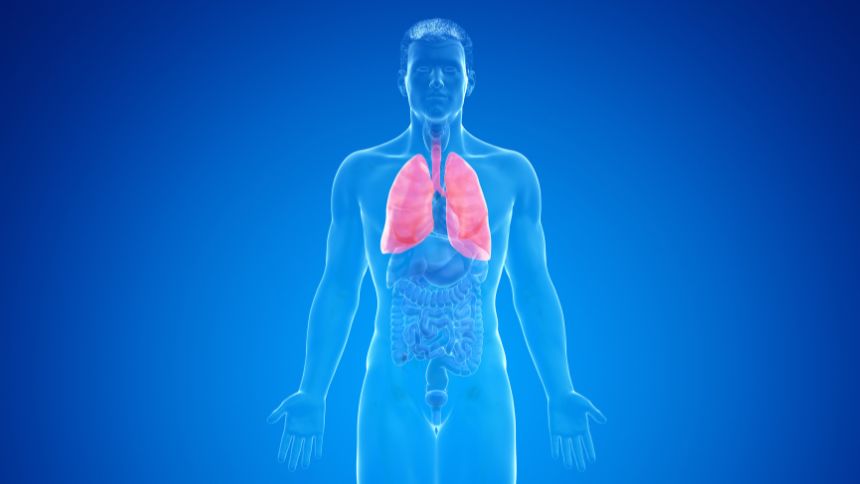
P3ARL Technologies will first focus on developing a dry powder aerosol delivery platform for the treatment of cystic fibrosis (CF), a genetic disease that affects nearly 40,000 people in the United States and more than 100,000 worldwide. CF is marked by the buildup of thick mucus in the lungs, which traps microbes and leads to frequent and severe infections. Treatment often requires large doses of antibiotics — 200 to 400 mg — but current inhalation devices cannot reliably deliver such quantities in a single dose. As a result, patients endure multi-step treatment regimens that increase costs, prolong recovery times, and reduce quality of life.
Looking ahead, P3ARL Technologies sees opportunities to leverage its ultrasonic dispersion system in areas such as:
- Continuous manufacturing of pharmaceutical powders;
- Aerosol feedstock for coatings processes (plasma spray, thermal spray, cold spray);
- Standardized aerosols for calibration of scientific instruments;
- Surface cleaning applications, such as maintaining solar panels; and
- Enhanced consumer products, including high-efficiency vacuum cleaners.
Like what you've read?
Forward to a friend!