

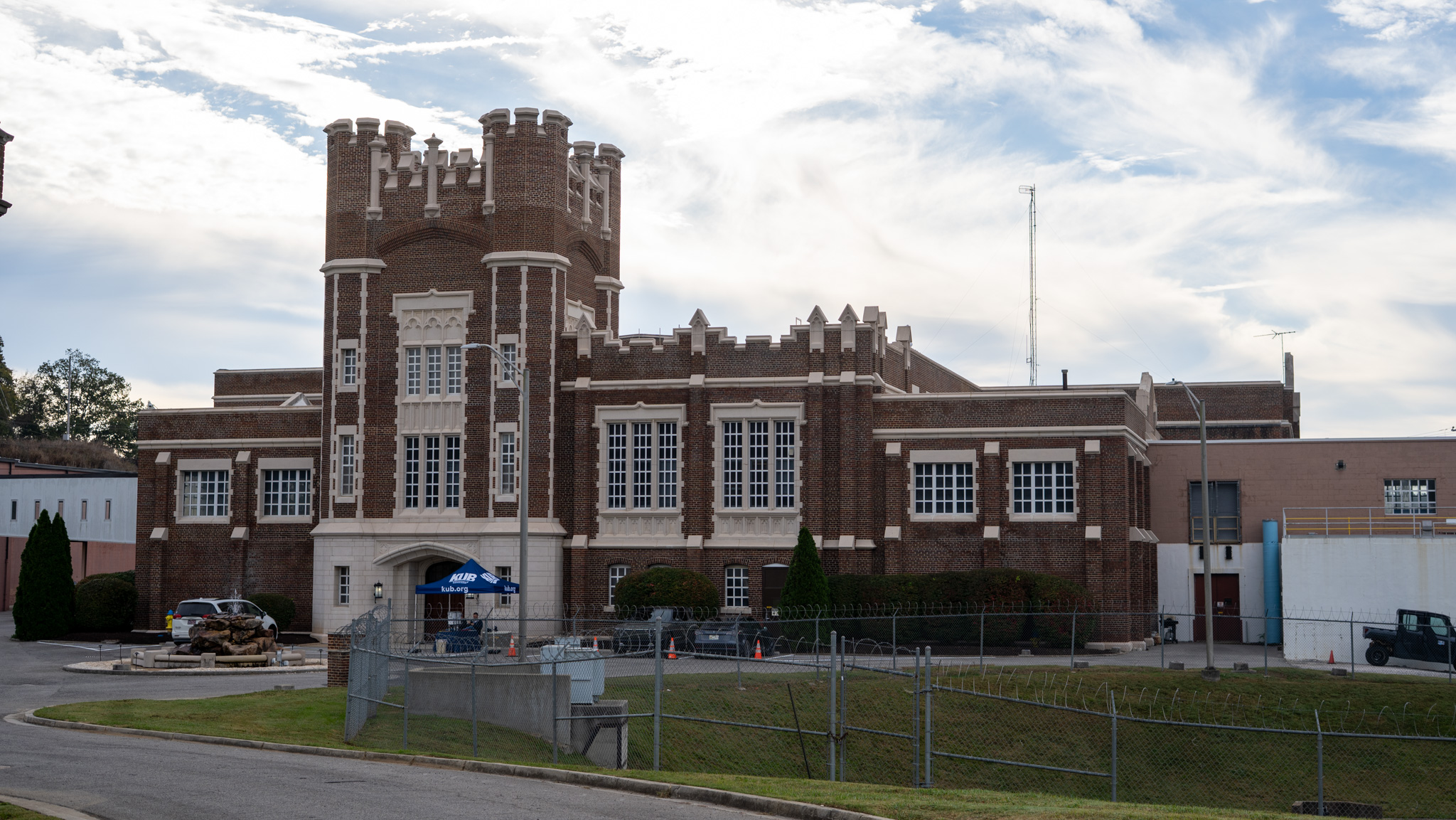
Inside KUB’s Mark B. Whitaker Water Treatment Plant, where 100 years of history meets innovation
“For 100 years, the Mark B. Whitaker Water Treatment Plant has played an important role in serving our community,” said Gabriel J. Bolas II, KUB’s president and CEO. “We’re proud of this legacy and are committed to building on it for years to come.”
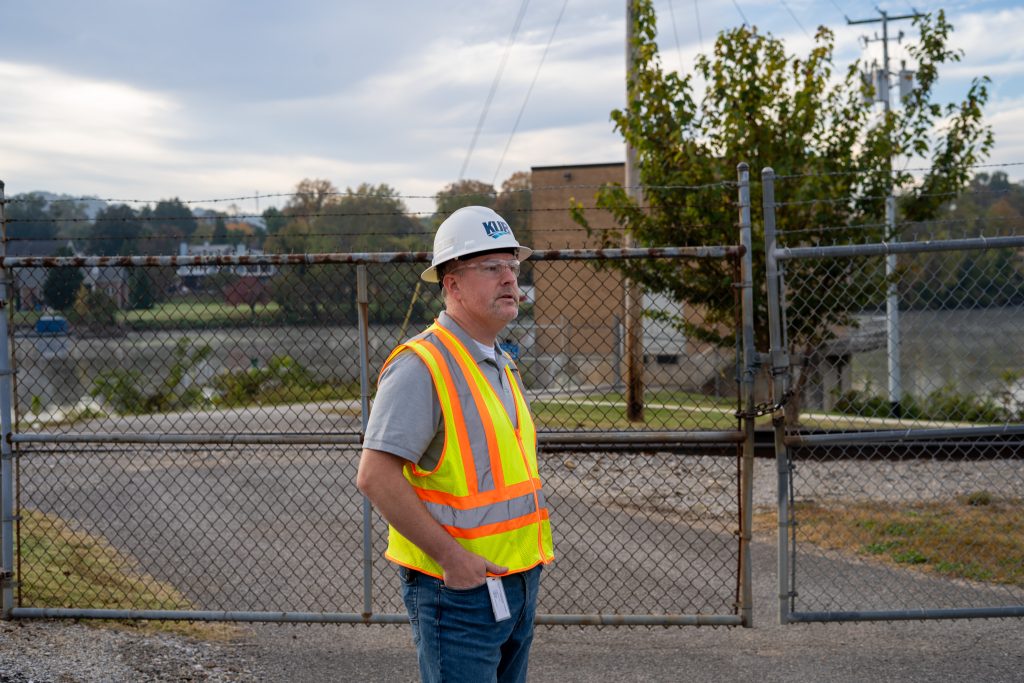
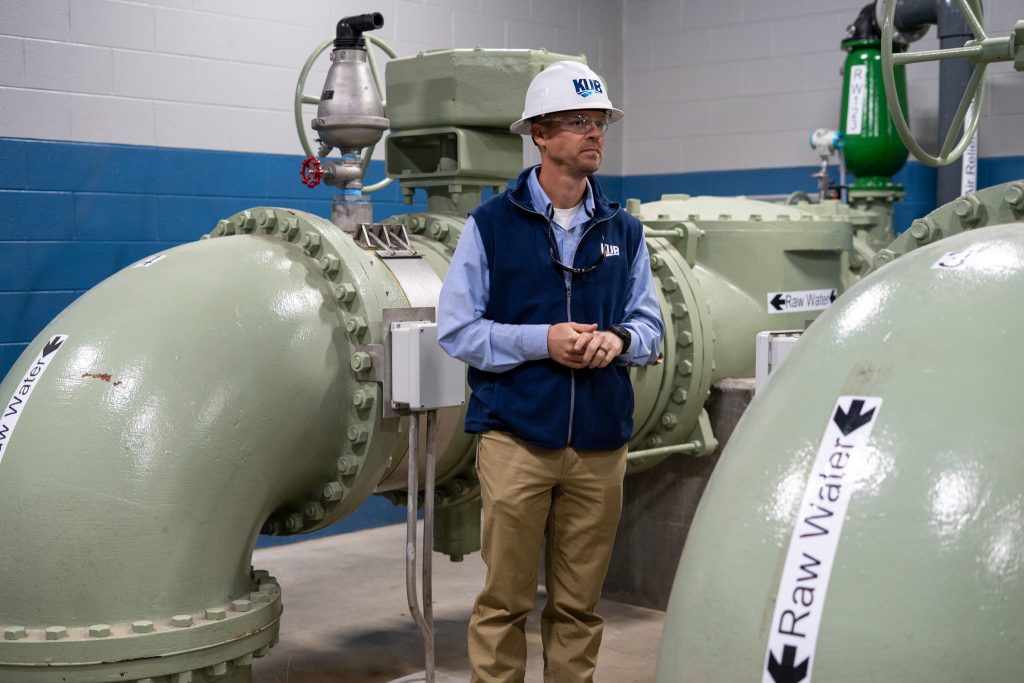
To mark Knoxville Utilities Board’s (KUB) Mark B. Whitaker Water Treatment Plant celebrating its 100th anniversary, we got to tour the facility guided by Chris Thomas, KUB’s manager of plant operations.
Seeing this facility, it’s clear that serving a growing community for a century takes steady innovation over time.
A century of innovation
On March 26, 1926, contracts to design and build the plant, then called the Williams Creek Water Plant, were awarded to a Chicago engineering firm and architect. The building was designed in the Collegiate Gothic style popular at the time, so if it looks familiar, that’s because the University of Tennessee’s iconic Ayres Hall shares the same style.
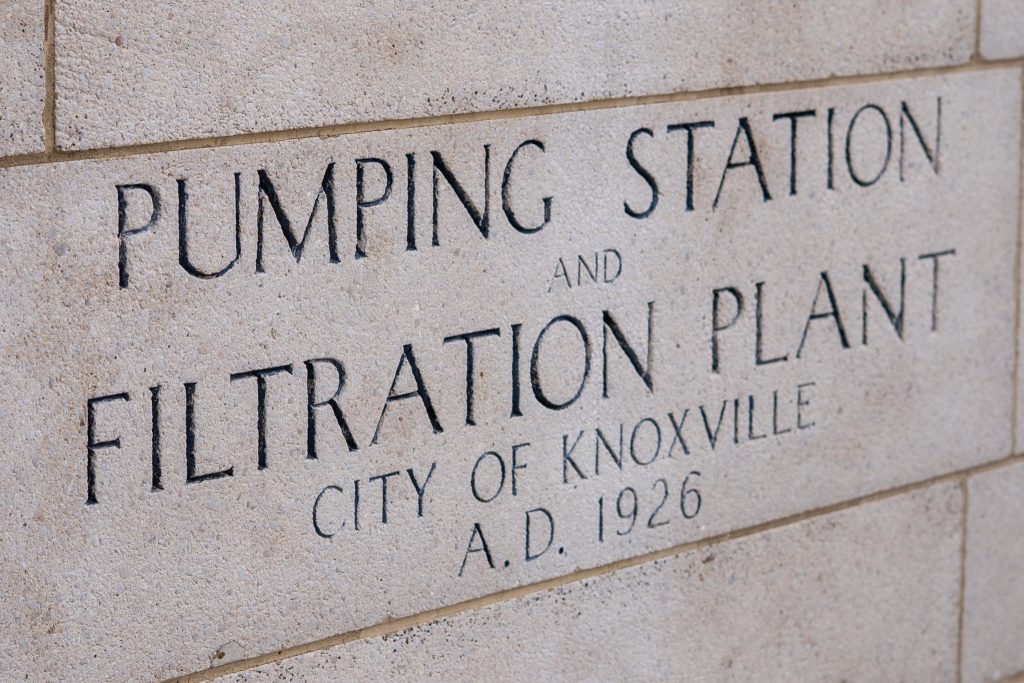
The grand style continues inside with Tennessee pink marble, the same stone found in New York’s Grand Central Terminal and quarried only in East Tennessee. Built for about $1 million, the steam-powered plant began operating on Sept. 1, 1927.
Within a decade, the plant had its first homegrown innovation. In 1936, longtime superintendent Herbert Neff patented a machine that evenly mixed treatment chemicals into water. Because it ran on water instead of electricity, it fit right in at a plant still powered by steam. But that changed in 1939, when the plant switched to electricity, only to return to steam in 1941 to conserve power for the World War II effort.
After the war, Knoxville grew and the plant grew with it. KUB added more filters and storage for treated water in 1945. In 1948, KUB installed a new valve to keep water flowing if a main broke. Looking back, that valve was an early sign of KUB’s commitment to redundancy and resiliency, a focus that would carry through the decades.
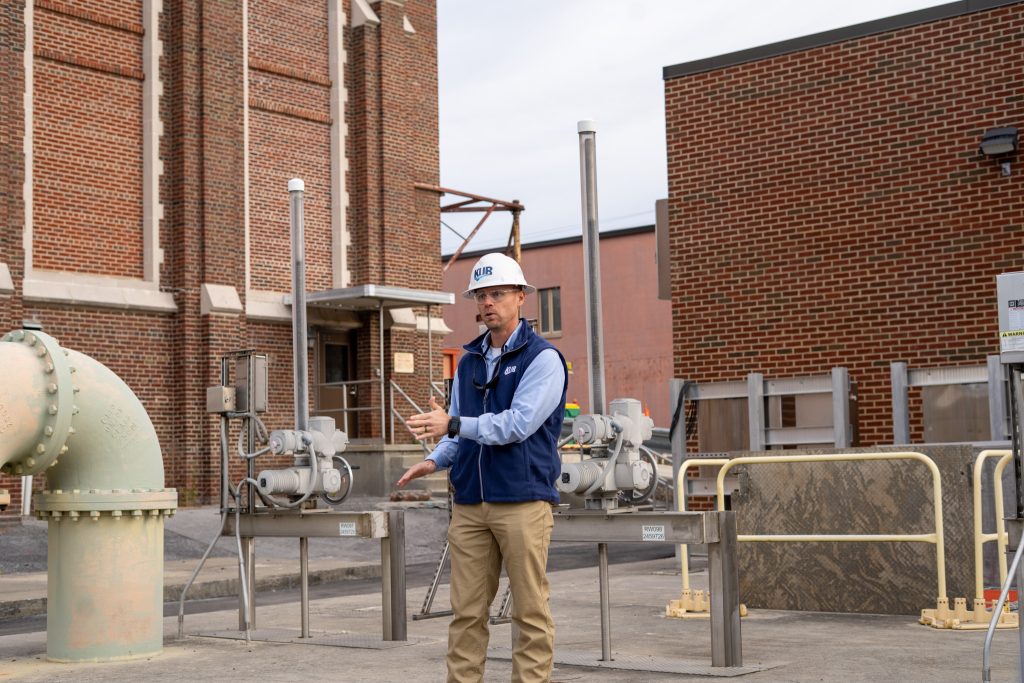
Then, the plant’s 210-foot brick chimney, a leftover from the steam era, came down in 1954, and a new pump the next year skyrocketed capacity. Major renovations in 1968 added new pumps, chemical equipment and a building to bring water into the plant. That same year, the plant was renamed for Mark B. Whitaker, KUB’s general manager from 1953 to 1971.
The 1970s and 1980s brought a shift toward automation. In 1974, KUB became the first utility in Tennessee to automatically control fluoride levels. Then, as part of a $4.5 million upgrade from 1981 to 1983, KUB installed a computer system known as SCADA that lets operators monitor and control pumps, reservoirs and plant equipment from one place. It remains a critical part of operations today.
The investments kept coming in the new century:
- A new treatment process in 2001 that brought better tasting water.
- A $1.9 million storage tank for said treated water took shape in 2003.
- In 2005, an $8.3 million pump station to send water out to customers was established.
- In 2014, KUB tied its efforts together with a $169 million master plan designed to make sure no single equipment failure could shut down the plant.
That brings us to today.
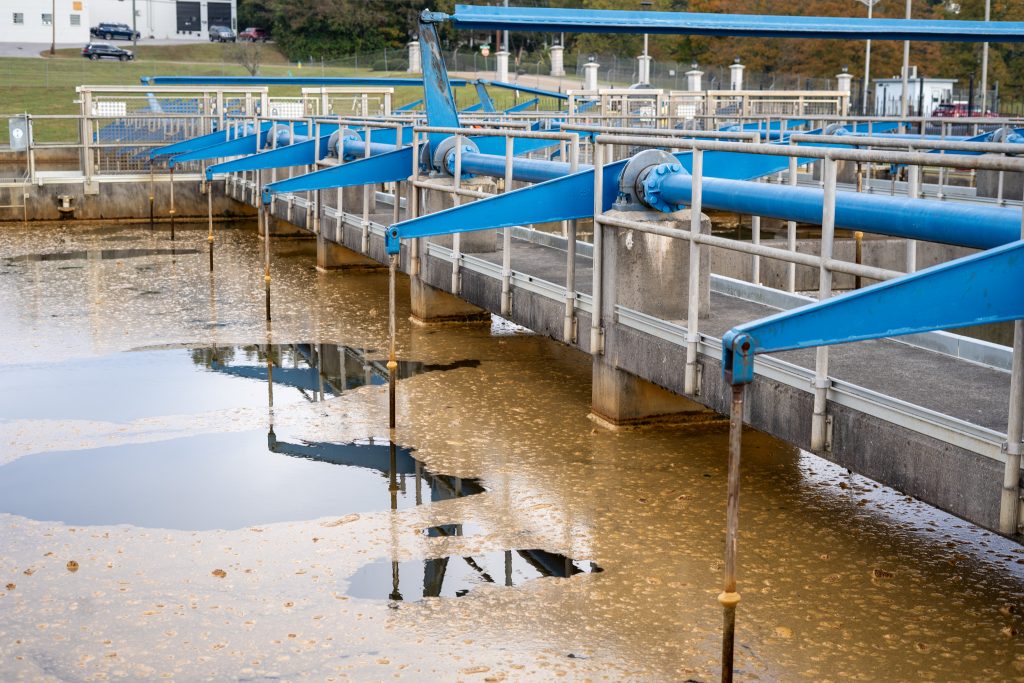
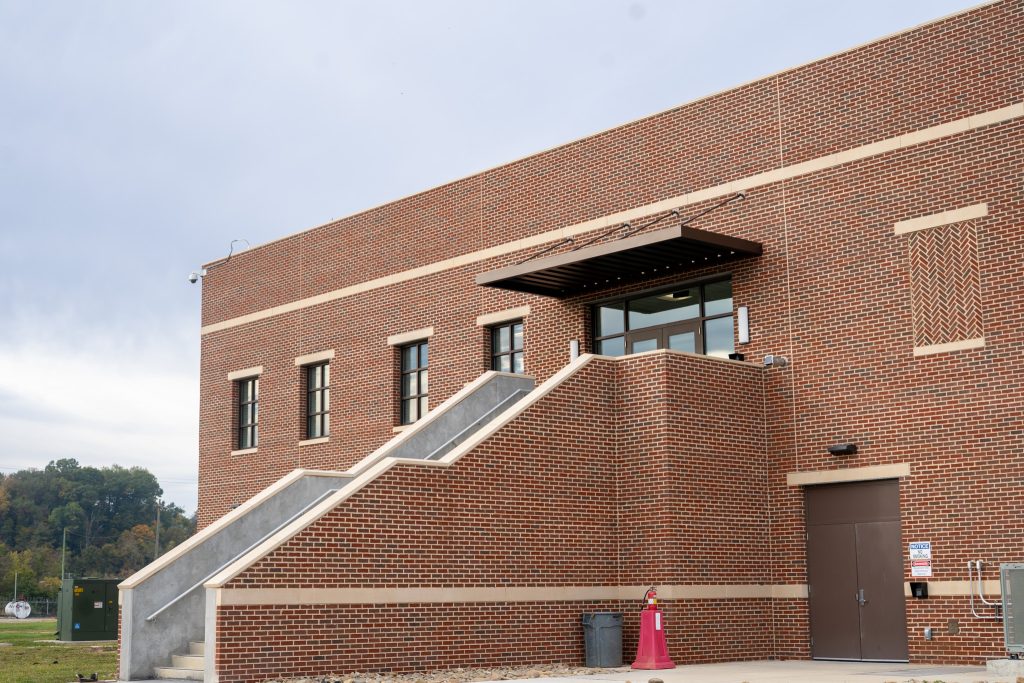
The cornerstone of that master plan is a $67 million filtration project, the largest in KUB history. Construction started in 2024 and wrapped up this year, adding six new filters capable of treating 38 million gallons a day, along with a new pumping station, lab space and control room.
Surprisingly, the goal isn’t more water. Thomas said what keeps him up at night isn’t how much the plant can produce on its best day, but whether the water keeps flowing on its worst.
The new filters give KUB a second line of defense. That can be for the routine tasks like existing equipment needing repairs or maintenance, which is inevitable in a century-old facility. Or it can be for the unimaginable threats or natural disasters. Either way, the new filters can take over without interrupting service.
“Imagine a day without water,” Thomas said. “It’s so critical that you can’t have any gaps. So the redundancy and resiliency helps to fill those gaps.”
We heard “redundancy” and “resiliency” again and again on the tour. They’re the same principles that have guided KUB’s growth from about 200 miles of water mains back then to more than 1,400 today, serving more than 84,000 customers.
“For 100 years, the Mark B. Whitaker Water Treatment Plant has played an important role in serving our community,” said Gabriel J. Bolas II, KUB’s president and CEO. “As we celebrate this milestone, we also recognize the employees whose dedication keeps this essential service running. We’re proud of this legacy and are committed to building on it for years to come.”
Like what you've read?
Forward to a friend!