From walkie-talkies to real-time data | Krew is ready to transform the production industry
On a film set, nearly every hold, delay and safety call goes out over a walkie-talkie first. Once the speaker lets go of the button, that information is gone forever.
Krew, a startup with roots in Johnson City, has built a device to capture it and, in the process, take on one of the industry’s most persistent challenges: inefficient recapping.
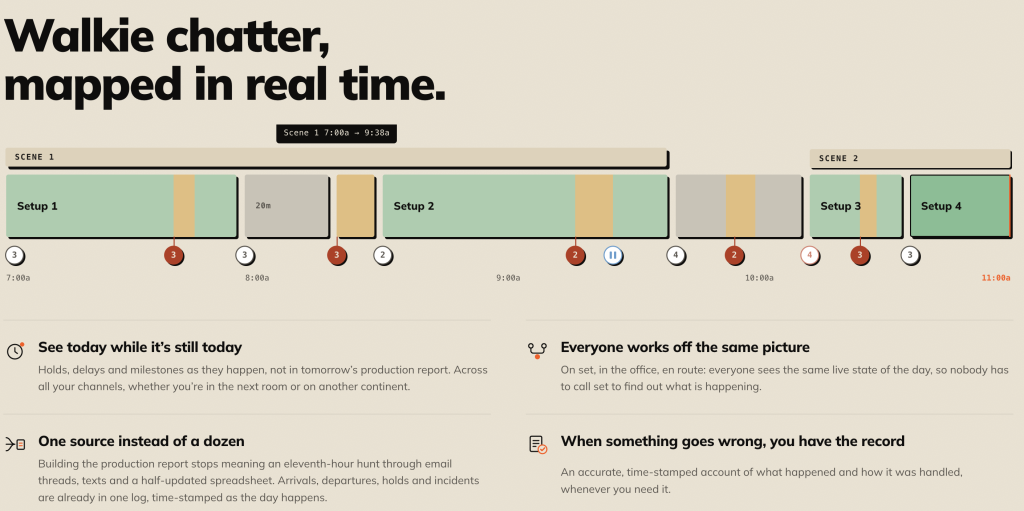
Its product, Krewmate, is a lunchbox-size Pelican case that sits on set, passively logs radio traffic across a production’s designated channels and organizes it into a live, time-stamped picture of the shoot day.
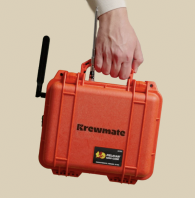
A production team member sets the Krewmate down in a central location, raises the antenna and the system goes live. It works with the radios crews already use, so there’s no new equipment for anyone to carry or learn.
Producers, assistant directors and off-site executives can see holds, delays and milestones as they happen rather than waiting for the next day’s production report.
Privacy limits are also built in. Productions choose which channels are captured and who has access, transcripts are organized by department rather than by individual speaker, and off-set viewers see milestones, not transcripts.
How did this product come to be?
The startup has been brewing for about two years, and the product looks different today than when the team started.
“The original idea was document intelligence software. It came from seeing how much money that was intended to end up on screen went to putting out fires behind the scenes instead,” said CEO Josiah Stendel.
But when the full team came together, they all realized this actually boiled down to administrative and operational inefficiencies.
For example, while embedded on a production for a five-month pilot with a large streaming series, the team noticed a production assistant sitting on the walkie channels all day, transcribing updates into a group text for executives off-site.
That observation, followed by a late-night brainstorming session in an Airbnb in Lexington, Kentucky, led the team to ask whether walkie traffic itself could become a data source to optimize processes.
The pilot also gave Krew a way to measure the cost of these inefficiencies.
Comparing the production’s paperwork with what actually happened on set, the team found more than 800 inconsistencies. That averaged out to about 12 a day, in records that had passed three rounds of human review and been submitted to unions.
In the industry, these inconsistencies have a major impact on pay, compliance and liability.
A team with production chops
Good business ideas usually come from knowing an industry, and Krew’s founders know the production one well.
- Stendel built a viral media firm to more than 1 billion organic views and worked in creative strategy at 5&2 Studios, the studio behind “The Chosen.”
- COO Adam Swerdlow was the founding COO of “The Chosen,” where he grew the team from four people to more than 80, generated more than $100 million in revenue and raised more than $20 million in funding.
- Co-founder and adviser Luke Thompson built ActionVFX, whose assets have appeared in “The Avengers,” “Stranger Things” and “The Mandalorian.”
- CTO Jacob Windle is a former Amazon engineer with more than 11 years of early-stage product building and deep AI and machine learning expertise.
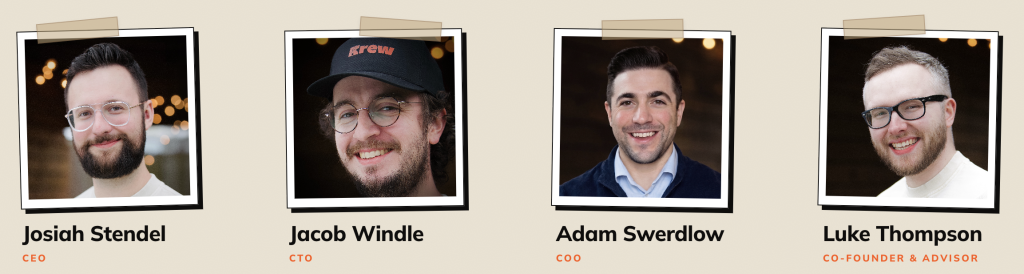
And while they all have impressive resumes, one of the coolest things is that the team’s path runs through Northeast Tennessee’s startup ecosystem.
Thompson met Windle at the FoundersForge’s first Startup Mountain Summit and bonded over AI. The two said it is rewarding to now see how much Startup Mountain Summit has grown, knowing that’s what gave them their start.
What’s next
Krew recently signed an agreement with one of the largest providers of radio equipment to the film industry. The provider works with major studios and streamers and could place Krewmate on 60 to 90 productions at any given time.
But the founders see film as just the beginning, saying it represents less than 1% of the opportunity.
“The applications for this type of technology quickly expand outside the film industry, though. Construction, live events, emergency communications and a ton more,” said Thompson.
Like what you've read?
Forward to a friend!