

Tennessee students and educators rise to the Presidential AI Challenge
The AI projects emerging from Tennessee schools and universities demonstrate that AI is not just for big tech hubs.
At the recent AI Tennessee Summit, a featured lunch panel highlighted how local students and educators are engaging with the Presidential AI Challenge. The initiative aims to encourage classroom adoption of artificial intelligence and prepares the next generation of both students and teachers to be confident in an AI-assisted workforce.
The challenge is structured into three distinct tracks. Students can either propose how AI could solve a community problem (Track 1) or actually build the integrated solution (Track 2). Track 3 empowers educators to integrate AI into their own teaching practices.
The panel featured local higher education or K-12 experts familiar with the program to chat through AI’s role in Tennessee’s education system:
- Dr. Josh Rosenberg: Haslam Family Professor & Associate Professor of STEM Education, University of Tennessee, Knoxville (UTK).
- Reid Jackson: Computer Science Educator & AI Program Lead, L&N STEM Academy.
- Dr. Emily Holtz: Assistant Professor of Elementary Education, UTK.
Alcoa City Schools
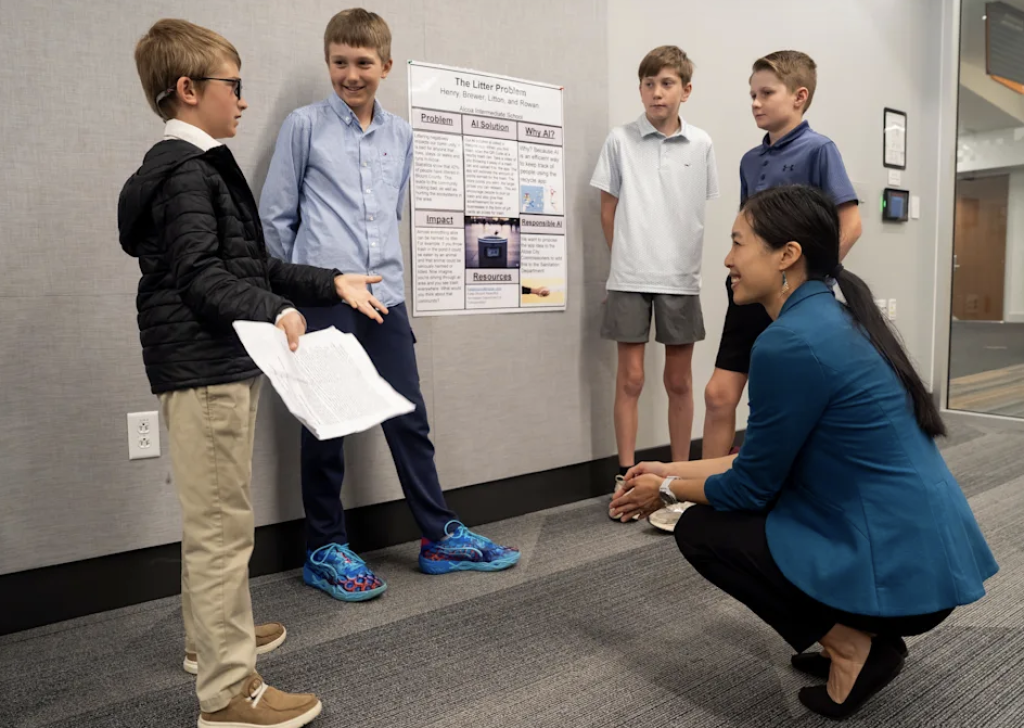
At Alcoa City Schools, 34 elementary students, supported by two teachers, submitted a number of projects. These young innovators used AI to brainstorm solutions for:
- Community health: Managing goose droppings and litter in local ponds.
- Safety: Improved flashing systems for emergency vehicles and smarter traffic signals.
- Social good: Enhancing access to charities, books, and elder care.
The students are slated to present their projects to the Alcoa School Board and the City Council in the coming weeks.
L&N STEM Academy
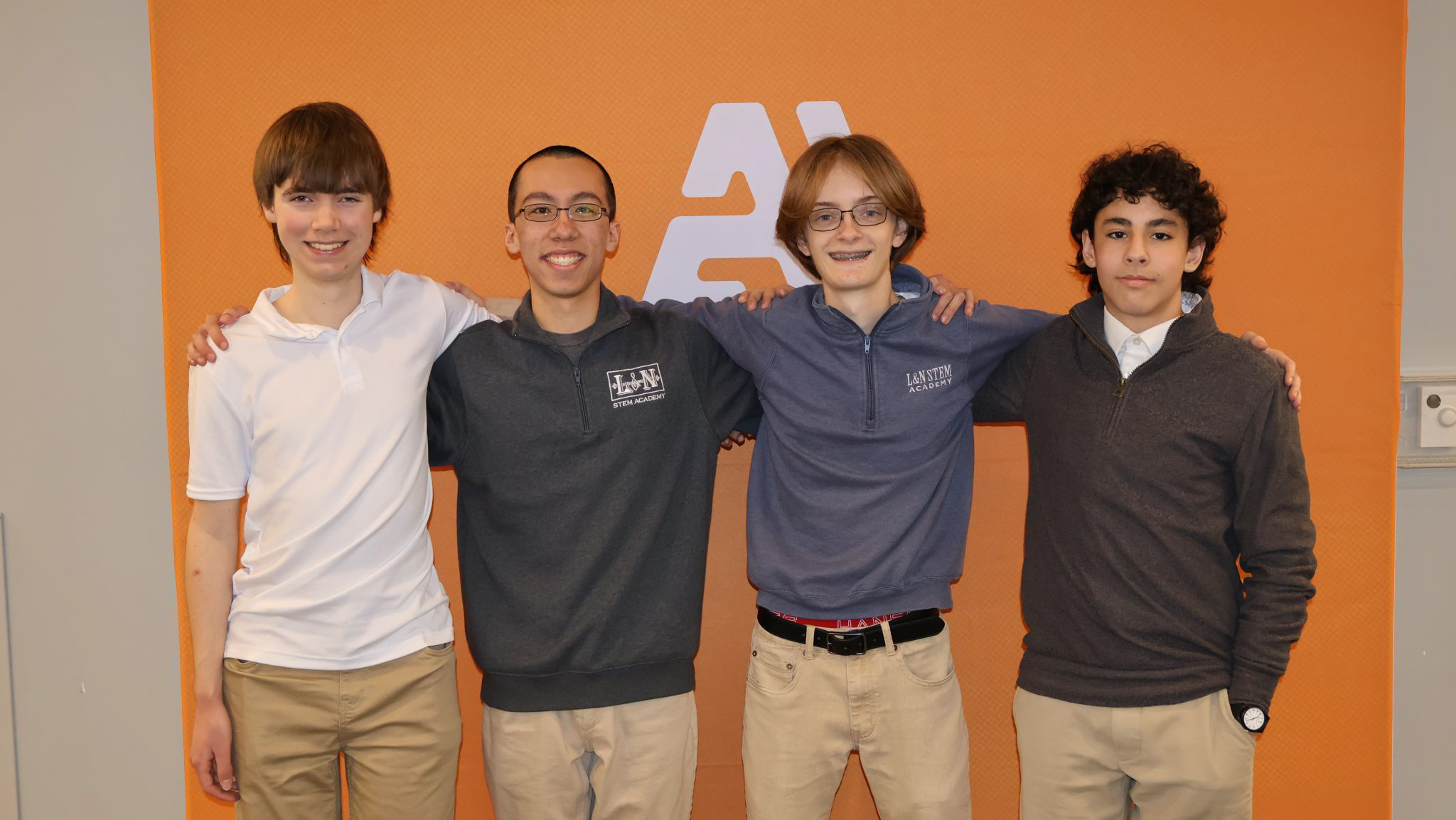
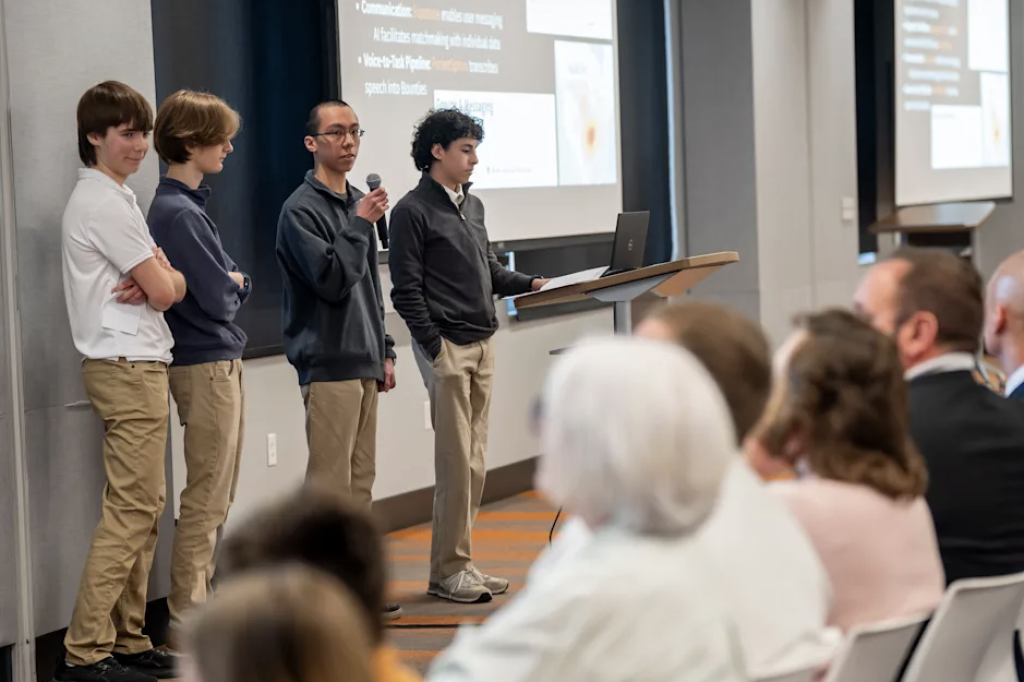
In the wake of Hurricane Helene, four students at L&N STEM Academy tackled the chaos of disaster coordination. Partnering with CGI, the students built a technically sophisticated disaster hub. The panel said the technical specs of their project rival college-level engineering:
- Model: A DeepSeek-V3-Turbo Large Language Model (LLM) to consolidate data from the National Weather Service, NASA, and other news sources.
- Architecture: Retrieval-augmented generation (RAG) with a Chroma vector database for precise data synthesis.
- Analysis: Sentiment analysis using a BERT framework to assess disaster severity and populate real-time heat maps.
L&N STEM Academy is looking into further developing this tool and having high school students mentor elementary and middle school students.
Educator use cases
- The University of Memphis developed an AI-driven chatbot to provide iterative feedback on student Project-Based Learning (PBL).
- Middle Tennessee State University built STEAMCompass, a tool that helps teachers align complex STEAM subjects and generate student investigations.
- Fisk University led the charge on ethics, exploring a statistics-based approach to bias and fairness in AI inference.
During the initial brainstorming stage, one educator posed a question that has since become a guide for Tennessee’s education-focused AI integration: “How much heavy lifting should be done by the AI versus the teacher?”
By keeping this strategic balance at the forefront, Tennessee is ensuring that technology remains a tool for teacher empowerment, rather than a substitute for it.
Like what you've read?
Forward to a friend!