
ORNL and EPB partner to derisk the future of the American power grid
The partnership between ORNL and EPB is a signal to the rest of the country that the future of the American energy economy is being forged in East Tennessee.
Many associate Oak Ridge with its secret past. Today, the focus is on its world-leading present.
The U.S. power grid is often called “the biggest machine in the world.” It was designed decades ago and has served the nation well, but modern demands like population growth, AI computing and industrial reshoring have pushed the aging infrastructure to its limits.
To address this, researchers at Oak Ridge National Laboratory (ORNL) are using the Grid Research and Deployment Center (GRID-C) as a testbed.
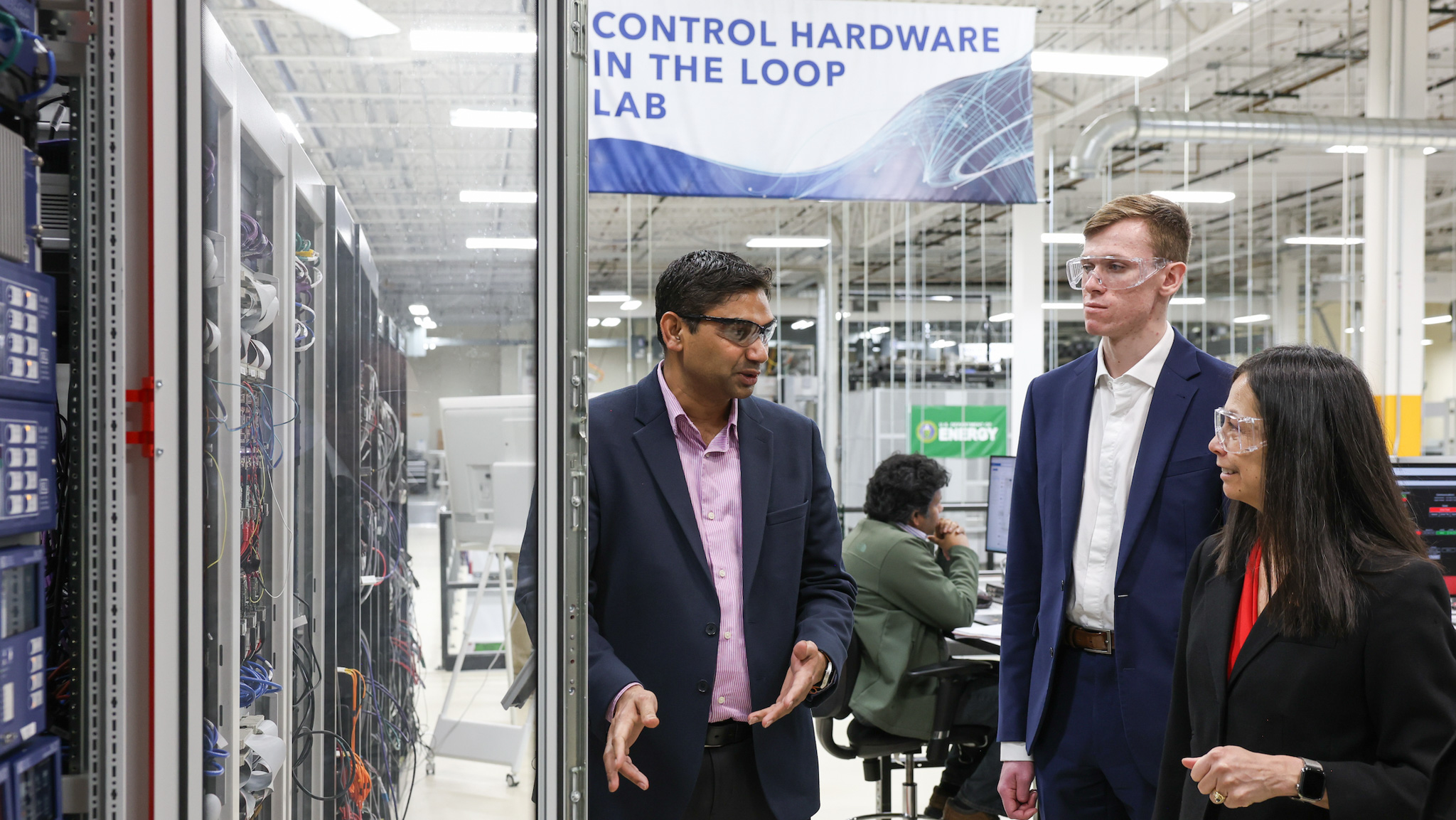
On Monday, ORNL hosted a tour of the grid research facility to highlight a major milestone: the installation of microgrid equipment within Chattanooga’s Electric Power Board (EPB) existing network.
We got to see the innovation firsthand and speak with the key players driving the initiative:
- The Honorable Catherine (Katie) Jereza, Assistant Secretary for the U.S. Department of Energy’s Office of Electricity
- Stephen Streiffer, Director of Oak Ridge National Laboratory
- Robert Wagner, Associate Laboratory Director of the Energy Science and Technology Directorate at ORNL
From Lab to Living Room
The challenge with grid innovation is simple: you cannot easily test new, “disruptive” technologies on a live system where thousands of people rely on power for their homes, businesses, and hospitals.
GRID-C allows researchers to emulate the power system under one roof. The tour guide, Philip Bingham, head of the Electrification and Energy Infrastructures Division at ORNL, explained that the facility uses medium voltage (one to two kilovolts). This is about 100 times the voltage of a cellphone.
By utilizing this microgrid environment, ORNL acts as a bridge between high-level research and the practical needs of utility providers. This process is known as derisking and ensures that by the time technology reaches a city like Chattanooga, it is ready to perform.
Post-Tour Press
Following the tour, the leaders of this initiative shared their perspectives on why this specific milestone with EPB matters for the future of the American energy landscape.
Hear from Robert Wagner
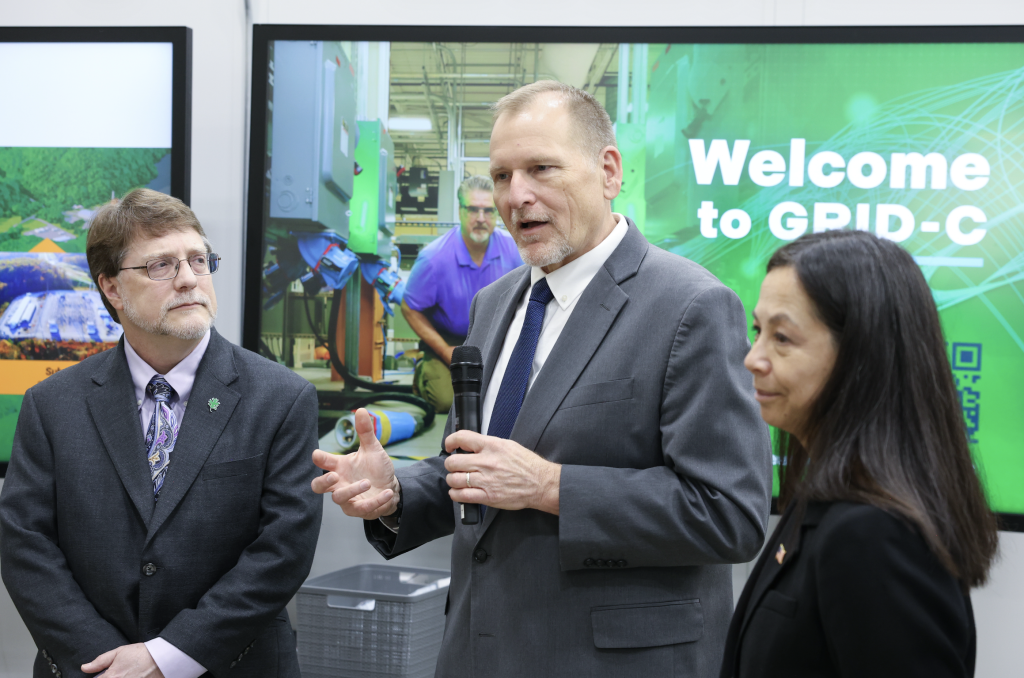
“Today, we highlight two things. First, a major milestone: our partnership with EPB in Chattanooga. And second, to expose you to this very unique facility called Grid-C that makes those deployments possible.
We all know electric demand is increasing rapidly. Utilities must maintain reliability, generation, and storage, all without dramatically increasing costs. That requires new controls, including new ways to manage the grid.
With microgrids, you are no longer physically constrained. Instead of operating as those isolated islands, we can now coordinate and share stored energy across various technologies.
The technology being deployed to Chattanooga is engineered and validated here. This microgrid significantly reduces our technical and operational risk before utilities deploy and scale.”
Hear from Stephen Streiffer
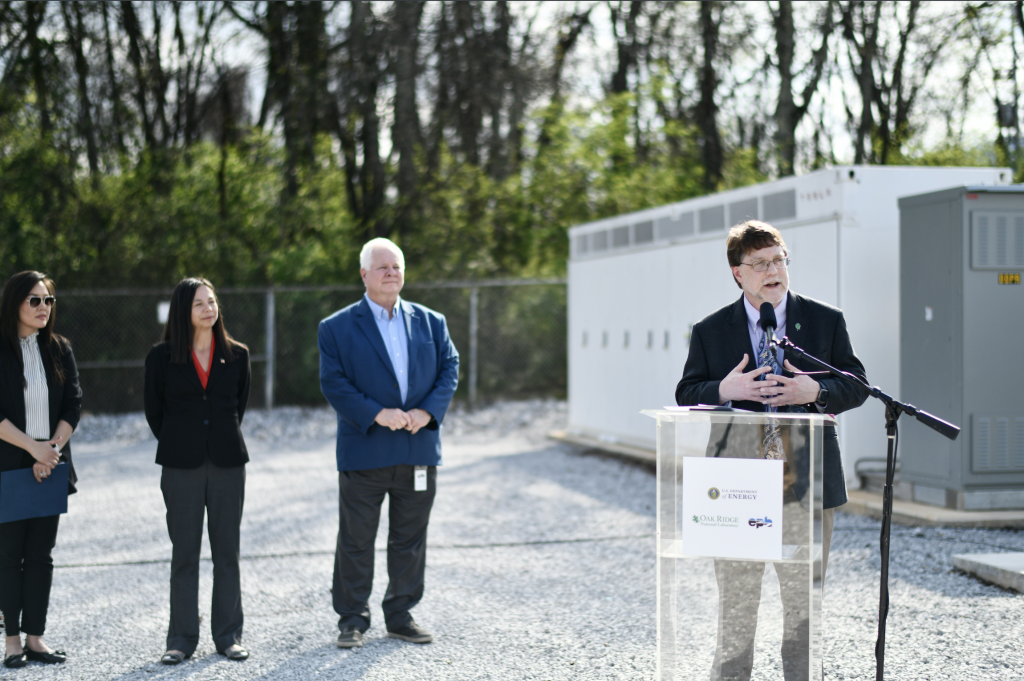
“Here at ORNL, we understand that a modern, reliable electric grid is foundational to not only society, but everything we do in science and technology. The nation’s national security and the safety of its systems ultimately depend upon reliable power.
ORNL is uniquely positioned to achieve this because it’s not just a research campus. We actually function as the testbed on which we can try the technologies that allow us to derisk these new approaches and make them attractive for the private sector and the nation.
The infrastructure that we have provides a very realistic proving ground for the modernization efforts with utility partners such as the EBP in Chattanooga under real-world operational constraints.
The work that we do here at ORNL’s Hardin Valley campus and Grid-C allows us to emulate the power system under this one roof. The sort of work that we do in this facility includes advanced power electronics, grid-scale, long-duration energy storage, AI-enhanced grid modeling and operations, and cyber-physical security.
We have industry partners who come in here to derisk technologies in ways that they can’t afford to do on their own, accelerating innovation while strengthening domestic supply chains and improving resilience and sustainability. Utilities can’t afford unproven solutions. The facility that we’re in today, Grid-C, bridges that gap, translating heavily funded research into utility-ready technology. This model has been hugely successful.”
Hear from the Honorable Catherine (Katie) Jereza
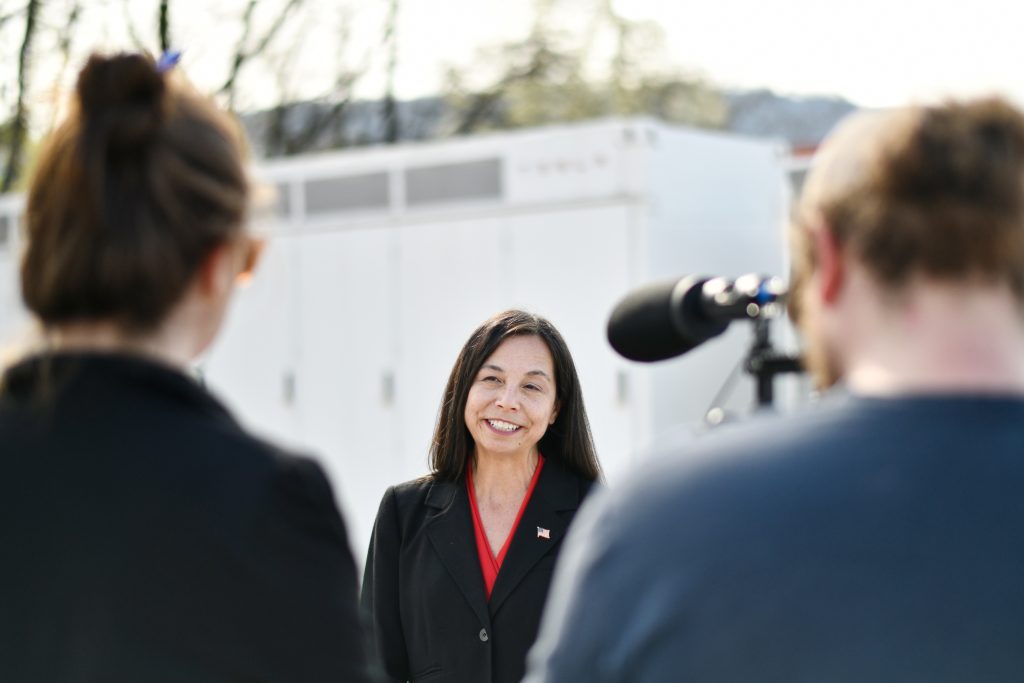
“I’m really excited to see how federal research investments are strengthening American energy infrastructure. To see it firsthand is just really personal to me, because I’m an engineer, and seeing the science turn into action is just incredibly exciting and something that I’m very proud of to be a part of.
The electric grid underpins American society. It is the back and bone of our economy, and demand growth is accelerating from advancing manufacturing to AI computing to the reshoring of industry. Meeting that demand requires a grid that is stable, optimized, and capable of expansion.
We want a grid that can be stable, optimized, and grow. We want to optimize the performance so that as we become more reliable, the grid becomes more affordable as well. When we get to growth, we must tap into the resources that we have today, such as nuclear, natural gas, and coal.
Our strategy depends on the national laboratories like Oak Ridge National Lab and forward- looking utilities like EPB.”
Read ORNL’s full press release here.
Like what you've read?
Forward to a friend!