

ORNL advances battery chemistry for Army-funded project
New battery innovations at ORNL are leveraging Tennessee's materials and talent to support defense missions and broader civilian drone applications.
When Corporate Fellow and Head of Electrification, Dr. Ilias Belharouak, and his team at Oak Ridge National Laboratory (ORNL) began a high-stakes project funded by a Department of War contract, they started with a simple question: Can the batteries that power our laptops and cars handle the rigors of tactical flight for eVTOLs (electric vertical takeoff and landing aircraft)?
After extensive initial testing, the team concluded the answer is a resounding no, citing the need for intense power bursts and a heavy weight-to-power ratio.
But as a national lab, Belharouak sees it as his and ORNL’s mission, not to accept that dead end. Instead, he is pivoting to altering the battery chemistry itself to find a solution.
“We, as a national lab, have programs where we can develop and discover new formulations that can really satisfy energy needs. That means we can play with what these batteries are made of,” he said.
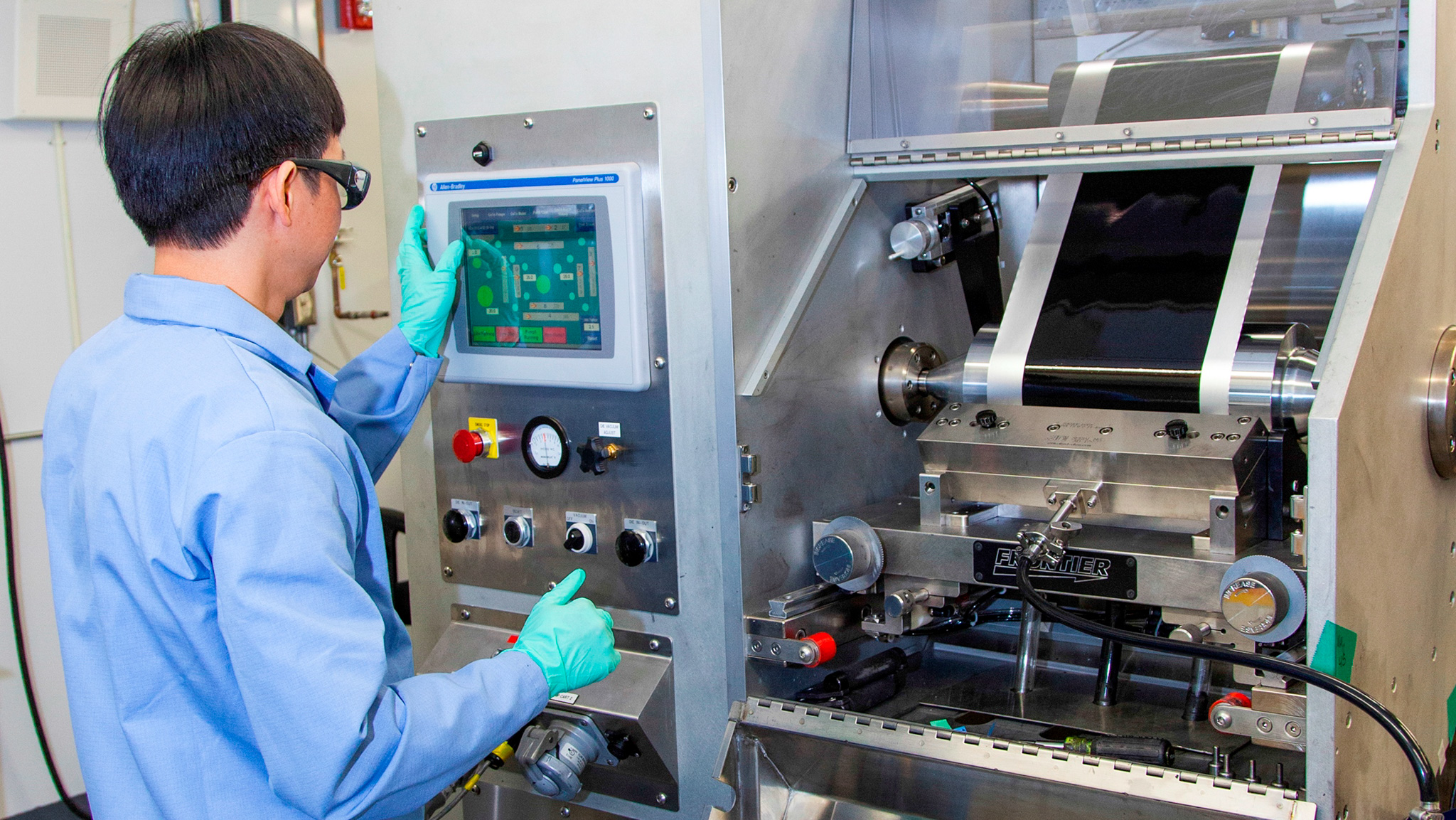
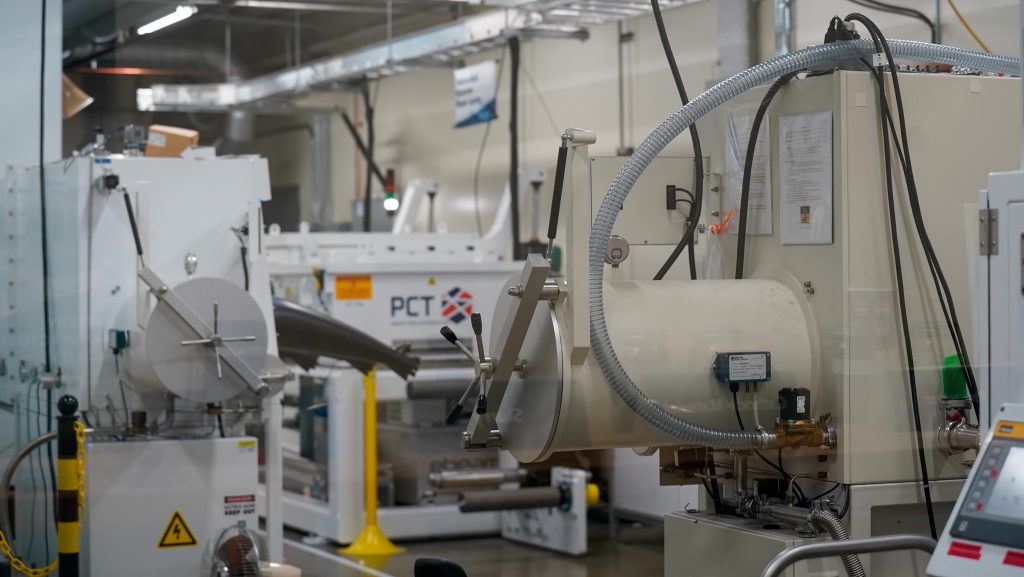
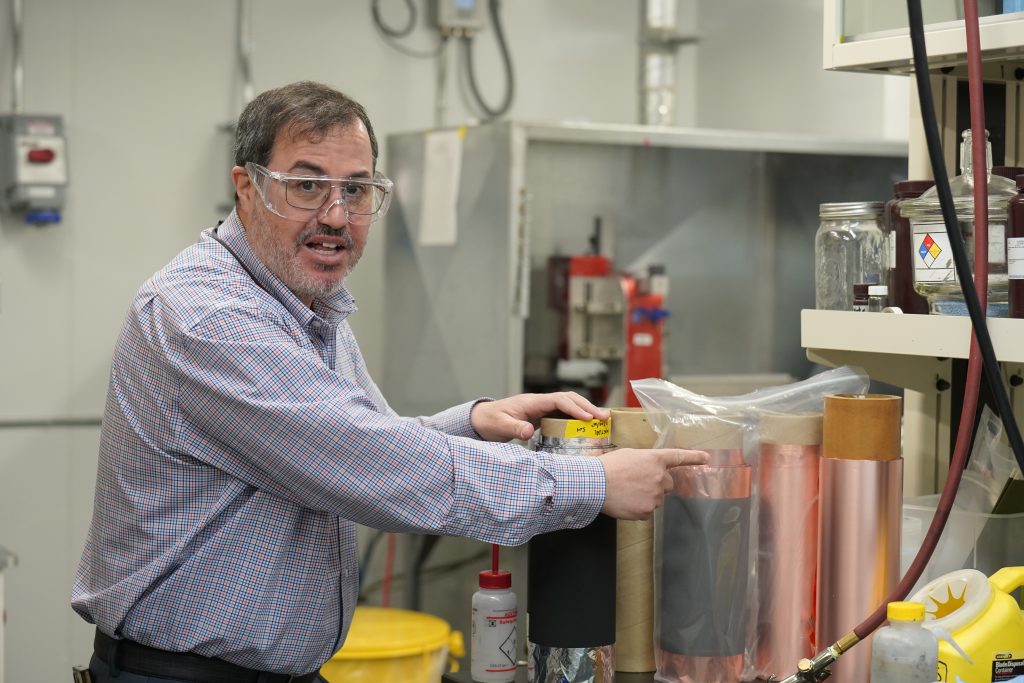
We interviewed Belharouak and toured the Battery Manufacturing Facility to get a close-up look at the project’s status.
Successes
Once his team began analyzing the chemical makeup, they found success in moving toward lithium metal anodes. By replacing the standard graphite found in consumer electronic batteries with lithium metal, the team is on a pathway toward doubling the energy density capacity of current eVTOL systems.
Belharouak noted that this density issue was a main concern and described the transition as a “happy outcome.”
Another win has centered on rechargeability.
“Right when you want to bring your aircraft down, you do not want to charge it for a day. You want to charge it quickly, probably within one hour. Some of the electrolytes prove to be very, very difficult to do that to. That’s why we came up with a new electrolyte system that works great so far,” he said.
Ongoing evaluations
One remaining issue is that lithium metal is highly reactive. The switch to that material has produced results, but it is not a viable long-term option.
“Lithium metal develops dendrites, which is not suitable from a safety standpoint,” Belharouak explained.
These dendrites can pierce through the multiple layers that make up a battery and cause failures. The team is now working to better understand a path forward by dissecting those battery layers and studying them in a forensic-style analysis.
Strengthening the Tennessee supply chain
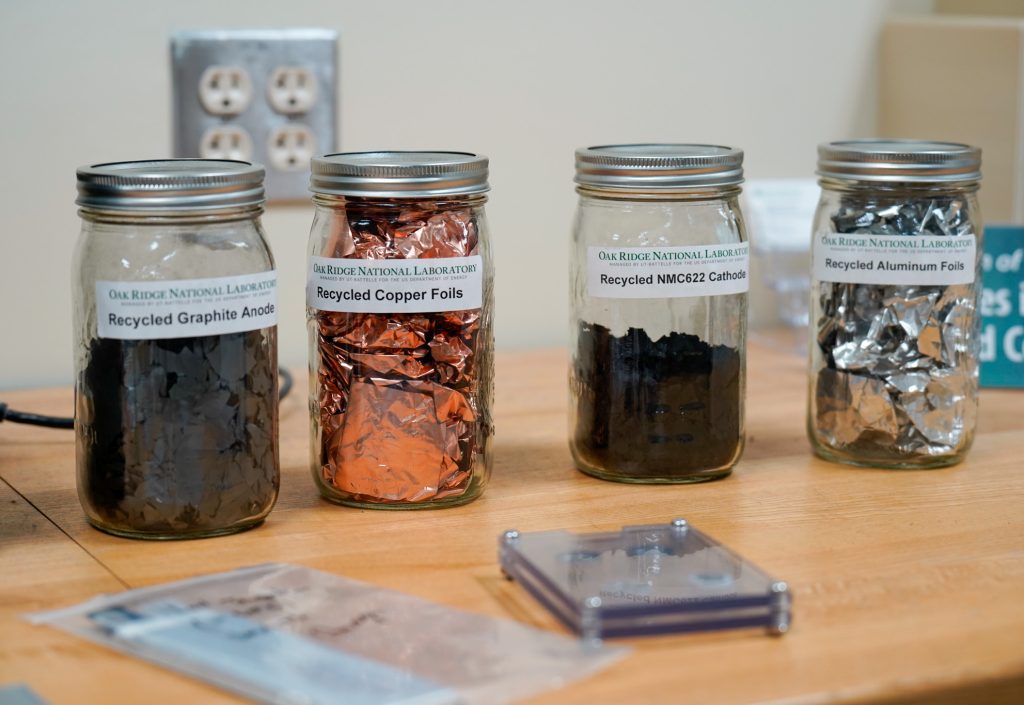
As the price of graphite climbs, which is a key battery component, the ORNL team looks to source materials locally.
Belharouak said a graphite manufacturer in Chattanooga could be an option, along with a lithium processing plant near the North Carolina border.
But if these local options do not end up being the right fit, he would like to pursue future research exploring manganese as an option. Manganese is an abundant and accessible material that could replace the more constrained minerals, such as cobalt and nickel, that are also key to battery chemistry.
Battery applications and workforce development
While the project is of military interest due to the tactical pros of eVTOLs like their near-silent operations and ability to fly low autonomously, the battery technology being refined at ORNL has much broader potential.
“Energy problems cannot be solved with one solution. We have to have diverse solutions. Nuclear energy is a very, very important solution. It’s not going to vanish. Likewise, batteries will not solve the issues that nuclear power will solve. But batteries have big use cases, especially when it comes to grid stabilization and micro-grid development. Take EPB, for example. They could deploy long-range eVTOLs for power line inspections in remote areas. Or outside of utilities, a firefighter could deploy a drone to fight a fire on a high-rise,” Belharouak said.
With these newfound applications comes the need for the next generation of talent. Belharouak urges Tennessee companies, schools and universities to do their part to ready the workforce.
“Battery opportunities in Tennessee are huge. Bring those youngsters in to actually understand battery chemistry. The next generation is poised to really be at the front of tackling big engineering issues, which can bring a lot of wealth to the state,” ended Belharouak.
Like what you've read?
Forward to a friend!