

Key takeaways from the ‘Nuclear 101 for Economic Developers’ workshop
From SMRs to AI power demands, industry experts at the UT CIS & TCED’s ‘Nuclear 101’ workshop map out how Tennessee can maintain its head start within the industry.
It is no longer a secret that Tennessee is doubling down on its nuclear future. With the Oak Ridge National Laboratory (ORNL) in its backyard, an eager supply chain, and the University of Tennessee, the state is uniquely positioned to lead the next generation of innovation.
To sharpen this competitive edge, the UT Center for Industrial Services (CIS) recently hosted a specialized elective for the Tennessee Certified Economic Developer (TCED) program called ‘Nuclear 101 for Economic Developers: Tennessee’s Next Big Opportunity.’
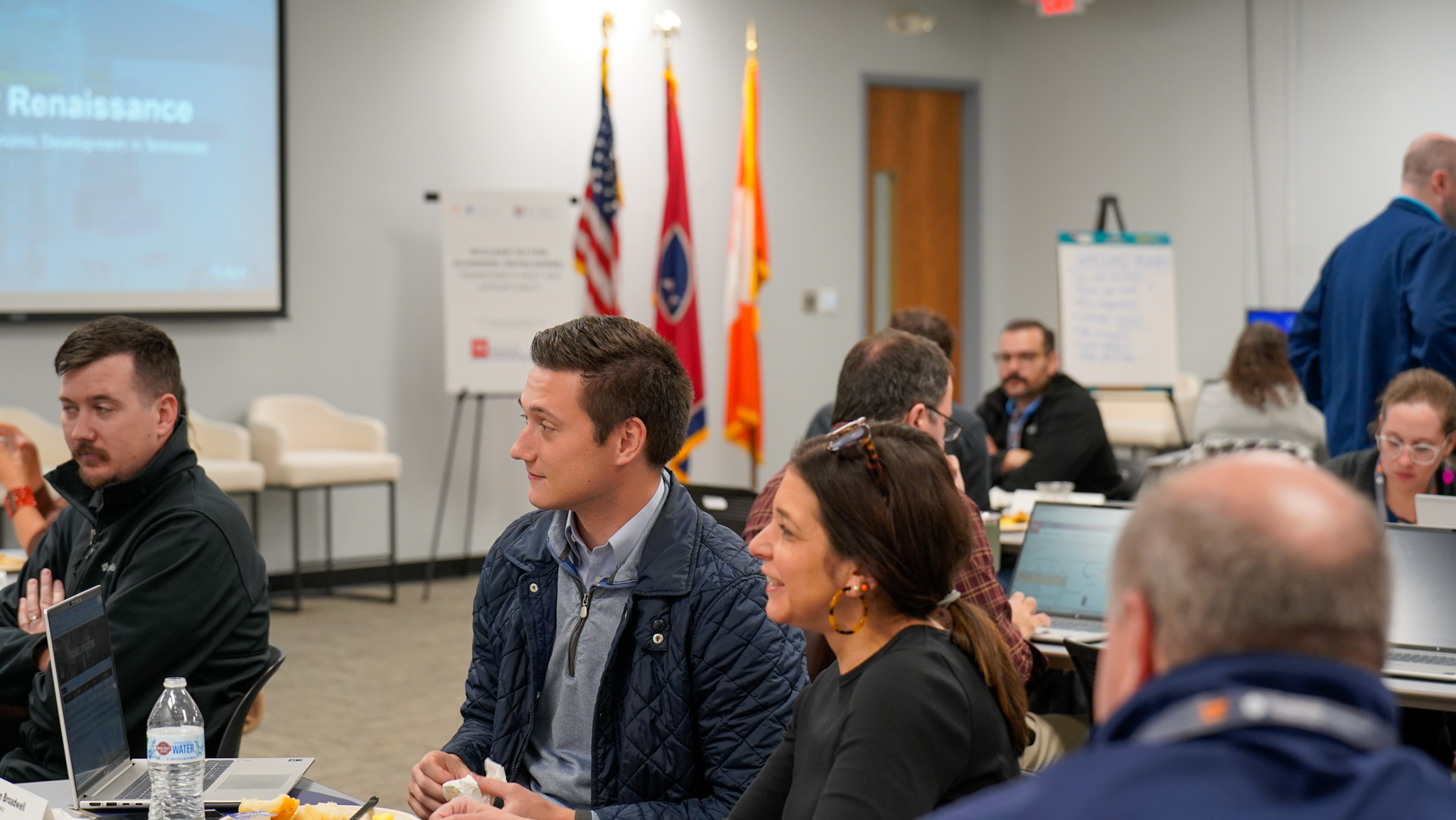
Held March 18-19 at the UT Outreach Center in Oak Ridge, the workshop brought together industry leaders to debunk nuclear myths and map out how local organizations can tap into the industry. Learn about the key takeaways from select panels.
The nuclear energy multiplier effect: community opportunities
This first panel was moderated by Tracy Boatner of the East Tennessee Economic Council (ETEC). The discussion featured insights from Kati Austgen of the Nuclear Energy Institute (NEI), Jesse Smith of ORNL, and Joshua Vajda representing the American Nuclear Society (ANS).
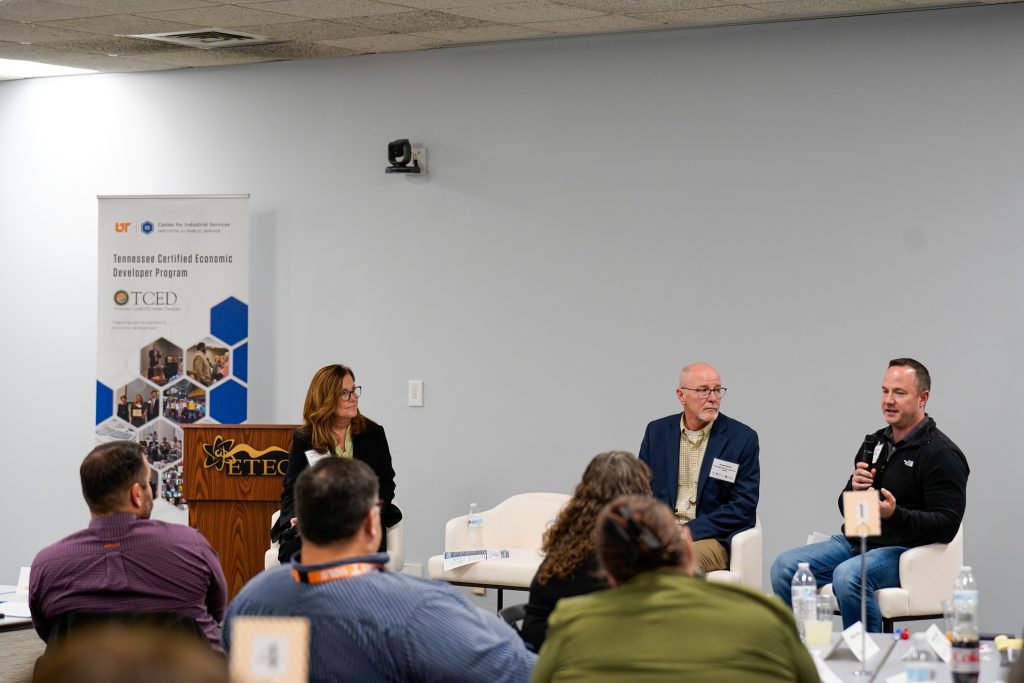
Economic development is often compared to a million-dollar factory metaphor. Bringing in a high-value asset, like a doctor or a nuclear plant, creates a ripple effect. A single facility demands a city of support from specialized welders and 3D-printing labs to local restaurants and housing.
- The capability mindset: Small businesses shouldn’t ask how to become a nuclear company. Instead, they should identify which existing capabilities of theirs that the nuclear industry needs.
- Go to everything: Economic development should be viewed through the lens of sales: go to everything, join groups like ETEC or ETEBA, and follow the funding to see where to plug in.
- Think outside the box: Companies like Container Technologies Industries (CTI) in Helenwood, TN prove that businesses don’t need to be next door to a plant to get involved in nuclear. CTI develops nuclear containment solutions, your sign to think about all of the parts and pieces that go into nuclear services.
- High-growth supply chain needs: The panel identified several hot sectors ripe for local expansion, including welding, 3D printing, data analytics, LiDAR technology, nuclear isotope containers, grid infrastructure, ventilation, and sterile preperation.
- Land Use: While Tennessee has benefited from Department of Energy (DOE) land, that inventory is reaching its limit. Future growth depends on community acceptance of new sites beyond traditional boundaries.
Community and site readiness for nuclear energy projects
Phil Schneider of Global Location Strategies led this session, highlighting how communities can better prepare robust nuclear and energy investments.
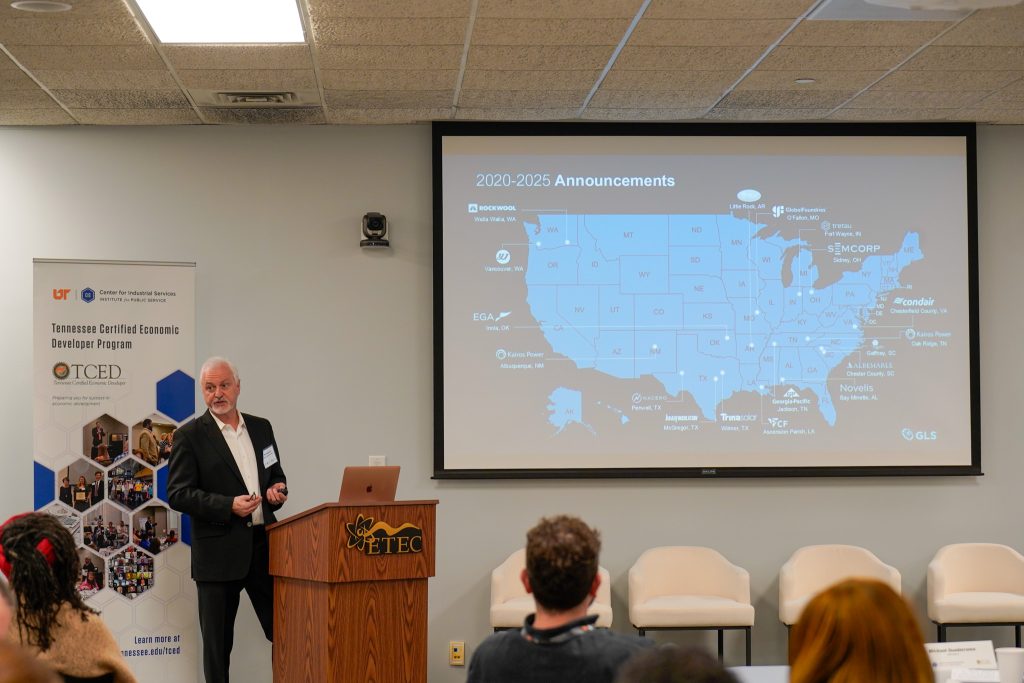
He began by outlining a massive market shift: nuclear has officially entered the mainstream, evidenced by a global generation record in 2025 and the development of over 125 Small Modular Reactor (SMR) designs worldwide.
- Scalability and speed: Unlike traditional giga-projects that take 10–15 years to build, SMRs range from 20–300 MW and can be mass-produced. This modularity reduces costs and allows for much faster deployment.
- The AI demand: The explosion of AI is a primary driver for nuclear adoption. An AI data center rack requires 50–150 kilowatts, compared to just 5–15 kilowatts for a traditional rack. Large-scale AI facilities now require 300–500 MW of reliable baseload power.
- Tech giant investment: Major names are already moving to secure power. Google is partnering with Kairos Power for 500 MW of SMR capacity. Amazon is investing $20 billion in nuclear-powered facilities.
- Economic action items: Schneider emphasized that economic developers must map local manufacturing capacity, identify specific parcels for SMR co-location, and build relationships with “Tier 1” tech companies like NuScale, X-energy, and TerraPower.
- The competitive window: Tennessee currently holds a 2- to 3-year head start over regions like Wyoming and Ontario. However, decisions made between 2026 and 2028 will determine which states dominate the 2030s deployment landscape.
Powering the future with workforce development
The session was moderated by Tyler Asher of the Tennessee Department of Labor and Workforce Development. The expert panel included Teresa Duncan of Roane State Community College; Mary Lin, EdD, of the Oak Ridge Enhanced Technology and Training Center (ORETTC) – Y-12; Paul Jennings, PhD, of UT CIS; and Brian Wirth, PhD, of the University of Tennessee, Knoxville.
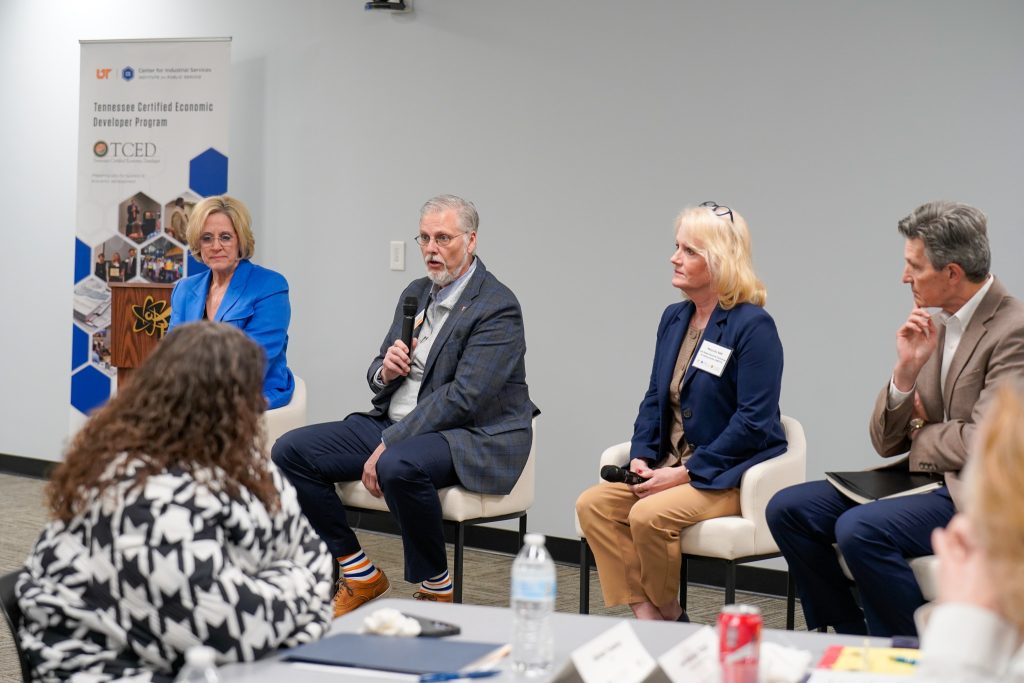
- The technician pipeline: For every one nuclear engineer, the industry requires 3 to 10 technicians. Roane State has seen related program enrollment jump from 7 to 44 students in just a few semesters to meet this demand.
- Beyond power: Tennessee is becoming an epicenter for nuclear medicine. By using radioactive isotopes to target specific cancer cells, researchers at ORNL and the UT Health Science Center are turning nuclear energy into a life-saving medical tool that can kill cancer without the broad cell damage caused by traditional chemo.
- Accessibility: New certifications, such as the Certified Nuclear Professional credential through ANS, requires only a high school diploma. This open doors for a broader workforce through partnerships with TCATs and community colleges.
Learn more about other TCED courses.
Like what you've read?
Forward to a friend!