
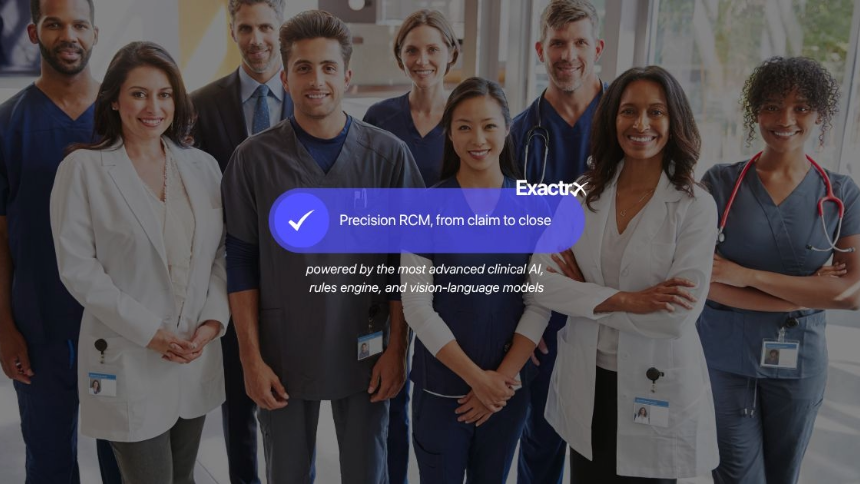
The biggest barrier to care is financial | ExactRx is building toward ‘the last claim ever submitted’
"The biggest barrier to care is financial," co-founder and CEO Athena Doshi said. "When you're constantly in a state of debt and deficit, you spend more time chasing the bills than providing patient care. We wanted a solution that didn't add headcount or complexity but really solved days to cash."
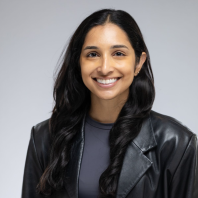
Nashville-based ExactRx walked away with the top prize at LaunchTN’s 3686 pitch competition, and in the few weeks since, the momentum has only kept building.
We interviewed Athena Doshi about this hands-free medical billing product that’s the difference between partial payment and full reimbursement for speciality practices and surgery centers.
Q: Tell us your backstory. How did you get here?
My background is in biology and human interaction design. I studied at UC San Diego, and that’s where I started my first company, which was in the public health space. We had a for-profit software arm that templated public health interventions and sold them to corporations. We also had a nonprofit arm that helped organizations adopt the technology and took a lot of the lift off of them. At the time, I was gearing up to apply to medical school. Instead, I went on to work at Heartbeat Health, which did cardiovascular digital telemedicine. I did everything there, from working as a medical assistant to doing clinical research that ultimately got published with the American College of Cardiology on the efficacy of digital health interventions. I knew that staying in startups was for me. After that, I went to Omada Health, a chronic care management platform that went public last year.
Q: How did the ExactRx team come together?
I met my co-founder, Ellard Li, at Omada. He was the engineering manager on my product team, and he comes from a background in health and finance. He was an early employee at WePay, which was acquired by JPMorgan Chase. When he first joined Omada, he was on the billing team and built out their billing infrastructure. We then paired with a researcher and a clinician. Our researcher is Dr. Jan Krumsiek, an associate professor at Cornell in computational biology and AI, who has previously been a Y Combinator founder. Dr. Gina Cocos graduated from UC San Francisco and also went to UCSD, so she and I had a lot of mutual friends. The four of us realized we were all very passionate about increasing access to care.
Q: What problem did you set out to solve?
Through our backgrounds, we realized the biggest barrier to access to care was financial rather than clinical. A lot of the doctors we were talking to, working with or had interned for struggled to get paid in a timely manner, so they had to underwrite their own practices. That was particularly prevalent in surgery. When you’re constantly in a state of debt and deficit, you spend more time chasing the bills than providing patient care. We wanted a solution that didn’t add headcount or complexity but really solved days to cash, so doctors could spend more time on what matters most, which is patients. It shouldn’t be this much work to get paid. You’re already doing the work.
Q: How does ExactRx work?
It’s a full-stack, AI-native medical billing company for specialty practices and surgery centers. We do everything a medical billing company does, but faster, smarter and cheaper, because we scale with technology instead of people. We work directly with management services organizations (MSO) that aggregate medical groups and surgery centers. All you have to do is add us as a user in your electronic medical record (EMR) systems. Our agents reason against each other. They’re built on institutional knowledge, payer policies, managed care contracts, fee schedules and claims adjudication outcomes to prepare and submit claims that get accepted by insurance companies on first pass. It’s like having a full-time, AI-native employee base that’s billing the same day of surgery and getting claims out within seconds, with very high accuracy. Exceptions are routed to our internal team of experts, who review high-cost, high-acuity, high-complexity claims before submission.
Q: What kind of results are you seeing?
We launched just over 60 days ago with our first customer, starting with their first site, and one customer can have anywhere from five to more than 300 sites. We’re processing 1,500 claims a month with a 99% first-pass approval rate, up from a 68% baseline, and a 98% zero-touch rate, up from 0% because everything was done manually. We also reduced their days in accounts receivable from more than six months to less than 30 days. We’re launching with our second MSO and already have expansions contracted for both. We expect to support more than 40,000 patient cases by the end of this year.
Q: Why Nashville?
We formally moved here around the end of March. This is such a great city for healthcare, and we want to continue to support that spirit of innovation within Nashville by making care more accessible and building tech-like margins into one of the most regulated industries. Zap with The Lighthouse has come on as a local investor. Their support has been incredible. We’re also backed by Northwestern Medicine and a variety of physician angels, which has been super helpful for customer acquisition. I truly think this is an opportunity to build a billion-dollar business right here in Nashville, and I love the idea of building a billion-dollar business with only 40 people. My co-founders and I want to scale as much as possible to support more providers and make ExactRx a standard of care, so that financial barriers to care are no longer a blocker.
Like what you've read?
Forward to a friend!