
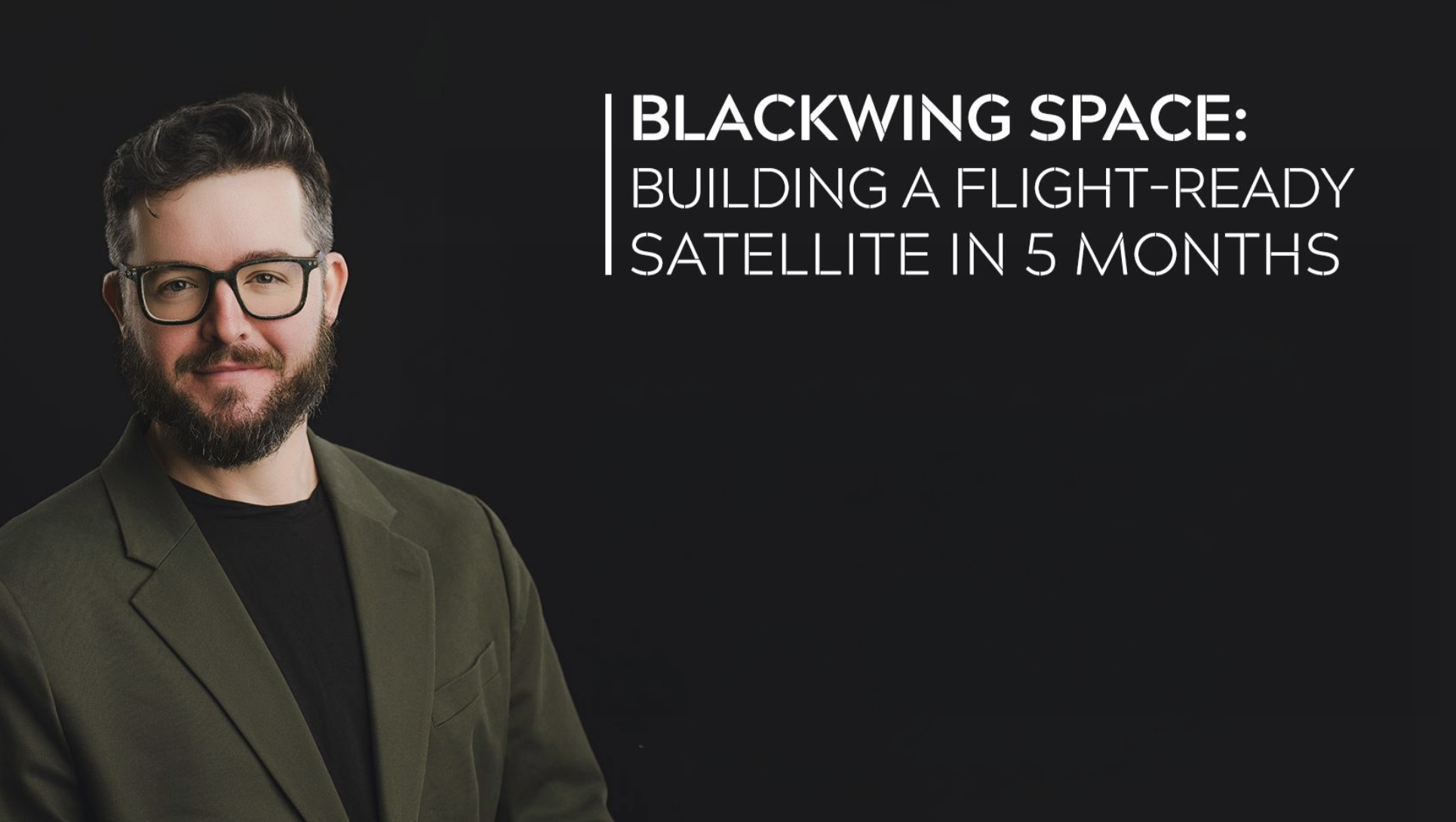
‘Fly early. Fly often. Fly Blackwing.’ | Blackwing Space’s first satellite heads to orbit with a statewide team behind it
Blackwing Space's story is the latest proof of what Tennessee’s innovation ecosystem can deliver. Its founders, engineers, lead investor and launch integrator are all based in Tennessee. Together, they have taken the company from founding to orbit in less than a year and made their satellite flight-ready in just five months.
You may know the name Blackwing Space from its recent pitch at LaunchTN’s 3686 Fest.
But the name has been making the rounds in the state’s startup community for much of the past year, including as a portfolio company of Knoxville-based Market Square Ventures.
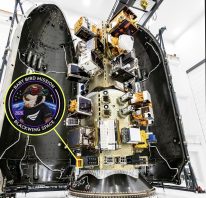
Why? When a SpaceX Falcon 9 rocket lifted off from Vandenberg Space Force Base in California on Oct. 1 on the Transporter-18 rideshare mission, it carried Baby Bird, Blackwing Space’s first spacecraft and the first commercial satellite built in Tennessee.
Let’s break down their story.
The problem: space is still too hard to reach
Co-founders Paul Anderson and Oliver Muoto are big believers that the space economy is at an inflection point. There are more companies than ever pursuing space, creating unprecedented interest in new hardware and software.
Area Development did the math. More than 12,300 Tennesseans now work in aerospace and defense at 164 companies across the state, and the sector has grown 44% since 2019.
However, most of these companies hit the same wall.
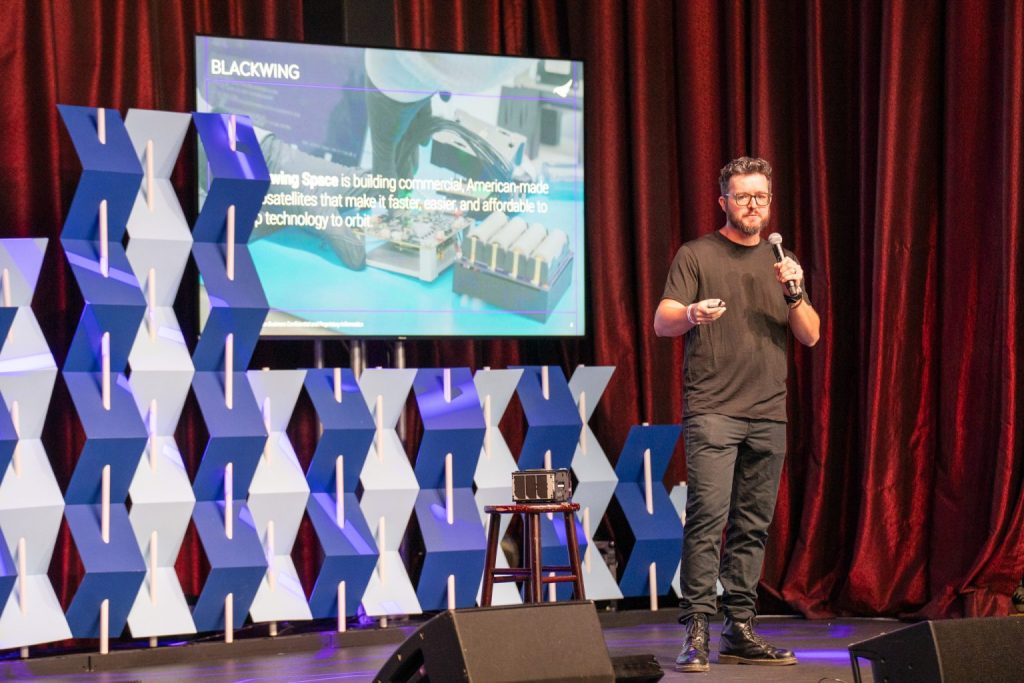
“Space is too expensive. It’s too complex. It’s too bespoke and niche for your everyday businesses to leverage the economic potential of services in the space economy,” Anderson elaborated.
Much of the satellite industry is built around multi-ton spacecraft for government and national security customers. That’s not an ideal fit for the startups and smaller innovators Blackwing Space believes will lead the next wave of growth.
The fix: a satellite the size of a loaf of bread
Blackwing Space knows that lowering the cost and complexity of reaching orbit could unlock a $2 trillion market in the next five to 10 years. So, they came up with a fix.
“Our mission is simple: we want to make it faster, easier, and more affordable than ever for companies, whether those are startups, corporations, research labs, or government teams, to ship their products to space. We do this with our line of commercial nanosatellite platforms that are about the size of a loaf of bread, weighing anywhere from 10 to 20 pounds,” Anderson said.
The company prices its nanosatellites like high-end commercial drones, starting around $25,000 and reaching $100,000 to $150,000 for larger, more powerful models. Customers shop through an online storefront, much like buying a car or laptop with base specifications and transparent pricing for upgrades.
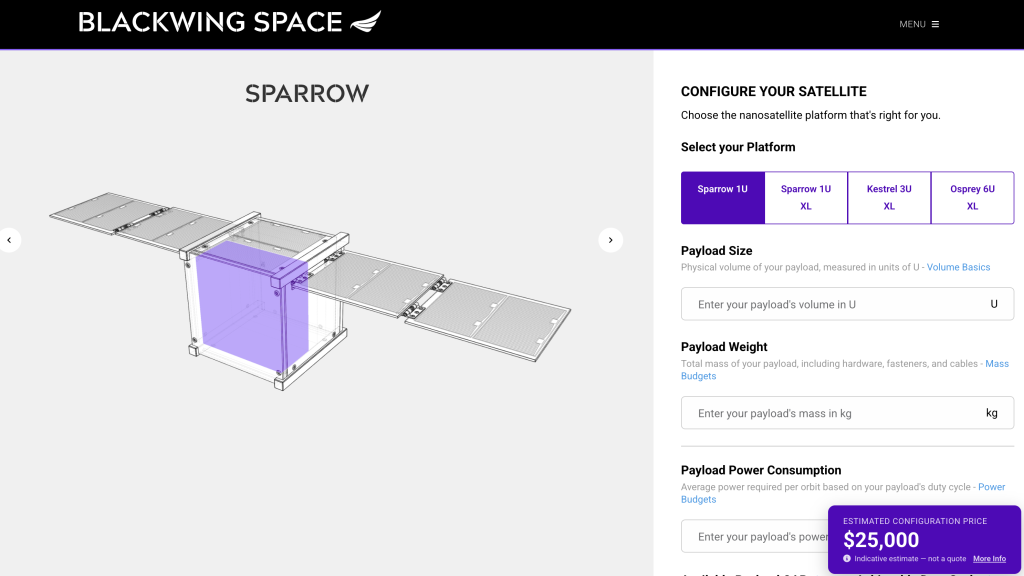
These nanosatellites share a ride to orbit with other spacecraft. How would a customer apply these platforms once in orbit? The options are endless. Think AI inference at the edge, radio frequency intelligence, commercial GPS and quantum security, relay signals from remote sensors, capture images of space and much more. Organizations like Techstars and Y Combinator are already interested.
The advantage: built on Tennessee’s strengths
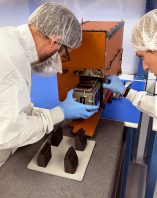
Blackwing Space did not have to look outside the state for what it needed: since 2019, Tennessee has produced more than 20,300 graduates in aerospace and defense-related fields and attracted more than $617 million in sector investment and 3,200 new job commitments.
“Our team is from across the state of Tennessee, representing the top technical talent here: Nashville, Knoxville, Chattanooga, Tullahoma and everywhere in between,” Anderson said. “It turns out you don’t need a whole bunch of people to build a satellite. You only really need four to five of the best talent, and we’re looking to scale up our presence in the state even more.”
The company is looking to establish its initial manufacturing facility in Franklin as a testimony that “hard tech belongs in the area and is a generational investment opportunity for Tennessee.”
Keeping things local also keeps costs low. They see gross margins of 50% or more, and only expect those to improve as they bring more of their supply chain home.
Follow Blackwing Space on LinkedIn.
Like what you've read?
Forward to a friend!