

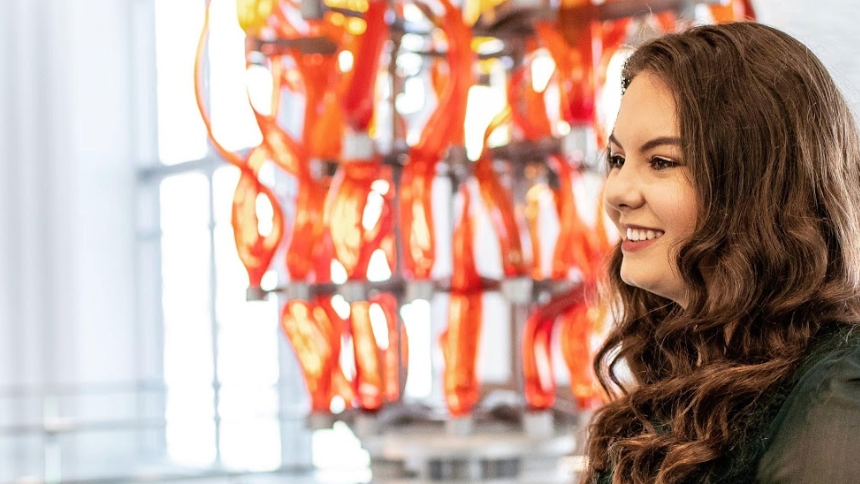
Knoxville native Kinley Koontz launches consulting firm focused on corporate innovation and family farms
Kinley Koontz learned how broken systems operate at the highest levels in Washington, D.C. Now, she’s back home in East Tennessee, applying that same diagnostic mindset to two of the region’s most urgent challenges: corporate technology transformation and the accelerating loss of family farmland.
Born and raised in Knoxville, Koontz earned a degree in biomedical engineering from the University of Tennessee, Knoxville. In 2022, she headed to Washington, D.C., joining Deloitte as a technical project manager. There she led large-scale technology initiatives for major federal agencies, including the Department of State, the Financial Crimes Enforcement Network (FinCEN) and the Defense Health Agency.

But her work extended beyond U.S. borders and into the social impact realm. Through a program related to Deloitte’s new nonprofit services, she helped develop corporate strategy for an agriculture startup in East Africa and supported workforce development programs with Mozaik in Bosnia.
By late 2024, however, Koontz felt a strong pull to return home.
“I always knew I wanted to bring what I learned in D.C. back to East Tennessee,” she said. “I saw an opportunity to help local companies and family farms tackle complex challenges with the same structured, innovative approach I used at the federal level.”
Bringing the blueprint home
In early 2025, Koontz launched her own consulting practice in Knoxville. Her firm offers four core service areas: technology and data strategy, project and program management, sales and revenue strategy, and marketing and storytelling.
Her client roster already includes several high-profile organizations:
- Altar’d State, where she led a large-scale SAP software transformation.
- The University of Tennessee System, where she is helping build a Project Management Office through the Office of Innovative Technologies (OIT).
- XpertSavers, where she’s leading digital channel development and deposit growth for community banks.
What distinguishes Koontz is her engineering-trained consulting approach.
“I’ve found that most organizations don’t actually have people problems. They have systems that make it hard for people to succeed. So when I come in, my first priority is to make the real problem visible to everyone. There’s a principle in biology that structure shapes function. In organizations, that means the way we design systems directly impacts how people show up, collaborate and perform. I start by uncovering the structural constraints, then work with teams to realign both the system and the culture around the outcomes they’re trying to create. That allows people to actually thrive while doing meaningful work,” she explained.
A passion for preserving farmland
While corporate consulting remains her primary revenue stream, Koontz is deeply committed to expanding her work with agriculture.
Her great-grandmother, a lifelong inspiration, ran a farm store off Dry Gap Pike in North Knoxville that has since been converted into a real estate development. That family legacy, combined with what she witnessed in D.C., motivated her to act.
According to data from the University of Tennessee Institute of Agriculture’s Center for Farm Management, Tennessee has lost more than 430,000 acres of farmland since 2017. That is an average of over 200 acres per day or roughly 86,000 acres per year. Family farms are increasingly selling to data centers and large-scale real estate developers, and with many younger generations opting out of farming, the pressure continues to mount.
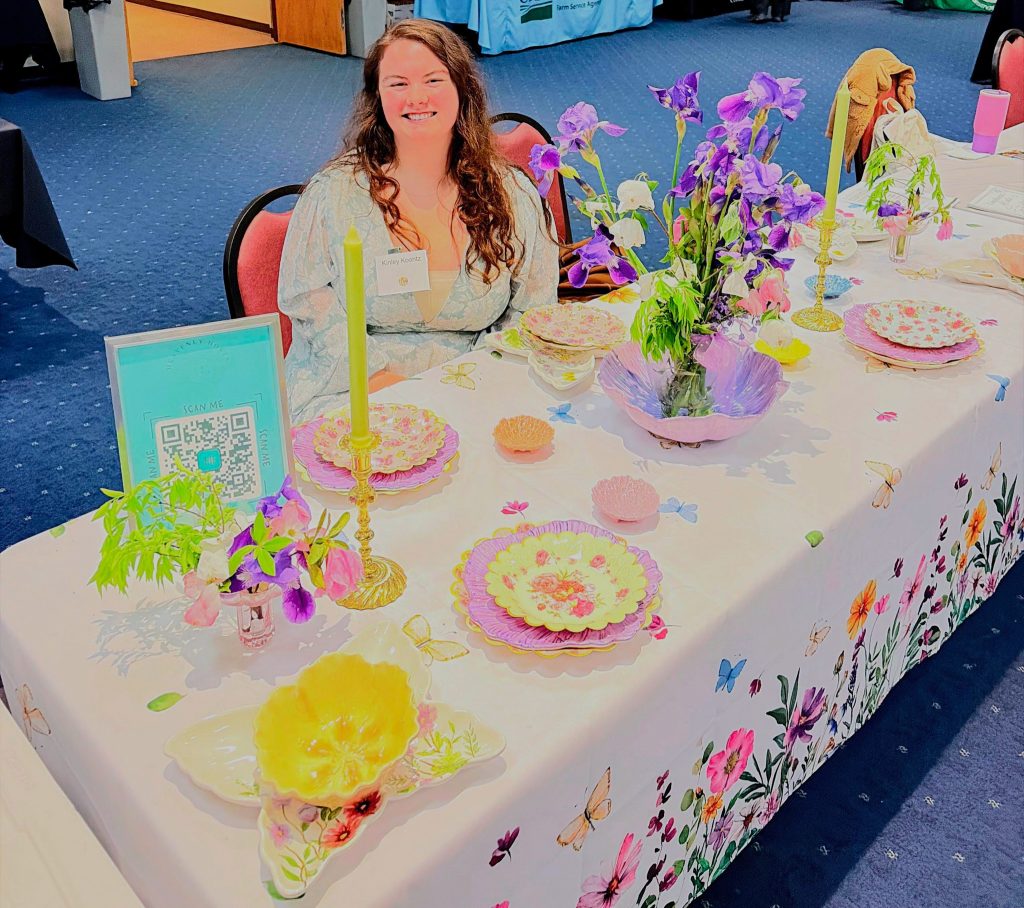
“Family farms are the backbone of our communities and our food system,” Koontz said. “We don’t have time to waste. We need to help them become more profitable and sustainable so they can stay independent and keep producing for Tennessee and the nation.”
Koontz applies the same toolkit she uses with corporations to help farmers thrive. By embracing a term she’s coined “farm hospitality,” digital marketing and direct-to-consumer experiences, local farms can create new revenue streams while sharing their story and products with a broader audience.
She recently worked with The Henry BnB, a regenerative farm stay located in Seymour, to balance production technology with a growing agritourism operation.
“For me, this work is personal. I’ve seen what happens when systems fail both people and land, and I’m committed to building ones that sustain both,” she said
Connect with Kinley Koontz on LinkedIn or visit her website to learn more about how she partners with both growing companies and family farms.
Like what you've read?
Forward to a friend!